ICSR Management for Biological Medicinal Products
An individual case safety report (ICSR) is the structured record of safety information concerning one identifiable patient, one or more medicinal-product exposures and one or more suspected adverse reactions. An adverse reaction is a noxious and unintended response for which a causal relationship with a medicinal product is at least a reasonable possibility. The ICSR does not prove causality. It preserves the observations and assessment needed for regulatory reporting, aggregate evaluation and signal detection.
For a chemically synthesised medicine, an active-substance name may often identify the exposure sufficiently for many analyses. For a biological medicinal product, that name may be only the outer label of a more detailed identity. The clinically administered exposure may need to be resolved to the exact product, brand, batch, formulation, device, route, manufacturing period and switching sequence.
A useful scientific analogy is a specimen chain of custody. A laboratory result can be interpreted only if the specimen is connected reliably to the patient, collection conditions and analytical method. Similarly, a biological ICSR can support product- or batch-level inference only if the reaction is connected reliably to the administered exposure. The analogy stops at causality: an ICSR combines reported clinical observations and medical judgement rather than a controlled laboratory measurement.
This article builds on QPPV.com's general articles on ICSR validity, ICSR follow-up, special situations and electronic submission. Its purpose is to show what must be done differently or more deliberately when the suspected medicine is biological.
Table of Contents
- Regulatory and scientific framework
- The biological ICSR as an evidence model
- Continuing worked case
- Stage 1: intake and day-zero control
- Potential safety information
- Receipt date and regulatory clock
- Source and report type
- Stage 2: validity and case creation
- The four minimum elements
- Identifying a biological suspected product
- Incomplete identity does not automatically invalidate a case
- Stage 3: biological-product identification
- Identity hierarchy
- Brand, manufacturer and authorisation holder
- Batch, lot and serial identifiers
- Formulation, strength, route and device
- Biosimilar switching and exposure sequence
- Stage 4: targeted follow-up
- Core clinical follow-up
- Reaction-specific biological follow-up
- Traceability and quality follow-up
- Proportionate follow-up
- Stage 5: event and exposure chronology
- Stage 6: coding and structured data
- MedDRA coding
- Product coding
- Device, medication-error and quality concepts
- Stage 7: seriousness, expectedness and listedness
- Stage 8: medical and causality assessment
- Temporal relationship and biological plausibility
- Dechallenge, rechallenge and persistence
- Alternative explanations
- Immunogenicity
- Lack or loss of efficacy
- Product, batch, class and use-process attribution
- Stage 9: narratives and case comments
- Stage 10: quality, device and manufacturing interfaces
- Stage 11: special situations
- Medication errors and administration problems
- Pregnancy and breastfeeding
- Occupational exposure, misuse and off-label use
- Stage 12: duplicate detection and case versioning
- Stage 13: E2B(R3) transmission
- Stage 14: quality control, reconciliation and governance
- Complete worked-case output
- Practical biological ICSR checklist
- Intake and validity
- Exposure reconstruction
- Clinical assessment
- Processing and transmission
- Key Takeaways
- References
- Regulatory Note
Regulatory and scientific framework
In the European Union, GVP Module VI Rev. 2 describes collection, management and submission of reports of suspected adverse reactions. Its Addendum I addresses duplicate management. Addendum II, legally effective from 25 July 2025, specifies masking or omission of personal data in ICSRs submitted to EudraVigilance. GVP Product- or Population-Specific Considerations II explains why continuous product and batch traceability is particularly important for biologicals.
ICH E2B(R3) defines the structured data and message specification used to exchange ICSRs electronically. It does not determine whether the clinical facts are true or causal; it determines how available information is represented and transmitted. ICH E2D(R1), adopted at Step 4 in September 2025, provides current international post-approval definitions and reporting standards. Regional implementation requirements remain controlling.
The biological ICSR as an evidence model
A case has three linked axes:
| Axis | Primary question | Biological-specific detail |
|---|---|---|
| Patient | Who experienced the event? | Age, sex, disease, immune status, organ function, pregnancy and relevant genotype |
| Clinical event | What happened and when? | Diagnosis, severity, objective tests, treatment, outcome and recurrence |
| Exposure | What exactly was administered? | Active substance, exact product, batch, formulation, device, route, dose, dates, switching and handling |
The exposure axis is often the most fragile. Recording only an international non-proprietary name can collapse several distinguishable products into one category and prevent product-specific assessment.
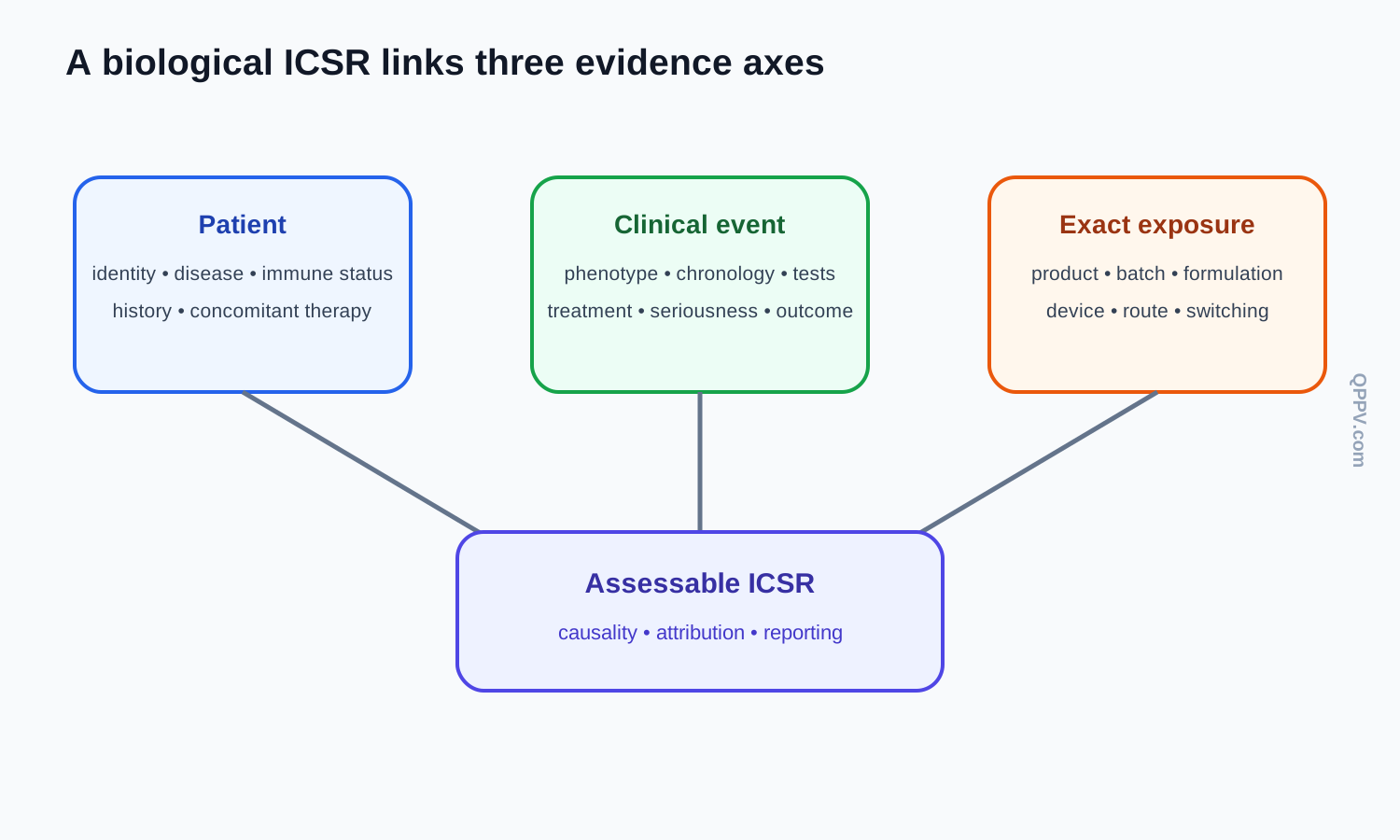
Figure 1. A scientifically useful biological ICSR links patient, clinical event and exact exposure. Failure to resolve the exposure hierarchy limits attribution even when the reaction is well described.
Continuing worked case
A fictional patient with inflammatory arthritis receives self-injected mAb-Z, a monoclonal antibody. After stable response to reference product Z-Original, the patient switches to biosimilar Z-Bio. Following the third injection, the patient reports injection failure, reduced disease control and a generalised hypersensitivity reaction. The injector is retained. The initial report gives the active substance but no batch number.
This is one communication but potentially several connected safety concepts: hypersensitivity, loss of therapeutic response, a product-use or device problem, and a switching sequence. The example is fictional and does not represent a real product.
Stage 1: intake and day-zero control
Potential safety information
All organisational channels capable of receiving safety information must be able to recognise and transfer it promptly. For biologicals, relevant information may enter through medical information, patient-support programmes, product complaints, device technical services, quality units, homecare providers, market-research programmes, digital channels, commercial teams or clinical operations.
The intake control should preserve the reporter's original words, attachments, images, laboratory results and product photographs. A complaint described as “pen did not fire and treatment stopped working” must not be reduced to “device issue”; it may contain both a quality complaint and suspected clinical reaction.
Receipt date and regulatory clock
Day zero is the date on which the organisation, through personnel or parties covered by its pharmacovigilance arrangements, first has the minimum information required for a valid report under the applicable framework. It initiates regulatory time calculation. The organisation must define which partners and systems count as receipt points and reconcile transfers against source timestamps.
The date on which a case reaches the central safety database is not automatically day zero. If a contracted homecare provider obtained a valid report three days earlier, delayed internal transfer does not reset regulatory awareness.
Source and report type
Classify whether information is spontaneous, solicited, study-derived, literature-derived, authority-derived or from another organised data-collection system. Source classification affects assessment and reporting rules. A report from a patient-support programme is not automatically spontaneous merely because a patient volunteered the event; the programme design and method of collection matter.
Stage 2: validity and case creation
The four minimum elements
A post-authorisation report ordinarily requires:
- an identifiable reporter;
- an identifiable patient;
- a suspected medicinal product; and
- a suspected adverse reaction.
“Identifiable” does not require a full name. It means enough information exists to support the existence of a distinct reporter or patient and permit reasonable verification within privacy constraints. The applicable regional rules and source context must be followed.
Identifying a biological suspected product
A reporter may identify “adalimumab,” “my biologic injection,” a brand, a carton photograph or a dispensing record. The validity question is whether a suspected medicinal product can be recognised, not whether every traceability field is complete. Once valid, product resolution becomes a high-priority follow-up and data-quality task.
Incomplete identity does not automatically invalidate a case
Missing brand or batch information usually limits attribution rather than destroying validity when the suspected product is otherwise identifiable. The case should be processed, reported within applicable timelines and followed up. Do not delay an initial required submission while waiting for the batch number.
In the worked case, “mAb-Z” plus hypersensitivity is sufficient to enter assessment if the other minimum elements are present. The absent brand and batch are material missing data.
Stage 3: biological-product identification
Identity hierarchy
Product identity should be resolved from broad to specific:
- active substance or biological material;
- exact authorised product and brand;
- manufacturer and marketing authorisation context;
- pharmaceutical form and strength;
- route and presentation;
- device or administration system;
- batch or lot;
- dose unit serial or unique identifier where applicable;
- manufacturing or distribution period linked internally; and
- prior and subsequent products in an exposure sequence.
The database must not infer a brand from country, active substance or authorisation holder unless the source evidence supports that inference. “Unknown” is scientifically preferable to a confident but invented value.
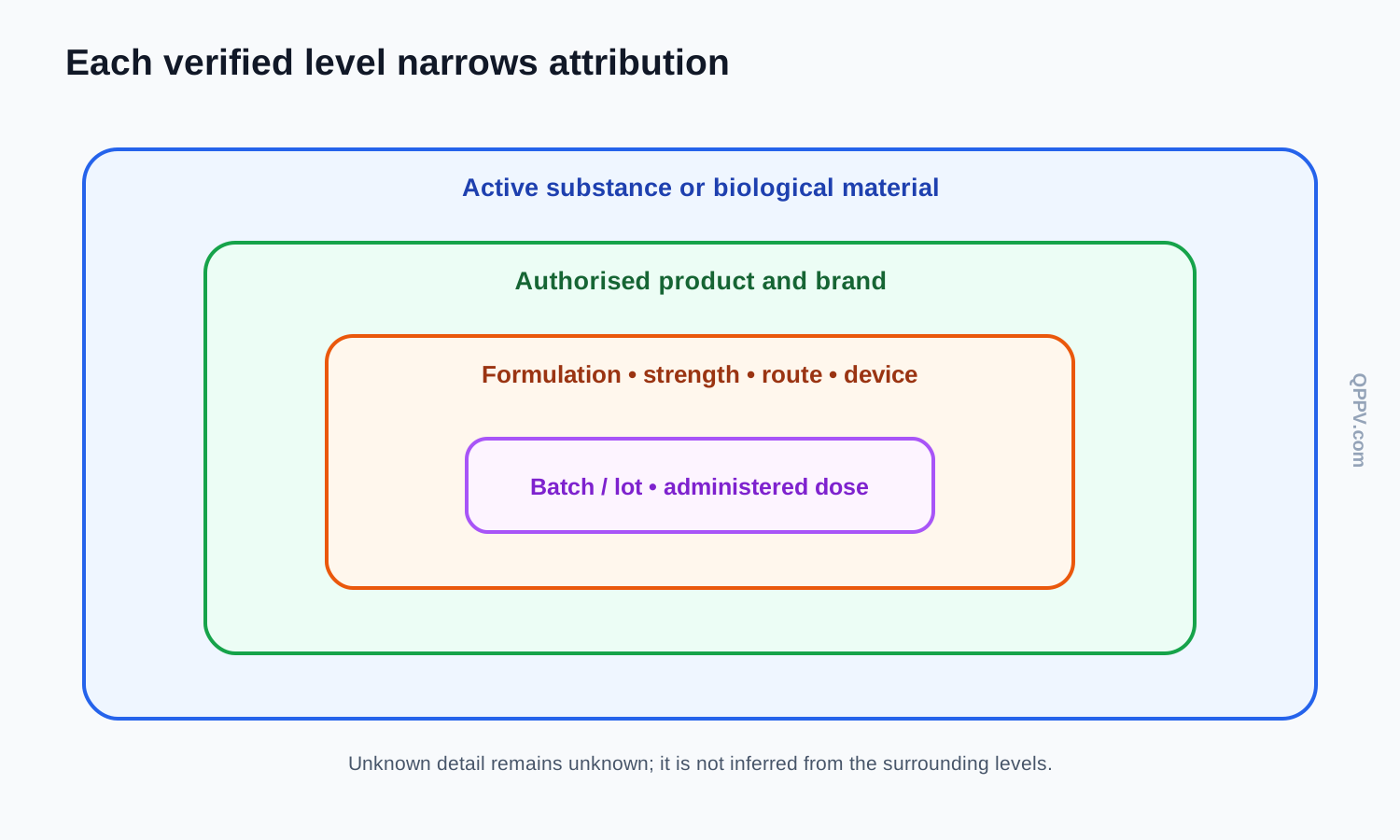
Figure 2. Biological exposure identity is nested. Each additional verified level permits more specific attribution; missing detail should remain explicitly unknown rather than being inferred.
Brand, manufacturer and authorisation holder
Capture the product name exactly as reported and normalise it separately for structured coding. Product name, manufacturer and marketing authorisation holder are related but not interchangeable. Distribution agreements, parallel distribution, licensing and changes in ownership may separate the visible pack name from the organisation responsible for pharmacovigilance.
Useful sources include a pack photograph, prescription, dispensing record, administration record, hospital pharmacy system, patient card and product barcode. Record the evidence source.
Batch, lot and serial identifiers
A batch or lot is a defined quantity produced in a process or series of processes expected to be homogeneous within specified limits. The identifier connects the clinical exposure to manufacturing, testing, release and distribution records.
Preserve leading zeros, hyphens and ambiguous characters. Distinguish batch number from expiry date, catalogue number, device serial number and prescription number. If a photograph is transcribed, retain it according to data-governance rules and document any uncertainty, such as “O” versus zero.
Batch absence should itself be measurable. Traceability performance can be monitored by source, country, product and seriousness, but a low batch-capture rate is not corrected by populating inferred values.
Formulation, strength, route and device
Two presentations with the same active substance may have different excipients, concentrations, administration routes, container-closure systems or devices. These differences may alter exposure, local tolerability, administration error and immunogenicity risk.
Capture:
- concentration and total dose;
- vial, pre-filled syringe, pen, pump or infusion system;
- intravenous, subcutaneous, intramuscular or other route;
- diluent and reconstitution;
- infusion duration or injection technique;
- needle or device component where relevant;
- storage, thawing, preparation and handling.
Biosimilar switching and exposure sequence
A biosimilar is a biological medicinal product shown to be highly similar to an authorised reference product, with no clinically meaningful differences in quality characteristics, biological activity, safety, immunogenicity and efficacy based on the totality of evidence. Biosimilarity does not permit case processors to treat brand identity as irrelevant.
Construct an exposure sequence:
| Sequence element | Worked case |
|---|---|
| Previous biological | Z-Original |
| Switch date and reason | Date recorded; formulary switch |
| Current biological | Z-Bio |
| Doses before event | Three |
| Event after which product | Hypersensitivity after Z-Bio |
| Device used | Z-Bio pre-filled injector |
| Batch | Initially unknown |
| Subsequent action | Product withheld |
Do not attribute an event to switching merely because it followed a switch. The sequence is a hypothesis-generating fact; clinical, product, behavioural and disease-related explanations must still be assessed.
Stage 4: targeted follow-up
Follow-up is purposeful uncertainty reduction. A standard questionnaire can support consistency, but biological cases often require questions selected for the reaction and product architecture.
Core clinical follow-up
Obtain the diagnosis, signs and symptoms, onset and resolution dates, seriousness criterion, treatment, outcome, medical history, concomitant medicines, relevant investigations, dose dates, action taken and reporter's causal assessment.
Reaction-specific biological follow-up
For hypersensitivity or infusion reactions, ask about timing relative to administration, phenotype, vital signs, tryptase if measured, treatment, prior reactions, premedication, infusion or injection rate and recurrence.
For suspected immunogenicity or loss of effect, obtain disease activity, adherence, trough drug concentration where available, anti-drug antibody assay result, assay method and timing, neutralising-antibody result if tested, baseline status, pharmacokinetic context and alternative causes. An anti-drug antibody result is not by itself a clinical diagnosis or proof of causality.
For infection, obtain organism, site, diagnostic method, immune status, concomitant immunosuppression, prophylaxis and exposure history.
Traceability and quality follow-up
Request the exact brand, batch, expiry, presentation, device identifier, photographs, storage history, transport or cold-chain deviation, preparation, visible abnormalities, administration technique, returned-sample availability and complaint reference number.
For a suspected device failure, ask what the user observed before, during and after activation; whether the dose indicator changed; whether liquid leaked; whether the needle deployed; whether a replacement dose was given; and whether the device is available for investigation.
Proportionate follow-up
Priority should reflect seriousness, fatality, medical importance, novelty, signal relevance, product-quality implications, preventability and the expected value of missing information. A case may justify parallel urgent clinical and quality follow-up. Required initial reporting must not be delayed.
In the worked case, the first follow-up requests the injector and pack photograph, batch and expiry, exact injection sequence, leakage or indicator state, dose completion, time to hypersensitivity, clinical treatment, disease-activity evidence and the dates of Z-Original and Z-Bio exposure.
Stage 5: event and exposure chronology
Chronology should show exposure before inference. Record each administration, dose, batch where known, switching event, onset, intervention and outcome on a common time axis. Biological effects may be immediate, delayed or persistent because of long half-life, receptor occupancy, immune activation or durable cellular effects.
A simple temporal interval is insufficient when several products or batches were administered. For every reaction, identify the most recent exposure, cumulative exposure, prior tolerated exposures and whether the reaction arose after re-exposure.
| Date/time | Exposure or event | Product-level detail | Interpretive value |
|---|---|---|---|
| Day −120 to −30 | Stable treatment | Z-Original; repeated doses | Prior tolerance |
| Day 0 | Switch | Z-Bio initiated | Exposure transition |
| Day 28 | Third Z-Bio dose | Injector; batch later recovered | Index administration |
| Day 28 + 20 min | Generalised urticaria and dyspnoea | Objective treatment recorded | Temporally compatible reaction |
| Day 28 | Incomplete dose suspected | Device indicator abnormal | Possible exposure failure |
| Day 35 | Increased disease activity | Clinical score increased | Supports loss of response, not its cause |
Stage 6: coding and structured data
MedDRA coding
The Medical Dictionary for Regulatory Activities (MedDRA) is the standard hierarchical terminology used to code medical information. Code the reporter's concepts at the most specific supported level without upgrading uncertainty.
“Rash and difficulty breathing treated as anaphylaxis” may support several signs plus a diagnosis if the reporter diagnosed anaphylaxis. If no diagnosis was made and criteria are unclear, do not code a definitive diagnosis merely to simplify the case. Preserve the verbatim description.
Loss of effect, device malfunction, underdose, medication error and product-quality concepts may coexist. Coding one must not erase the others.
Product coding
The structured medicinal-product record should reproduce verified identity, role, dose, route, formulation, dates, indication, action taken, batch and authorisation data in the applicable E2B(R3) fields and regional terminology.
Distinguish product role:
- suspect: the reporter or sender considers a causal role possible;
- interacting: a possible interaction contributes;
- concomitant: exposure is relevant but not suspected.
A previous reference product may be historical exposure, while the current biosimilar is suspect. Do not classify every member of the same class as suspect.
Device, medication-error and quality concepts
A device problem can cause an adverse reaction through incomplete delivery, overdose, contamination, needle injury or delayed treatment. Create linked structured concepts rather than embedding all information only in the narrative. Where separate complaint systems exist, maintain reciprocal identifiers so the ICSR and investigation remain reconcilable.
Stage 7: seriousness, expectedness and listedness
Seriousness is a regulatory classification based on outcomes or consequences such as death, life-threatening experience, hospitalisation, disability, congenital anomaly or another medically important condition. It is not synonymous with clinical severity. A severe injection-site reaction may be non-serious; a moderately symptomatic event requiring hospitalisation is serious.
Expectedness is assessed against the applicable reference safety information for the relevant reporting context. Listedness commonly refers to whether the reaction is included in the company core safety information. These assessments are related but should not be treated as interchangeable.
For biologicals, use the correct product and current reference version. A reaction listed for one product containing the same active substance cannot automatically be assumed expected for another product without applying the governing regional and product-specific rules.
Stage 8: medical and causality assessment
Causality assessment asks whether the medicinal product may reasonably have contributed to the reaction. It should explain supporting and opposing evidence rather than produce an unsupported label.
Temporal relationship and biological plausibility
Assess latency against the product's pharmacology and the reaction mechanism. Immediate cytokine-release or hypersensitivity phenomena have different plausible time windows from delayed anti-drug-antibody-associated loss of response. Long half-life can make events after discontinuation temporally relevant.
Biological plausibility means consistency with known pharmacology, immunology, target biology or product characteristics. Plausibility supports a hypothesis; it does not establish that it occurred in the patient.
Dechallenge, rechallenge and persistence
Dechallenge is the clinical course after reducing or stopping exposure. Rechallenge is recurrence or non-recurrence after re-exposure. For long-acting biologicals, improvement may be delayed and therefore difficult to interpret. Rechallenge may be unethical or clinically inappropriate after serious hypersensitivity and should never be encouraged for case assessment.
Persistence after discontinuation may reflect long pharmacodynamic action, irreversible tissue injury, disease progression or another cause.
Alternative explanations
Evaluate disease activity, infection, concomitant immunosuppression, other medicines, administration technique, adherence, storage, underdelivery, device malfunction and background incidence. A balanced assessment neither ignores alternatives nor treats their mere existence as disproof.
Immunogenicity
Immunogenicity is the ability of a therapeutic product to induce an immune response against itself or related proteins. Anti-drug antibodies may be transient or persistent, binding or neutralising, clinically silent or associated with altered pharmacokinetics, loss of efficacy, hypersensitivity or cross-reactivity.
Interpretation requires:
- assay type, sensitivity and drug tolerance;
- sample timing relative to dose;
- baseline and subsequent results;
- antibody titre and persistence;
- neutralising activity where relevant;
- drug concentration;
- clinical phenotype; and
- competing explanations.
Do not write “immunogenic reaction confirmed” from one positive screening assay without this context.
Lack or loss of efficacy
Lack of efficacy is not automatically an adverse reaction, but it may be clinically important and may require reporting in specified circumstances. For biologicals it can indicate disease progression, inadequate dose, non-adherence, device underdelivery, storage failure, neutralising antibodies, product-quality problems or an incorrect diagnosis.
Distinguish:
- primary non-response: expected effect never occurred;
- secondary loss of response: an established response diminished;
- administration failure: intended dose may not have reached the patient;
- therapeutic failure with serious consequence: clinical outcome may itself require expedited attention.
Product, batch, class and use-process attribution
State the narrowest level supported:
| Attribution level | Supporting pattern | Example conclusion |
|---|---|---|
| Target or class | Similar reaction across mechanistically related products | Pharmacological class contribution plausible |
| Active substance | Pattern across products sharing the substance | Substance-level association considered |
| Product | Events concentrate in one authorised product | Product-specific hypothesis requires assessment |
| Batch | Temporally and geographically coherent batch cluster | Batch investigation warranted |
| Device/formulation | Administration failures linked to one presentation | Delivery-system contribution plausible |
| Use process | Preparation, storage or technique explains exposure | Administration-process factor identified |
| Patient/disease | Strong independent clinical explanation | Product contribution weakened, not automatically excluded |
The medical assessment should not jump from a batch number being present to a batch defect. Attribution requires comparison, complaint investigation and exposure or distribution context.
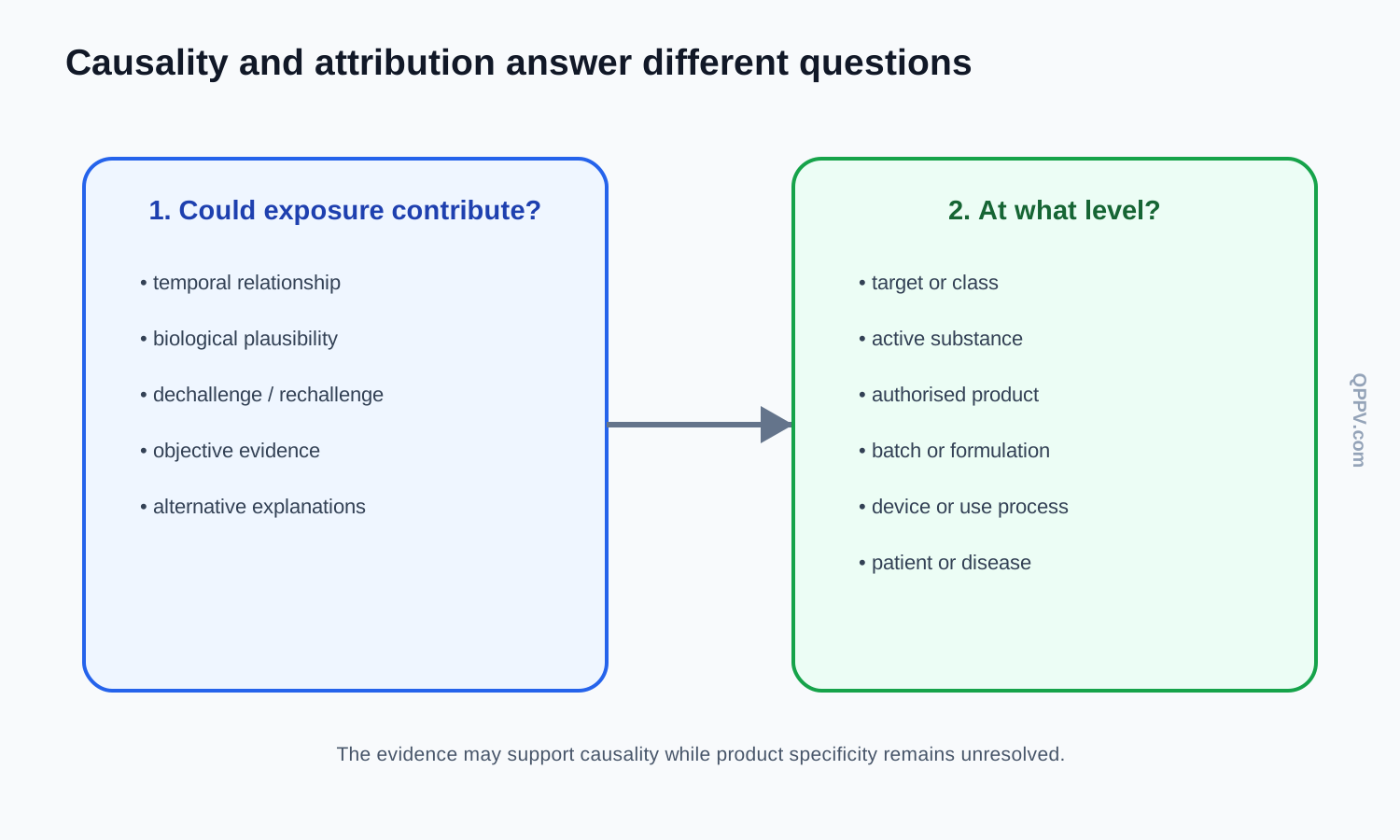
Figure 3. Causality and attribution are separate questions. The assessor first evaluates whether exposure may have contributed, then determines whether evidence supports class-, substance-, product-, batch-, device- or use-process specificity.
Stage 9: narratives and case comments
The narrative is a chronological clinical synthesis, not a dump of structured fields. It should permit another qualified reader to reconstruct what occurred and why the case was assessed as it was.
A biological ICSR narrative should include, when relevant:
- patient and indication;
- exact current and previous biological products;
- switch dates and reasons;
- doses, routes, formulations and devices;
- batch identifiers and how they were obtained;
- storage, preparation and administration;
- reaction phenotype, timing, treatment and outcome;
- immunogenicity tests with method and timing;
- quality complaint and investigation identifiers;
- dechallenge, rechallenge and alternatives;
- reporter and company assessments.
Separate reported fact, source opinion and company interpretation. Avoid statements such as “the batch caused the event” unless evidence supports that conclusion.
A concise company comment can state: “The immediate hypersensitivity phenotype is temporally compatible with mAb-Z exposure. The reported incomplete injection may explain reduced exposure and subsequent disease activity but does not explain the immediate hypersensitivity reaction. Device investigation is pending. Product and batch specificity cannot yet be determined.”
Stage 10: quality, device and manufacturing interfaces
Pharmacovigilance and quality processes answer different but connected questions. PV determines the clinical case and regulatory safety obligations. Quality investigates whether the product or device met specifications and whether a defect, deviation, counterfeit product, handling failure or distribution problem occurred.
Use a bidirectional workflow:
- PV sends the complaint identifier, product identity, batch, clinical consequence and urgency to Quality.
- Quality returns investigation status, sample findings, batch review, complaint trend and conclusion.
- PV reassesses the case and any reporting or signal implications.
- Both systems reconcile identifiers and closure status.
A “no defect found” result does not invalidate the clinical reaction. Conversely, a confirmed defect without an adverse reaction may require quality and regulatory action even when no valid ICSR exists.
Stage 11: special situations
Medication errors and administration problems
Biologicals may require reconstitution, weight-based calculation, infusion-rate control, cold-chain handling or device technique. Capture error stage, intended and actual product, dose, route, clinical consequence, preventability factors and whether instructions or design contributed.
Examples include wrong diluent, rapid infusion, incomplete thawing, intrathecal administration of an intravenous product, dose omission after injector failure and duplicate dosing after uncertainty about dose completion.
Pregnancy and breastfeeding
Record maternal and paternal exposure as applicable, product, batch if obtainable, dose dates relative to conception and gestational age, indication, concomitant medicines, pregnancy course, outcome and infant follow-up. For long-half-life antibodies, placental transfer varies with gestational stage and antibody characteristics. Do not equate exposure with an adverse outcome.
Apply current pregnancy-specific GVP guidance and regional requirements. Avoid unnecessary identifiable personal data in transmitted ICSRs.
Occupational exposure, misuse and off-label use
Determine whether an identifiable patient or exposed person and suspected reaction exist, while preserving the special-situation context. A nurse's needlestick from a pre-filled syringe may involve occupational exposure, device complaint, infection risk and a reaction. Off-label use describes use outside authorised terms; it does not itself prove error, misuse or causality.
Stage 12: duplicate detection and case versioning
Duplicate reports arise when the same patient-event episode reaches the system through different routes: patient and clinician, literature and spontaneous reporting, authority retransmission, patient-support programme, quality complaint or another marketing authorisation holder.
Biological cases require both ordinary matching variables and exposure-specific variables:
- patient characteristics and initials where lawfully available;
- reporter, country, dates and clinical event;
- active substance and brand;
- batch, expiry and device identifier;
- administration date and site;
- switch sequence;
- complaint or programme reference;
- distinctive laboratory findings.
Shared batch numbers do not prove duplication because many patients receive the same batch. Conversely, differing product names do not disprove duplication when one source reports an active substance and another reports the brand.
GVP Module VI Addendum I requires judgement and documented manual confirmation in duplicate management. Preserve the most complete record according to controlled procedures, maintain links and audit trail, and avoid double counting without deleting scientifically relevant information.
A case version is an updated representation of the same case after follow-up or correction. New information should be assessed for clinical significance, reporting requirements and whether structured fields, narrative, seriousness, expectedness, causality or product identity change.
Stage 13: E2B(R3) transmission
ICH E2B(R3) is a structured exchange architecture. Think of it as a scientific data schema: it defines labelled locations for case identifiers, source, patient, reactions, tests, medicines, dose, route, indication, narrative and sender information. A technically valid message can still be clinically poor if information is miscoded, inferred or confined to free text.
For biologicals, quality control should verify that:
| Information | Structured transmission principle |
|---|---|
| Exact product | Use verified medicinal-product identification; preserve reported text where required |
| Batch/lot | Populate the applicable batch field exactly; do not mix with expiry or serial number |
| Multiple batches | Represent exposure periods accurately and explain ambiguity |
| Dose form/route | Use applicable controlled terminology and the actual presentation |
| Device | Represent medicinal-product and device/problem information in applicable fields and narrative |
| Switching | Record each product as a separate exposure with dates and roles |
| Immunogenicity tests | Transmit test name, date, result, unit and normal range where meaningful |
| Quality complaint | Preserve clinically relevant details and linked reference in appropriate text fields |
| Reporter assessment | Keep distinct from sender/company assessment |
| Follow-up | Send the updated case version according to applicable rules |
The EU ICSR Implementation Guide and current business rules supplement the ICH core. Successful transmission requires message validation, routing, acknowledgement review, error correction and reconciliation. Acceptance by a gateway confirms technical receipt, not medical accuracy.
Under GVP Module VI Addendum II, personal information in ICSRs sent to EudraVigilance must be masked or omitted as specified. Privacy processing must not remove the scientifically necessary non-identifying chronology, product identity or reaction information.
Stage 14: quality control, reconciliation and governance
Quality control should be risk-based and should test both data accuracy and scientific coherence. For a biological ICSR, confirm:
- source text agrees with structured fields;
- current and previous products are not conflated;
- brand and batch are verified or explicitly unknown;
- formulation, route and device are internally consistent;
- dose and chronology are plausible;
- reaction and special-situation concepts are completely coded;
- seriousness and expectedness use the correct criteria and reference;
- causality addresses alternatives and attribution level;
- narrative distinguishes fact from interpretation;
- complaint and ICSR records are cross-referenced;
- follow-up is targeted and documented;
- E2B(R3) output preserves the assessed information;
- acknowledgement and submission status are reconciled; and
- personal-data handling follows applicable law and guidance.
Governance should monitor more than timeliness. Useful indicators include exact-brand capture, batch capture, unresolved product identity, complaint-to-ICSR reconciliation, meaningful follow-up yield, coding corrections, rejected messages, late partner transfer, duplicate rate and recurring product-specific errors. Metrics need denominators and context; products administered in hospitals may have different traceability performance from self-administered products.
Inspection evidence should demonstrate source-to-database traceability, day-zero control, medically justified follow-up, qualified review, timely transmission, version history, complaint linkage, vendor oversight, corrective and preventive action, and evidence that recurring errors change the system.
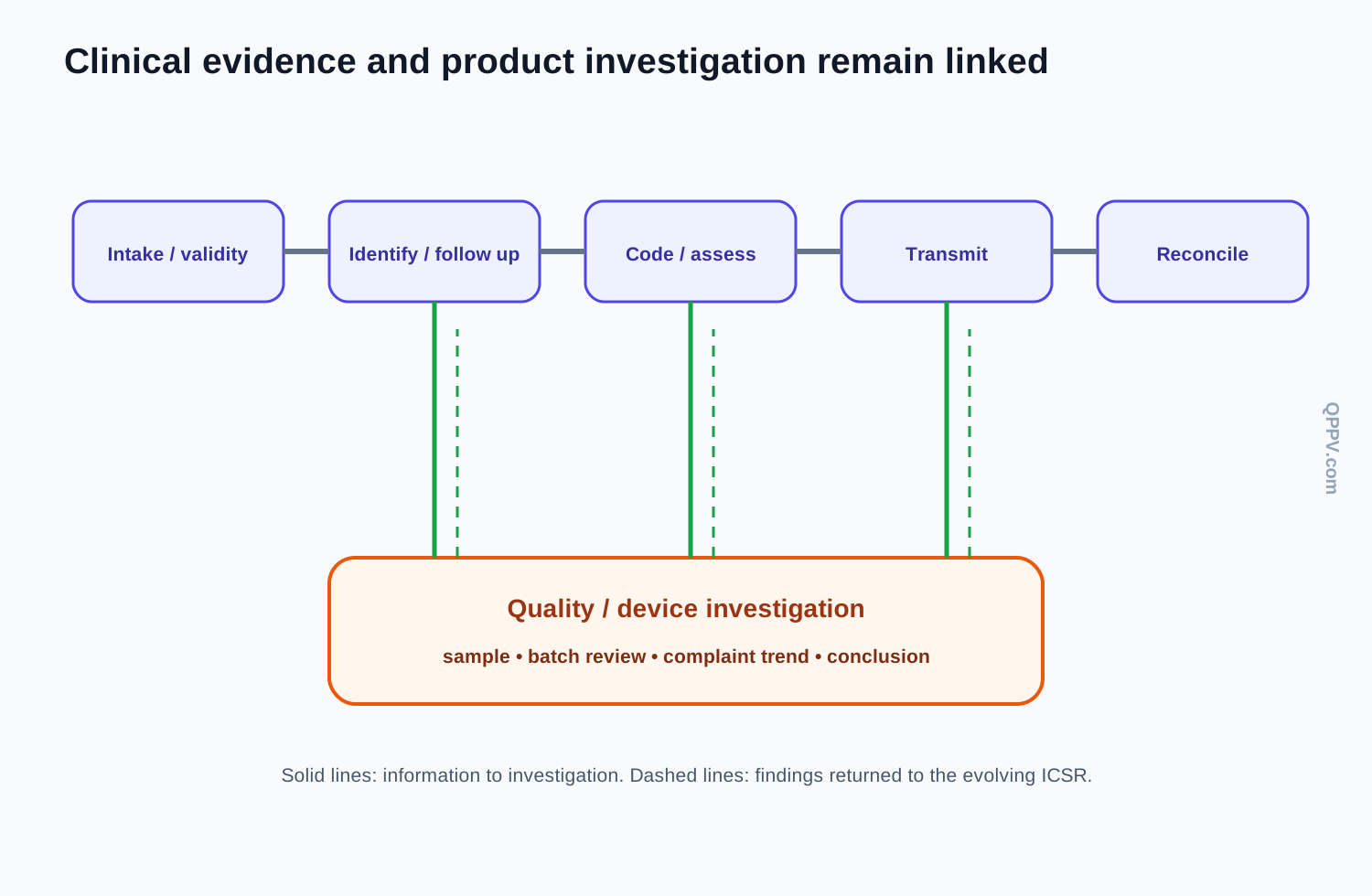
Figure 4. Biological ICSR management preserves clinical and exposure evidence from intake through transmission, while quality and device investigations operate as reconciled parallel processes.
Complete worked-case output
Follow-up supplies a carton photograph and returned injector. The case is resolved as follows:
| Domain | Final case information | Assessment consequence |
|---|---|---|
| Product sequence | Z-Original followed by Z-Bio | Prevents attribution to an unspecified active substance |
| Index exposure | Third Z-Bio dose, exact date and time | Establishes temporal relationship |
| Batch/device | Batch B314; injector serial captured | Enables complaint and batch investigation |
| Hypersensitivity | Urticaria, bronchospasm, emergency treatment 20 minutes after injection | Seriousness and reaction phenotype assessed |
| Loss of response | Increased disease-activity score one week later | Clinically supported secondary deterioration |
| Dose delivery | Returned device confirms incomplete delivery | Plausible contributor to reduced exposure |
| Immunogenicity | No interpretable anti-drug-antibody result available | Immunogenicity remains unconfirmed |
| Quality review | Device malfunction confirmed; no batch-wide medicinal-product defect identified | Supports device-level, not batch-wide, attribution |
| Medical conclusion | Hypersensitivity temporally compatible; mechanism unresolved. Incomplete delivery plausibly contributed to loss of response | Two related outcomes require distinct causal reasoning |
| Regulatory record | Initial case submitted on time; follow-up version includes investigation result | Timeliness preserved while evidence evolves |
The case should not be compressed to “biosimilar caused allergy and treatment failure.” That sentence merges temporal sequence, causality, product specificity and two different mechanisms into one unsupported conclusion.
Practical biological ICSR checklist
Intake and validity
- Preserve the original report, attachments and receipt timestamps.
- Test the four minimum validity elements without demanding completeness.
- Start the applicable clock at organisational awareness, not database entry.
- Identify parallel complaint, device or medical-information records.
Exposure reconstruction
- Capture active substance and exact product separately.
- Verify brand; do not infer it from context alone.
- Request and transcribe batch/lot exactly.
- Record formulation, strength, route, device and administration technique.
- Build the complete switching and dosing sequence.
- Document storage, preparation and cold-chain information when relevant.
Clinical assessment
- Define the reaction phenotype and objective evidence.
- Construct dose-to-event chronology.
- Assess seriousness separately from severity.
- Apply the correct reference for expectedness or listedness.
- Evaluate pharmacology, immunogenicity, dechallenge, rechallenge and alternatives.
- State whether attribution is class-, substance-, product-, batch-, device- or use-process level.
- Keep lack of efficacy, underdelivery and disease progression analytically distinct.
Processing and transmission
- Code all supported medical and special-situation concepts.
- Write a chronological narrative that distinguishes fact, opinion and assessment.
- Link PV and quality records bidirectionally.
- Search for duplicates using clinical and product-specific variables.
- Populate E2B(R3) fields from verified evidence.
- Apply current regional business rules and privacy masking.
- Review acknowledgements and reconcile submission status.
- Reassess each meaningful follow-up version.
Key Takeaways
- A biological ICSR is only as attributable as its exposure identity permits.
- Missing brand or batch information usually calls for targeted follow-up, not automatic invalidation or delayed submission.
- Product name, active substance, manufacturer, authorisation holder, batch, device and formulation are distinct data concepts.
- Switching history is a chronology, not a causal conclusion.
- Immunogenicity requires assay, exposure, pharmacokinetic and clinical context.
- Quality, device and PV investigations must be linked but retain their different questions.
- Causality and attribution level should be reasoned separately.
- E2B(R3) technical validity does not guarantee medical or product-identification quality.
- Duplicate control must prevent double counting without losing the most complete evidence.
- Inspection readiness depends on traceability from source information to assessment, transmission, acknowledgement and closure.
References
- European Medicines Agency. Guideline on good pharmacovigilance practices (GVP), Module VI: Collection, management and submission of reports of suspected adverse reactions to medicinal products, Rev. 2. EMA/873138/2011 Rev. 2; legally effective 22 November 2017. EMA GVP collection.
- European Medicines Agency. GVP Module VI Addendum I: Duplicate management of suspected adverse reaction reports. EMA/405655/2016; legally effective 22 November 2017. EMA document.
- European Medicines Agency. GVP Module VI Addendum II: Masking of personal data in individual case safety reports submitted to EudraVigilance. EMA/178902/2025; legally effective 25 July 2025. EMA GVP collection.
- European Medicines Agency. GVP Product- or Population-Specific Considerations II: Biological medicinal products. EMA/168402/2014; legally effective 16 August 2016. EMA document.
- International Council for Harmonisation. E2B(R3): Electronic Transmission of Individual Case Safety Reports — Implementation Guide and related files. Step 4 implementation package, version 1.11, January 2026. ICH E2B(R3) resources.
- International Council for Harmonisation. E2D(R1): Post-Approval Safety Data — Definitions and Standards for Management and Reporting of Individual Case Safety Reports. Final version adopted 15 September 2025. ICH guideline.
- European Medicines Agency. European Union Individual Case Safety Report Implementation Guide. EMA document.
- European Medicines Agency. EudraVigilance: electronic reporting. EMA webpage.
- International Council for Harmonisation. MedDRA Term Selection: Points to Consider. Current version should be consulted through MedDRA MSSO/JMO resources.
- European Medicines Agency. Guideline on immunogenicity assessment of therapeutic proteins. Current applicable revision should be consulted for assay and clinical interpretation.
Regulatory Note
This article is an educational technical guide, not legal advice or a substitute for the current legislation, GVP modules, ICH guidance, EU ICSR Implementation Guide, EudraVigilance business rules, MedDRA conventions, product information, safety-data exchange agreements or competent-authority instructions applicable to a specific case. Requirements vary by jurisdiction, product status, report source and reporting context. Organisations should verify current regional rules and controlled procedures before making validity, reportability, privacy or submission decisions.