Inebilizumab is a humanised monoclonal antibody directed against CD19, a B-cell surface protein expressed across a broad span of B-cell development. It is marketed as Uplizna. Its modern regulatory history is unusually instructive: a medicine first authorised for aquaporin-4 antibody-positive neuromyelitis optica spectrum disorder (NMOSD) subsequently expanded into immunoglobulin G4-related disease (IgG4-RD) and generalized myasthenia gravis (gMG). These diseases involve different organs and symptoms, but all can be driven by pathogenic antibody-producing B-cell lineages.
The key mechanistic concept is not simply “B-cell depletion”. CD19 is expressed from early B-cell stages through plasmablasts and some antibody-secreting cells, whereas CD20 expression is absent on some later antibody-producing populations. Target choice therefore changes the cellular compartment affected and helps explain why inebilizumab can influence diseases in which pathogenic antibodies are central.
Table of Contents
- Product identity and classification
- Development and regulatory expansion
- B-cell biology and CD19
- Where CD19 sits in B-cell development
- CD19 versus CD20
- Mechanism of action
- Three diseases, one cellular strategy
- NMOSD
- IgG4-related disease
- Generalized myasthenia gravis
- Treatment architecture
- Safety profile and mechanism-informed interpretation
- Infusion reactions
- Infections and screening
- Immunoglobulin reduction
- PML and severe opportunistic infection
- Product pharmacovigilance
- Practical assessment framework
- Key Takeaways
- References
- Regulatory Note
Product identity and classification
| Dimension | Classification |
|---|---|
| Modality | Humanised monoclonal antibody |
| Target | CD19 |
| Functional effect | B-cell depletion/cytolysis |
| Therapeutic concept | Pathogenic-antibody and B-cell disease modification |
| Route | Intravenous infusion |
| Current major indications | NMOSD, IgG4-RD and antibody-positive gMG |
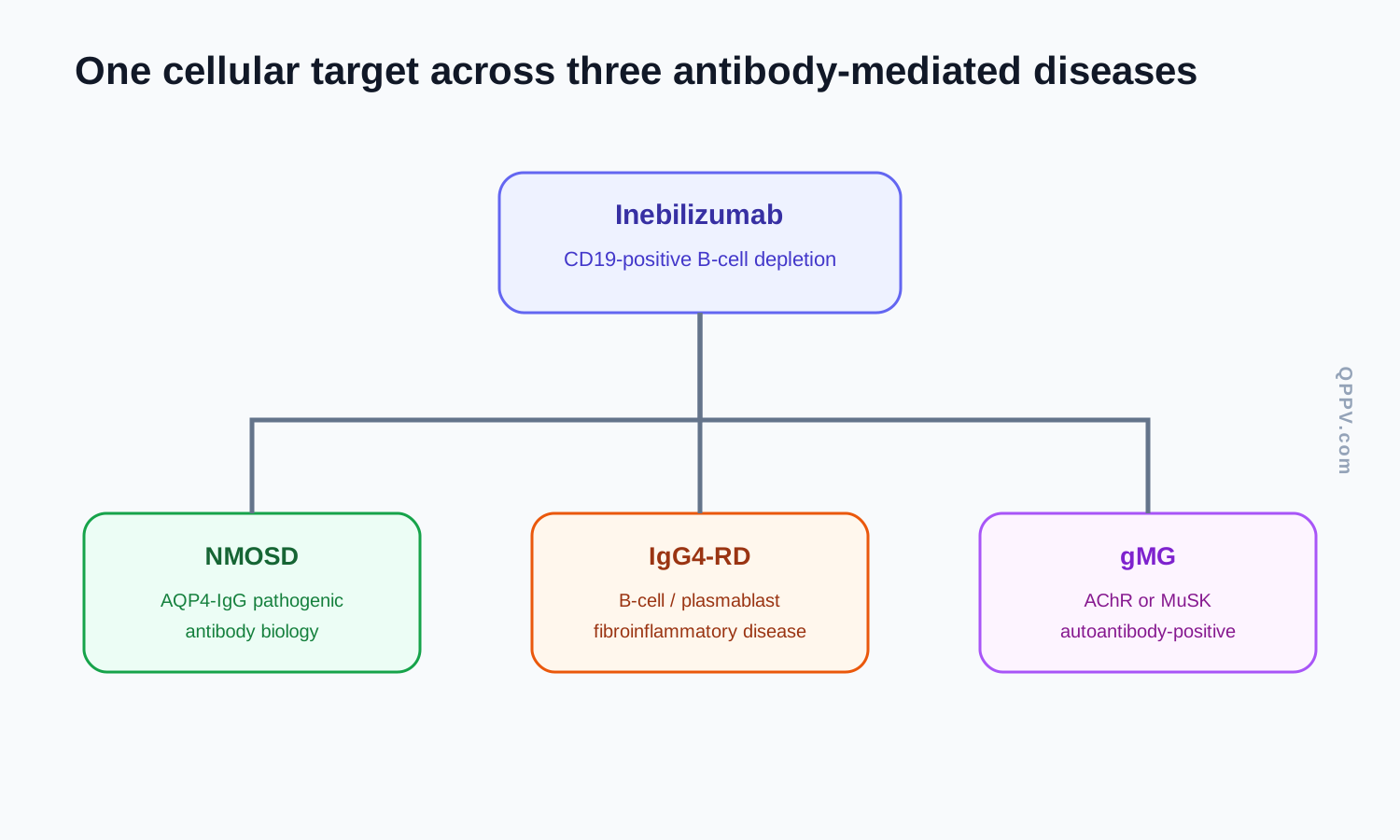
Figure 1. Inebilizumab is a CD19-directed B-cell-depleting antibody used across distinct diseases in which pathogenic B-cell and antibody biology is central.
Development and regulatory expansion
Inebilizumab was initially developed in NMOSD, where antibodies against aquaporin-4 identify a major disease subgroup and B cells participate in both antibody production and antigen presentation. US approval followed in 2020, and EU authorisation followed in 2022 for adults with AQP4-IgG-positive NMOSD.
The product later expanded into IgG4-RD. FDA approved Uplizna for adults with IgG4-RD on 3 April 2025 after the MITIGATE study demonstrated a substantial reduction in disease flares. The indication also advanced in Europe during 2025.
A further expansion occurred in gMG. FDA approved inebilizumab on 11 December 2025 for adults with gMG who are anti-acetylcholine receptor or anti-MuSK antibody positive. EMA's late-2025 variation similarly supported gMG as an add-on to standard therapy, alongside NMOSD and IgG4-RD. The sequence illustrates platform biology: once a cellular target is shown to modify one antibody-mediated disease, other diseases can be investigated where the same cell lineage contributes to pathogenic antibody production.
B-cell biology and CD19
Where CD19 sits in B-cell development
B cells develop from bone-marrow precursors, mature in peripheral lymphoid tissues and may differentiate into memory B cells, plasmablasts and plasma cells. CD19 is expressed early and persists through many later B-cell stages, including plasmablasts and some antibody-secreting populations.
This broad expression pattern matters because pathogenic antibodies are not generated by one homogeneous cell type. A therapy that reaches more of the B-cell lineage can influence antigen presentation, cytokine production, memory responses and antibody production simultaneously.
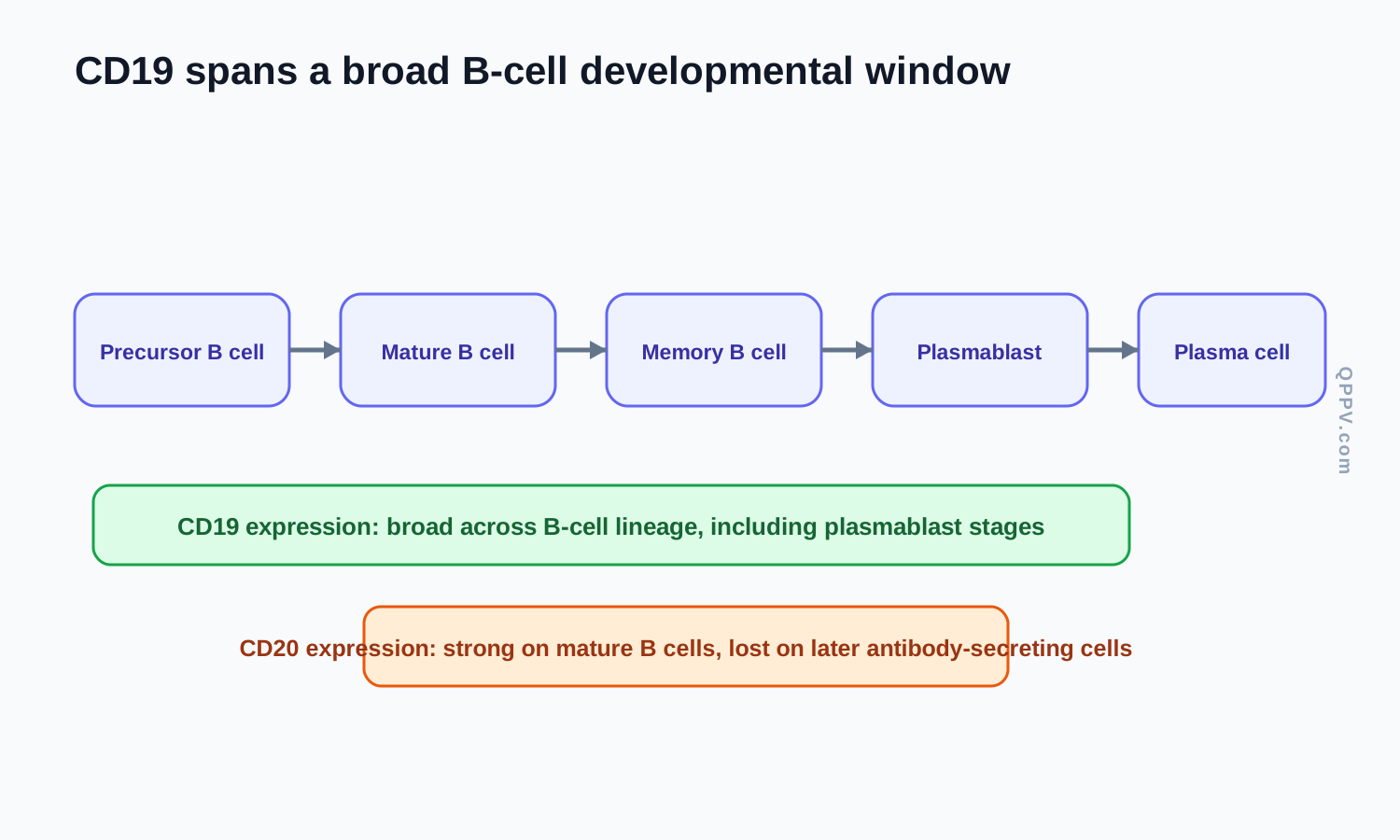
Figure 2. CD19 spans a broad portion of B-cell development, including stages beyond the main CD20 expression window. The exact phenotype of antibody-secreting cells varies, but the broader CD19 compartment helps distinguish inebilizumab from CD20-directed depletion.
CD19 versus CD20
CD20-directed antibodies are established B-cell-depleting therapies, but CD20 is lost as B cells differentiate into many plasmablast and plasma-cell states. CD19 remains on a broader range of B-lineage cells. The practical distinction is not that one target is universally “deeper” or better; it is that the cellular populations affected differ.
That difference matters when reasoning about efficacy, immunoglobulin changes and infection risk. Product-level PV should therefore avoid treating all B-cell depletion as pharmacologically identical.
Mechanism of action
Inebilizumab binds CD19 on B cells and promotes antibody-dependent cellular cytolysis and phagocytosis, resulting in depletion of circulating CD19-positive B cells. The therapeutic consequence depends on the disease: fewer pathogenic-antibody precursors in NMOSD, reduced disease-driving B-cell activity in IgG4-RD, and suppression of autoantibody-producing lineages in antibody-positive gMG.
The mechanism is long-acting. Safety events may therefore arise well after the infusion itself because the relevant exposure is not only serum antibody concentration but the persistence of B-cell depletion and downstream immune effects.
Three diseases, one cellular strategy
NMOSD
NMOSD is an inflammatory disease of the central nervous system characterised by severe attacks of optic neuritis, myelitis and other syndromes. In most patients, pathogenic IgG antibodies against aquaporin-4 identify the disease biology. These antibodies bind astrocytic aquaporin-4, activate complement and inflammatory pathways, and can produce destructive lesions.
Because relapses can cause permanent neurological disability, preventing attacks is central to treatment. In this setting, B-cell depletion aims to reduce the cellular source and support system for pathogenic antibody responses rather than repairing established neurological injury.
IgG4-related disease
IgG4-RD is a systemic fibroinflammatory disease that can affect pancreas, salivary glands, kidneys, retroperitoneum, lymph nodes and many other organs. Expanded plasmablast populations and B-cell abnormalities are closely linked to disease activity. Repeated inflammatory flares can lead to fibrosis and irreversible organ dysfunction.
In this disease, the relevant PV outcome is often flare prevention rather than symptom reduction alone. A report of “ineffective” treatment should identify which organ flared, how the flare was confirmed, glucocorticoid exposure and whether B-cell depletion had been achieved.
Generalized myasthenia gravis
gMG is an autoimmune disorder of neuromuscular transmission. In anti-AChR-positive disease, autoantibodies disrupt acetylcholine receptor function and can activate complement. In anti-MuSK-positive disease, antibodies disrupt signalling needed to maintain the neuromuscular junction through a different immunological mechanism.
Both are antibody-mediated, providing a rationale for B-cell-directed therapy. However, weakness can worsen for many reasons, including infection, medication effects, respiratory compromise and natural fluctuation. Disease worsening during inebilizumab treatment must therefore be clinically reconstructed rather than automatically considered lack of effect.
Treatment architecture
Inebilizumab is administered by intravenous infusion after an initial loading sequence followed by widely spaced maintenance dosing. Exact schedules and premedication requirements should be taken from the current jurisdiction-specific product information.
Before initiating therapy, the US label requires hepatitis B screening, quantitative serum immunoglobulins and tuberculosis assessment. Active infection should be excluded before each infusion, and corticosteroid, antihistamine and antipyretic premedication is used to reduce infusion-reaction risk.
This architecture creates several safety layers:
| Control | Purpose |
|---|---|
| HBV screening | Reduce risk of unrecognised reactivation in susceptible patients |
| Tuberculosis assessment | Identify important infection risk before immunosuppression |
| Baseline immunoglobulins | Establish immune reserve before B-cell depletion |
| Infection check before infusion | Avoid dosing during active clinically important infection |
| Premedication | Reduce infusion-reaction severity/risk |
| Longitudinal immunoglobulin monitoring | Detect persistent hypogammaglobulinaemia |
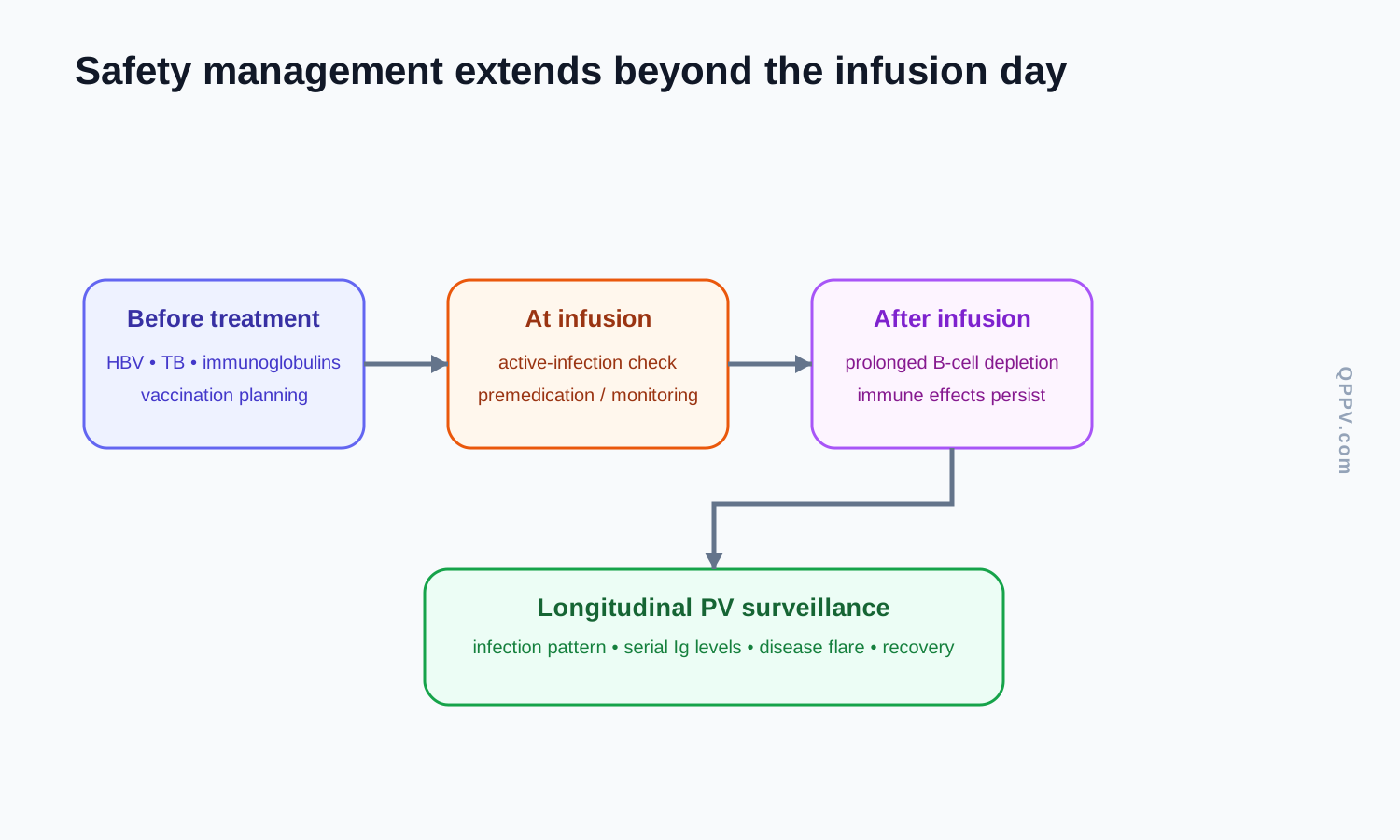
Figure 3. B-cell depletion requires longitudinal safety controls extending beyond the infusion day: infection screening, immunoglobulin assessment, infusion-reaction prevention and continued surveillance during prolonged B-cell suppression.
Safety profile and mechanism-informed interpretation
Infusion reactions
Infusion reactions are among the most immediate risks. Symptoms may include headache, nausea, somnolence, dyspnoea, fever, myalgia, rash or other hypersensitivity-like manifestations. A useful case should capture infusion number, onset relative to infusion, premedication, infusion rate, whether treatment was interrupted or slowed, clinical phenotype and subsequent re-exposure.
Not every symptom during infusion is caused by the drug. Anxiety, underlying neurological disease, infection and concomitant medicines can contribute, but the close chronology usually makes infusion-related assessment relatively tractable.
Infections and screening
B-cell depletion can increase susceptibility to infection. Reported infections should be characterised by site, organism, severity, recurrence, hospitalisation, antimicrobial treatment and concomitant immunosuppression. NMOSD, IgG4-RD and gMG populations may differ substantially in prior corticosteroid and immunosuppressive exposure, so indication is not a trivial field.
HBV reactivation is a mechanistically important concern for B-cell-depleting therapies. Cases should include baseline serology, HBV DNA where obtained, prophylaxis, liver tests and timing relative to B-cell depletion.
Immunoglobulin reduction
Repeated B-cell depletion can reduce immunoglobulin concentrations. The clinical significance depends on magnitude, persistence and infection history. A low IgG value without infection and recurrent serious infections with sustained hypogammaglobulinaemia are not equivalent safety observations.
For PV, serial quantitative immunoglobulins are much more informative than a single result. Replacement immunoglobulin use, treatment interruption and B-cell recovery should be captured where relevant.
PML and severe opportunistic infection
Progressive multifocal leukoencephalopathy is a rare, serious demyelinating infection caused by JC virus reactivation in immunosuppressed patients. Even where no confirmed causal pattern is established for a specific product, new unexplained neurological deterioration during profound immunomodulation requires careful differential diagnosis.
This is particularly challenging in NMOSD because new neurological symptoms may initially resemble a disease attack. MRI findings, cerebrospinal-fluid testing, AQP4-related relapse assessment and treatment response are essential discriminators.
Product pharmacovigilance
Product pharmacovigilance for inebilizumab must preserve three layers simultaneously: cellular mechanism, disease indication and longitudinal immune status. A serious infection after treatment may be clinically meaningful for all indications, but the background corticosteroid burden, disease manifestations and alternative causes differ substantially between NMOSD, IgG4-RD and gMG.
High-value case information includes:
| Domain | Useful information |
|---|---|
| Product exposure | infusion dates, dose, lot, infusion number, interruptions |
| Disease | exact indication, antibody status, baseline severity, prior relapses/flares |
| Immune status | CD19/B-cell data where clinically obtained, quantitative IgG/IgM/IgA |
| Screening | HBV, tuberculosis, infection status before treatment |
| Concomitant therapy | corticosteroids, other immunosuppressants, antimicrobials |
| Event | diagnosis, onset, microbiology/imaging, treatment, seriousness, outcome |
| Follow-up | subsequent infusion, B-cell recovery, immunoglobulin trend, recurrence |
Disease worsening versus treatment-related complications
The three indications create different attribution traps. Visual loss or limb weakness in NMOSD may represent relapse, infection or another neurological disorder. Organ swelling or laboratory abnormalities in IgG4-RD may represent disease flare, infection or treatment toxicity. Weakness in gMG may reflect autoimmune worsening, infection-triggered decompensation, sedative medicines or respiratory disease.
An experienced assessor therefore avoids coding “disease progression” as a complete explanation. The clinical syndrome and diagnostic evidence should be reconstructed first.
Vaccination and immune response
B-cell depletion can reduce humoral responses to vaccination. Reports of vaccination during therapy should capture vaccine type, timing relative to infusion, live versus non-live status where relevant, and whether infection occurred despite vaccination. Recommended vaccine timing should follow current product information and clinical guidance rather than a generic rule.
Pregnancy and infant exposure
Monoclonal antibodies can cross the placenta, particularly later in pregnancy. Maternal B-cell-depleting therapy may therefore create concern for transient neonatal B-cell reduction. Pregnancy reports should capture gestational timing of the last infusion, maternal disease activity, neonatal blood counts/B-cell assessments where obtained, vaccination planning and infant infections.
Aggregate interpretation
Useful aggregate stratifications include indication, prior immunosuppression, baseline immunoglobulin level, cumulative number of infusions, serious versus non-serious infection, opportunistic versus routine infection, and degree/duration of hypogammaglobulinaemia.
A cluster of infections among heavily pretreated IgG4-RD patients should not automatically be compared with treatment-naive NMOSD patients without adjustment for exposure context. Conversely, a recurring unusual infection pattern across indications may strengthen a mechanism-based signal.
Practical assessment framework
- Confirm the indication and pathogenic-antibody status. NMOSD, IgG4-RD and gMG are clinically different diseases.
- Reconstruct the infusion timeline. Include loading and maintenance doses.
- Establish immune baseline. Screening and immunoglobulin values materially affect interpretation.
- Define the event clinically. Distinguish infection, infusion reaction, disease flare and neurological complication.
- Assess concomitant immunosuppression. Steroids and prior therapies are major confounders.
- Review longitudinal immunoglobulins. Persistent decline plus recurrent infection is more informative than one low value.
- Consider prolonged pharmacodynamic exposure. B-cell depletion persists beyond serum drug exposure.
- Preserve product traceability. Brand and batch support cluster and quality investigations.
- Ask whether the pattern is indication-specific or mechanism-wide. This guides signal evaluation.
Illustrative scenario: weakness after an infusion in gMG
An adult with anti-AChR-positive gMG develops increasing weakness ten days after infusion. The report initially describes “Uplizna ineffective”. Follow-up reveals fever, cough and positive influenza testing, followed by worsening bulbar symptoms.
A stronger causal model recognises infection as a possible treatment-related complication and also as a known trigger of myasthenic worsening. The same clinical episode may therefore contain both an infection safety event and disease exacerbation secondary to that infection.
Illustrative scenario: recurrent infections with falling IgG
A patient receiving maintenance therapy develops recurrent bacterial sinusitis. IgG has declined progressively across several treatment cycles. The case becomes more informative when serial IgG values, prior infections, antibiotic courses, concomitant steroids and treatment decisions are assembled into one longitudinal record.
Key Takeaways
- Inebilizumab depletes CD19-positive B-lineage cells across a broader developmental range than classic CD20-directed therapies.
- The same cellular strategy now supports treatment across AQP4-IgG-positive NMOSD, IgG4-RD and antibody-positive gMG.
- Different indications share B-cell biology but not clinical manifestations or background risks.
- Infection screening, immunoglobulin assessment and longitudinal immune surveillance are core parts of treatment safety.
- A low immunoglobulin value is most informative when interpreted as a trend and linked to clinical infection history.
- B-cell depletion persists beyond the infusion day, so safety attribution must use a longer time horizon than acute infusion reactions.
- Neurological worsening in NMOSD or gMG requires careful differential diagnosis rather than automatic classification as lack of efficacy.
References
- U.S. Food and Drug Administration. UPLIZNA (inebilizumab-cdon) Prescribing Information. Current indication set includes NMOSD, IgG4-RD and gMG; consult current FDA label.
- U.S. Food and Drug Administration. Orphan Drug Designations and Approvals: inebilizumab-cdon for IgG4-RD. Marketing approval 3 April 2025. https://www.accessdata.fda.gov/scripts/opdlisting/
- U.S. Food and Drug Administration. Orphan Drug Designations and Approvals: inebilizumab-cdon for myasthenia gravis. Marketing approval 11 December 2025. https://www.accessdata.fda.gov/scripts/opdlisting/
- European Medicines Agency. Uplizna (inebilizumab) EPAR and product information. Product information updated 22 May 2026. https://www.ema.europa.eu/en/medicines/human/EPAR/uplizna
- European Medicines Agency. CHMP post-authorisation positive opinion for Uplizna: IgG4-RD and generalized myasthenia gravis. 11 December 2025.
- Cree BAC, Bennett JL, Kim HJ, et al. Inebilizumab for the treatment of neuromyelitis optica spectrum disorder (N-MOmentum). Lancet. 2019;394:1352-1363.
- Stone JH, et al. Inebilizumab in IgG4-related disease: MITIGATE study. Peer-reviewed phase 3 publication/current regulatory assessment.
Regulatory Note
This article is an educational pharmacovigilance reference and does not replace current product information. Inebilizumab's indication set expanded rapidly during 2025-2026, and regulator web summaries may temporarily lag approved product-information variations. For patient care and PV decisions, verify the latest jurisdiction-specific SmPC or US Prescribing Information, including screening, vaccination, pregnancy and dosing recommendations.