Infliximab: History, Classification, Mechanism of Action, Safety and Pharmacovigilance
Scope
Infliximab was among the first monoclonal antibodies to demonstrate that targeted cytokine blockade could transform chronic inflammatory disease. It remains important across gastroenterology, rheumatology and dermatology and has a mature biosimilar market.
This article treats infliximab as an active substance. Remicade is used when reference-product history or labelling is discussed. Product-specific indications, formulation, route, administration time, paediatric use and risk-minimisation measures must be verified locally. Some infliximab products or jurisdictions may include a subcutaneous presentation after intravenous induction; this must not be inferred for every product.
History: from TNF hypothesis to multispecialty therapy
Establishing TNF as a disease driver
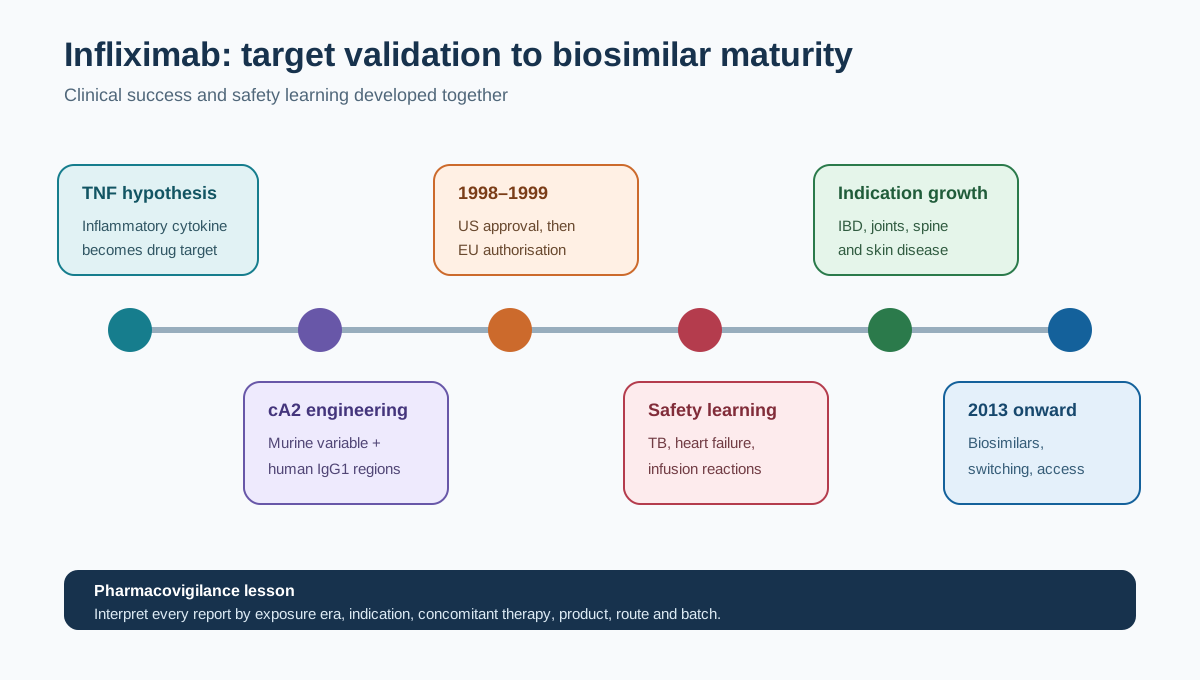
During the 1980s and early 1990s, experimental and human evidence placed tumour necrosis factor (TNF) near the centre of inflammatory cytokine networks. Blocking TNF reduced inflammation in experimental systems, while rheumatoid synovium and inflamed intestinal tissue provided clinically relevant evidence of dysregulated TNF activity.
The cA2 antibody
Infliximab originated as cA2, an antibody engineered by combining murine variable regions recognising human TNF with human IgG1 constant regions. This chimeric strategy retained antigen recognition while reducing the murine content of the antibody compared with a fully mouse monoclonal antibody. It did not eliminate immunogenicity.
Early clinical studies in rheumatoid arthritis and Crohn’s disease supplied decisive proof of concept. Responses could be rapid and clinically substantial, including improvement in fistulising Crohn’s disease. Experience also exposed the consequences of TNF blockade: tuberculosis and other serious infections, infusion reactions, antibody formation and the influence of concomitant immunosuppression.
Authorisation and expansion
The United States first approved Remicade in 1998. The European Union authorised it on 13 August 1999. Its uses expanded from Crohn’s disease and rheumatoid arthritis into ulcerative colitis, ankylosing spondylitis, psoriatic arthritis and plaque psoriasis, with selected paediatric inflammatory-bowel-disease indications.
Post-authorisation evidence changed practice and labelling. Reports of tuberculosis prompted stronger screening and monitoring. A heart-failure trial and postmarketing evidence led to restrictions concerning moderate or severe heart failure and high-dose use. Rare hepatosplenic T-cell lymphoma reports, particularly in young males with inflammatory bowel disease and thiopurine exposure, became a major combined-treatment safety concern.
Biosimilar transition
The EU authorised the first infliximab biosimilars in 2013, making infliximab a landmark test of biosimilar extrapolation, switching and multispecialty acceptance. Remsima and the duplicate Inflectra shared the same comparative development programme; Inflectra’s EU authorisation was withdrawn in 2026 for commercial reasons after it had ceased marketing, while Remsima remained authorised. Commercial withdrawal is not evidence of a safety or efficacy failure.
Historical importance
Infliximab established several recurring biological-product lessons: target validation can cross diseases; intravenous administration makes acute reactions visible; intermittent exposure can promote immunogenicity; concomitant immunosuppression can improve persistence while adding infection and malignancy risk; and mature molecule-level evidence must coexist with precise brand and batch traceability.
Multidimensional classification
| Axis | Classification | Why it matters |
|---|---|---|
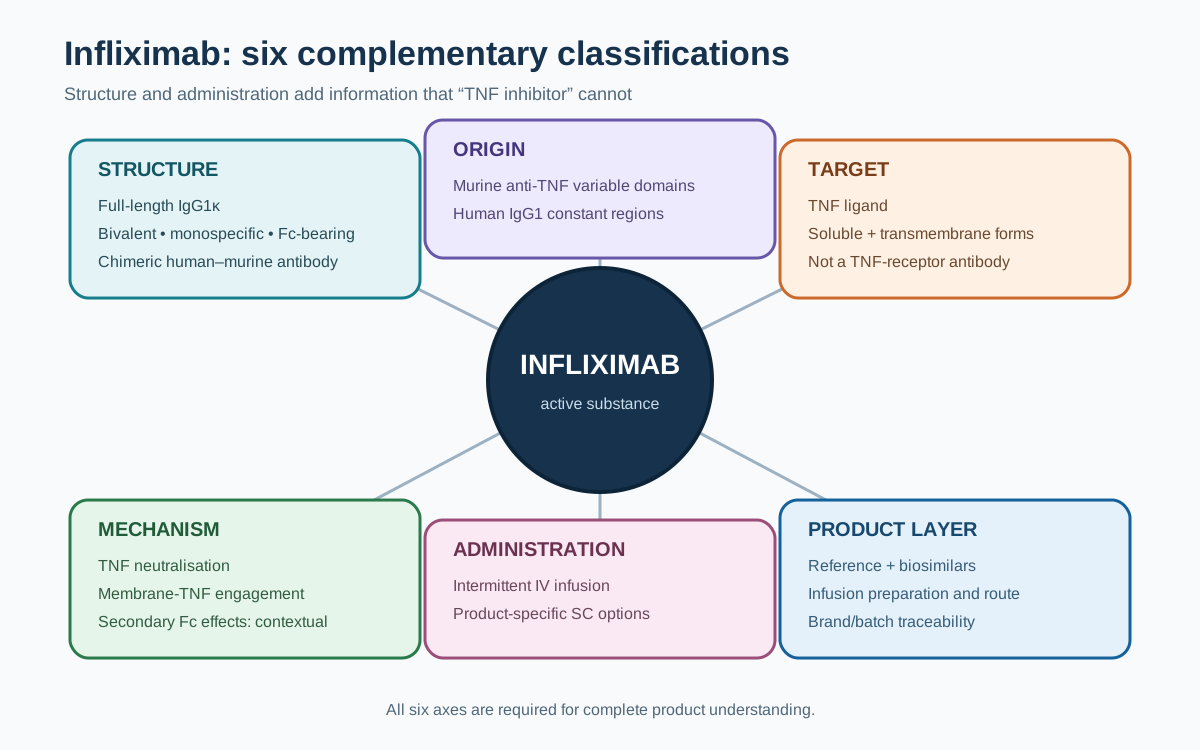
| Molecular format | Full-length monoclonal antibody | Large-molecule distribution and Fc-mediated persistence |
| Immunoglobulin class | Chimeric human–murine IgG1κ | Murine variable regions contribute to immunogenic potential |
| Valency/specificity | Bivalent, monospecific | Two arms recognise TNF |
| Target | Soluble and transmembrane TNF | Ligand neutralisation plus membrane-TNF biology |
| Primary mechanism | Blocks TNF interaction with TNFR1/p55 and TNFR2/p75 | Suppresses downstream inflammatory signalling |
| Secondary properties | Fc-bearing; complement- and cell-mediated effects demonstrable in relevant systems | Possible contribution varies with tissue and assay context |
| Therapeutic class | TNF inhibitor; immunosuppressant; ATC L04AB02 | Supports class-level safety surveillance |
| Administration | Traditionally intermittent intravenous infusion; product-specific SC options may exist | Creates peak exposure, infusion reactions and administration controls |
| Clinical deployment | Multispecialty chronic immunomodulation | Baseline risks and concomitant medicines differ by indication |
| Product status | Reference product and multiple biosimilars | Requires brand/batch attribution and nested signal analysis |
Structural classification
Infliximab contains murine-derived variable domains joined to human IgG1 constant regions. “Chimeric” describes this domain-level origin; it does not mean the marketed vial contains a mixture of mouse and human antibodies. The molecule is a conventional, bivalent, Fc-bearing antibody—not a fragment, receptor–Fc fusion, antibody–drug conjugate or multispecific antibody.
The Fc region contributes neonatal-Fc-receptor recycling and can interact with Fc gamma receptors and complement. These properties distinguish infliximab from Fc-free anti-TNF fragments. However, demonstrating complement-dependent cytotoxicity or antibody-dependent cellular cytotoxicity in vitro does not quantify its clinical contribution in a particular disease.
Target and mechanism classification
Infliximab is a ligand-neutralising anti-cytokine antibody. It binds TNF rather than TNFR1 or TNFR2 and does not directly inhibit intracellular kinases. It binds TNF with high affinity in soluble and cell-associated forms and inhibits TNF bioactivity.
It is not equivalent to every TNF inhibitor. Etanercept is a soluble receptor–Fc fusion protein; certolizumab pegol is an Fc-free pegylated Fab′ fragment; adalimumab and golimumab are fully human IgG antibodies. Shared target biology supports class surveillance, while structural and pharmacokinetic differences may affect particular outcomes.
Detailed mechanism of action
1. TNF production and receptor signalling
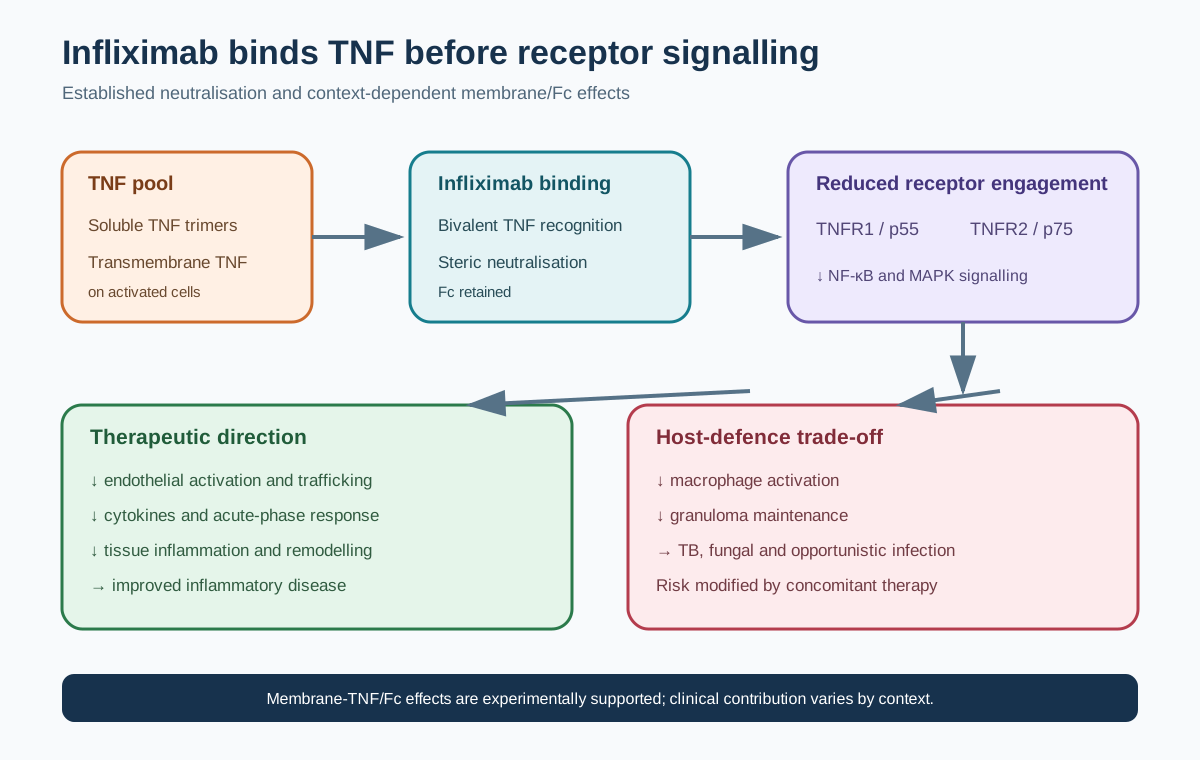
Activated macrophages, lymphocytes and stromal cells produce TNF as a transmembrane protein. Proteolytic cleavage releases soluble TNF. Bioactive TNF commonly forms trimers and engages TNFR1 and TNFR2, promoting receptor clustering and adaptor recruitment.
Downstream pathways include NF-κB and mitogen-activated protein kinases, with context-dependent survival or death signalling. Consequences include endothelial activation, adhesion-molecule expression, chemokine and cytokine production, leukocyte recruitment, acute-phase responses and tissue remodelling.
2. Neutralisation of soluble TNF
Infliximab binds soluble TNF and prevents productive receptor engagement. Reduced TNFR1/TNFR2 signalling interrupts inflammatory amplification. This can lower C-reactive protein, reduce leukocyte trafficking and improve tissue inflammation. It does not eliminate every inflammatory pathway; non-response may reflect TNF-independent disease, inadequate exposure, immunogenic clearance or irreversible damage.
3. Binding transmembrane TNF
Infliximab also binds TNF on cell membranes. This can prevent local receptor engagement and may trigger reverse signals into the TNF-expressing cell. Because infliximab has an intact IgG1 Fc, membrane-bound complexes can engage complement or Fc-receptor-bearing cells under appropriate conditions.
The evidence should be separated into levels: binding to membrane TNF is established; secondary effects are experimentally demonstrated; their magnitude as clinical efficacy drivers remains disease- and context-dependent.
4. Host-defence trade-off
TNF supports macrophage activation, granuloma organisation and containment of intracellular pathogens. Blocking it explains the established risks of tuberculosis, invasive fungal disease and other opportunistic infection. Screening reduces avoidable risk but cannot prevent new exposure, false-negative tests or infections unrelated to latent tuberculosis.
Pharmacokinetics, immunogenicity and infusion biology
Intermittent systemic exposure
Intravenous infusion provides complete systemic delivery and produces an early concentration peak followed by distribution and proteolytic clearance. The long IgG half-life supports induction doses followed by maintenance intervals measured in weeks. Dose and interval vary by indication, response and product information.
Body size, albumin, inflammatory burden, faecal protein loss, anti-drug antibodies and other factors influence exposure. Severe intestinal inflammation can increase clearance. Population relationships do not justify unstructured individual dose changes; clinical status, objective inflammation, concentrations and antibodies must be interpreted together.
Immunogenicity
Antibodies to infliximab can accelerate clearance, lower trough concentrations, reduce response and increase infusion-reaction risk. Incidence estimates vary markedly with assay drug tolerance, sampling, schedule, indication and concomitant therapy. A negative assay obtained in the presence of circulating drug may not exclude antibodies.
Immunogenicity is more likely with episodic treatment or long interruptions than with scheduled maintenance. Methotrexate or thiopurines can reduce antibody formation in relevant populations, but their addition creates independent infection, hepatic, marrow and malignancy risks. Combination therapy therefore changes the entire benefit–risk profile rather than merely “protecting” infliximab.
Acute infusion reactions
Reactions during or shortly after infusion range from flushing, headache, pruritus and urticaria to dyspnoea, hypotension, chest symptoms and anaphylaxis-like presentations. Mechanisms are heterogeneous: cytokine release, complement activation, immune complexes, non-IgE hypersensitivity, true IgE-mediated allergy and unrelated events can resemble one another.
Capture infusion number, time from start, rate, dose, premedication, prior interruptions, antibody status, vital signs, clinical phenotype, tryptase if obtained, treatment and outcome. “Infusion reaction” is a clinical umbrella, not a proven mechanism.
Delayed hypersensitivity
Serum-sickness-like reactions can occur days after exposure, particularly after reintroduction following a prolonged interval. Fever, rash, arthralgia, myalgia, facial or hand oedema and dysphagia may occur. Complement, inflammatory markers and anti-drug-antibody results can support assessment but are not uniformly available.
Therapeutic drug monitoring
Reactive drug and antibody testing can help distinguish inflammatory non-response with low exposure from mechanistic failure despite adequate exposure. Thresholds and algorithms depend on indication, assay and treatment objective. Pharmacovigilance reports should state the assay, sampling relative to infusion and numerical result rather than recording “low level” or “antibodies positive” without context.
Clinical use and administration
Reference-product EU indications include rheumatoid arthritis with methotrexate, adult and paediatric Crohn’s disease and ulcerative colitis, ankylosing spondylitis, psoriatic arthritis and plaque psoriasis. Eligibility, dose and concomitant treatment differ.
Intravenous treatment requires reconstitution, dilution, compatible materials, controlled infusion and observation. Premedication and infusion-rate modification may be used according to clinical history and local instructions. A preparation or administration deviation can be a medication error, quality complaint and adverse-event contributor simultaneously.
Product-specific subcutaneous infliximab formulations should be treated as distinct presentations. Route switching changes exposure pattern, device risks and adherence responsibilities even when the active substance is unchanged.
Biosimilars and switching
Infliximab biosimilar approval rests on a totality of analytical, functional, pharmacokinetic, clinical and immunogenicity evidence. Extrapolation across indications is scientifically justified when residual uncertainty about mechanism, target biology, disposition and safety is adequately addressed; it is not an assumption that diseases are identical.
Avsola (infliximab-axxq) is Amgen's US-licensed biosimilar to Remicade, approved in December 2019. It is a useful reminder that a corporate portfolio entry may be jurisdiction-specific: it should not be represented as an EU-authorised Amgen infliximab brand without an applicable EU authorisation. For case processing, “Amgen infliximab” is still insufficient; the reported brand, US suffix, batch, infusion site and presentation should be verified.
Switching studies and real-world experience support use of authorised biosimilars, but pharmacovigilance must preserve the actual brand and batch. A post-switch loss-of-effect report should capture disease activity before and after, dose/interval, adherence, concentration and antibody results, concomitant changes and switch reason. Temporal association does not prove molecular nonequivalence.
Safety profile
Serious and opportunistic infection
Serious infections—including tuberculosis, bacterial sepsis, invasive fungal infection and other opportunistic pathogens—are central identified risks. Current US labelling contains a boxed warning; EU information contraindicates active tuberculosis, other severe infection and moderate or severe heart failure.
Cases require organism, site, dissemination, onset relative to infusions, screening history, geography/travel, corticosteroids and other immunosuppressants, antimicrobial treatment, infliximab interruption and outcome. For tuberculosis, distinguish latent-treatment failure, reactivation and new infection where evidence permits.
Malignancy
Lymphoma and other malignancies have been reported with TNF blockers. Severe inflammatory disease and concomitant immunosuppression alter background risk, so case-level attribution is rarely simple. Obtain histology, stage, latency, cumulative exposure and all prior immunomodulators.
Hepatosplenic T-cell lymphoma reports have largely involved adolescents or young adults with Crohn’s disease or ulcerative colitis, especially males, and almost all reported US cases had current or prior azathioprine or 6-mercaptopurine exposure. This is a critical combined-treatment context, not evidence that one component alone explains every case.
Heart failure
A clinical study in moderate-to-severe heart failure found worse outcomes at high-dose infliximab, and postmarketing cases of new or worsening heart failure occurred. Assess baseline NYHA class, ejection fraction, dose, fluid status, ischaemia, infection and response to withdrawal or cardiac therapy. Dyspnoea during infusion may reflect hypersensitivity, volume, ischaemia or heart failure and should not be coded mechanistically without evidence.
Hepatic and haematological events
Severe hepatic reactions, including jaundice, hepatitis and rare liver failure, have been reported. TNF blockade can also reactivate hepatitis B. Collect serial liver tests, viral markers/DNA, imaging, histology, alcohol/metabolic risks and concomitant hepatotoxins.
Cytopenias require serial counts, marrow findings, infection and concomitant myelotoxic treatment. Fever plus cytopenia can represent infection, marrow toxicity, macrophage activation or malignancy.
Neurological and autoimmune events
New or worsening demyelinating disease has been reported. Obtain phenotype, MRI, cerebrospinal fluid, electrophysiology and alternative causes. Antinuclear and double-stranded-DNA antibodies may develop; a lupus-like syndrome requires compatible clinical findings, not serology alone.
Paradoxical psoriasis and other inflammatory reactions can occur. Proposed cytokine-network mechanisms do not make every rash paradoxical inflammation; morphology, biopsy, infection and alternative medicines matter.
Pregnancy and infants
As an IgG1 antibody, infliximab crosses the placenta increasingly later in pregnancy. Maternal disease control, trimester-specific exposure, last infusion and infant outcomes should be recorded. Current local product information governs vaccination of exposed infants; recommendations must not be inferred from half-life alone.
Causality assessment
Ask whether exposure and product are confirmed, latency is compatible, the event is a TNF-class or infliximab-specific risk, objective evidence supports diagnosis, concomitant immunosuppression or disease offers a stronger explanation, and the pattern suggests molecular toxicity, immunogenicity, infusion practice, batch quality or device failure.
Rechallenge is often unethical after serious infection, anaphylaxis, demyelination or severe hepatic injury. Its absence is not evidence against causality.
Pharmacovigilance framework
| Domain | High-value information |
|---|---|
| Product | Brand, manufacturer, route/presentation, batch, expiry |
| Exposure | Indication, mg/kg, dates, induction/maintenance, interruption and previous biologics |
| Infusion | Reconstitution, diluent, rate, premedication, start/stop times and observation |
| Immunogenicity | Trough timing, concentration, antibody assay/result and concomitant immunomodulator |
| Infection | Screening, organism/site, geography, microbiology, dissemination and therapy |
| Concomitants | Corticosteroids, methotrexate, thiopurines and other immunosuppressants |
| Outcome | Seriousness, intervention, withdrawal, recurrence and sequelae |
| Switching | Previous/current brand, date, reason, objective disease activity and route/device change |
Signal analysis
Analyse evidence at class, active-substance, product, presentation and batch levels. Class pooling strengthens detection of mechanism-based infection signals; product-level review can identify immunogenicity, quality or administration clusters. Spontaneous counts cannot compare products without exposure denominators and consideration of stimulated reporting.
Registries, claims, electronic records and active-comparator studies help quantify risks but require control of indication, disease severity, prior biologics, corticosteroids and immortal-time or channeling biases. Infusion-centre data can illuminate reactions and preparation deviations that routine coding misses.
Risk minimisation
Risk controls include infection and tuberculosis assessment, hepatitis B evaluation, patient reminder cards where required, vaccination review, infusion monitoring and education about delayed reactions. Effectiveness should be measured through screening completion, patient knowledge, time to recognition and preventable-event patterns—not distribution counts alone.
Practical scenarios
For an acute infusion reaction, reconstruct rate and chronology, phenotype, vital signs, treatment, prior gaps and antibodies. For post-switch loss of response, obtain objective activity, exposure, antibodies and implementation changes. For disseminated infection, capture geography, screening, concomitant immunosuppression and diagnostic delay. For lymphoma, obtain exact subtype and thiopurine history.
Key conclusions
- Infliximab is a chimeric human–murine, bivalent, monospecific IgG1 antibody against soluble and transmembrane TNF.
- TNF neutralisation is primary; membrane-TNF, reverse-signalling and Fc effects are relevant but clinically context-dependent.
- Intravenous intermittent exposure makes infusion reactions and immunogenicity central product characteristics.
- Serious infection, tuberculosis, malignancy context, heart failure, hepatic injury, demyelination and autoimmune phenomena require structured surveillance.
- Concomitant immunosuppression can reduce antibodies while adding independent safety risks.
- Biosimilar assessment and switching require molecule-level integration plus brand/batch traceability.
References
- European Medicines Agency. Remicade: EPAR, product information and assessment history. https://www.ema.europa.eu/en/medicines/human/EPAR/remicade
- US Food and Drug Administration. Remicade (infliximab) prescribing information. Initial US approval 1998. https://www.accessdata.fda.gov/drugsatfda_docs/label/2025/103772s5412lbl.pdf
- European Medicines Agency. Remsima: EPAR. https://www.ema.europa.eu/en/medicines/human/EPAR/remsima
- European Medicines Agency. Inflectra: EPAR and withdrawal information. https://www.ema.europa.eu/en/medicines/human/EPAR/inflectra
- Knight DM, Trinh H, Le J, et al. Construction and initial characterization of a mouse-human chimeric anti-TNF antibody. Molecular Immunology. 1993;30:1443–1453.
- Tracey D, Klareskog L, Sasso EH, Salfeld JG, Tak PP. Tumor necrosis factor antagonist mechanisms of action. Pharmacology & Therapeutics. 2008;117:244–279. doi:10.1016/j.pharmthera.2007.10.001.
- European Medicines Agency. Guideline on similar biological medicinal products. https://www.ema.europa.eu/en/similar-biological-medicinal-products-scientific-guideline
- European Medicines Agency. GVP Product- or Population-Specific Considerations II: Biological medicinal products. https://www.ema.europa.eu/en/human-regulatory-overview/post-authorisation/pharmacovigilance-post-authorisation/good-pharmacovigilance-practices
-
International Council for Harmonisation. ICH E2D(R1): Post-Approval Safety Data. https://www.ich.org/page/efficacy-guidelines
-
U.S. Food and Drug Administration. Avsola (infliximab-axxq), BLA 761086: approval package. Approved 6 December 2019. https://www.accessdata.fda.gov/drugsatfda_docs/nda/2019/761086Orig1s000Approv.pdf. Accessed 4 September 2026.
- U.S. Food and Drug Administration. Purple Book: Avsola (infliximab-axxq), BLA 761086. https://purplebooksearch.fda.gov/index.cfm?blaNo=761086&event=productdetails. Accessed 4 September 2026.
Regulatory Note
This educational article does not replace current product information, clinical guidance, infusion protocols or regulatory requirements. Indications, doses, routes, observation periods, contraindications, vaccination advice, biosimilar status, interchangeability and risk-minimisation measures differ by product and jurisdiction and may change. Verify product-specific decisions against current authoritative sources.