Inotuzumab Ozogamicin: Classification, Mechanism, ALL Use and Pharmacovigilance
Inotuzumab ozogamicin is an antibody-drug conjugate (ADC) that couples a humanised anti-CD22 monoclonal antibody to a cytotoxic calicheamicin derivative. The antibody provides cellular targeting; internalisation delivers the payload; intracellular release of the calicheamicin derivative produces DNA damage and cell death.
The molecule therefore has three pharmacological layers that matter to safety: the distribution of CD22, the behaviour of the linker and conjugate, and the toxicity of the cytotoxic payload. In pharmacovigilance, an event cannot always be understood from the antibody target alone. Hepatic sinusoidal injury, prolonged cytopenias and infection reflect the integrated ADC rather than a simple CD22-blocking effect.
- Inotuzumab Ozogamicin: Classification, Mechanism, ALL Use and Pharmacovigilance
- Classification and Molecular Architecture
- Clinical and Regulatory Context
- Why Transplantation Changes the Safety Model
- Safety Profile Through the ADC and Treatment Sequence
- Practical Pharmacovigilance Assessment
- Signal Detection and Aggregate Review
- Risk Controls and Practical Implementation
- Illustrative Failure Modes
- Inspection and Governance Considerations
- Practical Checklist
- Key Takeaways
- References
- Regulatory Note
Classification and Molecular Architecture
Inotuzumab ozogamicin is a CD22-directed ADC used in B-cell precursor acute lymphoblastic leukaemia (ALL). CD22 is a B-lineage transmembrane glycoprotein that undergoes internalisation after antibody binding, making it suitable for targeted intracellular payload delivery.
Antibody component
The antibody recognises CD22 on malignant B-lineage cells. Unlike an unconjugated depleting antibody, its principal therapeutic purpose is to act as a delivery vehicle for the attached cytotoxic agent.
Calicheamicin payload
Calicheamicins are highly potent DNA-damaging compounds. After internalisation and intracellular processing, the released payload induces DNA strand breaks and apoptosis. This potency allows targeted delivery at low systemic quantities, but it also creates clinically important off-target and organ-specific toxicities.
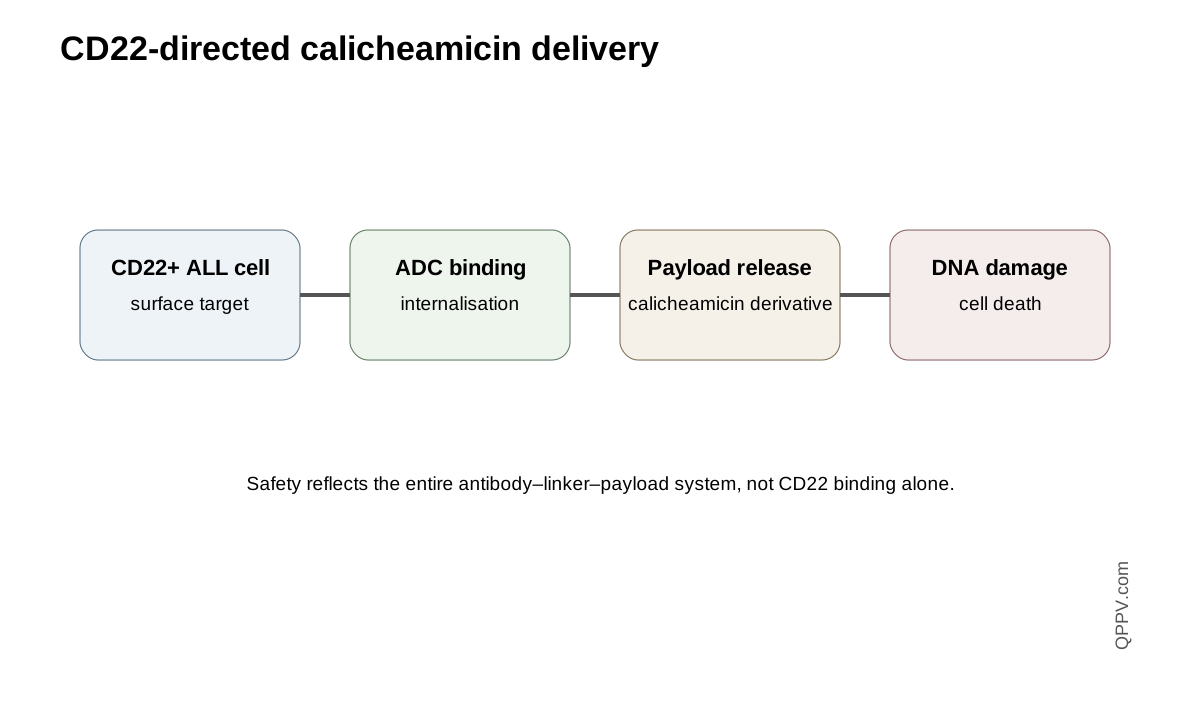
Figure 1. Inotuzumab ozogamicin binds CD22, is internalised, releases a calicheamicin derivative intracellularly and causes DNA damage. Its safety profile reflects the complete antibody–linker–payload system.
Clinical and Regulatory Context
In the European Union, inotuzumab ozogamicin is authorised as monotherapy for adults with relapsed or refractory CD22-positive B-cell precursor ALL, with additional conditions for Philadelphia chromosome-positive disease. The treatment is often used in a clinical pathway in which achieving remission may enable allogeneic haematopoietic stem-cell transplantation (HSCT).
This sequencing is crucial to PV. The medicine may be stopped before transplantation, yet a serious hepatic event after HSCT can still be related to prior exposure because the relevant biological injury may persist beyond the final ADC dose.
Why Transplantation Changes the Safety Model
A conventional adverse-event timeline often privileges proximity to the last dose. That approach is insufficient here. Hepatic sinusoidal obstruction syndrome, historically also termed veno-occlusive disease (VOD), can occur during therapy or after subsequent HSCT. Risk is influenced by prior liver disease, cumulative exposure, conditioning regimen and other hepatotoxic treatment.
The correct unit of analysis is therefore not just drug → event. It is ADC exposure → liver vulnerability → transplant conditioning → post-transplant hepatic outcome.
Safety Profile Through the ADC and Treatment Sequence
Hepatotoxicity and sinusoidal obstruction syndrome
The defining serious risk is hepatic toxicity, including sinusoidal obstruction syndrome/veno-occlusive disease (SOS/VOD). Clinical features may include bilirubin elevation, hepatomegaly, right-upper-quadrant pain, rapid weight gain, ascites and fluid retention. The syndrome is clinically important during treatment and after HSCT.
A useful safety report should capture baseline liver disease, liver-function tests before and during treatment, cumulative exposure, prior HSCT, subsequent transplant timing, conditioning regimen, other hepatotoxic medicines, onset features, diagnostic work-up, treatment and outcome. Merely recording “hepatotoxicity” loses the most important mechanistic information.
Cytopenias and infection
ALL itself, prior therapy and the ADC can all contribute to neutropenia, thrombocytopenia and anaemia. These abnormalities can lead to serious infection or bleeding. Causality therefore depends on baseline marrow status, disease response, treatment cycle, nadir and recovery rather than a single count.
Infusion-related reactions
Infusion reactions may occur during or shortly after administration. Reports should record timing within the infusion, clinical manifestations, premedication, interruption or discontinuation, treatment and whether re-exposure was tolerated.
Tumour lysis syndrome
Rapid treatment response can produce tumour lysis syndrome in patients with substantial disease burden. Baseline tumour burden, uric acid, renal function, prophylaxis and biochemical abnormalities are important follow-up data.
QT interval and cardiac context
Current product information includes cardiac electrophysiological precautions. A report involving QT prolongation should capture baseline QT, electrolytes, concomitant QT-prolonging medicines, cardiac disease and temporal relationship to treatment.
Practical Pharmacovigilance Assessment
For serious hepatic events, a structured sequence is particularly useful:
| Stage | Questions |
|---|---|
| Before ADC | Liver disease? prior HSCT? baseline bilirubin/transaminases? |
| During ADC | Cumulative cycles? liver-test trend? concomitant hepatotoxins? |
| Before HSCT | Time from last dose? conditioning plan? baseline liver status? |
| After HSCT | Weight gain? ascites? bilirubin rise? diagnostic criteria? outcome? |
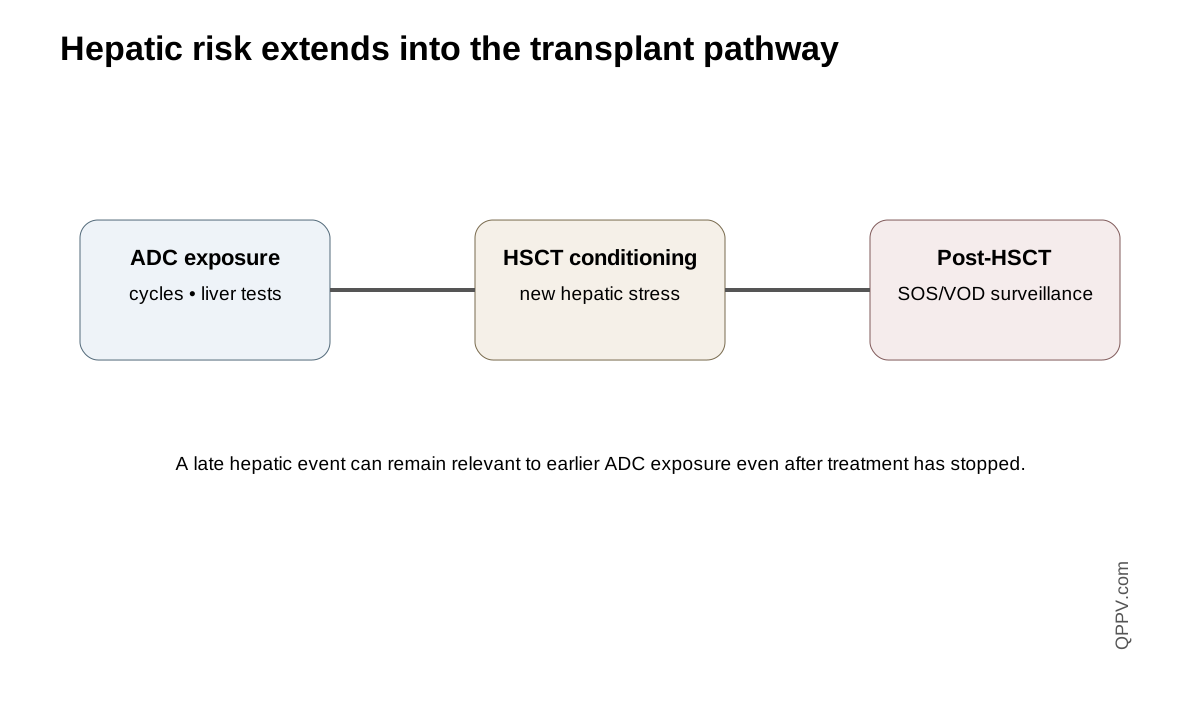
Figure 2. Hepatic risk can extend beyond the final inotuzumab ozogamicin dose into subsequent transplantation. PV assessment must preserve the complete exposure–conditioning–post-transplant sequence.
Signal Detection and Aggregate Review
SOS/VOD should be reviewed as a medically coherent syndrome rather than split across ascites, hyperbilirubinaemia, hepatic failure and weight gain. Aggregate analyses are stronger when stratified by subsequent HSCT, number of treatment cycles, prior transplantation and baseline hepatic risk.
Cytopenia, infection and bleeding should likewise be linked. A fatal infection in profound neutropenia conveys more benefit-risk information than separate aggregate counts of “neutropenia” and “infection” that cannot be connected at patient level.
Risk Controls and Practical Implementation
Current regional product information includes dose modification, liver-function monitoring and transplant-related precautions. These are formal risk-management instructions rather than optional operational preferences. PV systems should ensure that serious hepatic cases are followed through transplantation when the patient proceeds to HSCT.
Recommended operational practice is to flag inotuzumab ozogamicin exposure in transplant handover records so that the prior ADC remains visible even after the oncology treatment episode has ended.
Illustrative Failure Modes
The following are hypothetical examples.
Post-transplant VOD assessed only against conditioning chemotherapy. The case file contains the transplant regimen but omits prior inotuzumab ozogamicin cycles. This breaks the clinically relevant causal sequence.
Hepatic syndrome fragmented into unrelated terms. Ascites, bilirubin increase and weight gain are processed as separate events without recognition of possible SOS/VOD. Aggregate signal review consequently underestimates the syndrome.
Thrombocytopenia reported without bleeding outcome. Severe thrombocytopenia is captured, but clinically important gastrointestinal bleeding and transfusion are absent from follow-up.
Inspection and Governance Considerations
Inspection-relevant evidence includes whether case processing captures cumulative ADC exposure, transplant timing, conditioning regimen and liver-risk factors; whether serious hepatic events are medically reviewed for SOS/VOD; and whether periodic reports integrate marrow toxicity, infection, bleeding and transplantation outcomes.
A mature PV system should also be able to explain how late events after HSCT remain linked to earlier exposure where medically appropriate.
Practical Checklist
- Confirm CD22-positive B-cell precursor ALL and treatment setting.
- Capture every treatment cycle and cumulative exposure.
- Record baseline and serial liver-function tests.
- For suspected SOS/VOD, obtain bilirubin trend, weight gain, ascites, hepatomegaly and diagnostic assessment.
- Capture prior and subsequent HSCT, conditioning regimen and timing.
- Link cytopenias to infections, bleeding and transfusion support.
- Document infusion reactions with timing and re-exposure.
- Assess tumour lysis against disease burden and prophylaxis.
- Keep late post-transplant hepatic events linked to prior ADC exposure when clinically relevant.
Key Takeaways
Inotuzumab ozogamicin is not simply an anti-CD22 antibody. It is a targeted cytotoxic delivery system whose pharmacovigilance is dominated by the interaction between ADC exposure, marrow toxicity, hepatic sinusoidal vulnerability and subsequent transplantation.
The most consequential analytical mistake is to end the safety timeline at the final dose. For patients proceeding to HSCT, the clinically relevant exposure window extends into the transplant episode.
References
- European Medicines Agency. Besponsa (inotuzumab ozogamicin): EPAR and product information. Product information updated 18 May 2026. https://www.ema.europa.eu/en/medicines/human/EPAR/besponsa
- U.S. Food and Drug Administration. Inotuzumab ozogamicin prescribing information and postmarketing requirements. https://www.accessdata.fda.gov/drugsatfda_docs/appletter/2024/761040Orig1s003ltr.pdf
- Kantarjian HM, et al. Inotuzumab ozogamicin versus standard therapy for acute lymphoblastic leukemia. New England Journal of Medicine. 2016.
- Contemporary transplant and hepatology literature on sinusoidal obstruction syndrome after antibody-drug conjugate exposure, interpreted with current regional product information.
Regulatory Note
Transplant-related precautions, dose limits and approved populations may differ by jurisdiction and can change. Current regional product information should govern clinical decisions and formal regulatory assessment.