Insulin Glargine: History, Classification, Mechanism of Action, Safety and Pharmacovigilance
Scope
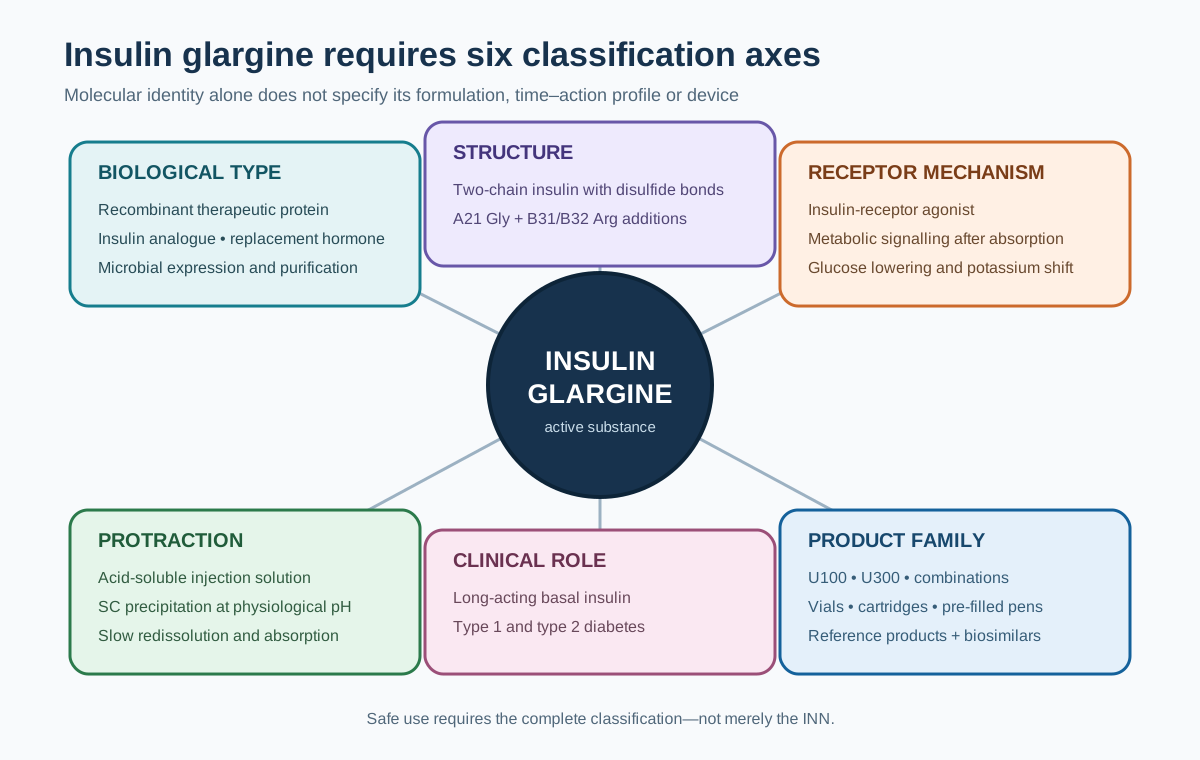
Insulin glargine is simultaneously a recombinant protein, an engineered insulin analogue, a replacement hormone, an insulin-receptor agonist, a long-acting basal insulin and the active substance in several concentrations, devices, reference products, biosimilars and fixed-ratio combinations. Each description is valid, but each answers a different question.
This article concerns insulin glargine as an active substance. Lantus is used when discussing the original European reference product and its development history. Other insulin-glargine products can differ in concentration, presentation, device, excipients, approved ages, dosing instructions, biosimilar status and jurisdictional interchangeability. The current local product information remains decisive.
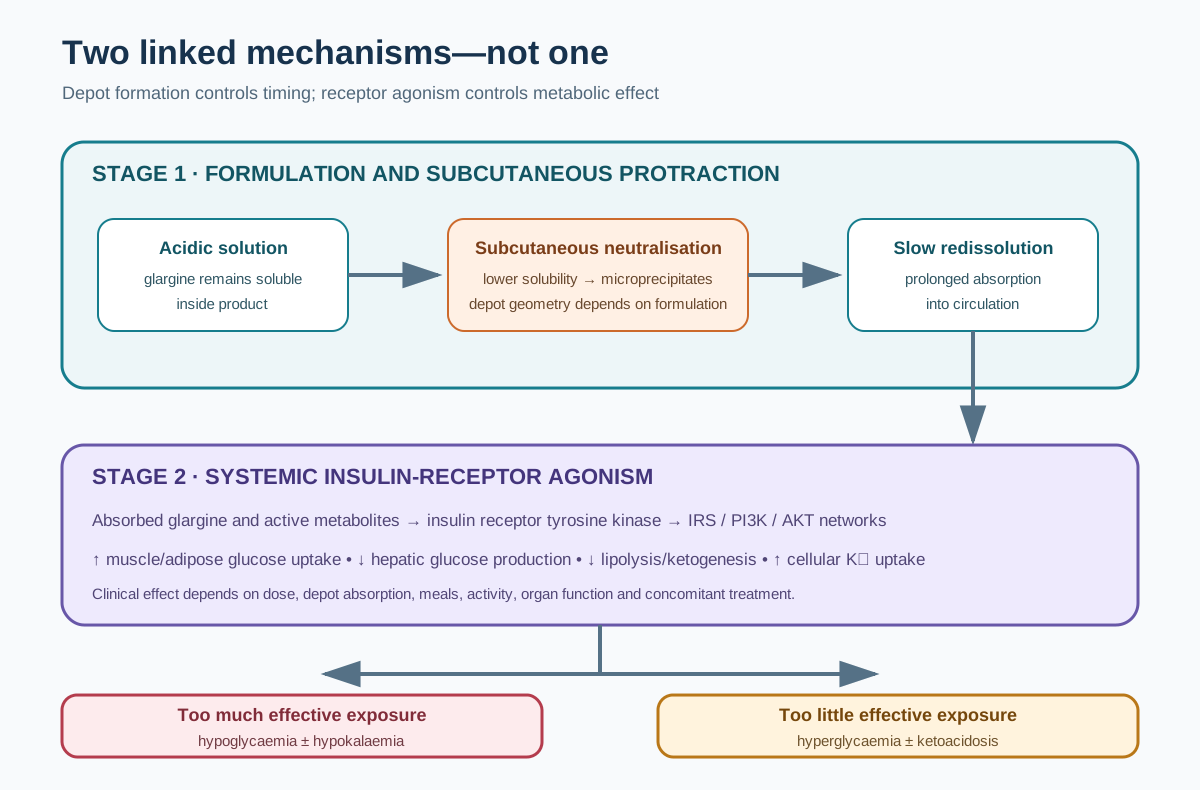
Three mechanisms must be kept separate:
- molecular engineering changes glargine’s solubility;
- formulation and subcutaneous precipitation prolong absorption; and
- insulin-receptor agonism produces metabolic effects after absorbed insulin glargine and its metabolites reach the circulation.
Conflating these layers leads to common errors—for example, claiming that receptor binding itself explains the 24-hour profile, or assuming that all concentrations of the same active substance have identical pharmacokinetics.
History: from pancreatic extract to engineered basal insulin
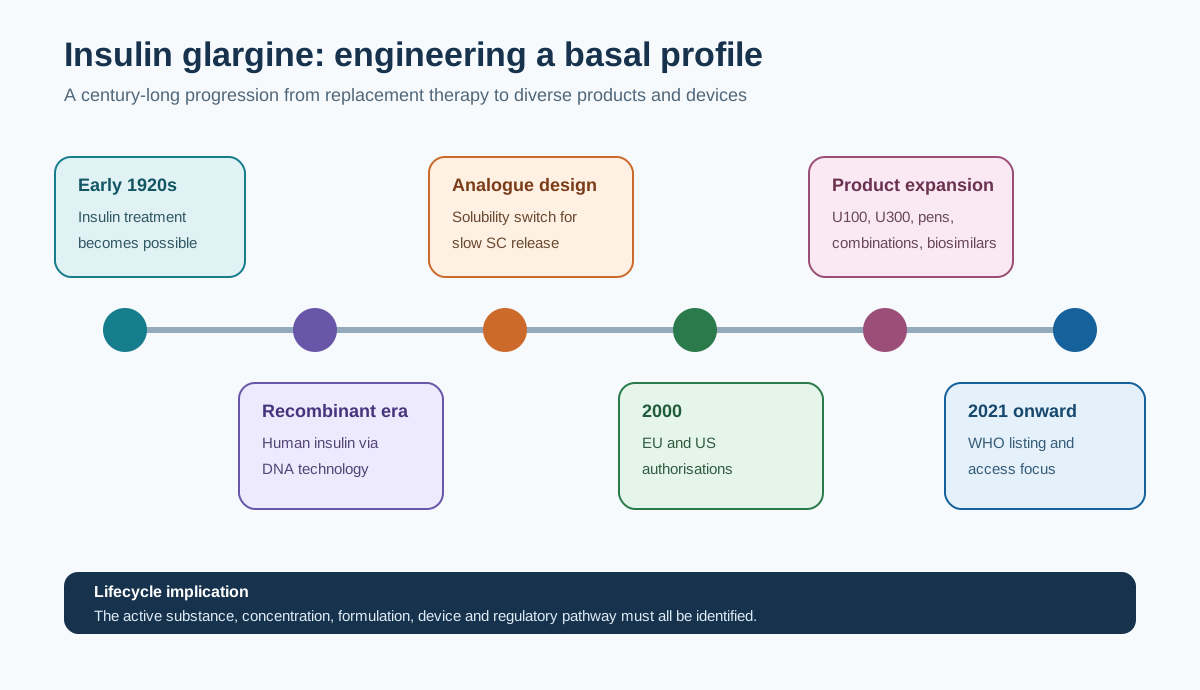
Insulin replacement becomes possible
The therapeutic discovery of insulin in the early 1920s changed type 1 diabetes from a rapidly fatal disease into a treatable chronic condition. Early animal-derived preparations were lifesaving but variable in purity and duration. Subsequent purification, crystallisation and formulation advances produced shorter- and longer-acting preparations, including protamine-containing basal insulins.
Recombinant DNA technology later enabled production of human insulin without dependence on animal pancreas. Human insulin was followed by analogues in which selected amino acids were changed to alter absorption, self-association or duration while preserving activation of the insulin receptor.
The basal-insulin design problem
Normal pancreatic secretion includes both meal-related pulses and a lower continuous background component. Conventional intermediate-acting insulin can provide basal coverage, but its absorption peak and variability may contribute to nocturnal or between-meal hypoglycaemia. Developers therefore sought a soluble injectable insulin that would form a slowly dissolving depot after subcutaneous administration.
Insulin glargine was designed around a solubility switch. Human insulin’s asparagine at A21 was replaced by glycine, and two arginine residues were added to the B-chain terminus at B31 and B32. These changes shifted the isoelectric behaviour of the molecule. The final acidic formulation remains soluble in the cartridge or vial but becomes much less soluble after neutralisation in subcutaneous tissue.
Authorisation and clinical adoption
The European Union authorised Lantus on 9 June 2000. The United States also approved insulin glargine in 2000. It became a widely used once-daily basal-insulin option in type 1 and type 2 diabetes, generally paired with mealtime insulin in type 1 diabetes and used alone or with other glucose-lowering treatments in type 2 diabetes.
Lifecycle development subsequently included paediatric use, new pens and cartridges, a 300-units/mL product family, fixed-ratio combinations with glucagon-like peptide-1 receptor agonists, and multiple follow-on or biosimilar insulin-glargine products. These additions increased choice but also created new opportunities for strength, product-selection and device errors.
Biosimilars and global access
The EU authorised Abasaglar, a biosimilar of Lantus, in 2014; further insulin-glargine biosimilars followed. Regulatory classification is jurisdiction-specific: the same product may be described using different legal pathways or terminology in different markets.
In 2021, the World Health Organization added long-acting insulin analogues—including insulin glargine, insulin detemir and insulin degludec and quality-assured biosimilars—to its Model Lists of Essential Medicines for defined use. The 2025 WHO list continues to include long-acting insulin analogues and quality-assured biosimilars. The policy rationale combines clinical need with the continuing problem of affordable, reliable access to insulin.
Why insulin glargine is a distinctive pharmacovigilance product
For many medicines, an overdose begins with an unusual prescribed dose. With insulin, a routine dose administered to the wrong patient, at the wrong time, in the wrong amount, by the wrong device or without adequate food can be life-threatening. Product complaints, use errors and clinical adverse events therefore overlap.
Furthermore, glucose concentration at the time of assessment may not capture the preceding nadir, and treatment can obscure diagnostic evidence. A high-quality report reconstructs the temporal sequence of dose, food, activity, glucose measurements, symptoms, rescue treatment and recurrence.
Multidimensional classification
| Classification axis | Insulin glargine classification | Pharmacological or safety relevance |
|---|---|---|
| Biological type | Recombinant therapeutic protein | Manufacturing consistency, immunogenicity and cold-chain handling matter |
| Hormonal role | Insulin analogue used for hormone replacement | Effects are an extension of endogenous insulin physiology |
| Structural class | Two-chain insulin analogue with three sequence modifications relative to human insulin | The substitutions change solubility and formulation behaviour |
| Molecular modifications | A21 Asn→Gly; addition of Arg at B31 and B32 | Shifts isoelectric properties and supports precipitation after injection |
| Production | Recombinant DNA-derived, commonly expressed using a microbial production system | Product quality depends on expression, purification, folding and process controls |
| Receptor pharmacology | Insulin-receptor agonist | Drives glucose lowering, anabolism and potassium shift |
| Temporal class | Long-acting basal insulin analogue | Intended to provide background rather than prandial insulin coverage |
| Biopharmaceutical mechanism | Acid-soluble formulation forming a subcutaneous microprecipitate depot at physiological pH | Prolonged absorption is primarily a formulation/depot phenomenon |
| Administration | Subcutaneous injection; product-specific vial, cartridge or pre-filled pen | Technique and device selection directly affect dose delivery |
| Concentration | Product families include U100 and U300; other market-specific presentations may exist | Same units/mL cannot be assumed; pharmacokinetics can differ by formulation |
| Regulatory status | Original/reference products, biosimilars or follow-on products, depending on jurisdiction | Controls comparative dossier, substitution and traceability rules |
| Combination status | Single-ingredient products and fixed-ratio combinations with another glucose-lowering active substance | Combination devices require different dose-expression and error analysis |
Structural classification
Like human insulin, insulin glargine consists of an A chain and a B chain linked by disulfide bonds. It is not a monoclonal antibody, fusion protein, peptide conjugate or depot microsphere. The molecule itself is an insulin analogue; the prolonged delivery arises after the formulated protein is injected.
The three sequence changes are purposeful:
- replacement of A21 asparagine by glycine improves stability in the acidic formulation context;
- addition of arginine at B31 and B32 shifts the isoelectric point toward neutrality; and
- the altered solubility enables precipitation when the acidic solution encounters physiological pH.
“Modified insulin” does not mean a permanently slow receptor agonist. Once soluble molecules or active metabolites are available systemically, they signal through insulin receptors. The engineered sequence principally controls how the dose becomes available.
Classification by mechanism of protraction
Long-acting insulins reach prolonged profiles by different engineering strategies. Insulin glargine is classified as a precipitation-based basal analogue. This distinguishes it from:
- protamine suspensions, where dissolution of insulin–protamine crystals prolongs action;
- fatty-acid-acylated analogues, where albumin binding and self-association contribute to protraction; and
- multihexamer-forming analogues designed for very prolonged subcutaneous release.
The distinction matters because preparation, mixing, resuspension, concentration and switching instructions cannot safely be inferred from the generic phrase “long-acting insulin.”
Therapeutic classification
Insulin glargine is a basal insulin. Basal insulin restrains hepatic glucose production and lipolysis between meals and overnight. It is not designed to replace the rapid rise in insulin required for most meals. In type 1 diabetes, omitting prandial insulin because basal insulin is present can produce marked postprandial hyperglycaemia; omitting basal insulin can contribute to insulin deficiency and ketoacidosis.
An insulin may be pharmacologically long acting but clinically inadequate for a particular person over the entire dosing interval. Duration varies with dose, injection site, tissue characteristics and patient factors. “Peakless” is a comparative description, not proof of a perfectly flat concentration or effect in every patient.
Product and regulatory classification
The active-substance name does not specify the complete medicine. A safety record should distinguish:
- U100 insulin glargine reference products;
- U100 biosimilar or follow-on products;
- U300 insulin glargine products;
- cartridges intended for compatible reusable pens;
- pre-filled disposable pens;
- vials and syringes where authorised; and
- fixed-ratio combination pens containing insulin glargine plus another active substance.
U100 and U300 insulin glargine contain the same active substance but are not merely packaging variants. Their depot geometry and exposure profiles differ, and product information may state that they are not bioequivalent or directly interchangeable. Conversion and titration instructions must be followed rather than derived from concentration alone.
Similarly, a biosimilar comparison relates a specified product to a specified reference medicine. It does not establish that every insulin-glargine device, strength or combination product is equivalent to every other one.
Detailed mechanism of action
Stage 1: molecular design changes solubility
At the acidic pH of the injection solution, insulin glargine remains soluble. After subcutaneous injection, tissue fluid moves the environment toward physiological pH. The molecule approaches its isoelectric region, its aqueous solubility falls and microprecipitates form.
This is a physicochemical transition. It occurs before the principal systemic receptor-mediated effect and is essential to the intended time–action profile of U100 formulations.
Stage 2: the subcutaneous depot controls input
Small amounts of soluble insulin glargine are released from the microprecipitate depot over time. The slow rate of redissolution and absorption spreads systemic delivery across many hours and reduces the pronounced peak seen with some intermediate-acting preparations.
The depot is sensitive to the conditions in which it forms. This helps explain several instructions:
- intravenous administration bypasses the depot and can cause severe hypoglycaemia;
- mixing or dilution can change pH, precipitation and pharmacokinetic behaviour;
- intramuscular injection can accelerate absorption because muscle perfusion differs from subcutaneous tissue; and
- concentration and injected volume can change depot surface area and absorption characteristics.
U100 and U300: same active substance, different depot behaviour
A U300 formulation delivers the assigned units in one third of the U100 injection volume. The more compact subcutaneous depot has a lower surface area relative to the amount deposited, slowing redissolution and producing a longer, flatter exposure profile. Because bioavailability and dose–response relationships differ, a numerically identical unit dose does not guarantee an identical glucose-lowering profile during a switch.
This does not mean that an international unit has changed its definition. It means that the fraction and timing of the administered dose reaching the systemic circulation differ because of formulation and depot behaviour. Product-specific conversion, monitoring and titration are therefore required.
Stage 3: circulating molecules activate insulin receptors
After absorption, insulin glargine is metabolised at the carboxyl terminus of the B chain. Circulating exposure includes active metabolites, particularly M1, and the balance depends on dose and sampling. Insulin glargine and its active metabolites bind the human insulin receptor and reproduce the principal metabolic actions of insulin.
The insulin receptor is a transmembrane receptor tyrosine kinase. Ligand binding produces conformational change and receptor autophosphorylation. Insulin-receptor substrates and downstream pathways—including phosphoinositide 3-kinase, AKT and other signalling networks—then coordinate metabolic and growth-related responses.
Glucose-lowering effects
Insulin lowers blood glucose through complementary actions:
- increased glucose uptake in skeletal muscle and adipose tissue, partly through GLUT4 translocation;
- suppression of hepatic glucose production through reduced gluconeogenesis and glycogenolysis;
- promotion of glycogen synthesis;
- inhibition of lipolysis and ketogenesis; and
- modulation of protein synthesis and proteolysis.
The most immediate pharmacovigilance consequence is that excessive insulin action relative to available glucose produces hypoglycaemia. “Excessive” is relational: the prescribed dose may be correct on an ordinary day but excessive after missed food, unplanned exercise, renal deterioration or an interacting medicine.
Potassium shift
Insulin stimulates cellular potassium uptake, including through effects on sodium–potassium ATPase. Therapeutically, insulin is used with glucose in hyperkalaemia management. During routine diabetes treatment, excessive effect or susceptibility can contribute to hypokalaemia. Severe hypokalaemia may cause weakness, arrhythmia or respiratory compromise.
Mitogenic signalling and historical cancer concern
Insulin and insulin-like growth factor pathways overlap. In-vitro receptor-affinity and mitogenicity experiments therefore formed part of the non-clinical evaluation of insulin analogues. Observational reports later raised concern about possible cancer associations with insulin glargine, but such studies were vulnerable to confounding, exposure misclassification, short follow-up and multiple comparisons. Subsequent evidence, including randomised clinical data and regulatory review, did not establish a general causal increase in cancer risk attributable to insulin glargine.
This history is instructive: biological plausibility can justify investigation, but it does not substitute for internally valid clinical evidence. Malignancy surveillance remains appropriate for any widely used chronic medicine, while communication should avoid presenting an unresolved historical signal as an established adverse reaction.
Pharmacokinetics and pharmacodynamics
A time–action profile, not a fixed clock
Insulin-glargine product information describes a prolonged effect suitable for once-daily basal administration in many patients. The actual glucose-lowering profile varies within and between individuals. Dose, injection site, local blood flow, lipohypertrophy, cutaneous amyloid deposits, physical activity, renal and hepatic function, counter-regulatory responses and concomitant medicines can alter the observed response.
Plasma insulin concentrations are difficult to interpret when endogenous insulin or other insulin products are present, and immunoassays may cross-react differently with glargine, metabolites and human insulin. Pharmacodynamic clamp studies are therefore central to comparative development, but their controlled results do not eliminate real-world variability.
Metabolism and elimination
Insulin glargine undergoes proteolytic metabolism, including conversion to active metabolites. Insulin is cleared substantially by liver and kidney; declining renal or hepatic function can reduce requirements, although illness, stress hormones and nutrition may move requirements in the opposite direction. Dose adjustment is clinical and individual, guided by glucose monitoring rather than a universal organ-impairment formula.
Injection-site tissue changes
Repeated injection at the same location can produce lipohypertrophy. Repeated injections into lipohypertrophic tissue may cause delayed and variable absorption. Abruptly moving injections from affected to normal tissue can increase absorption and precipitate hypoglycaemia unless monitoring and dose review occur.
Localised cutaneous amyloidosis has also been reported at repeated injection sites. Insulin absorption from amyloid deposits may be impaired; changing to unaffected tissue can again increase effective exposure. Site rotation is therefore a pharmacokinetic risk-control measure, not merely a cosmetic recommendation.
Clinical use
Type 1 diabetes
Insulin glargine supplies the basal component of a basal–bolus regimen. Rapid- or short-acting insulin generally covers meals and corrections. Continuous glucose monitoring or structured capillary testing helps assess overnight stability, fasting glucose, exercise responses and recurrent hypoglycaemia.
Type 2 diabetes
Basal insulin may be introduced when non-insulin therapy does not provide adequate control or when marked hyperglycaemia, catabolism or intercurrent illness requires insulin. It may be combined with oral or injectable glucose-lowering medicines. Titration should balance fasting targets against nocturnal and daytime hypoglycaemia.
Other clinical contexts
Pregnancy, paediatrics, older age, fasting, acute illness, surgery, travel and shift work require individual planning. Product-specific age authorisation and pregnancy information must be checked. Long-acting insulin is not a substitute for intravenous short-acting insulin in diabetic ketoacidosis or other circumstances requiring rapid, closely adjustable insulin action.
Biosimilarity and comparability
An insulin-glargine biosimilar must demonstrate high similarity to its reference product through comparative quality, structural, functional, pharmacokinetic and pharmacodynamic evidence, with no clinically meaningful differences. Euglycaemic clamp studies are especially important because they directly compare glucose-lowering profiles under controlled conditions.
Immunogenicity assessment remains necessary even though insulin is structurally related to an endogenous hormone. Antibodies may cross-react with human insulin and can sometimes alter insulin requirements or glycaemic variability; clinically consequential antibody effects are uncommon. Assay methods and clinical context matter more than isolated antibody positivity.
Safety profile
Hypoglycaemia: the dominant risk
Hypoglycaemia is the most frequent and clinically important adverse effect of insulin. Neurogenic symptoms may include sweating, tremor, palpitations, hunger and anxiety. Neuroglycopenia can cause behavioural change, confusion, visual disturbance, seizures, coma, injury and death. Warning symptoms can be attenuated after recurrent episodes, long diabetes duration, autonomic neuropathy or particular concomitant medicines.
Risk factors include:
- excessive dose or duplicate administration;
- wrong insulin, wrong strength or wrong device;
- missed, delayed or reduced food intake;
- unplanned or prolonged exercise;
- alcohol;
- renal or hepatic deterioration;
- recovery from stress or infection without dose reduction;
- altered injection site or technique;
- switching from lipohypertrophic or amyloid tissue to normal tissue;
- interactions that increase insulin sensitivity or mask warning symptoms; and
- intentional overdose.
Case assessment should obtain the lowest measured glucose, measurement method and timing, symptoms, assistance required, carbohydrate/glucagon/intravenous glucose, recurrence, hospitalisation and outcome. A “serious” episode should be classified using regulatory seriousness criteria, not glucose value alone.
Hyperglycaemia and ketoacidosis
Insulin underexposure can result from omitted doses, pen or needle failure, leakage, storage damage, wrong-product selection, injection into abnormal tissue or deliberate dose reduction. In type 1 diabetes, interruption of basal insulin can progress to ketoacidosis.
When hyperglycaemia follows an apparent device problem, retain both the clinical event and the product complaint. Capture glucose and ketones, acid–base findings, insulin delivery, priming, needle status, remaining cartridge volume, storage, visible damage and technical investigation. Apparent mechanical failure may instead be failure to remove an inner needle cap, reuse of a blocked needle, incorrect dialling or injection technique; the distinction requires evidence.
Hypokalaemia
Clinically important hypokalaemia may follow excessive insulin effect, particularly with intravenous misuse, overdose, poor intake or concurrent potassium loss. Collect serial potassium, electrocardiography, renal function, acid–base status, gastrointestinal loss, diuretics and replacement therapy. Hypokalaemia and hypoglycaemia can coexist but should be coded and assessed separately.
Weight gain and oedema
Weight gain can accompany improved glycaemic utilisation, reduced glycosuria and insulin’s anabolic effects. Insulin may also cause sodium retention and oedema, especially during initiation or intensification after poor control. Reports require trajectory, fluid status, heart/renal/liver disease and concomitant medicines. Sudden oedema should not be attributed to insulin until dangerous alternatives are considered.
Injection-site reactions, lipodystrophy and amyloidosis
Pain, erythema, pruritus or swelling may occur locally. Lipohypertrophy is often underreported despite its importance for variable absorption. Lipoatrophy is less common. Localised cutaneous amyloidosis presents as a persistent mass at repeatedly used sites and requires differentiation from lipohypertrophy, abscess, cyst or tumour; biopsy may be needed.
Follow-up should document site rotation, lesion morphology, duration, ultrasound or pathology, continued injection into the lesion, glucose variability and outcome after site change.
Hypersensitivity
Generalised hypersensitivity, including anaphylaxis, is rare but potentially life-threatening. The suspected antigen may be insulin glargine, an excipient, latex-containing equipment where relevant, adhesive, needle material or another exposure. Record timing after injection, cutaneous and respiratory features, blood pressure, tryptase if measured, treatment, prior insulin tolerance, skin testing and outcome after alternative product use.
Visual change and retinopathy context
Rapid improvement in glucose control can transiently alter refraction and may temporarily worsen diabetic retinopathy in susceptible patients. Long-term glycaemic control reduces microvascular risk. A report of vision loss requires ophthalmic diagnosis and timing; it should not be reduced to an “insulin adverse effect” without separating refractive change, retinopathy progression, macular oedema and unrelated ocular disease.
Interactions affecting glucose
Many medicines can increase or decrease insulin requirements. Corticosteroids and some sympathomimetics can worsen hyperglycaemia; other glucose-lowering agents can increase hypoglycaemia risk. Beta blockers may blunt adrenergic warning symptoms. Concomitant pioglitazone with insulin has been associated with fluid retention and heart failure risk in susceptible patients.
The pharmacovigilance task is not to memorise a static list but to reconstruct changes in dose, medicine, renal function, diet and illness around the event.
Medication errors and product-use risks
Wrong insulin
Patients may use basal and rapid-acting pens with similar shapes or labelling. Administering rapid-acting insulin instead of glargine can cause acute hypoglycaemia; administering glargine instead of mealtime insulin can cause early hyperglycaemia followed by prolonged hypoglycaemic risk. Reports should identify both intended and administered products and retain photographs or packaging where available.
Wrong strength
Confusion between U100 and U300 creates risk. Modern pre-filled pens generally display the number of units to be injected, so mathematical conversion should not be improvised. Withdrawing insulin from a pen cartridge using a syringe bypasses the device’s dose metering and can produce major overdose, particularly with concentrated insulin.
Duplicate dose and uncertain dose
Memory failure, disrupted routines and unclear caregiver handover can cause duplicate dosing. Conversely, uncertainty after leakage or premature needle withdrawal can lead to an unsafe “replacement” dose. Case prevention may involve dose logs, connected pens, consistent timing and explicit caregiver responsibility.
Mixing, dilution and route errors
Insulin-glargine formulations should not be mixed or diluted unless a specific authorised product instruction explicitly permits it. Mixing can alter pH and precipitation. Insulin glargine is intended for subcutaneous use; intravenous administration can transform a slow depot dose into rapidly available insulin. It is generally not intended for insulin pumps.
Storage and temperature excursions
Unopened and in-use storage requirements differ and are product-specific. Freezing, excessive heat, direct sunlight or use beyond the in-use period may reduce potency or damage the product. Visual normality does not prove preserved biological activity. Reports should capture exact temperatures and durations, whether frozen, product state, opening date and manufacturer quality assessment.
Pharmacovigilance framework
Minimum high-value case data
| Domain | Information to collect |
|---|---|
| Exact product | Brand, active substance(s), concentration, presentation, device, manufacturer, batch/lot and expiry |
| Intended regimen | Indication, prescribed units, timing, titration plan, basal–bolus context |
| Actual exposure | Dialled units, injected units if known, date/time, duplicate or missed dose, injection site and route |
| Technique | New needle, priming/flow check, inner cap removed, dwell time, leakage, device damage or blockage |
| Event chronology | Food, exercise, alcohol, illness, glucose/CGM trajectory, ketones, symptoms and recurrence |
| Clinical response | Oral carbohydrate, glucagon, intravenous glucose, potassium, emergency care and outcome |
| Patient factors | Diabetes type/duration, renal/hepatic function, hypoglycaemia awareness, pregnancy and cognition |
| Concomitant treatment | Other insulins, glucose-lowering drugs, corticosteroids, beta blockers, diuretics and recent changes |
| Product handling | Storage temperatures, opening date, travel, freezing/heat exposure and appearance |
| Switching | Previous/current product and strength, switch date, instructions, device training and titration |
Reconstructing an insulin event
A useful chronology is often more informative than a global causality score:
- What insulin was intended?
- What product and concentration were actually selected?
- What did the dose window display and was a syringe used?
- Was the dose delivered subcutaneously and completely?
- What were the timing and content of meals and exercise?
- When did glucose begin to change and what was the nadir or peak?
- What rescue treatment was given and did hypoglycaemia recur?
- Was there a device, quality, prescribing, dispensing or administration failure?
Because basal insulin persists, recurrence after initial correction is clinically coherent. Follow-up should extend beyond the first normal glucose value.
Coding and root-cause analysis
The clinical consequence and the error should both be represented. For example, “hypoglycaemic seizure” does not preserve that U300 insulin was withdrawn from a pen with a U100 syringe; “medication error” alone loses the outcome.
Root cause can reside at several levels:
- prescribing or conversion instructions;
- dispensing the wrong strength or pen;
- storage or supply-chain failure;
- look-alike devices or names;
- inadequate training;
- human-factor limitations of the device;
- intentional misuse; or
- patient-specific cognitive, visual or dexterity limitations.
Prematurely assigning “user error” can suppress a repeatable design problem. Conversely, every post-dose hypoglycaemia is not a device malfunction. Preserve the reporter’s account while technical and clinical investigations proceed.
Product quality and device vigilance interface
A complaint may require simultaneous pharmacovigilance, quality and medical-device handling. Data should be exchanged without duplicate loss. The physical product should be retained when possible, and returned-device analysis should document dose counter, piston or plunger position, cartridge integrity, needle findings and reproducibility.
Clusters should be reviewed by batch, device model, market, complaint type and time. A single low-information failure may be inconclusive; a coherent pattern can identify a manufacturing, assembly, instruction or training problem.
Biosimilar switching and traceability
Switching between insulin-glargine products may also change pen mechanics, concentration, appearance or dose instructions. Monitor glucose more closely during clinically significant transitions according to product information. Record the actual brand and batch rather than relying only on the INN.
A post-switch event does not demonstrate biosimilar nonequivalence. Evaluation should consider dose conversion, titration, device technique, adherence, expectation effects, intercurrent illness and changes in diet or concomitant therapy. Comparative signal analyses require exposure denominators and adjustment for channeling; spontaneous-report counts alone cannot establish relative risk.
Signal detection
Important surveillance topics include:
- severe, nocturnal or recurrent hypoglycaemia;
- wrong-product and wrong-strength errors;
- overdose after syringe withdrawal from concentrated-insulin pens;
- device failure with hyperglycaemia or ketoacidosis;
- injection-site amyloidosis and glycaemic instability after site change;
- unexpected immunogenicity patterns;
- batch-related potency or particulate concerns;
- use during pregnancy and in very young or older populations; and
- outcomes after product or device switching.
Useful evidence sources include spontaneous reports, poison-centre data, clinical trials, glucose-monitoring datasets, registries, electronic health records, claims, device complaints and medication-error surveillance. Each source answers a different question and has different biases.
Aggregate benefit–risk evaluation
Routine cumulative review should stratify by diabetes type, age, product, concentration, device, regimen and switch status. Exposure expressed only as “patients” can be misleading for long-term therapy; patient-years, prescriptions, units distributed and devices dispensed may each support different analyses.
Hypoglycaemia outcomes require consistent definitions. Biochemically detected low glucose, symptomatic episodes, episodes requiring third-party assistance, emergency attendance and serious regulatory cases are overlapping but non-identical categories.
Medication-error prevention should be evaluated through measurable outcomes: correct identification of product and strength, observed injection technique, frequency of wrong-insulin reports, recurrence after training and completeness of batch/device data. Distribution of educational material is a process measure, not proof that risk has been reduced.
Regulatory and lifecycle perspective
The EU authorisation of Lantus in 2000 was followed by changes in presentations, paediatric evidence and product information. Separate insulin-glargine product families and biosimilars later received their own authorisations and lifecycle procedures. In the EU, Abasaglar was authorised in 2014 and Semglee in 2018 as biosimilars to Lantus. Other products have entered or left markets for regulatory, commercial or supply reasons.
Regulatory history should be reconstructed by product, jurisdiction and date. A safety instruction introduced for a concentrated pen should not be projected onto an earlier U100 vial, and a biosimilar authorisation should not be treated as authorisation of all insulin-glargine concentrations or combinations.
Practical assessment examples
Severe nocturnal hypoglycaemia
Obtain the evening dose and exact product, preceding glucose, meal and alcohol, daytime exercise, renal function, recent titration, other glucose-lowering therapy, CGM trace, assistance required and recurrence after rescue. Consider delayed exercise effects and declining renal clearance before attributing the event to an unexplained change in product potency.
Hyperglycaemia after changing pens
Check product/strength, prescribed units, whether the patient performed a flow test, removed both caps, used a new compatible needle, held the needle in the skin long enough and observed leakage. Examine the returned pen and verify storage. Record ketones and acidosis separately from device findings.
Hypoglycaemia after moving injection sites
Document the old site for lipohypertrophy or amyloid, the new site, dose change, glucose trajectory and clinician advice. Improved absorption from normal tissue is a plausible explanation and an opportunity for anticipatory monitoring and dose review.
Key conclusions
- Insulin glargine is a recombinant, two-chain long-acting human insulin analogue and insulin-receptor agonist.
- A21 glycine plus B31/B32 arginine modifications shift solubility; physiological pH after subcutaneous injection produces a slowly dissolving microprecipitate depot.
- The depot controls systemic input, while receptor signalling by absorbed insulin glargine and active metabolites produces metabolic effects.
- U100 and U300 products share an active substance but have different depot and pharmacokinetic behaviour; they should not be assumed directly interchangeable.
- Hypoglycaemia is the dominant risk, but hyperglycaemia, ketoacidosis, hypokalaemia, injection-site pathology, hypersensitivity and medication errors require active surveillance.
- Exact product, strength, device, batch, actual dose, technique and glucose chronology are essential case data.
- Biosimilar surveillance must combine molecule-level analysis with product and device traceability.
References
- European Medicines Agency. Lantus: European Public Assessment Report, product information and assessment history. https://www.ema.europa.eu/en/medicines/human/EPAR/lantus
- US Food and Drug Administration. Lantus (insulin glargine) prescribing information. Initial US approval 2000; revised June 2023. https://www.accessdata.fda.gov/drugsatfda_docs/label/2023/021081s078s079lbl.pdf
- European Medicines Agency. Abasaglar (previously Abasria): EPAR. https://www.ema.europa.eu/en/medicines/human/EPAR/abasaglar
- European Medicines Agency. Semglee: EPAR. https://www.ema.europa.eu/en/medicines/human/EPAR/semglee
- European Medicines Agency. Toujeo (previously Optisulin): EPAR. https://www.ema.europa.eu/en/medicines/human/EPAR/toujeo
- World Health Organization. The Selection and Use of Essential Medicines 2021. WHO Technical Report Series 1035. https://www.who.int/publications/i/item/9789240041134
- World Health Organization. WHO Model List of Essential Medicines, 24th list, 2025. https://www.who.int/publications/i/item/B09474
- European Medicines Agency. Guideline on similar biological medicinal products. https://www.ema.europa.eu/en/similar-biological-medicinal-products-scientific-guideline
- European Medicines Agency. Good pharmacovigilance practices: Product- or Population-Specific Considerations II—Biological medicinal products. https://www.ema.europa.eu/en/human-regulatory-overview/post-authorisation/pharmacovigilance-post-authorisation/good-pharmacovigilance-practices
- International Council for Harmonisation. ICH E2D(R1): Post-Approval Safety Data—Definitions and Standards for Management and Reporting. https://www.ich.org/page/efficacy-guidelines
- Hilgenfeld R, Seipke G, Berchtold H, Owens DR. The evolution of insulin glargine and its continuing contribution to diabetes care. Drugs. 2014;74:911–927. doi:10.1007/s40265-014-0226-4.
- Bolli GB, Owens DR. Insulin glargine. Lancet. 2000;356:443–445. doi:10.1016/S0140-6736(00)02546-0.
Regulatory Note
This article is educational and does not replace current approved product information, clinical guidance, device instructions, risk-management materials or emergency advice. Insulin-glargine indications, age limits, concentrations, conversion instructions, dosing, administration devices, storage periods, biosimilar status, interchangeability and fixed-ratio combinations differ by product and jurisdiction and may change. Insulin dosing is individual; verify all clinical and product-specific decisions against current authoritative sources.