Ipilimumab: Classification, History, Mechanism of Action, Safety and Pharmacovigilance
- Ipilimumab: Classification, History, Mechanism of Action, Safety and Pharmacovigilance
- Multidimensional classification
- Development and regulatory role
- Clinical use and treatment-context map
- Safety profile through mechanism and phenotype
- Biological persistence and delayed events
- Pharmacovigilance case assessment
- Signal detection and aggregate review
- Periodic benefit-risk evaluation
- Risk management and operational controls
- Potential failure modes
- Inspection and governance perspective
- Practical checklist
- Key Takeaways
- References
- Regulatory Note
Ipilimumab is a fully human immunoglobulin G1 (IgG1) monoclonal antibody directed against cytotoxic T-lymphocyte-associated antigen 4 (CTLA-4). CTLA-4 is an inhibitory receptor on T cells that competes with the stimulatory receptor CD28 for binding to CD80 and CD86 on antigen-presenting cells. By blocking CTLA-4, ipilimumab increases the opportunity for T-cell activation during the priming phase of an immune response.
The resulting pharmacological effect is not confined to a tumour cell. Ipilimumab alters a control point that influences the breadth and persistence of T-cell responses. That helps explain its antitumour activity, but it also creates the possibility of immune-mediated injury in organs not containing tumour. Pharmacovigilance therefore depends on understanding the treatment setting, the timing and phenotype of the event, the co-administered regimen and the clinical evidence for competing diagnoses.
Multidimensional classification
| Classification axis | Ipilimumab | Pharmacovigilance significance |
|---|---|---|
| Molecular class | Fully human IgG1 monoclonal antibody | Biological product with product-specific identity and quality attributes |
| Target | CTLA-4 on T cells | Modifies a costimulatory checkpoint during T-cell priming |
| Functional class | Immune-checkpoint inhibitor | Safety may reflect loss of physiological immune restraint |
| Main biological effect | Increased T-cell activation and expansion | Immune-mediated injury can be multi-organ and delayed |
| Therapeutic use | Monotherapy and combination immunotherapy in authorised cancer settings | Attribution requires regimen-level reconstruction |
| Fc framework | IgG1 | Fc biology is part of product characterisation, but clinical effect is principally checkpoint blockade |
| Product category | Biological medicinal product | Presentation, batch and administration data remain relevant |
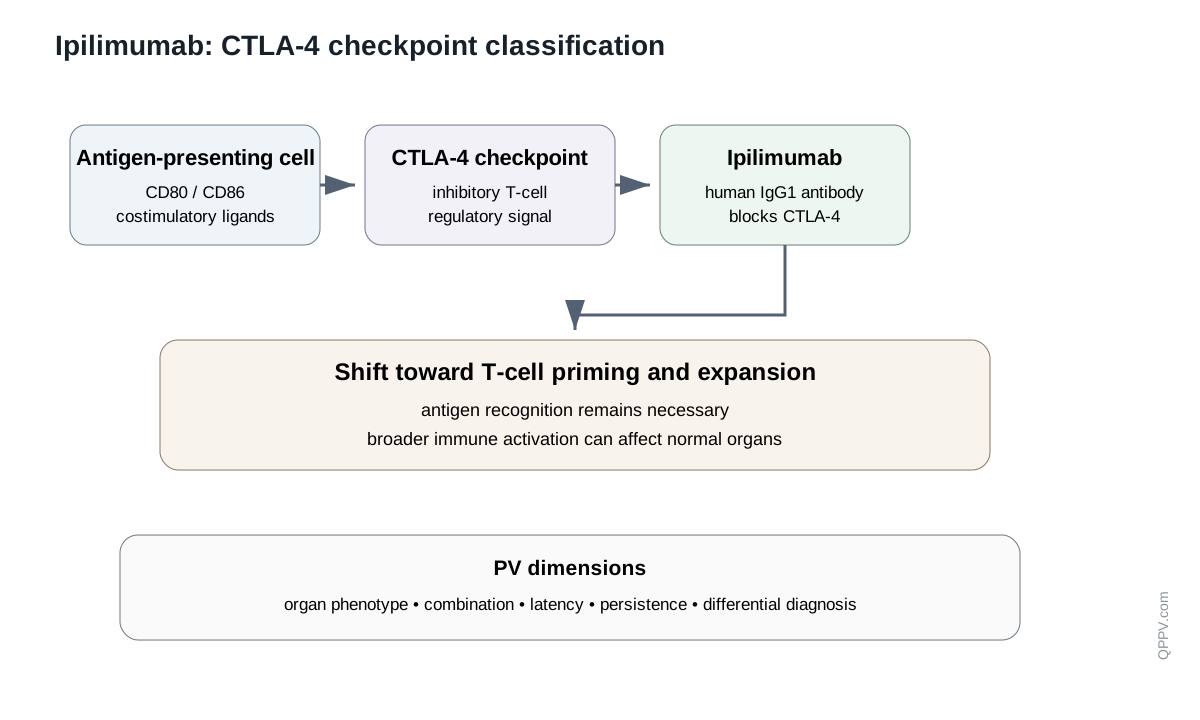
Figure 1. Ipilimumab acts at the CTLA-4 checkpoint during T-cell priming. The mechanism differs from PD-1 blockade even when both products are used in the same regimen.
CTLA-4 and CD28 are competing regulatory signals
Naive T-cell activation requires antigen recognition together with costimulatory signals. CD28 can bind CD80 and CD86 on an antigen-presenting cell and promote activation. CTLA-4 also binds these ligands, with an inhibitory effect that limits the strength and duration of the response.
Ipilimumab blocks CTLA-4 and shifts this balance toward activation. The simple description “removes an immune brake” is useful only if its limits are understood: the response still depends on antigen presentation, T-cell repertoire, tumour immunogenicity and the wider tumour microenvironment. It is not equivalent to indiscriminate activation of every immune cell.
Why CTLA-4 blockade differs from PD-1 blockade
CTLA-4 primarily regulates early T-cell activation in lymphoid tissue, whereas PD-1 signalling is particularly important in the peripheral tissue and tumour microenvironment. The pathways overlap functionally but intervene at different points. Combining them may produce complementary antitumour effects and greater immune activation, but a combined exposure should not be treated as two unrelated monotherapies.
For PV, the distinction supports target-aware signal detection. An event shared by CTLA-4 and PD-1 therapy may represent a pathway-level effect, but product, dose, schedule, indication and combination remain essential explanatory variables.
Development and regulatory role
Ipilimumab was first developed as an antitumour checkpoint antibody and became an important treatment for advanced melanoma. Its authorised use subsequently expanded in combination with nivolumab and other anticancer regimens across defined tumour types and treatment settings. The current European product information should be used for the applicable indication, age group, dosage and warnings.
An ipilimumab exposure can therefore represent a short induction course, a monotherapy regimen, a combination with nivolumab or a combination involving chemotherapy. The safety denominator differs across those settings. For example, cytopenia or infection during chemoimmunotherapy may have several plausible causes, while a delayed endocrine event may be more consistent with immune-mediated injury but still requires objective confirmation.
The SmPC and other regional labels are the regulatory baseline. Pharmacovigilance procedures may add structured follow-up and governance controls, but such operational measures should be identified as recommended practice unless explicitly required by law or guidance.
Clinical use and treatment-context map
Ipilimumab is frequently used in regimens where its CTLA-4 mechanism is deliberately combined with another antitumour treatment. The exposure record should therefore contain the complete regimen, not only the ipilimumab administration.
Monotherapy and induction exposure
When used as monotherapy or as an induction component, the temporal pattern of toxicity may differ from continuous systemic anticancer treatment. Some immune-mediated events emerge during the treatment course; others become apparent after the last dose. A case that lacks the date of the final administration cannot be interpreted reliably.
Combination with nivolumab
The ipilimumab–nivolumab combination blocks CTLA-4 and PD-1. The two antibodies act at different checkpoints, so the combination may increase the probability or intensity of immune-mediated toxicity. Cases should preserve which component was administered on which date, whether the event followed the combination phase or maintenance nivolumab, and whether the clinical team attributed the event to one component, both or the regimen.
Combination with chemotherapy or other anticancer medicines
Chemotherapy, targeted agents and radiotherapy may produce overlapping symptoms and laboratory abnormalities. Diarrhoea, hepatitis, pneumonitis, rash, fatigue and cytopenias should be evaluated against the full treatment history. A causal assessment that ignores co-medication can either over-attribute events to ipilimumab or miss an immune-mediated phenotype.
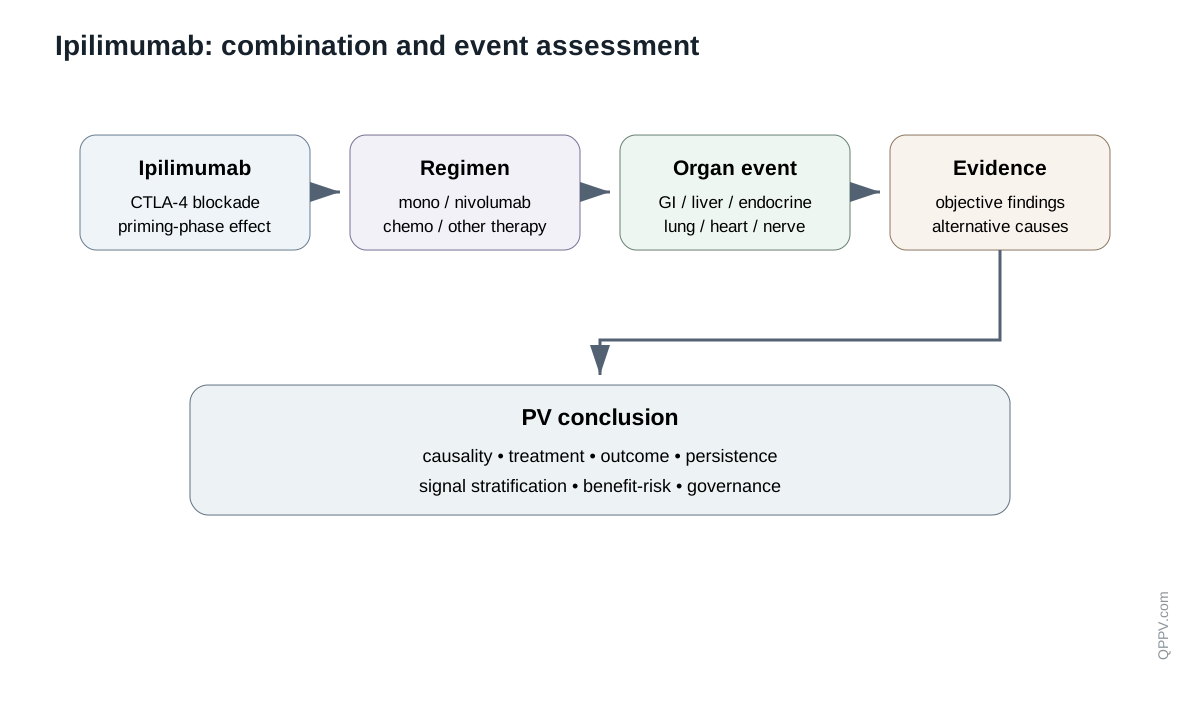
Figure 2. Ipilimumab case assessment links the CTLA-4 mechanism with regimen, timing, organ phenotype and alternative causes.
Safety profile through mechanism and phenotype
Gastrointestinal immune-mediated disease
Immune-mediated colitis may present with diarrhoea, abdominal pain, blood in stool, fever or dehydration. The report should preserve stool frequency, blood, infection testing, imaging or endoscopy when performed, hydration status, treatment and outcome. Inflammatory bowel disease, infection, antibiotics and other medicines may provide competing explanations.
The term “diarrhoea” is not enough for aggregate evaluation. Severity, persistence, objective findings and response to corticosteroid or other treatment determine whether the event represents a clinically meaningful immune-mediated syndrome.
Hepatic injury
Immune-mediated hepatitis may be detected through laboratory testing before symptoms appear. Serial alanine aminotransferase, aspartate aminotransferase, alkaline phosphatase and bilirubin values help describe the phenotype. Viral hepatitis, liver metastases, biliary obstruction, alcohol and concomitant hepatotoxic medicines should be considered.
A pharmacovigilance case should record whether ipilimumab was interrupted, whether corticosteroids or other immunosuppression were given and whether liver tests recovered. The chronology of improvement supports but does not by itself prove causality.
Endocrine events
Hypophysitis, thyroid dysfunction, adrenal insufficiency and other endocrine disorders may be persistent. Symptoms such as fatigue, headache, hypotension or weight change are nonspecific and can be confused with cancer or treatment effects. Hormone concentrations, imaging where relevant and replacement therapy are therefore important.
The long-term consequence is clinically relevant. An event may be medically controlled but not fully reversible, and the pharmacovigilance outcome should not be closed as recovered merely because symptoms improved on replacement therapy.
Skin, pulmonary, renal, cardiac and neurological events
Rash and pruritus are common clinical observations, but severe cutaneous reactions require precise diagnosis and mucosal or systemic assessment. Pneumonitis requires imaging and infection evaluation. Nephritis requires renal and medication context. Myocarditis and neurological syndromes require urgent, phenotype-specific investigation because early symptoms may be subtle and the consequences serious.
Infusion reactions and hypersensitivity
Acute reactions around administration should be distinguished from delayed immune-mediated disease. Capture infusion number, rate, premedication, onset, vital signs, interruption, treatment and rechallenge. A reaction labelled as anaphylaxis should contain the clinical evidence supporting that diagnosis rather than relying on the reporter's terminology alone.
Biological persistence and delayed events
Checkpoint blockade can have effects that outlast the last infusion. A delayed event may therefore remain biologically plausible, but the interval also increases the importance of alternative diagnoses and background disease. The case narrative should describe the complete exposure history, prior immune events, subsequent medicines and the clinical reasoning used to connect the event to treatment.
Pharmacovigilance case assessment
Ipilimumab assessment should reconstruct the relationship between CTLA-4 blockade, the complete anticancer regimen, the organ-specific phenotype and the evidence for alternative causes. This is especially important when ipilimumab is given with nivolumab or chemotherapy.
Event-specific follow-up priorities
| Event or concern | High-value follow-up information |
|---|---|
| Colitis | Stool frequency, blood, infection testing, imaging/endoscopy, hydration, treatment and outcome |
| Hepatitis | Serial liver tests, bilirubin, viral testing, metastases or obstruction, concomitant hepatotoxic drugs |
| Hypophysitis or adrenal insufficiency | Symptoms, pituitary and adrenal hormones, imaging, replacement therapy and persistence |
| Thyroid disorder | Baseline and serial thyroid tests, symptoms, treatment and clinical outcome |
| Pneumonitis | Imaging, oxygenation, infection evaluation, radiation, tumour progression and treatment response |
| Severe skin reaction | Lesion distribution, mucosal involvement, biopsy or specialist diagnosis, treatment and outcome |
| Myocarditis | Symptoms, troponin, ECG, echocardiography, cardiac imaging, competing causes and outcome |
| Neurological syndrome | Phenotype, neurological examination, imaging, CSF tests where relevant, alternative diagnoses and outcome |
| Acute infusion reaction | Infusion sequence, rate, premedication, vital signs, treatment and rechallenge |
Signal detection and aggregate review
Signal detection should preserve CTLA-4 exposure, PD-1 co-exposure, combination chemotherapy, treatment phase, indication and latency. A broad search for “immune-mediated” terms may be useful for case finding but is not an adequate clinical definition for evaluation.
Aggregate review should distinguish organ-specific syndromes from nonspecific preferred terms. It should also consider treatment discontinuation, corticosteroid or immunosuppressive treatment, recurrence after rechallenge and long-term sequelae. A signal may concern not only more cases but also a change in severity, latency, reversibility or risk factors.
Periodic benefit-risk evaluation
The benefit-risk assessment should be linked to the authorised tumour setting and regimen. Evidence of disease control, response, survival or recurrence prevention must be weighed against immune-mediated risks in the population actually receiving treatment. A risk that is acceptable in advanced disease may require a different balance in a curative-intent population.
Important safety domains may include colitis, hepatitis, endocrine disorders, pneumonitis, severe skin reactions, myocarditis, neurological events, nephritis, infusion reactions, pregnancy exposure, medication errors and combination-attribution issues.
Risk management and operational controls
The current product information and applicable law establish the regulatory requirements. Recommended controls include:
- structured identification of ipilimumab, nivolumab and other regimen components;
- organ-specific follow-up for suspected immune-mediated events;
- capture of treatment phase and final dose date;
- objective laboratory and imaging evidence;
- documentation of alternative diagnoses;
- follow-up for persistence and sequelae;
- reconciliation with product-quality and medical-information systems;
- batch and presentation traceability.
Potential failure modes
The following are illustrative scenarios, not published inspection findings:
- A colitis case records diarrhoea but no stool frequency, infection evaluation or treatment response.
- A hepatitis case is attributed to ipilimumab without reviewing liver metastases or concomitant medicines.
- Combination exposure is not separated from nivolumab maintenance.
- Endocrine adverse events are classified as recovered when replacement therapy remains necessary.
- A delayed event is excluded because treatment had ended.
- A signal analysis uses a broad immune-mediated category without organ-specific case definitions.
- A severe acute reaction is labelled anaphylaxis without infusion chronology or objective findings.
Inspection and governance perspective
An inspector would expect evidence that the PV system can identify and medically evaluate CTLA-4-related immune-mediated risks, preserve combination exposure and recognise delayed or persistent outcomes. Evidence may include targeted follow-up, medical-review criteria, product dictionaries, signal analyses, periodic reports, reconciliation records and governance minutes.
Effectiveness is demonstrated by the quality of the resulting data. If the system requires combination attribution but cannot distinguish induction from maintenance, or requires endocrine follow-up but lacks hormone results, the written procedure is not enough.
Practical checklist
Confirm:
- exact product, dose, batch, presentation and administration dates;
- indication, treatment line and treatment intent;
- all concurrent and recent anticancer treatments;
- whether nivolumab or another checkpoint inhibitor was co-administered;
- event phenotype, laboratory or imaging evidence and differential diagnosis;
- treatment, interruption, rechallenge and outcome;
- persistence or replacement therapy for endocrine events;
- stratification by regimen and treatment phase in aggregate review.
Key Takeaways
Ipilimumab is a fully human IgG1 antibody that blocks CTLA-4, shifting the balance between inhibitory CTLA-4 signalling and CD28-mediated T-cell costimulation during immune priming.
Its pharmacovigilance profile is shaped by multi-organ immune-mediated toxicity, delayed presentation, combination treatment and the possibility of persistent sequelae. Accurate assessment requires organ-specific evidence and complete regimen attribution.
References
- European Medicines Agency. Yervoy (ipilimumab): EPAR and current product information. https://www.ema.europa.eu/en/medicines/human/EPAR/yervoy
- U.S. Food and Drug Administration. Yervoy (ipilimumab) prescribing information. https://www.accessdata.fda.gov/drugsatfda_docs/label/
- Hodi FS, O'Day SJ, McDermott DF, et al. Improved survival with ipilimumab in patients with metastatic melanoma. N Engl J Med. 2010;363:711–723. doi:10.1056/NEJMoa1003466.
- European Medicines Agency. GVP Module I: Pharmacovigilance systems and their quality systems. https://www.ema.europa.eu/en/human-regulatory-overview/research-development/pharmacovigilance-research-and-development/good-pharmacovigilance-practices
- European Medicines Agency. GVP Module V: Risk management systems. https://www.ema.europa.eu/en/documents/scientific-guideline/guideline-good-pharmacovigilance-practices-module-v-risk-management-systems-rev-2_en.pdf
- European Medicines Agency. GVP Module IX: Signal management. https://www.ema.europa.eu/en/documents/scientific-guideline/guideline-good-pharmacovigilance-practices-gvp-module-ix-signal-management-rev-1_en.pdf
Regulatory Note
Authorised indications, dosing, warnings and regimen-specific requirements vary by jurisdiction and may change. This article is an educational pharmacovigilance reference and does not replace current product information. Current EMA product information was checked in September 2026.