Ivonescimab: Classification, Mechanism, Evidence and Pharmacovigilance
Ivonescimab is a humanised bispecific IgG1 monoclonal antibody that binds programmed cell death protein 1 (PD-1) and vascular endothelial growth factor A (VEGF-A). China’s NMPA authorised it with pemetrexed and carboplatin for locally advanced or metastatic non-squamous non-small-cell lung cancer (NSCLC) with an EGFR mutation after progression on an EGFR tyrosine kinase inhibitor (TKI). [1]
The design combines checkpoint inhibition and VEGF-pathway binding in one antibody. These are distinct pathways, and the mechanism alone does not establish clinical synergy or lower toxicity.
Classification and target biology
PD-1 is an inhibitory receptor on immune cells. Ligand engagement can attenuate T-cell activity. VEGF-A is a vascular growth factor with roles in angiogenesis and the tumour microenvironment. The NMPA describes ivonescimab as binding both targets and blocking their interactions with ligands. [1]
Ivonescimab is an engineered bispecific IgG1, not an antibody-drug conjugate. Its activity comes from binding two targets rather than delivering a cytotoxic payload. The rationale for combining immune checkpoint and angiogenic pathway effects is a pharmacological hypothesis that must be evaluated in controlled clinical studies.
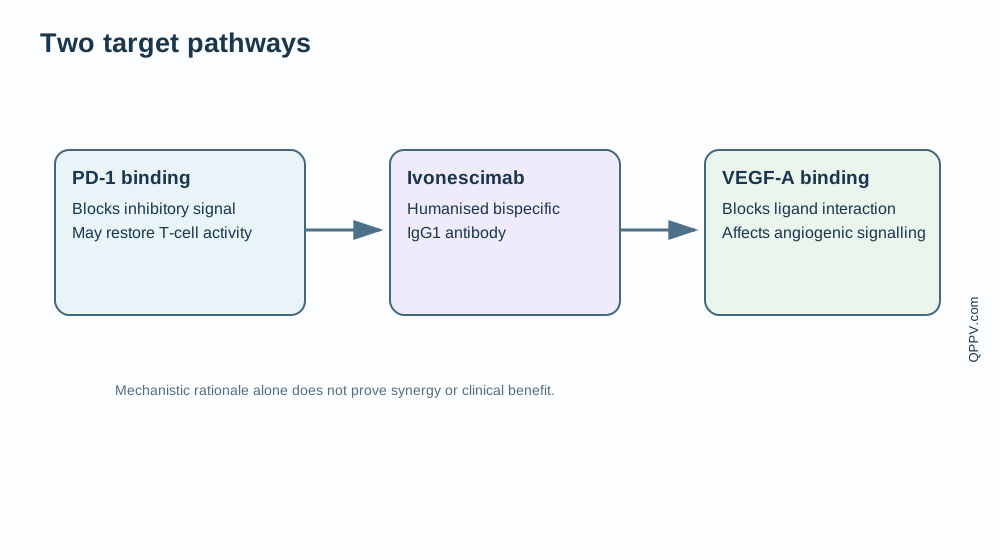
Figure 1. Simplified view of the two target pathways; it does not prove synergy or preferential tumour localisation.
China authorisation
The NMPA notice dated 19 February 2025 specifies combination use with pemetrexed and carboplatin for EGFR-mutated locally advanced or metastatic non-squamous NSCLC after EGFR-TKI progression. This narrow scope should not be expanded to all NSCLC settings or other tumour types. [1]
Results from trials with different histologies, comparators or treatment lines inform the broader research programme but do not change label scope unless a regulator authorises a variation.
Clinical evidence
HARMONi-A was a randomised, placebo-controlled phase 3 study in 322 patients with advanced or metastatic EGFR-mutated NSCLC after EGFR-TKI progression. Participants received ivonescimab or placebo with pemetrexed and carboplatin, followed by maintenance treatment. In the first planned interim analysis, independently reviewed median progression-free survival (PFS) was 7.1 versus 4.8 months (hazard ratio 0.46; 95% CI 0.34–0.62). Overall-survival data were immature at that analysis. [2]
Grade 3 or higher treatment-emergent adverse events occurred in 61.5% versus 49.1%. Grade 3 or higher immune-related events were reported in 6.2% versus 2.5%, and grade 3 or higher VEGF-related events in 3.1% versus 2.5%. Severe events were often chemotherapy-related. These are study-specific estimates, not universal rates. [2]
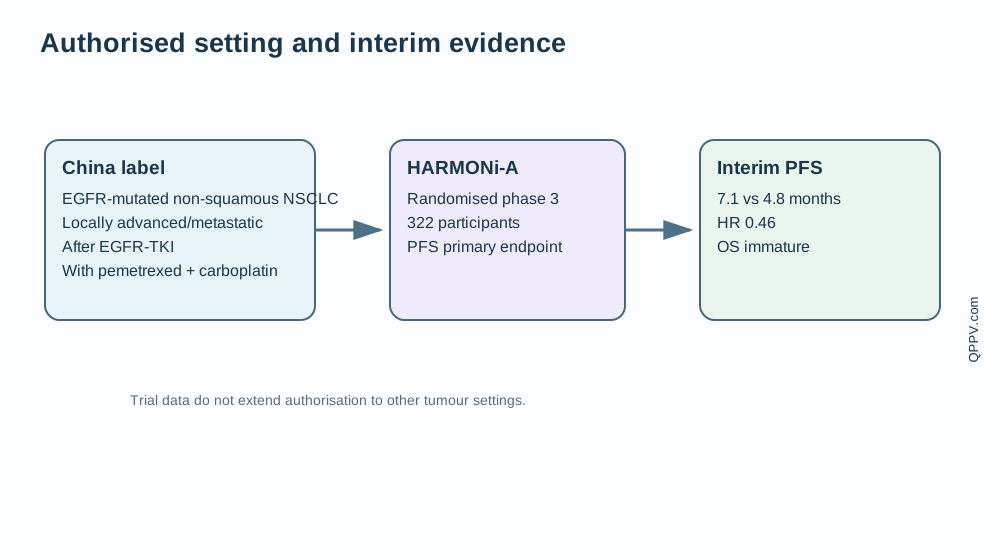
Figure 2. Trial and authorisation share the post-EGFR-TKI disease context and chemotherapy backbone; interim overall survival was not mature.
Safety and case assessment
The dual target creates two monitoring lenses. PD-1 blockade can cause immune-mediated inflammation in organs such as lung, bowel, liver, endocrine glands, skin or kidney. VEGF-pathway effects may raise vascular, blood-pressure or bleeding questions. Treat these as mechanism- and class-informed considerations unless the current product information identifies a product-specific warning or frequency.
Chemotherapy, infection and cancer progression can produce overlapping signs. For suspected pneumonitis, document imaging, infection evaluation, oxygenation, prior radiotherapy, tumour status and concomitant drugs. For bleeding, capture site, severity, platelet counts, anticoagulants and tumour involvement. Avoid assigning causality from timing alone.
Pharmacovigilance priorities
Capture EGFR variant and test context, prior TKI, progression date, regimen, cycle, dose interruption, event onset, work-up, treatment and outcome. For immune-mediated events, record diagnostic reasoning and response to immunosuppression. For vascular events, record objective findings where available.
At aggregate review, stratify by event class, exposure, tumour population and concomitant chemotherapy. Keep immune-mediated, VEGF-related, chemotherapy-related and disease-related hypotheses distinct.undefined
Governance and inspection perspective
An auditable case narrative shows prompt intake, relevant medical follow-up and a reasoned causality assessment. In oncology, progression, infection, previous radiotherapy, chemotherapy and the antibody may all contribute. Preserve alternative causes and changes in the assessment as new evidence arrives.
Reconcile clinical-trial and post-authorisation safety information according to applicable procedures. Coding should not collapse pneumonitis, infection and tumour progression into broad groupings that prevent meaningful medical review. Signal assessment should account for exposure time, treatment interruptions and follow-up maturity.
Key takeaways
- Ivonescimab is a humanised bispecific IgG1 antibody binding PD-1 and VEGF-A.
- The China NMPA indication is a defined post-EGFR-TKI non-squamous NSCLC combination regimen.
- HARMONi-A showed longer PFS at interim analysis; overall survival was immature.
- Safety assessment must distinguish immune, VEGF-related, chemotherapy and disease effects.
- Evidence in other trial populations does not automatically broaden authorisation.
References
- China National Medical Products Administration. Ivonescimab Injection Approved for Marketing by China NMPA. 19 February 2025. https://english.nmpa.gov.cn/2025-02/19/c_1073516.htm
- Fan Y, et al. Ivonescimab plus chemotherapy in non-small cell lung cancer with EGFR variant: a randomized clinical trial. JAMA. 2024. PMID: 38820549. https://pubmed.ncbi.nlm.nih.gov/38820549/
- Xiong A, et al. Ivonescimab versus pembrolizumab for PD-L1-positive NSCLC (HARMONi-2). Lancet. 2025. PMID: 40057343. https://pubmed.ncbi.nlm.nih.gov/40057343/
Regulatory Note
Regulatory status was checked on 25 September 2026. The described indication is the China NMPA scope in the cited notice. Other trial populations are contextual evidence, not authorisations. Consult current local product information and reporting rules.