Lamivudine: Discovery, Development, Safety and Pharmacovigilance
Lamivudine, commonly abbreviated 3TC, illustrates how the same antiviral molecule can acquire two quite different clinical and regulatory lives. In HIV infection it is a nucleoside reverse-transcriptase inhibitor (NRTI) used with other active antiretrovirals. In chronic hepatitis B it inhibits HBV polymerase, but a low barrier to viral resistance limits its role relative to newer agents. An HIV tablet and an HBV tablet are not interchangeable simply because their active ingredient has the same international nonproprietary name. The clinical consequences of a substitution error can include loss of HIV suppression, resistance and later difficulty constructing an effective regimen. [1–5]
This is a lifecycle article about the single INN lamivudine, not a separate article for each brand or fixed combination. Epivir and Epivir-HBV in the United States, and Epivir and Zeffix in the European Union, are used to explain formulation- and indication-specific decisions. Lamivudine also appears in many combination products, including zidovudine/lamivudine and dolutegravir/lamivudine. Evidence for those combinations cannot automatically be assigned to lamivudine alone. Similarly, the A033 queue position derives partly from a dolutegravir/lamivudine product record; it is not a validated stand-alone lamivudine sales ranking. [3–6]
Three distinctions run through the story. First, a drug can be effective against a virus while being unsuitable as monotherapy because resistance emerges. Second, a reaction described in a warning, a clinical trial, or a postmarketing subsection is not necessarily represented identically in another jurisdiction's adverse-reaction table. Third, a patient's apparent liver toxicity after stopping therapy may be viral reactivation rather than direct dose-dependent drug injury. Sound pharmacovigilance requires the clinical chronology, exact product and both viruses' status before assigning a cause. [1–5]
- Lamivudine: Discovery, Development, Safety and Pharmacovigilance
- Discovery: from cytidine analogue to 3TC
- Molecular pharmacology: one triphosphate, two viruses
- The clinical evidence: why lamivudine mattered and where it fell short
- Chronic hepatitis B: early efficacy and later resistance
- Formulations, dosing and pharmacokinetics
- Safety profile and product-specific listedness
- Clinical safety problems that deserve particular attention
- Pharmacovigilance: turning the two-virus problem into reliable evidence
- Key takeaways
- References
- Regulatory Note
Discovery: from cytidine analogue to 3TC
The scientific problem in the late 1980s
Early HIV treatment relied on nucleoside analogues that interfered with reverse transcription, but treatment was constrained by toxicity and rapid selection of resistant virus. Zidovudine had demonstrated that viral replication could be pharmacologically interrupted; it also made clear why one-drug suppression was not durable. Researchers therefore sought analogues with improved selectivity, activity against resistant isolates, and pharmacological properties compatible with combination therapy. Lamivudine belongs to a class of modified cytidine analogues whose antiviral effect depends on intracellular activation rather than direct inhibition by the administered parent compound. [1,6,7]
The precursor BCH-189 and its stereochemical development emerged from the Canadian BioChem Pharma programme in the late 1980s. Contemporary company records identify BioChem Pharma as the discoverer and date the discovery programme to 1989. Accounts of the work also associate the chemistry with Bernard Belleau and colleagues, but a detailed inventor-by-inventor assignment should not be inferred solely from later commercial summaries. The selected negative enantiomer, lamivudine, became 3TC. This stereochemical choice mattered: a molecule's three-dimensional configuration can alter antiviral selectivity and interaction with host polymerases. It was not simply a new brand name for zidovudine. [6,7]
BioChem Pharma licensed commercial rights to Glaxo, subsequently Glaxo Wellcome after the 1995 merger with Wellcome. The relationship connected a promising NRTI to a company already associated with zidovudine, allowing the two agents to be developed and distributed as part of the emerging combination-treatment strategy. The originator, licensing partner, later marketing authorisation holder and present generic suppliers are different entities; a pharmacovigilance case must use the actual product's manufacturer and authorisation details, not a historical assumption about ownership. [6,7]
Why the 1995 approval was a turning point
The US approval of Epivir for HIV treatment came in November 1995, initially in the context of combination therapy with zidovudine. European authorisation followed on 8 August 1996. These dates precede the widespread use of contemporary integrase-inhibitor regimens and reflect the period in which combination NRTI evidence was reshaping HIV treatment. Lamivudine became a component of multidrug therapy, not a cure and not a substitute for maintaining an effective full regimen. [1,3,6]
The fixed-dose combination of lamivudine and zidovudine, Combivir, was authorised in the United States in 1997; subsequent combinations incorporated other antiretroviral classes and additional NRTIs. Such products changed adherence and prescribing logistics as much as they changed the molecule's visibility. A single-tablet combination can simplify treatment, yet it also creates new risks: duplicated lamivudine across overlapping prescriptions, inability to adjust one constituent's dose independently in renal impairment, and abrupt withdrawal of HBV-active therapy when the HIV regimen is changed. [1,5,7]
The second indication: chronic hepatitis B
HBV also requires reverse transcription during its replication cycle, even though it is a DNA virus. Lamivudine's activity against HBV polymerase led to a separate treatment programme and a different labelled dose. The European Commission authorised Zeffix for chronic hepatitis B on 29 July 1999. The US EPIVIR-HBV product was developed for HBV at a lower standard adult dose than the HIV product. This extension of use was scientifically logical but created a particularly important medication-safety boundary. [2,4]
Early HBV studies demonstrated suppression of viral DNA, improvement in biochemical and histological markers and, in some populations, HBeAg seroconversion. However, HBV can select polymerase substitutions that reduce lamivudine susceptibility during prolonged therapy. The present EU Zeffix indication accordingly restricts initiation in compensated disease to situations in which a higher-resistance-barrier alternative is unavailable or inappropriate; decompensated disease requires combination with another anti-HBV agent without the same cross-resistance. The molecule's clinical history is therefore also a history of learning that initial antiviral response and durable resistance protection are different endpoints. [4,8]
Molecular pharmacology: one triphosphate, two viruses
Intracellular activation and chain termination
Lamivudine enters cells and is phosphorylated to lamivudine 5'-triphosphate, the pharmacologically active metabolite. HIV reverse transcriptase or HBV polymerase can incorporate this analogue during viral DNA synthesis. Incorporation terminates further chain elongation and impairs viral replication. The drug acts on a viral enzyme-mediated process; it does not eradicate integrated HIV provirus or eliminate the HBV covalently closed circular DNA reservoir. This explains why suppression and cure must not be conflated, and why stopping active therapy can permit renewed replication. [1–4]
Lamivudine has relatively little interaction with mammalian DNA polymerases compared with some older nucleoside analogues, but this selectivity does not make mitochondrial or metabolic safety warnings irrelevant. Nucleoside-analogue-associated lactic acidosis and hepatic steatosis remain in relevant product information. In practice, the differential diagnosis of an elevated lactate or abnormal liver tests includes infection, hypoperfusion, pre-existing liver disease, concomitant medicines and virological rebound. [1,3,4]
HIV resistance: M184V and M184I
HIV reverse transcriptase can develop the M184V or M184I substitution under lamivudine selection pressure. These changes markedly reduce susceptibility to lamivudine and to the related cytidine analogue emtricitabine. M184V may also impair viral replication capacity and alter susceptibility to some other NRTIs in laboratory experiments. Such mechanistic observations do not justify continuing an ineffective regimen: treatment choices depend on the complete resistance history, current viral load, the activity of the remaining agents and applicable HIV guidelines. [3,5]
A virological failure report should therefore distinguish a resistance-associated loss of antiviral activity from a conventional adverse drug reaction. It should capture missed doses, formulation switches, co-administered oral solutions, gastrointestinal problems and drug interactions before assigning resistance to an intrinsic failure of lamivudine. A laboratory genotype can explain the biological mechanism but cannot, by itself, prove the precise reason that suppression was lost. [1,3]
HBV resistance: the YMDD motif
HBV resistance commonly involves substitutions in the polymerase YMDD motif, including rtM204V/I, often accompanied by compensatory substitutions. Under continued lamivudine exposure, resistant HBV can regain replication despite apparently adequate dosing. This is especially consequential in advanced liver disease, where viral breakthrough or a flare may lead to decompensation. Monitoring HBV DNA together with ALT and clinical status is more informative than interpreting an isolated transaminase elevation. [2,4,8]
The two resistance pathways must not be merged: HIV M184V and HBV rtM204V/I are changes in different viral enzymes, despite their analogous clinical lesson. A patient with HIV/HBV coinfection can have HIV suppression while HBV escapes, or the reverse, depending on the regimen. Both viral histories are needed when evaluating a suspected loss of efficacy or treatment interruption. [4,5]
The clinical evidence: why lamivudine mattered and where it fell short
Surrogate responses and hard HIV outcomes
Initial studies showed that adding lamivudine to zidovudine-based treatment improved CD4-cell responses and reduced HIV RNA more than zidovudine alone. These early surrogate endpoints were valuable but incomplete: a short-term fall in viral load does not necessarily establish that patients live longer or avoid AIDS-defining illnesses. The decisive transition was to controlled studies of clinical outcomes. The European Epivir assessment describes five principal adult studies involving almost 3,000 people, including a large endpoint trial. [3]
The CAESAR trial, published in 1997, randomised people already receiving zidovudine-containing regimens to the addition of lamivudine, lamivudine plus loviride, or placebo. In the reported final analysis, progression to a new AIDS event or death occurred in 20% of the placebo group versus 9% in the lamivudine-containing groups; the relative hazard for the pooled lamivudine comparison was 0.42 (95% CI 0.32–0.57). The trial stopped after an interim analysis showed substantial benefit. It was conducted in a historical treatment context, and its findings should not be interpreted as a direct comparison with modern integrase-based ART. Its durable lesson is that adding an active agent to an inadequate regimen could change clinical outcomes. [9]
Another important 1997 study compared zidovudine or stavudine plus lamivudine with or without indinavir in participants with low CD4 counts. AIDS progression or death was lower with the three-drug regimen than with the two-NRTI regimen. The study was evidence for the advantage of potent multidrug suppression, not proof that indinavir's effect could be assigned to lamivudine. It also helped establish why a two-NRTI combination alone was not a sufficient long-term HIV treatment strategy. [10]
Modern two-drug regimens do not mean lamivudine monotherapy
The GEMINI-1 and GEMINI-2 studies evaluated dolutegravir plus lamivudine against dolutegravir plus tenofovir disoproxil fumarate/emtricitabine in treatment-naive adults meeting prespecified eligibility criteria. In the pooled 96-week analysis, HIV RNA below 50 copies/mL was achieved in 86.0% versus 89.5%, respectively, within the specified noninferiority margin. At 144 weeks the reported response was 82% versus 84%. The studies excluded important populations and resistance patterns; they cannot be generalised to an unassessed patient with HBV coinfection or existing lamivudine resistance. [12]
TANGO studied a different clinical question: whether virologically suppressed adults could switch from a tenofovir-alafenamide-based regimen to dolutegravir/lamivudine while maintaining suppression. Its noninferiority findings support a selected switch strategy, not indiscriminate simplification. If tenofovir is the only potent HBV-active component of a current HIV regimen, dropping it can leave lamivudine as the sole HBV-active drug. That is a distinct virological safety problem even if HIV remains suppressed. [5,13]
This illustrates a recurring problem in pharmacovigilance interpretation. A reported flare after an apparently successful HIV switch is not necessarily an adverse effect of the newly introduced drug; it may be an effect of withdrawing an anti-HBV component. The case narrative must capture what was removed as carefully as what was started. [1,5]
Paediatric evidence and the formulation effect
Lamivudine is also used in paediatric HIV treatment with age-, weight- and presentation-specific dosing. In the ARROW experience, children receiving lamivudine oral solution alongside other oral solutions had lower lamivudine exposure, poorer virological suppression and more resistance than those receiving tablet-based regimens. The US Epivir label recommends an all-tablet regimen when feasible and more frequent viral-load monitoring when oral solution is used in circumstances that may reduce exposure. The EU Epivir SmPC similarly prefers tablets when feasible. [1,3]
This was not evidence that all liquid formulations are defective. Sorbitol and related osmotic polyols can lower lamivudine oral-solution exposure, and formulation combinations, age, administration and adherence can influence the observed result. A signal investigation should record every liquid medicine's excipients, not merely the active ingredients. The example also shows why product-level exposure data are essential: the same INN may perform differently when co-administered in different formulations. [1,3]
Chronic hepatitis B: early efficacy and later resistance
The one-year placebo-controlled evidence
The pivotal one-year study reported by Lai and colleagues in 1998 randomised 358 patients with chronic hepatitis B to lamivudine 25 mg, lamivudine 100 mg, or placebo. Histological improvement and viral suppression supported the clinical value of lamivudine; the 100-mg regimen performed better than 25 mg. This study established antiviral activity and the rationale for HBV-specific development. It did not establish indefinite protection against resistance, because one year is shorter than many patients' required treatment duration. [8]
The EU Zeffix assessment summarises five principal studies in 1,083 adults with compensated liver disease. Across controlled studies, lamivudine improved histology, viral and biochemical outcomes compared with placebo. These were clinically meaningful developments at a time when oral alternatives were limited. Yet a decline in HBV DNA or normalisation of ALT is not identical to sustained HBsAg loss, prevention of cirrhosis, or long-term absence of hepatocellular carcinoma. The different endpoints must remain visible in any evidence summary. [4,8]
Clinical progression and the resistance trade-off
The 2004 randomised trial by Liaw and colleagues studied 651 people with chronic hepatitis B and advanced fibrosis or cirrhosis. At a median follow-up of approximately 32 months, the composite disease-progression endpoint occurred in 7.8% of lamivudine-treated participants versus 17.7% of placebo recipients (hazard ratio 0.45). The study also reported fewer cases of worsening Child–Pugh score and hepatocellular carcinoma in the lamivudine group. Importantly, YMDD resistance substitutions developed in 49% of lamivudine recipients, and deterioration was more common among those with resistant virus. [11]
The apparently competing results are both true: lamivudine provided meaningful clinical benefit in that historical trial, and resistance limited durable effectiveness. A careful interpretation neither dismisses the original drug nor treats it as equivalent to later agents with higher genetic barriers. Modern HBV guidelines and the Zeffix SmPC place lamivudine in a restricted role when better resistance-protective options are unavailable or inappropriate. A patient already taking lamivudine needs individual clinical review; this article is not an instruction to stop treatment abruptly. [4,5,11]
Negative and limiting evidence
A number of findings temper broad claims. Lamivudine alone is not a durable HIV treatment; early two-NRTI combinations were overtaken by more potent multidrug regimens. HIV virological failure with M184V is a known possibility. HBV monotherapy can select YMDD resistance. HBV DNA commonly rebounds after discontinuation, and flares can be serious. In paediatric HIV treatment, co-administered oral solutions can compromise exposure. A modern dolutegravir/lamivudine trial in selected participants does not answer the question of efficacy in untreated HIV/HBV coinfection. These are not reasons to ignore favourable trials; they define where those trials apply. [1–5,9–13]
Formulations, dosing and pharmacokinetics
The HIV and HBV product boundary
| Treatment setting | Example products | Labelled adult oral dose | Essential limitation |
|---|---|---|---|
| HIV-1, in an active ART regimen | US/EU Epivir tablets; HIV-appropriate generics | 300 mg/day, once daily or 150 mg twice daily | Never treat HIV with the HBV-dose product as monotherapy |
| Chronic HBV | US Epivir-HBV; EU Zeffix | 100 mg once daily in standard adult circumstances | High resistance risk; consider higher-barrier alternatives and product-specific restrictions |
The table describes standard adult doses before renal adjustment, not a dosing instruction for a particular patient. In EU Zeffix, treatment is for adults; the US Epivir-HBV label also contains paediatric dosing. These population scopes differ and should not be flattened into a single global authorisation. In HIV/HBV coinfection, HIV-appropriate lamivudine dosing must be part of fully suppressive ART, and the overall regimen must provide adequate HBV treatment. [1–5]
Renal clearance and dose adjustment
Lamivudine is predominantly eliminated unchanged through the kidneys, including active tubular secretion. Reduced renal function increases exposure, making dose adjustment necessary for the single-ingredient products. The US Epivir and EU Epivir documents provide creatinine-clearance-based regimens and oral-solution options for doses that tablets cannot accurately deliver. A fixed-dose combination may be unsuitable for a patient needing an adjusted lamivudine dose even when the other components would be appropriate. Product-specific renal thresholds and local guidance must be checked rather than assuming that every formulation shares the same adjustment rule. [1,3]
The fact that lamivudine is not a major CYP3A substrate reduces some metabolic interaction concerns, but does not eliminate interactions. Trimethoprim can increase lamivudine exposure through renal transport competition. Sorbitol-containing oral products can reduce lamivudine absorption. Duplicate lamivudine or concurrent emtricitabine creates avoidable therapeutic duplication; the EU SmPC also discourages concomitant cladribine because lamivudine may interfere with its intracellular phosphorylation. These are mechanistically different problems requiring different follow-up questions. [1,3,4]
The business and regulatory lifecycle in perspective
The original BioChem Pharma–Glaxo relationship, Glaxo Wellcome's 1995 HIV launch, the 1996 European Epivir authorisation, later fixed-dose HIV combinations, and the 1999 Zeffix authorisation represent distinct stages of the molecule's commercial history. The programme's value increasingly came from its role as a combination component rather than from a claim that one company controlled all later lamivudine use. The present EU Epivir marketing authorisation holder is ViiV Healthcare BV; the EU Zeffix authorisation holder is GlaxoSmithKline Trading Services Limited. Generic supply and regional presentations further complicate a single-company revenue narrative. [3,4,6,7]
A pharmacovigilance organisation must trace the specific authorisation and product for which it is responsible. For an individual case, the reporter's product name, strength, batch, country, manufacturer and combination partners matter more than the historical brand associated with the original discovery. Neither an originator's sales history nor a combination-product ranking supplies a reliable denominator for lamivudine-specific adverse-event incidence. [1–5]
Safety profile and product-specific listedness
The principal safety challenge is not a single characteristic lamivudine toxidrome. It is the intersection of tolerability, antiviral resistance, hepatitis flare risk, interactions, renal exposure, and the patient's complete treatment regimen. For regulatory analysis, adverse-reaction listedness must be anchored to an exact medicinal product and a dated source. The following comparison was checked on 30 October 2026 against the US Epivir HIV label updated 15 August 2024, the US Epivir-HBV label effective 29 October 2024, the EU Epivir SmPC updated 20 August 2026, and the EU Zeffix SmPC updated 22 July 2026. [1–4]
US HIV product: Epivir tablets and oral solution
The US Epivir label covers 150-mg and 300-mg tablets and 10-mg/mL oral solution for HIV-1 treatment in combination with other antiretrovirals. Its boxed warning focuses on severe HBV exacerbations after discontinuation in HIV/HBV coinfection and the importance of using HIV-appropriate rather than HBV-dose lamivudine. Section 5 separately addresses nucleoside-analogue lactic acidosis/hepatic steatosis, pancreatitis risk in certain paediatric patients, immune reconstitution syndrome and lower virological suppression associated with oral-solution coadministration. The boxed-warning language and the adverse-reaction tables serve different purposes; the presence of a risk in one does not mean its frequency is established by the other. [1]
In the label's adult trial experience, commonly reported reactions include headache, nausea, malaise or fatigue, nasal symptoms, diarrhoea and cough. The historical comparative trial table records events during combination therapy, not attributable incidence for lamivudine alone. Pancreatitis is discussed in the trial and warning sections; a higher rate in certain nucleoside-experienced paediatric cohorts cannot be transferred to all current patients. The US postmarketing subsection includes anaemia (including pure red-cell aplasia), hypersensitivity including anaphylaxis and urticaria, muscle weakness/CPK elevation/rhabdomyolysis, hyperglycaemia, and lactic acidosis/hepatic steatosis. Voluntary postmarketing reports have no reliable denominator, so their inclusion should not be converted into an incidence estimate. [1]
EU HIV product: Epivir tablets and oral solution
The EU Epivir SmPC section 4.8 provides a frequency-classified list. It includes common headache, insomnia, cough, nasal symptoms, nausea, vomiting, abdominal pain or cramps, diarrhoea, rash, alopecia, arthralgia, muscle disorders, fatigue, malaise and fever. It classifies neutropenia, anaemia and thrombocytopenia as uncommon; pure red-cell aplasia, lactic acidosis and peripheral neuropathy/paraesthesia as very rare; pancreatitis, hepatitis, angioedema and rhabdomyolysis as rare. These categories describe the assessed EU product information, not frequencies that can be imported into the US postmarketing subsection. [3]
The EU SmPC also discusses HBV flare after withdrawal, mitochondrial dysfunction following in-utero exposure, osteonecrosis in the context of advanced HIV or combination therapy, and metabolic changes during ART. Some are described in section 4.4 rather than appearing as simple lamivudine-attributable entries in section 4.8. EU Epivir advises against HIV monotherapy and certain historical triple-nucleoside regimens with early failure. The existence of such warnings does not make every associated event a suspected lamivudine adverse reaction. [3]
HBV products: US Epivir-HBV and EU Zeffix
The US Epivir-HBV product contains 100-mg tablets and 5-mg/mL solution for chronic hepatitis B. Its boxed warning addresses post-discontinuation HBV exacerbations and HIV resistance if an HBV-dose product is given to a person with unrecognised or untreated HIV. The product information stresses HBV resistance and recommends use only when a higher-barrier alternative is unavailable or inappropriate. In its historical trial table, reported events at or above 10% and more frequent than placebo include upper respiratory/ENT infections, sore throat and diarrhoea; the table expressly includes events regardless of causality assessment. A difference between trial event rates and a causal reaction list is therefore material. [2]
EU Zeffix is a separate adult HBV product. Its section 4.8 lists very common ALT elevations, common rash, pruritus, CPK elevations and muscle disorders; rare angioedema; very rare lactic acidosis; and thrombocytopenia and rhabdomyolysis with frequency not known. Section 4.4 provides extensive detail about on-treatment breakthrough, post-withdrawal hepatitis flares, YMDD variants and monitoring, particularly in decompensated cirrhosis. ALT elevation is not a self-explanatory marker of direct drug hepatotoxicity in this setting: it may accompany immune-mediated HBV disease activity, viral breakthrough or withdrawal. [4]
What differs between the assessed US and EU labels?
| Safety or scope issue | US Epivir HIV, August 2024 | EU Epivir HIV, August 2026 | HBV-specific context |
|---|---|---|---|
| HBV flare after withdrawal | Boxed warning; section 5 | Section 4.4 monitoring warning | US Epivir-HBV boxed warning; EU Zeffix section 4.4 |
| Common clinical symptoms | Adult combination-trial tables, with denominators | Section 4.8 frequency classes | HBV trial populations and event definitions differ |
| Lactic acidosis | NRTI class warning and postmarketing section | Very rare in section 4.8 | EU Zeffix very rare; check the exact US HBV label |
| Pancreatitis | Paediatric warning and trial experience | Rare in section 4.8 | Not equivalent to an established HBV-product frequency |
| Pure red-cell aplasia | US postmarketing adverse reaction | Very rare in EU section 4.8 | Do not extrapolate HIV label to HBV presentations |
| HIV resistance with HBV-dose therapy | HIV/HBV formulation warning | HIV/HBV product distinction | Explicit US HBV boxed warning; EU Zeffix section 4.4 |
| Paediatric scope | HIV product from age 3 months; HBV product from age 2 years | EU Epivir includes children; EU Zeffix authorised for adults | Jurisdiction and indication must be retained |
This table compares the specified source versions and sections, not every generic, national authorisation or fixed-dose combination. A reaction being absent from one selected table is not proof that it is unlisted across all products, nor that it is absent from another warning or postmarketing section. US and EU terminology, tabulation and underlying clinical populations differ; no undocumented regulatory explanation is asserted. [1–4]
Listedness is not case expectedness or causality
For a case report, public USPI and SmPC comparison is a useful evidence exercise, but it does not replace the marketing authorisation holder's applicable reference safety information or company core data sheet. A reaction may be listed in an EU section 4.8 yet require a separate assessment against the authorised RSI applicable to a clinical trial, or against the relevant local label for postmarketing expectedness. Seriousness, causality, expectedness, reportability and signal priority are separate determinations. None follows mechanically from a single checkbox saying “listed.” [1–5]
Clinical safety problems that deserve particular attention
Hepatitis flare on stopping treatment
HBV suppression can disappear after interruption, and HBV replication may rebound with an ALT rise. Some flares are severe and may progress to hepatic decompensation. The EU Zeffix SmPC reports post-treatment ALT elevations greater than three times baseline in 21% of lamivudine-treated versus 8% of placebo-treated patients in controlled trials with follow-up; these are trial-specific biochemical outcomes, not the population incidence of fatal hepatitis. Its section 4.4 recommends at least four months of clinical and laboratory monitoring after discontinuation, with longer monitoring in high-risk decompensated patients. The US labels describe close monitoring for at least several months. [1,2,4]
A report of jaundice after a regimen switch must reconstruct the HBV-active components before and after the change, HBV DNA and serology, ALT/bilirubin/INR, underlying fibrosis or cirrhosis, and possible alternative causes. Stopping or switching therapy without a continuity plan is itself a preventable safety failure. The appropriate action is clinician-led assessment and maintenance or re-establishment of effective HBV therapy, not a reflex assumption that the newly prescribed antiretroviral is hepatotoxic. [4,5]
Pancreatitis, mitochondrial concerns and hypersensitivity
Pancreatitis has been reported during lamivudine treatment, particularly in certain paediatric historical studies. In an individual case, record abdominal symptoms, lipase or amylase, imaging, concurrent antiretrovirals, gallstones, alcohol exposure, triglycerides and infection-related causes. The product label's warning requires clinical attention but does not eliminate the need for differential diagnosis. Lactic acidosis and steatosis warrant similarly urgent assessment, while recognising that severe infection or hepatic disease can cause the same laboratory abnormalities. [1,3]
Anaphylaxis and other hypersensitivity reactions are recognised in product information. A patient with suspected acute systemic hypersensitivity requires appropriate clinical management; the pharmacovigilance record should preserve timing, skin and respiratory findings, treatment and response, and every recently introduced medicine. A report of anaemia or rhabdomyolysis should be evaluated against co-medications and disease-related explanations as well as the lamivudine label. [1,3,4]
Pregnancy, infants and breastfeeding
The EU Epivir SmPC describes extensive pregnancy experience without evidence of a malformation signal in the cited exposures and allows use if clinically needed. It also discusses potential mitochondrial effects of nucleoside-analogue exposure and the need to investigate unexplained severe findings in exposed infants. US and EU counselling language on breastfeeding can differ and must be interpreted with current national HIV transmission-prevention guidance; it should not be reduced to a universal pharmacological prohibition. For HBV, the EU Zeffix SmPC addresses breastfeeding in the context of adequate neonatal HBV prevention. A maternal case therefore needs HIV/HBV status, the complete regimen, gestational timing and infant prophylaxis information. [1,3,4]
Pharmacovigilance: turning the two-virus problem into reliable evidence
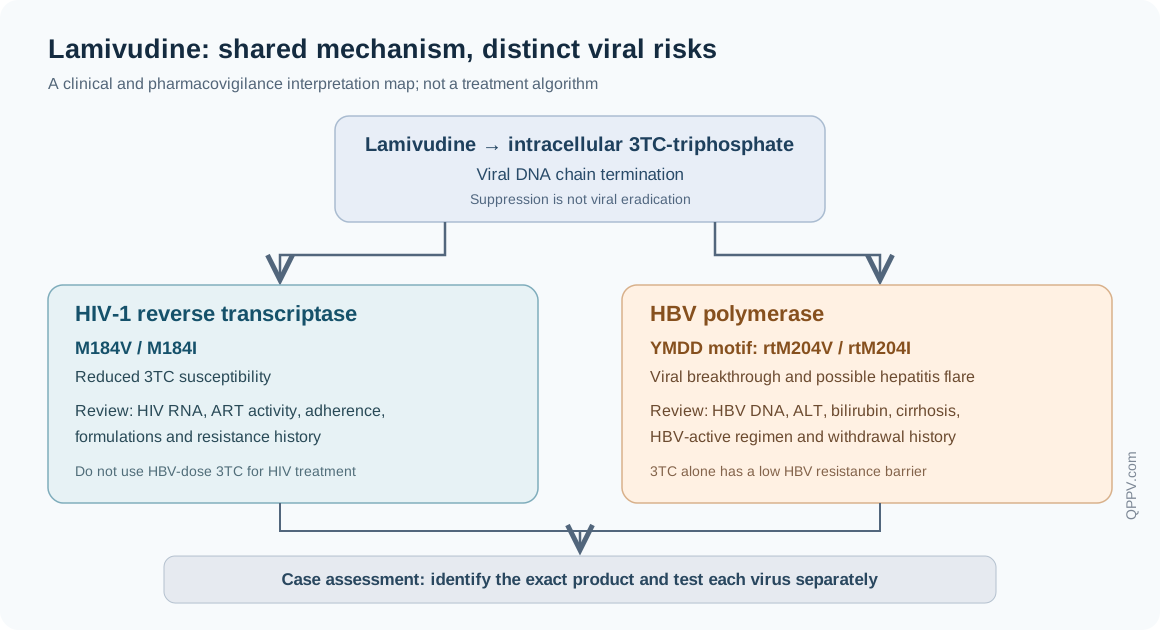
Figure 1. One intracellular chain-termination mechanism, two distinct viral resistance pathways. The diagram is a conceptual interpretation aid, not a clinical dosing or treatment algorithm. The same patient may require simultaneous HIV and HBV assessment.
The essential operational rule is to assess both viruses independently when both may be present. A suppressed HIV viral load does not prove that HBV is controlled. A normal ALT does not rule out HBV replication. Conversely, an isolated ALT rise does not prove that lamivudine directly damaged the liver. The case assessor must build a coherent chronology that links product exposure, virology, liver function, interactions and treatment changes before deciding whether the report is an adverse reaction, medication error, lack of efficacy, withdrawal effect or some combination of these. [1–5]
Intake and medical follow-up
Record the minimum information required for a valid individual case safety report under the applicable framework, then pursue details proportionate to the event. For lamivudine, the exact product is unusually important: Epivir versus Epivir-HBV versus Zeffix, tablet versus solution, concentration, strength, dose, route, indication, co-formulated ingredients, batch if available, and the actual dispensing country. An ambiguous statement such as “lamivudine 100” cannot safely be interpreted without asking whether it was a renal-adjusted HIV regimen or an HBV product. [1–4]
For a suspected hepatic event, obtain baseline and serial ALT, AST, bilirubin, INR and albumin, HBV DNA, HBsAg/HBeAg where relevant, HIV RNA, liver disease stage, concurrent hepatotoxic exposures and exact dates of starting, stopping or switching all HBV-active agents. For virological failure, request prior resistance results, adherence, missed doses, vomiting, oral-solution excipients, renal function and all concomitant medicines. For pancreatitis, include imaging and competing causes; for a suspected haematological reaction, include counts, marrow findings if available, other medicines and the time course after treatment changes. [1–5]
Distinguish the reporter's allegation from the company's medical assessment. A patient may accurately report that jaundice began after a new HIV medicine was started, while the reconstructed timeline shows that tenofovir was withdrawn at the same visit. The original report should not be rewritten, and the case should not be dismissed: the new regimen may still be temporally associated with a clinically important event. The medical narrative must explain the competing mechanisms and the evidence supporting each. [5]
Four illustrative case pathways
Case A — HBV flare after a two-drug switch. A person with HIV/HBV coinfection has an undetectable HIV viral load while taking a tenofovir-containing regimen. The regimen is simplified to dolutegravir/lamivudine without continuing adequate HBV-active treatment. Several weeks later ALT and HBV DNA rise. This is a hypothetical example of treatment-withdrawal risk, not a documented patient. Verify HBV status before the switch, prior HBV suppression, liver reserve and the complete medication timeline. Prompt clinical evaluation is needed because a flare may be severe. For signal governance, distinguish an individual prescribing/transition failure from a new intrinsic hepatotoxicity signal. [4,5,13]
Case B — paediatric loss of suppression after liquid coadministration. A child previously suppressed on a tablet-based regimen receives lamivudine oral solution alongside a sorbitol-containing liquid medicine. HIV RNA increases. Review the exact concentrations, administration timing, weight-based dosing, adherence, gastrointestinal illness and resistance testing. A plausible absorption interaction is not automatically proven in this child; nevertheless, the labelled interaction and ARROW experience make it an important, testable explanation. Medication reconciliation may identify a preventable formulation problem. [1,3]
Case C — breakthrough HBV on prolonged lamivudine. An adult treated for HBV has rising HBV DNA after initial suppression, with an ALT increase. Investigate adherence and laboratory methods, then consider HBV polymerase resistance testing and specialist reassessment of the antiviral regimen. A YMDD variant can explain virological breakthrough, but ALT may also reflect other liver pathology. Record the date and method of resistance testing and the clinical outcome after treatment adjustment. The event belongs in longitudinal effectiveness surveillance as well as individual safety assessment. [2,4,11]
Case D — severe anaemia with multiple antiretrovirals. A patient develops profound anaemia while taking a lamivudine-containing combination. The US Epivir postmarketing section includes severe anaemia and pure red-cell aplasia; the EU SmPC also lists haematological disorders. Nonetheless, zidovudine, infection, malignancy, nutritional deficiency and other drugs may be relevant. Capture the regimen, reticulocytes, haemolysis tests, marrow findings if available, transfusions and dechallenge history. Avoid attributing every combination-associated haematological event to the lamivudine component. [1,3]
Aggregate signal detection and denominator discipline
Aggregate review should group reports by indication, jurisdiction, product and formulation, then examine timing and co-treatment. A rising number of HBV flare reports after HIV regimen switches may reflect a prescribing-system vulnerability, changing regimen use or increased reporting rather than a new toxic property of lamivudine. A cluster of low-exposure cases in children using multiple oral solutions raises a different hypothesis. The same MedDRA preferred term may hide distinct mechanisms; line listings and case narratives remain indispensable. [1–5]
Spontaneous-report counts do not provide incidence without credible exposure denominators and attention to under-reporting, duplicates and stimulated reporting. Clinical-trial percentages belong to their defined populations, comparators, treatment durations and event definitions. A company should not divide all reported reactions by a combination product's global sales, nor treat a provisional revenue-led editorial queue as an epidemiological denominator. Where a signal is plausible, triangulate cases with pharmacokinetics, clinical trials, literature, drug-utilisation data, product complaints and virological outcomes. [1–5]
Risk minimisation and inspection-ready evidence
A practical control system connects four activities. Prescribing controls distinguish HIV-appropriate and HBV-appropriate doses and check HIV/HBV status before initiating or switching therapy. Dispensing controls flag duplicate lamivudine and emtricitabine, renal adjustment constraints, fixed-combination suitability and oral-solution interactions. Follow-up controls document HBV DNA, liver function, HIV RNA and treatment continuity where indicated. Governance controls preserve the decision trail: the case, the scientific rationale, the label version, any signal escalation, and evidence that a risk-minimisation action was communicated and evaluated. [1–5]
An inspection-ready record need not invent a mandatory universal monitoring schedule. The US and EU labels and applicable HIV/HBV guidelines provide the requirements and recommendations relevant to each product and patient. The company's procedure should specify who owns case intake, medical review, literature surveillance, signal evaluation, product-quality follow-up and escalation, while preserving jurisdiction-specific reporting decisions. A sample audit might trace one HBV flare report from receipt through follow-up, expectedness assessment, signal review and any corrective action, confirming that no step silently substituted an HIV label for an HBV label. This is an illustrative audit method, not a reported regulatory finding.
Key takeaways
Lamivudine's importance rests on its historical contribution to effective HIV combination therapy and its demonstrated anti-HBV activity. Its continuing risks arise from the interaction of low resistance barrier, two viral indications, different strengths and presentations, and the consequences of stopping HBV-active therapy. The US and EU labels are not interchangeable; nor are a boxed warning, a frequency-classified reaction, a spontaneous postmarketing report and a case-specific expectedness decision. The most useful safety question is not simply whether lamivudine was prescribed, but which product, for which infection, within which complete regimen, and what changed before the event? [1–5]
References
- US National Library of Medicine, DailyMed. Epivir (lamivudine) tablets and oral solution, ViiV Healthcare Company, prescribing information updated 15 August 2024; sections 1–8, 12 and 14. Official US product label. Accessed 30 October 2026.
- US National Library of Medicine, DailyMed. Epivir-HBV (lamivudine) tablets and oral solution, GlaxoSmithKline, US product labelling effective 29 October 2024; sections 1–8 and 14. US prescribing information PDF. Accessed 30 October 2026.
- European Medicines Agency. Epivir, Summary of Product Characteristics, product information updated 20 August 2026; sections 4.1–4.8 and 5.1–5.2. EMA product information. Accessed 30 October 2026.
- European Medicines Agency. Zeffix, Summary of Product Characteristics, product information updated 22 July 2026; sections 4.1–4.8 and 5.1. EMA product information. Accessed 30 October 2026.
- US Department of Health and Human Services, NIH HIV Clinical Guidelines. Hepatitis B Virus/HIV Coinfection and Hepatitis B Virus Infection, current online guidance consulted 30 October 2026. NIH clinical guideline.
- BioChem Pharma / Shire historical company disclosure. 3TC/Epivir, Combivir and Trizivir commercial and authorisation history, SEC annual filing, 2007. SEC filing.
- BioWorld. Glaxo on Time With NDA for 3TC; Approval Expected, 6 July 1995. Contemporary development report.
- Lai CL, et al. A One-Year Trial of Lamivudine for Chronic Hepatitis B. N Engl J Med. 1998;339:61–68. doi:10.1056/NEJM199807093390201.
- CAESAR Coordinating Committee. Randomised trial of addition of lamivudine or lamivudine plus loviride to zidovudine-containing regimens for patients with HIV-1 infection: the CAESAR trial. Lancet. 1997;349:1413–1421. PMID 9164314.
- Hammer SM, et al. A controlled trial of two nucleoside analogues plus indinavir in persons with HIV infection and CD4 counts of 200 per cubic millimeter or less. N Engl J Med. 1997;337:725–733. doi:10.1056/NEJM199709113371101.
- Liaw YF, et al. Lamivudine for patients with chronic hepatitis B and advanced liver disease. N Engl J Med. 2004;351:1521–1531. doi:10.1056/NEJMoa033364.
- Cahn P, et al. Durable efficacy of dolutegravir plus lamivudine in antiretroviral treatment-naive adults: 96-week GEMINI-1 and GEMINI-2 results. J Acquir Immune Defic Syndr. 2020. PMID 31834000.
- van Wyk J, et al. TANGO: switching to dolutegravir/lamivudine versus continuing tenofovir alafenamide-based regimens, through week 144. Clin Infect Dis. 2022. PMID 35079789.
Regulatory Note
This educational reference compares the named publicly available US and EU product-information versions accessed on 30 October 2026. It is not a prescribing instruction, a substitute for current local labelling or professional HIV/HBV guidelines, or a determination of individual-case causality, expectedness or reporting obligations. Regulatory labels, indications, treatment standards and safety information may change; verify the current authorised product and jurisdiction before clinical or pharmacovigilance decisions.