Lanadelumab: Classification, History, Mechanism of Action, Safety and Pharmacovigilance
- Lanadelumab: Classification, History, Mechanism of Action, Safety and Pharmacovigilance
- Multidimensional classification
- From classification to a safety hypothesis
- Development and regulatory context
- Clinical safety architecture
- Follow-up that changes the assessment
- Case assessment
- Causality, signal detection and benefit-risk
- Risk-management controls
- Common failure modes
- Practical QPPV checklist
- Key Takeaways
- References
- Regulatory Note
Lanadelumab is a human monoclonal antibody directed against plasma kallikrein, an enzyme in the contact system that contributes to generation of bradykinin. Its therapeutic purpose is prevention of recurrent hereditary angioedema attacks rather than treatment of an acute airway-threatening episode. Pharmacovigilance therefore has to distinguish breakthrough hereditary angioedema, treatment interruption, administration reactions and alternative causes of swelling while preserving the patient’s emergency-treatment context.
The pharmacovigilance question is broader than whether an event appears in a label. A useful assessment asks what biological function changed, when exposure occurred, what other therapies were present, which disease processes could produce the same finding and whether the event persisted after treatment was held.
Multidimensional classification
| Axis | Lanadelumab | PV significance |
|---|---|---|
| Molecular format | Human IgG1 monoclonal antibody | A biological medicinal product with product-specific quality and immunogenicity attributes |
| Target | Plasma kallikrein | Identifies the contact-system step whose inhibition reduces bradykinin generation |
| Functional class | Kallikrein inhibitor for hereditary-angioedema prophylaxis | Supports mechanism-led assessment without treating every swelling event as treatment failure |
| Route | Subcutaneous injection with an extended maintenance interval | Creates home-administration, adherence, injection-site and batch-traceability questions |
| Clinical context | Routine prevention of recurrent hereditary angioedema attacks in authorised populations | Age, bodyweight, attack history, dose interval and emergency treatment affect interpretation |
| Treatment intent | Long-term prevention, not acute attack rescue | A breakthrough attack must be assessed with its timing, severity and acute-treatment pathway |
From classification to a safety hypothesis
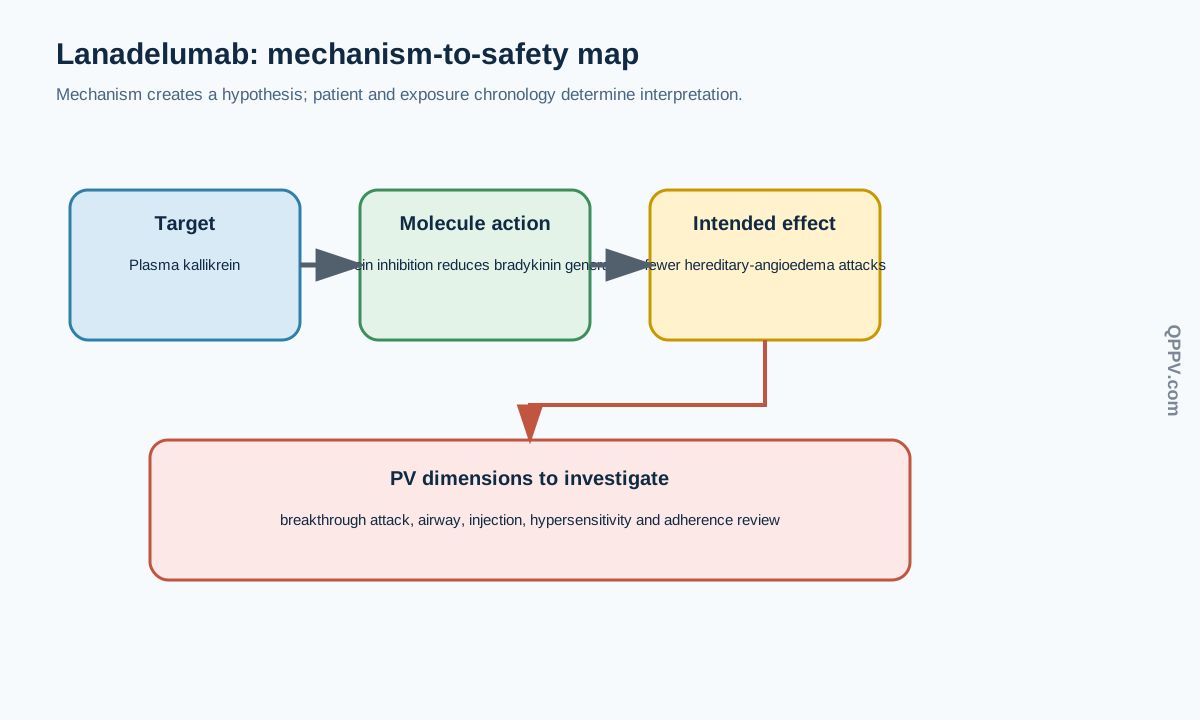
The target identifies the pathway being modified. The antibody format identifies a biological product with critical quality attributes that can influence exposure, immunogenicity and product-specific safety questions. The route creates a defined chronology with opportunities for administration reactions, handling errors and incomplete traceability.
For Lanadelumab, the principal mechanism-led safety hypothesis is that reduces kallikrein activity and limits downstream bradykinin generation. The intended clinical effect is prevention of recurrent hereditary angioedema attacks in the authorised prophylactic setting. The relevant pharmacovigilance concern is not simply an “immune effect”; it is the interaction between target biology, host susceptibility, concurrent treatment, disease activity and persistence of pharmacodynamic activity.
The mechanism therefore directs attention to injection-site reactions, hypersensitivity, breakthrough hereditary angioedema attacks, treatment interruption or delayed administration, immunogenicity and diagnostic confusion with allergic, medication-related or other forms of angioedema. It does not establish causality. A reported event must still be assessed against timing, objective findings, dechallenge, rechallenge when it occurs in routine care, alternative explanations and outcome.
Development and regulatory context
The important clinical distinction is between prevention and rescue. A report of facial, abdominal or laryngeal swelling should preserve whether the patient was receiving scheduled prophylaxis, whether a dose was delayed or missed, which acute treatment was used, how quickly symptoms progressed and whether another cause of angioedema was plausible.
The history of a biological medicine is also a history of changing clinical use. New indications, new age groups, new devices, switching patterns, combination regimens and longer exposure create new denominators and new opportunities for signal detection. A periodic review should distinguish evidence generated in the original development programme from evidence arising after broader clinical use.
A case that records only the substance name may be insufficient for investigation. Conversely, the presence of a plausible pathway does not mean that every infection, laboratory abnormality, neurological symptom or disease flare is drug-related. The useful question is whether the phenotype, timing, objective evidence and alternatives fit the proposed mechanism better than competing explanations do.
Clinical safety architecture
Lanadelumab safety is best understood through three interacting layers. The first is direct pharmacology: the biological function changed by plasma kallikrein in the contact system. The second is host susceptibility, including age, baseline organ function, disease severity, infection history, comorbidity and prior treatment. The third is the treatment environment, including procedures, concomitant medicines, treatment line and the reason treatment was started.
The same outward symptom can arise from different layers. Fever may reflect infection, inflammation or an administration-related reaction. A laboratory abnormality may be pharmacodynamic, a manifestation of organ injury, a consequence of disease activity or an effect of another medicine. A new neurological, respiratory, gastrointestinal or musculoskeletal finding may represent treatment toxicity, the underlying disease or an unrelated acute illness. The narrative must preserve baseline status, serial findings and the complete regimen rather than assigning causality from the event term alone.
Follow-up that changes the assessment
| Event or question | High-value follow-up |
|---|---|
| Breakthrough swelling or airway concern | site and phenotype, onset and progression, scheduled dose and interval, missed or delayed dose, acute treatment, airway intervention and outcome |
| Injection-site or hypersensitivity reaction | presentation, dose, injection site, technique, timing, vital signs, treatment, batch and any repeat exposure |
| Loss of preventive effect | attack frequency before and during treatment, exposure chronology, adherence, dose interval, bodyweight, concomitant prophylaxis and anti-drug-antibody information where available |
| Abdominal attack or diagnostic uncertainty | pain chronology, imaging, laboratory findings, alternative abdominal diagnoses, acute treatment and outcome |
| Suspected quality complaint | product, presentation, batch, storage, handling, device, co-exposed patients and distribution traceability |
Each request should target information capable of changing seriousness, causality, expectedness, signal interpretation or traceability. “Follow-up requested” is not a quality measure by itself; the useful measure is whether the information was obtained, evaluated and incorporated into the case.
Case assessment
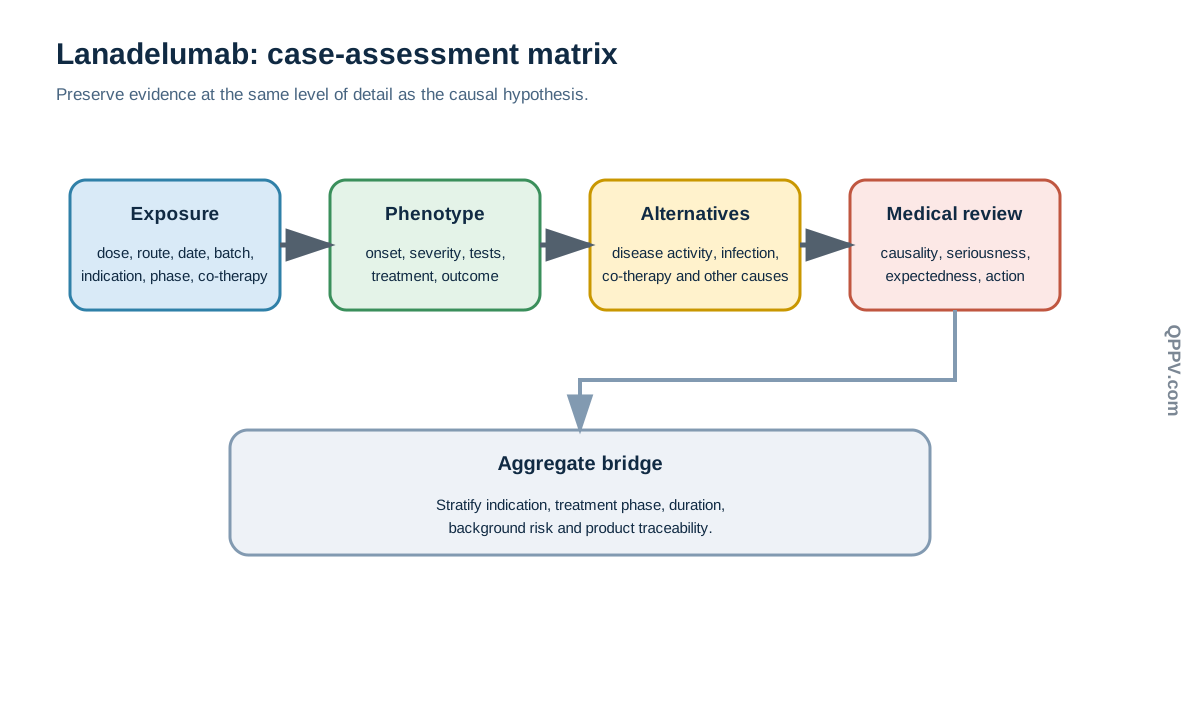
A strong assessment reconstructs a chain of events. Begin with why treatment was started and what outcome was intended. Establish exact exposure dates, dose, route, formulation, administration setting and batch, followed by concomitant medicines, recent procedures and prior biological therapies. Next describe onset, evolution, objective findings, treatment and outcome. Finally document alternative causes and the evidence for or against each one.
For Lanadelumab, the most important differential set includes a breakthrough hereditary angioedema attack, ACE-inhibitor or other medication-related angioedema, allergic reaction, infection, trauma, abdominal disease and an unrelated cause of swelling. Reviewers should record evidence before applying broad labels such as pathway-related, immune-mediated, treatment failure or administration reaction. Temporal association is necessary but rarely sufficient. A plausible mechanism strengthens a hypothesis; a strong competing cause weakens it.
Dechallenge may be informative, but it is often confounded by rescue therapy, hospital care, changes in concomitant medicines or natural disease fluctuation. Rechallenge can provide evidence, but it may be clinically inappropriate and should never be treated as a routine diagnostic test. For a persistent biological effect, interruption does not necessarily mean immediate biological reversal.
Causality, signal detection and benefit-risk
Causality should be stated with calibrated language. A case may support a relationship, remain indeterminate or be more consistent with another cause. The reasoning should connect exposure, phenotype, timing, objective evidence, dechallenge, competing explanations and outcome.
Signal detection should preserve strata that can change event frequency or meaning: indication, disease severity, treatment line, monotherapy or combination therapy, duration, age, baseline organ function, prior treatment, region, treatment phase and product presentation. Preferred-term counts are only a starting point. Several terms may represent one syndrome, while one term may combine multiple mechanisms.
Before drawing a conclusion, align the case definition, medical review, laboratory or imaging confirmation, exposure denominator and outcome severity. Compare the observed pattern with background disease rates, known class effects, concomitant medicines, reporting stimulation, changes in clinical practice and product or batch information. A signal is a hypothesis requiring evaluation, not proof of a causal relationship.
Risk-management controls
An effective system should make scientifically relevant information easy to capture and retrieve. Important controls for Lanadelumab include:
- structured fields for indication, treatment intent, treatment line and combination therapy;
- exact dose, route, administration date, formulation, presentation and batch;
- event-specific follow-up with baseline and serial findings;
- documented competing causes and explicit medical reasoning;
- reconciliation with quality complaints, medical-information contacts and distribution records;
- aggregate analyses stratified by population, regimen and treatment phase.
The controls should match the mechanism. For Lanadelumab, that means ensuring that injection-site reactions, hypersensitivity, breakthrough hereditary angioedema attacks, treatment interruption or delayed administration, immunogenicity and diagnostic confusion with allergic, medication-related or other forms of angioedema are not collapsed into a single undifferentiated “immune-related” category. A mechanism-led review should identify the phenotype that would support the hypothesis, the evidence that would weaken it and the information required to resolve uncertainty.
Common failure modes
Coding a symptom without recording objective findings may make disease activity indistinguishable from treatment effect. Assessing a serious event without reviewing baseline disease, procedures or concomitant treatment leaves major alternatives unexplored. Treating interruption as complete dechallenge may ignore persistent pharmacodynamic activity. Omitting presentation, batch, storage or administration details can make a quality investigation impossible.
For Lanadelumab, another recurrent error is to pool distinct clinical contexts. The important clinical distinction is between prevention and rescue. A report of facial, abdominal or laryngeal swelling should preserve whether the patient was receiving scheduled prophylaxis, whether a dose was delayed or missed, which acute treatment was used, how quickly symptoms progressed and whether another cause of angioedema was plausible. A periodic review should therefore state the population denominator, the exposure definition and the limitations of case completeness.
These are not merely documentation defects. They can change causality, signal strength, expectedness, traceability and regulatory decisions. During inspection, the important question is not whether a procedure exists, but whether it produces reliable evidence.
Practical QPPV checklist
- Confirm the active substance, indication, local authorisation and exact presentation.
- Reconstruct dose, route, dates, formulation, batch and administration setting.
- Describe the phenotype with objective findings, severity, treatment and outcome.
- Compare the event with the mechanism-led hypothesis and with a breakthrough hereditary angioedema attack, ACE-inhibitor or other medication-related angioedema, allergic reaction, infection, trauma, abdominal disease and an unrelated cause of swelling.
- Assess dechallenge and any routine-care rechallenge without manufacturing exposure.
- Request targeted follow-up that could change the medical conclusion.
- Stratify signal detection by indication, treatment phase, duration and relevant host risk.
- Link individual cases to quality, medical-information and aggregate processes.
- Record uncertainty explicitly and explain its impact on benefit-risk.
- Preserve source-to-decision traceability.
Key Takeaways
Lanadelumab pharmacovigilance is mechanism-led but never mechanism-only. plasma kallikrein in the contact system provides the biological anchor, while reliable interpretation requires the patient’s disease, susceptibility, co-medications, treatment chronology, objective findings and product identity.
In practice, preserve the authorised clinical context, follow up according to the event, document competing explanations, stratify aggregate analyses and maintain traceability from source information to regulatory action. This approach does not eliminate uncertainty. It makes uncertainty visible, reasoned and manageable.
References
- European Medicines Agency: Lanadelumab EPAR and product information.
- U.S. National Library of Medicine: Lanadelumab prescribing information.
- EMA: Good pharmacovigilance practices.
- ICH E2C(R2): Periodic benefit-risk evaluation report.
- ICH E2A: Clinical safety data management.
Regulatory Note
This article is an educational pharmacovigilance analysis, not a substitute for current local product information, clinical judgment or applicable legislation. Authorised indications, contraindications, monitoring, reporting duties and risk-minimisation measures vary by jurisdiction and may change. The current regulator-approved product information and validated safety procedures govern case handling.