Lenalidomide: Discovery, Development, Safety and Pharmacovigilance
Lenalidomide illustrates an unusual trajectory in therapeutics. A chemical descendant of thalidomide—whose history permanently changed medicines regulation—became a treatment for several blood cancers and for transfusion-dependent anaemia in selected myelodysplastic syndromes. Its clinical value is established in defined populations, but so are serious hazards: embryo-fetal toxicity, cytopenias, venous and arterial thrombosis, severe hypersensitivity, liver injury and second primary malignancies. The essential clinical question is not whether lenalidomide is generally beneficial or dangerous. It is whether the regimen, disease context, organ function and preventive controls make the anticipated benefit reasonable for a particular patient. [1,2]
The drug is often called an immunomodulatory imide drug (IMiD). That name describes a historical class, not a complete mechanism. Research identifying cereblon-dependent degradation of specific transcription factors explains why its biological effects extend beyond generic immune stimulation. Equally, the label is not a universal property of the molecule: different jurisdictions, products, combinations and indications have different approved instructions and adverse-reaction evidence. The following account connects molecular discovery to treatment decisions and the traceability expected in pharmacovigilance.
- Lenalidomide: Discovery, Development, Safety and Pharmacovigilance
- From thalidomide to lenalidomide
- Pharmacokinetics, formulations and treatment context
- Why indications cannot be merged
- Clinical development: from response to survival and maintenance
- Reading efficacy and safety together
- Safety profile: why prevention is part of treatment
- Listedness: US lenalidomide versus EU Revlimid
- Special populations and combination hazards
- Practical pharmacovigilance: turning a report into a defensible assessment
- Signal evaluation and risk-management governance
- Medication safety and continuity of care
- Key takeaways
- References
- Regulatory Note
From thalidomide to lenalidomide
The medicinal-chemistry and clinical problem
Thalidomide was introduced decades before lenalidomide and became infamous for severe congenital malformations. Its subsequent antimyeloma activity led investigators to examine structural analogues with different potency and tolerability. Lenalidomide, developed as CC-5013 in the Celgene programme, was one such compound. The intention was to preserve or improve useful antineoplastic and immune effects while changing unwanted toxicities. The phrase “safer thalidomide” is misleading without qualification: lenalidomide has a different safety profile, not freedom from teratogenic potential. Its restricted-distribution and pregnancy-prevention systems remain central to its benefit–risk management. [1,3]
Early development focused on myelodysplastic syndromes and multiple myeloma. The first US approval, in December 2005, was for a specified transfusion-dependent, lower-risk deletion-5q myelodysplastic syndrome population. [13] The US multiple-myeloma indication with dexamethasone followed in June 2006. The European authorisation was granted in June 2007, with subsequent extensions. These dates describe regulatory milestones, not the date of chemical invention, first human exposure or proof of activity in every later indication. [1,2,3]
The product's commercial lineage also changed. Revlimid was developed and marketed by Celgene, which was acquired by Bristol Myers Squibb in 2019. [15] Generic lenalidomide capsules later entered several markets under product-specific authorisations. A generic capsule and an originator capsule may share active substance and broad clinical use while retaining separate pack identifiers, approved product information and safety-contact details. A case processor should capture the actual brand, manufacturer, strength and country rather than assume that every exposure was to Revlimid. [1,2]
Cereblon changed the explanation of efficacy
A decisive mechanistic advance came after clinical efficacy had already been demonstrated. Lenalidomide binds cereblon (CRBN), the substrate receptor of a CUL4–RBX1–DDB1–CRBN E3 ubiquitin ligase complex. This changes substrate recognition so that the lymphoid transcription factors IKZF1 (Ikaros) and IKZF3 (Aiolos) are ubiquitinated and degraded by the proteasome. In myeloma cells, the resulting effects on the IRF4–MYC transcriptional network can suppress growth; in immune cells, altered IKZF signalling can enhance some T-cell responses. This is a molecular-glue degrader mechanism, rather than simple enzyme inhibition. [4]
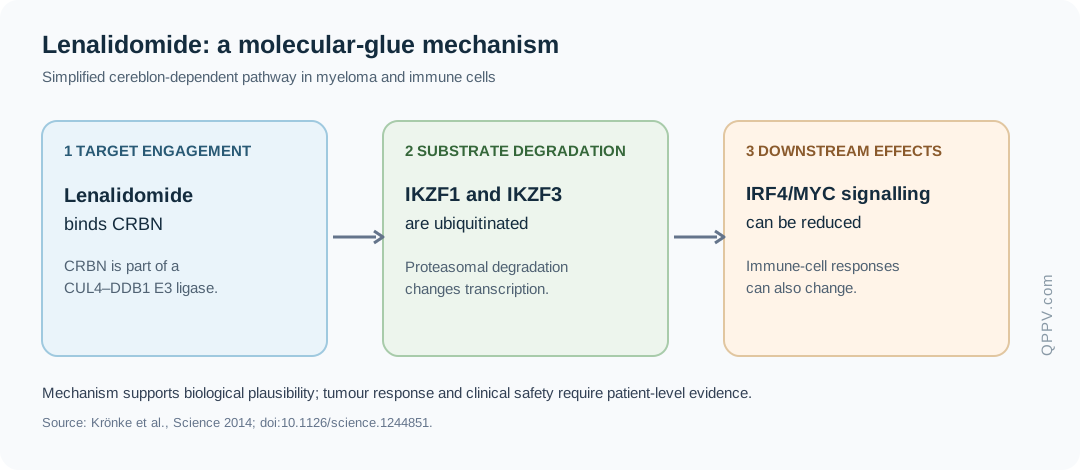
Figure 1. Lenalidomide changes cereblon-dependent protein degradation. The schematic represents a mechanistic pathway, not a clinical response prediction. [4]
The discovery helps explain both selective anticancer effects and the limits of a mechanistic prediction. The presence of cereblon does not establish that every tumour is sensitive, and laboratory measures of IKZF degradation do not replace clinical efficacy outcomes. Resistance may involve changes in cereblon-pathway function or tumour biology. Nor should the cereblon model be used to infer a precisely known mechanism for every reported adverse reaction. The relationship between target engagement, immune signalling, developmental toxicity and clinical outcomes is more complicated than a single pathway arrow.
The mechanism is also historically instructive: clinical use preceded complete molecular understanding. A safety programme cannot wait until every pathway is elucidated; it must act on clinical evidence, pharmacology, regulatory requirements and emerging signals. Later mechanistic work may sharpen hypotheses but does not erase the obligation to monitor actual outcomes.
Pharmacokinetics, formulations and treatment context
Lenalidomide is supplied as oral capsules. The US Devatis label reviewed for this article lists strengths from 2.5 mg to 25 mg, while the EU Revlimid SmPC also lists a 7.5-mg presentation. These are product-specific differences; they should not be interpreted as a clinical reason for different safety profiles. The medicine is substantially eliminated through the kidneys, so exposure increases when renal clearance is reduced. Dose adjustments are based on the regimen and estimated creatinine clearance in the applicable label, rather than on a generic “renal impairment” checkbox. [1,2]
Schedules differ sharply by indication. The US label describes 25 mg on days 1–21 of a 28-day cycle with dexamethasone for multiple myeloma, 10 mg continuously on days 1–28 after autologous transplantation, and other schedules for MDS and lymphoma. The EU SmPC includes additional combination schedules and their own interruption thresholds. These examples illustrate why a prescription written simply as “lenalidomide daily” is incomplete for medication reconciliation. The intended days off, cycle number, accompanying drugs, renal adjustment and last actual dose are all safety-relevant. [1,2]
The capsules must not be opened or handled casually. Exposure precautions extend to carers and pharmacy staff because the medicine is potentially harmful to an embryo. The US REMS and European Pregnancy Prevention Programme impose different operational frameworks; their details should be checked locally rather than treated as interchangeable. A dispensing failure can be a significant safety incident even before an adverse outcome is observed.
Why indications cannot be merged
The approved uses span biologically and clinically different conditions: plasma-cell myeloma, deletion-5q MDS, mantle-cell lymphoma and certain indolent lymphomas. In myeloma, lenalidomide may be used in combination with other medicines or as post-transplant maintenance. In MDS, the primary treatment objective may be durable independence from red-cell transfusions. In lymphoma, treatment may aim to delay progression after earlier therapy. Different endpoints, doses, co-medications and baseline risks mean that a common INN does not imply a common benefit–risk estimate. [1,2]
A useful evidence review therefore asks which population was randomised, what the comparator received, whether treatment was continuous or time-limited, whether the endpoint was response, transfusion independence, progression-free survival or overall survival, and what toxicity accompanied the benefit. The next section follows those questions through the pivotal studies.
Clinical development: from response to survival and maintenance
Relapsed multiple myeloma: MM-009 and MM-010
Two placebo-controlled phase III studies compared lenalidomide plus dexamethasone with placebo plus dexamethasone in patients whose multiple myeloma had progressed after prior treatment. They established that the contribution of lenalidomide was more than a response signal from a small uncontrolled series. In MM-010, 351 participants were randomised; median time to progression was 11.3 months with lenalidomide/dexamethasone versus 4.7 months with dexamethasone alone. Complete or partial response occurred in 60.2% versus 24.0%. The reported hazard ratio for death was 0.66 (P=0.03), but later treatment and unblinding complicate interpretation of longer-term comparisons. [5]
The toxicity contrast is equally instructive. MM-010 reported grade 3–4 neutropenia in 29.5% versus 2.3%, thrombocytopenia in 11.4% versus 5.7%, and venous thromboembolism in 11.4% versus 4.6%. Those are trial-arm proportions under the historical regimen, not spontaneous-reporting incidence estimates and not predictions for every modern prophylaxis strategy. MM-009 independently supported benefit in a North American population. Its details should not be collapsed into a pooled point estimate without explaining study differences. [5,6]
The regimen used relatively intensive dexamethasone compared with some later approaches. This matters because steroids contribute to infection, metabolic and thrombotic risk. The trial demonstrates the benefit of a combination, not the safety of lenalidomide as an isolated drug. A suspected event in routine care requires attribution among active ingredients and underlying disease.
FIRST: newly diagnosed patients ineligible for transplant
The FIRST trial compared continuous lenalidomide plus low-dose dexamethasone, a fixed 18-cycle course of the same combination, and melphalan–prednisone–thalidomide in 1,623 transplant-ineligible patients. Median progression-free survival was 25.5, 20.7 and 21.2 months, respectively. Continuous lenalidomide/dexamethasone was favoured versus melphalan–prednisone–thalidomide (hazard ratio 0.72), and versus the fixed-duration lenalidomide arm (hazard ratio 0.70), with P<0.001 for both comparisons. At the reported interim analysis, four-year overall survival was 59%, 56% and 51%. [7]
These findings supported a change in treatment strategy, but the comparison is against an older regimen rather than every contemporary triplet or quadruplet. More infections occurred with continuous lenalidomide/dexamethasone than with melphalan–prednisone–thalidomide, while some haematological and neurological toxicities were lower. The fact that an active regimen reduces one category of toxicity while increasing another illustrates why benefit–risk assessment must be multidimensional.
Continuous exposure also lengthens the time during which late toxicity can emerge. A pharmacovigilance review must record cumulative treatment, interruptions and subsequent lines of therapy. A treatment-emergent second malignancy years later cannot be assessed with the same exposure window as a rash arising after the first dose.
Maintenance after autologous transplantation: CALGB 100104 and IFM 2005-02
Maintenance trials addressed a different clinical question: could treatment after high-dose therapy and autologous transplantation delay relapse? CALGB 100104 randomised 460 patients around day 100 after transplantation. At the original analysis, median time to progression was 46 months with lenalidomide and 27 months with placebo. More severe haematological and non-haematological adverse events occurred in the active arm. Second primary cancers were reported in 18 lenalidomide-treated patients (8%) versus six placebo recipients (3%) at the reported follow-up. [8]
IFM 2005-02 likewise showed prolonged progression-free survival, but the two trials differed in design and subsequent treatment, and the overall-survival findings were not identical. In updated analyses cited in the US regulatory review, the CALGB overall-survival hazard ratio was 0.59, whereas IFM's was 0.90 with a confidence interval spanning no effect. These differences should not be obscured by describing all maintenance trials as providing an equivalent survival advantage. [1,9]
Maintenance also changes the safety denominator. Longer survival and prolonged treatment increase opportunities to observe infections, cytopenias and second cancers. Such outcomes must be considered alongside delayed myeloma progression, prior exposure to high-dose melphalan and the competing risk of death. The observation of a higher second-cancer rate does not prove that every subsequent cancer in an individual patient was caused by lenalidomide.
Deletion-5q myelodysplastic syndrome: MDS-004
In the 205-participant MDS-004 trial, the clinically meaningful endpoint was independence from red-cell transfusions for at least 26 weeks. The proportion achieving this endpoint was 56.1% with 10-mg lenalidomide, 42.6% with 5-mg lenalidomide and 5.9% with placebo. The trial allowed crossover after 16 weeks, limiting clean long-term comparisons of survival and leukaemic transformation. Severe neutropenia and thrombocytopenia were important treatment-limiting toxicities. [10]
The deletion-5q molecular context is not interchangeable with all forms of MDS. Patients may have baseline cytopenias before treatment, and subsequent blood-count decline can represent pharmacological myelosuppression, progression of the underlying marrow disorder, infection or another cause. Clonal evolution and acute myeloid leukaemia are outcomes that require longitudinal assessment, not an assumption of drug causality from temporal association.
Lymphoma: SPRINT and AUGMENT
SPRINT (MCL-002) compared lenalidomide with investigator's choice of single-agent treatment in relapsed or refractory mantle-cell lymphoma. Median progression-free survival was 8.7 versus 5.2 months. The EU SmPC also identifies early deaths in patients with high tumour burden and warns that tumour flare may resemble progression. A positive PFS result does not negate an early hazard in a clinically identifiable subgroup. [2,11]
AUGMENT randomised 358 patients with relapsed follicular or marginal-zone lymphoma to lenalidomide plus rituximab or placebo plus rituximab. Median progression-free survival was 39.4 versus 14.1 months, hazard ratio 0.46 (95% CI 0.34–0.62). Grade 3–4 neutropenia occurred in 50% versus 13%, and infections and cutaneous reactions were more common with the combination. The marginal-zone subgroup was relatively small, so its individual estimate was uncertain; the overall result should not be interpreted as equally precise for every lymphoma subtype. [12]
Reading efficacy and safety together
| Setting | Main benefit demonstrated | Safety or interpretation constraint |
|---|---|---|
| Previously treated myeloma | Longer time to progression with lenalidomide/dexamethasone | Cytopenias, thrombosis and steroid-related confounding |
| Transplant-ineligible newly diagnosed myeloma | Improved PFS for continuous Rd against historical MPT | Prolonged exposure, infections, evolving comparators |
| Post-transplant maintenance | Delayed progression or relapse | Second malignancies, cytopenias, prior melphalan exposure |
| Deletion-5q MDS | Sustained transfusion independence | Baseline marrow failure, profound cytopenias, crossover |
| Mantle-cell lymphoma | PFS benefit against investigator choice | Early deaths in high tumour burden, tumour flare |
| Follicular lymphoma | PFS benefit when added to rituximab | Neutropenia, infection, combination attribution |
The table is an evidence map, not a cross-trial ranking of treatment effect. Its purpose is to prevent the error of applying a single efficacy claim or adverse-event frequency to all lenalidomide regimens. Regulatory authorisation and current clinical guidance must be consulted for the actual disease setting.
Safety profile: why prevention is part of treatment
Embryo-fetal toxicity and controlled access
The thalidomide relationship makes pregnancy exposure a defining risk. Lenalidomide caused limb malformations in animal developmental studies, and the US label warns of severe birth defects or embryo-fetal death if used during pregnancy. Pregnancy is contraindicated. The US Lenalidomide REMS requires a restricted-distribution system, pregnancy testing and contraception or abstinence conditions for eligible patients. The EU Revlimid SmPC makes participation in the Pregnancy Prevention Programme central to prescribing, including for women of childbearing potential who would otherwise be contraindicated. [1,2]
These controls are not interchangeable administrative forms. Each programme has jurisdiction-specific counselling, verification, dispensing and documentation requirements, including requirements concerning male patients and donation of blood or sperm. A pregnancy exposure may warrant urgent clinical assessment and regulatory follow-up even when no malformation has yet been identified. Case documentation should preserve the exact dates of last dose, conception estimate, pregnancy tests, contraception history and product supply. A negative test after exposure does not retrospectively prove that no embryo was exposed.
Cytopenias and infection
Neutropenia and thrombocytopenia are major dose-limiting toxicities. In deletion-5q MDS, baseline marrow dysfunction can magnify the challenge of distinguishing disease-related cytopenia from treatment effect. The US label instructs weekly complete blood counts during the first eight weeks of MDS treatment and at least monthly thereafter, with interruption or dose reduction as needed. Myeloma and lymphoma regimens have their own monitoring schedules and dose-modification thresholds. [1]
Infections, including pneumonia and febrile neutropenia, may follow marrow suppression or arise from the malignancy, corticosteroids, other immunosuppressive therapy and prior transplantation. A case of pneumonia should record absolute neutrophil counts over time, microbiology, concomitant medicines and the dates of the infectious syndrome. A clinical trial may classify pneumonia as a treatment-emergent adverse event without establishing that lenalidomide was the sole cause.
Thrombosis and arterial events
The US boxed warning identifies venous thromboembolism—particularly deep-vein thrombosis and pulmonary embolism—and arterial events including myocardial infarction and stroke in patients receiving lenalidomide with dexamethasone. The label recommends thromboprophylaxis based on underlying risk. The EU SmPC similarly addresses risk factors such as previous thrombosis and concomitant erythropoiesis-stimulating or oestrogen-containing therapy. [1,2]
A thrombosis assessment should capture malignancy activity, immobility, central venous devices, prior thrombotic history, body mass index, smoking, hormonal therapy, steroid dose, prophylaxis prescribed and actually taken, platelet count and bleeding risk. The presence of prophylaxis does not exclude a drug contribution, while absence of prophylaxis does not alone establish causation. Arterial and venous events require distinct clinical adjudication, even though both appear in the same boxed warning.
Second primary malignancies
Long-term maintenance studies identified more second primary malignancies among some lenalidomide-treated patients. The December 2025-revised US generic label reports haematological second malignancies in 7.5% versus 3.3% after high-dose melphalan and autologous transplantation in maintenance comparisons; haematological plus solid tumours, excluding common non-melanoma skin cancers, occurred in 14.9% versus 8.8% with a median follow-up of 91.5 months. These are context-specific clinical-trial observations, not an overall rate for all lenalidomide users. [1]
Attribution is difficult because patients may have undergone intensive chemotherapy and transplantation, have inherited or acquired predisposition, and live long enough to develop unrelated cancers. The correct PV approach is to document the diagnosis, histology, cytogenetics, treatment history and latency, then consider both the known association and alternative causes. Dismissing the event as inevitable because the patient has cancer is as unsound as automatically assigning causality to lenalidomide.
Other important events
The US label warns about hepatotoxicity, severe cutaneous reactions, hypersensitivity, tumour lysis, tumour flare, impaired stem-cell mobilisation and increased mortality in chronic lymphocytic leukaemia and in a particular pembrolizumab-containing myeloma combination. Its postmarketing section includes hepatic failure, pneumonitis, viral reactivation, progressive multifocal leukoencephalopathy, Stevens–Johnson syndrome, toxic epidermal necrolysis and DRESS. Spontaneous postmarketing identification does not provide a reliable frequency denominator. [1]
The EU SmPC also discusses early mortality in mantle-cell lymphoma with high tumour burden, tumour flare that can resemble disease progression, thyroid dysfunction and peripheral neuropathy in combination regimens. Because bortezomib and other drugs can contribute neuropathy, an adverse-event report should identify the entire regimen rather than assume an isolated lenalidomide effect. [2]
Listedness: US lenalidomide versus EU Revlimid
The assessed US product is Devatis Inc. lenalidomide oral capsules, DailyMed SPL updated 3 February 2026, with prescribing information revised December 2025 (sections 1, 3–8). The assessed EU product is Bristol Myers Squibb Revlimid hard capsules, EMA English Annex I SmPC, product-information publication updated 9 September 2025 (sections 4.1–4.8). Both sources were accessed 1 November 2026. The US generic label is not presented as the originator's latest label; the separate March 2023 BMS Revlimid USPI provides historical originator context. [1,2,14]
| Assessment domain | US Devatis capsules, Dec 2025 revision | EU Revlimid capsules, Sep 2025 publication |
|---|---|---|
| Indication scope | Includes previously treated marginal-zone lymphoma with rituximab; myeloma, del(5q) MDS, mantle-cell and follicular lymphoma uses | Includes follicular lymphoma with rituximab; marginal-zone lymphoma is not listed in section 4.1 of the assessed SmPC |
| Available strengths | 2.5, 5, 10, 15, 20, 25 mg | Includes 7.5 mg in addition to these strengths |
| Pregnancy contraindication | Pregnancy; severe hypersensitivity, section 4 | Pregnancy, hypersensitivity and women of childbearing potential unless all Pregnancy Prevention Programme conditions are met, section 4.3 |
| Common reactions | Section 6.1 trial tables, by disease and regimen; cytopenias, diarrhoea, fatigue, rash and infections | Section 4.8 frequency tables, by disease and regimen; corresponding haematological, gastrointestinal, infectious and cutaneous reactions |
| Thrombosis | Boxed warning, section 5.4, trial reactions in 6.1 | Sections 4.4 and 4.8; venous and arterial thromboembolic events described |
| Second malignancies | Warning 5.6 with trial context | Section 4.4 discussion and section 4.8 safety context |
| Severe skin and liver injury | Warnings 5.8–5.9 and postmarketing section 6.2 | Sections 4.4 and 4.8, including serious skin and hepatic events |
| Additional controls | Lenalidomide REMS, restricted US distribution | Pregnancy Prevention Programme and additional-monitoring designation |
Listedness conclusion, within this defined comparison: neutropenia, thrombocytopenia, venous thromboembolism, rash and common gastrointestinal events are described in the adverse-reaction sections of both assessed labels. The assessed EU SmPC explicitly lists certain postmarketing hepatic reactions with unknown frequency, while the US label identifies hepatic reactions in section 6.2 without estimating frequency. Warnings and precautions also describe serious events, but a mention in a warning is not automatically equivalent to placement in an adverse-reaction table. Neither a difference in frequency categorisation nor the absence of a term from a summary table proves a genuine difference in causality. [1,2]
Public listedness is not case expectedness
This comparison is against two public product-information documents. Company-core data sheet listedness, the reference safety information applicable to a particular clinical trial, local expedited-reporting rules and case-specific expectedness may differ. “Listed” does not mean caused by lenalidomide in an individual case; “not found in this document” does not mean unexpected against every valid RSI. A PV assessment must record the document, version, jurisdiction, exact term and section used, then apply the correct reporting framework. [1,2]
Special populations and combination hazards
Renal function deserves repeated attention because lenalidomide clearance is predominantly renal. A patient whose kidney function declines during therapy may experience higher exposure without a nominal dose change. Dose selection must follow the applicable indication-specific renal table, and renal function should be reassessed when dehydration, sepsis, nephrotoxic therapy or progression of myeloma occurs. The EU SmPC notes limited data in hepatic impairment rather than offering a simple universal hepatic adjustment. [1,2]
Combination partners influence risk: dexamethasone and erythropoiesis-stimulating agents affect thrombosis; rituximab and steroids affect infection; melphalan and transplantation complicate later marrow toxicity and second-cancer attribution. The US label also recommends periodic digoxin level monitoring when co-administered. Clinicians should not treat a safety issue as a property of one INN when the actual intervention is a regimen. [1,2]
Practical pharmacovigilance: turning a report into a defensible assessment
Case intake and the minimum useful exposure history
A lenalidomide report is rarely interpretable from the suspected reaction term alone. The starting point is a patient-level chronology: indication and disease stage; prior treatment, transplantation and radiation; the exact product and strength; regimen and cycle day; actual dates of administration; renal function and dose adjustments; and every important concomitant medicine. A patient with myeloma on lenalidomide/dexamethasone, a patient receiving post-transplant maintenance and a patient with deletion-5q MDS have different baseline risks and different opportunities for alternative explanations.
The first assessment should distinguish the clinical event from its possible causes. “Neutropenic sepsis” contains at least two linked but distinct clinical concepts. Neutropenia may precede infection, infection may worsen marrow suppression, and several medicines or the underlying disease may contribute. Record laboratory trends, culture results, imaging, treatment interventions, hospitalisation and outcome. If a laboratory abnormality was already present before the first dose, describe its change rather than presenting the entire abnormality as treatment-emergent.
The chronology should include interruptions and rechallenge only when they actually occurred. It is not ethically appropriate to seek a rechallenge after a severe cutaneous reaction or suspected pregnancy exposure merely to strengthen causal evidence. Clinical management comes first; the PV record documents the evidence available. Where a serious event is suspected, appropriate medical and reporting pathways must not wait for complete causal certainty.
Illustrative case: pulmonary embolism during a combination regimen
Consider an illustrative patient receiving lenalidomide and dexamethasone who develops sudden dyspnoea and pleuritic pain after several cycles. Imaging confirms pulmonary embolism. A useful report records the timing of both drugs, thromboprophylaxis type and adherence, prior venous thromboembolism, mobility, recent surgery, catheter status, platelet count, cancer activity, renal function, hospital admission, anticoagulant treatment and outcome. The thrombotic risk is already recognised in both public labels. [1,2]
The presence of a labelled risk supports biological and regulatory plausibility, but it does not by itself prove individual causality. Cancer is independently prothrombotic, and glucocorticoid-containing regimens add complexity. An assessor should separate seriousness (for example, hospitalisation or a life-threatening event) from causality and expectedness. The reporting decision then follows the applicable regulatory and organisational framework, not a simplistic rule that “listed equals nonreportable.”
Illustrative case: falling blood counts in deletion-5q MDS
A patient with transfusion-dependent MDS begins lenalidomide and experiences marked neutrophil and platelet decline during the first month. The baseline marrow disorder is a competing explanation, but the timing and established dose-related toxicity support consideration of treatment contribution. Capture pretreatment counts, each cycle's laboratory results, dose interruptions, growth-factor or transfusion support, infections, bleeding, marrow reassessment and subsequent recovery. The US label's intensive early blood-count monitoring is a practical risk-control measure in precisely this setting. [1]
If the patient later develops acute myeloid leukaemia, the report must not conflate early cytopenia with malignant transformation. Obtain pathology and cytogenetics, prior marrow findings, clonal information if available, all cytotoxic exposures and elapsed time. An SPM signal assessment requires aggregate denominators, comparator groups, exposure duration and competing risks; an individual narrative alone is insufficient to estimate attributable risk.
Illustrative case: pregnancy prevention failure
A pregnancy exposure is a safety event with a different urgency and evidence need. Determine whether exposure was maternal or paternal, verify the exact dates and dose, identify the pregnancy stage and test results, document the relevant REMS or Pregnancy Prevention Programme control steps, and arrange appropriate medical follow-up through the responsible clinical team. Do not infer a healthy fetal outcome from absence of an early abnormal scan, and do not presume an adverse outcome without follow-up. The prevention process itself may need quality review even when no birth defect is confirmed. [1,2]
Signal evaluation and risk-management governance
Individual case safety reports help identify patterns, but disproportionality alone is not an incidence estimate or proof of causation. For a suspected new signal, define the event medically, inspect duplicates, evaluate temporal relationships, compare background risk in relevant malignancies, and examine trial, literature and real-world evidence. Distinguish events arising during lenalidomide monotherapy from events under rituximab, dexamethasone, bortezomib or transplant conditioning. Confounding by indication and treatment line is substantial in haematological oncology.
Risk minimisation should be assessed for effectiveness, not just existence. Useful measures include pregnancy-programme compliance, counselling and dispensing errors, timely blood-count testing, renal-dose review, thromboprophylaxis assessment and response to severe rash or liver injury. Audit findings should trace from a documented failure to a corrective action, ownership, implementation evidence and a measurable check that the change worked. A low count of reported events can reflect underreporting rather than a successful control.
The EU SmPC's additional-monitoring designation and its request for reporting suspected reactions are not evidence that every suspected event is unexpected. The designation supports prompt collection of safety information. Similarly, US REMS compliance is a restricted-distribution obligation distinct from the clinical assessment of a suspected adverse reaction. A competent PV system keeps these workstreams linked but does not substitute one for another. [1,2]
Medication safety and continuity of care
Lenalidomide dosing schedules create opportunities for wrong-day administration, duplicate doses, failure to apply renal adjustment and accidental use of a prior cycle's dose. Medication reconciliation should use the actual prescription, dispensed strength and calendar, not only a generic drug list. The label instructs swallowing capsules whole and handling them carefully; damaged capsules, inadvertent household exposure and disposal failures merit appropriate evaluation. [1,2]
Transfers between oncology centres, hospital wards, community pharmacies and long-term follow-up clinics can interrupt pregnancy-prevention verification or laboratory monitoring. When a patient changes brands, capture the dispensed product and local authorisation. A generic switch is not itself evidence of an adverse reaction, but confusion between strengths or packaging can create a medication error. If an error occurred, document whether it reached the patient, the clinical consequences, contributing factors and preventive action.
Key takeaways
Lenalidomide's efficacy is established across distinct haematological settings, not as a single interchangeable treatment claim. Cereblon-mediated protein degradation explains a central part of its pharmacology, while clinical outcomes and product information remain the authority for benefit–risk decisions. The most consequential risk controls address pregnancy, marrow suppression, thrombosis, renal dosing and late malignancy surveillance. US and EU labels differ in product scope and programme language; case-specific listedness and expectedness require the correct reference document. High-quality PV integrates chronology, competing causes, treatment combinations and evidence that risk-minimisation measures actually work.
References
- US National Library of Medicine, DailyMed. Lenalidomide capsules, Devatis Inc. Structured Product Labeling updated 3 February 2026; full prescribing information revised December 2025. Sections 1–8, 12, 14. Accessed 1 November 2026. https://dailymed.nlm.nih.gov/dailymed/drugInfo.cfm?setid=9959cd7e-12b6-4b59-8205-d5f6e7e7d09b
- European Medicines Agency. Revlimid (lenalidomide), Summary of Product Characteristics, Annex I, product information updated 9 September 2025. Sections 4.1–4.8, 5.1. Accessed 1 November 2026. https://www.ema.europa.eu/en/documents/product-information/revlimid-epar-product-information_en.pdf
- Kumar SK, Rajkumar SV. Thalidomide and lenalidomide in the treatment of multiple myeloma. Eur J Cancer. 2006;42:1612–1622. https://pubmed.ncbi.nlm.nih.gov/16750621/
- Krönke J, et al. Lenalidomide causes selective degradation of IKZF1 and IKZF3 in multiple myeloma cells. Science. 2014;343:301–305. https://doi.org/10.1126/science.1244851
- Dimopoulos M, et al. Lenalidomide plus dexamethasone for relapsed or refractory multiple myeloma. N Engl J Med. 2007;357:2123–2132. https://doi.org/10.1056/NEJMoa070594
- Weber DM, et al. Lenalidomide plus dexamethasone for relapsed multiple myeloma in North America. N Engl J Med. 2007;357:2133–2142. https://doi.org/10.1056/NEJMoa070596
- Benboubker L, et al. Lenalidomide and dexamethasone in transplant-ineligible patients with myeloma (FIRST). N Engl J Med. 2014;371:906–917. https://doi.org/10.1056/NEJMoa1402551
- McCarthy PL, et al. Lenalidomide after stem-cell transplantation for multiple myeloma (CALGB 100104). N Engl J Med. 2012;366:1770–1781. https://doi.org/10.1056/NEJMoa1114083
- Attal M, et al. Lenalidomide maintenance after stem-cell transplantation for multiple myeloma (IFM 2005-02). N Engl J Med. 2012;366:1782–1791. https://doi.org/10.1056/NEJMoa1114138
- Fenaux P, et al. A randomized phase 3 study of lenalidomide versus placebo in RBC transfusion-dependent lower-risk myelodysplastic syndromes with del5q. Blood. 2011;118:3765–3776. https://doi.org/10.1182/blood-2011-01-330126
- Trněný M, et al. Lenalidomide versus investigator's choice in relapsed or refractory mantle-cell lymphoma (MCL-002; SPRINT). Lancet Oncol. 2016. https://doi.org/10.1016/S1470-2045(15)00559-8
- Leonard JP, et al. AUGMENT: lenalidomide plus rituximab versus placebo plus rituximab in relapsed or refractory indolent lymphoma. J Clin Oncol. 2019;37:1188–1199. https://doi.org/10.1200/JCO.19.00010
- Oncology Nursing Society. FDA approves lenalidomide as maintenance therapy after autologous transplantation, 23 February 2017; historical approval chronology. https://www.ons.org/publications-research/voice/news-views/02-2017/fda-approves-lenalidomide-maintenance-therapy
-
Bristol Myers Squibb. Revlimid US Prescribing Information, originator capsules, revised March 2023; historical comparator, not asserted to be the latest US generic label. https://packageinserts.bms.com/pi/pi_revlimid.pdf
-
Bristol Myers Squibb. Completion of the acquisition of Celgene, company announcement dated 20 November 2019. https://news.bms.com/news/details/2019/Bristol-Myers-Squibb-Completes-Acquisition-of-Celgene-Creating-a-Leading-Biopharma-Company/default.aspx
Regulatory Note
This article is an educational, source-dated analysis, not an individual prescribing instruction, regulatory submission, company core data sheet or determination of reportability. The US and EU product documents compared here have different publication dates, indications and risk-minimisation systems. Consult the current locally authorised product information, relevant protocol/reference safety information and applicable reporting requirements for any real case. Clinical trial percentages depend on their denominators, follow-up, comparator and treatment regimen; spontaneous-reporting frequencies cannot be inferred from them.