Linvoseltamab: BCMA-Directed T-Cell Engagement and Pharmacovigilance
Linvoseltamab is a T-cell-engaging bispecific antibody for heavily pretreated multiple myeloma. Its design links a tumour-associated target to a component of the patient’s own immune system, creating a pharmacological interaction that is both the basis of activity and a source of acute safety risk. Pharmacovigilance therefore needs to preserve dose sequence and timing, not only the fact that an infusion occurred.
Molecular classification and mechanism
Linvoseltamab is a human IgG4 bispecific monoclonal antibody with binding domains for B-cell maturation antigen (BCMA) and CD3. BCMA is expressed on plasma cells, including malignant plasma cells in multiple myeloma; CD3 is part of the T-cell receptor complex. By binding both targets, the antibody forms a bridge between a T cell and a BCMA-expressing cell. This promotes T-cell activation and cytotoxic killing of the target cell.
This is not simply checkpoint blockade or conventional Fc-mediated cell killing. The intended mechanism recruits and activates T cells directly. Its clinical effect depends on the availability and function of T cells, target expression, tumour burden, treatment exposure and the host’s physiological reserve. Mechanistic plausibility can inform an assessment but cannot establish that a particular fever, neurological symptom or infection was caused by linvoseltamab.
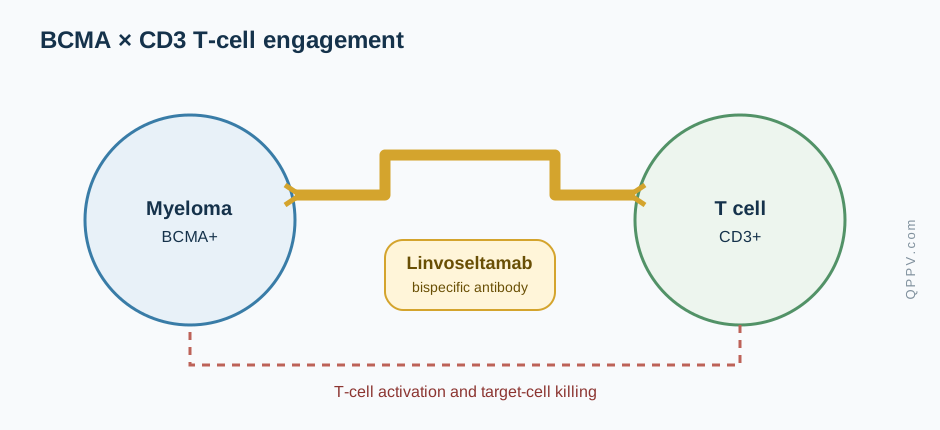
Figure 1. Linvoseltamab binds BCMA and CD3, creating an immune synapse that supports T-cell activation and target-cell killing. The diagram represents the intended mechanism, not a complete model of all immune effects.
EU indication and treatment course
The EU indication covers adults with relapsed or refractory multiple myeloma who have received at least three prior therapies, including a proteasome inhibitor, an immunomodulatory agent and an anti-CD38 monoclonal antibody, and whose disease progressed on the last therapy. The population is therefore characterised by substantial prior treatment, cumulative immunosuppression and limited remaining options. These factors influence both safety and benefit-risk interpretation.
The EU regimen uses weekly administration during the initial period, with step-up doses during the first weeks to reduce the risk of cytokine release syndrome (CRS) and infusion-related reactions. Later dosing intervals may be extended according to the authorised product information and response. This treatment architecture is safety-relevant: the first exposure, step-up period, subsequent dosing and later treatment stages should remain distinguishable in case narratives and aggregate reviews.
Treatment should be administered where CRS, infusion reactions and immune effector cell-associated neurotoxicity syndrome (ICANS) can be recognised and managed promptly, as specified in the current product information. The label also addresses premedication, monitoring, dose interruption and restrictions such as active infection. The exact current regimen and requirements must be taken from the SmPC, not reconstructed from a prior cycle or trial protocol.
Safety evidence and temporal patterns
The principal early safety concern is CRS, an inflammatory syndrome that may include fever, chills, hypotension, hypoxia, tachycardia and other systemic findings. Its onset can be temporally related to early doses and step-up administration, but severity and presentation vary. An infusion reaction may overlap clinically with CRS; accurate timing, diagnostic criteria and management are needed before events are coded or analysed as distinct syndromes.
ICANS can involve changes in attention, language, writing, consciousness or other neurological functions. The assessment should document onset relative to dosing, neurological findings, alternative causes and treatment. In patients with advanced myeloma, infection, metabolic disturbance, renal impairment, concomitant analgesics and disease-related complications may confound neurological presentation.
Infections require interpretation across several layers. Linvoseltamab is used after multiple previous therapies, while immune-cell engagement and ongoing treatment may alter host defence. The disease itself, prior corticosteroids or cytotoxic treatment, hypogammaglobulinaemia and comorbidity also contribute. A case report should distinguish infection phenotype and microbiological evidence where available, rather than using a broad “infection” label alone.
Tumour burden and rapid tumour-cell killing can create additional clinical complexity, including laboratory changes requiring differential diagnosis. The label and current clinical guidance should determine the recognised risks and monitoring. Do not promote a theoretical pathway into an established product risk without supporting evidence.
Case processing and exposure reconstruction
A useful case record includes exact product and batch when available; indication and prior treatment history; baseline disease burden; dose dates and amounts; step-up stage; premedication; inpatient or outpatient setting; event onset; objective measurements; interventions; outcome; and whether later doses were delayed, withheld or resumed. For CRS and ICANS, capture severity grading as reported, the grading system and the clinical basis for the grade.
The dose sequence is essential for aggregate analysis. If all cases are recorded only as “after linvoseltamab,” an early step-up event may be combined with an event arising after months of treatment. That can obscure a meaningful temporal pattern or falsely suggest consistency where the event phenotypes differ.
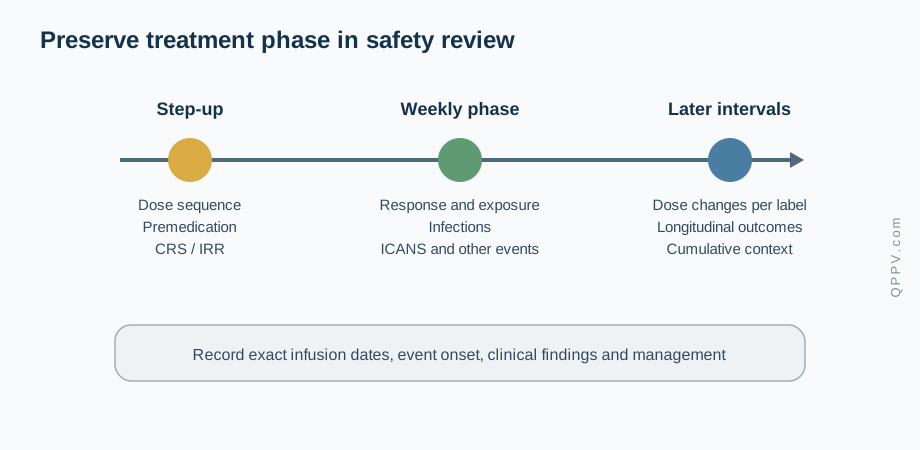
Figure 2. Safety review follows the treatment phases: step-up, continued weekly dosing and later interval extension where applicable. The timeline is conceptual; current dosing and monitoring requirements are defined by the EU product information.
Signal evaluation and operational controls
Signal review should consider the seriousness, medical coherence, timing, dose phase, recurrence, dechallenge, concomitant treatment and alternative causes of each event. For rare severe outcomes, absence of a statistical reporting threshold does not replace clinical review. Conversely, a cluster of reports does not establish a causal relationship or incidence. Exposure estimates and clinical-trial evidence should be considered where available.
The conditional EU marketing authorisation reflects less comprehensive data than a standard authorisation, with further evidence obligations identified by EMA. This creates a continuing need to connect emerging safety information with the benefit-risk profile in a population with high unmet need. Regulatory status and specific obligations should be rechecked in current EPAR documents because they may evolve.
A potential process failure is losing step-up-dose details during transfer from infusion records to the safety database. Another is coding fever and hypotension as nonspecific events without assessing CRS criteria. Training, structured fields and targeted follow-up can reduce these gaps. They are recommended quality controls; they should not be described as separate legal requirements unless a binding source says so.
Governance and inspection perspective
An inspector could assess whether the organisation’s processes preserve dosing sequence, identify and medically review CRS and ICANS, evaluate infections in the context of previous therapies, and document escalation decisions. Evidence may include case narratives, medical-review criteria, safety database conventions, signal outputs, aggregate reports, risk-minimisation implementation and follow-up on required post-authorisation evidence.
A strong process demonstrates how the company reached a conclusion and what uncertainty remained. It does not assume that each event is mechanistically caused by a bispecific antibody, nor does it dismiss a concern because the treated population is medically complex.
Key takeaways
- Linvoseltamab bridges BCMA-positive cells and CD3-positive T cells to promote T-cell cytotoxicity.
- The EU indication is a heavily pretreated relapsed or refractory multiple-myeloma population.
- Dose phase and exact chronology are crucial for evaluating CRS, infusion reactions and ICANS.
- Infection assessment must account for prior therapy, disease and immune status.
- Conditional authorisation makes ongoing evidence generation and benefit-risk review especially salient.
References
- European Medicines Agency. Lynozyfic: European Public Assessment Report.
- European Medicines Agency. Lynozyfic: current EU product information.
- European Medicines Agency. Good pharmacovigilance practices.
- European Medicines Agency. Lynozyfic assessment documents and post-authorisation requirements, available through the EPAR assessment history.
Regulatory Note
This article reflects the EU authorisation reviewed on 24 September 2026. Consult the current SmPC for dosing, contraindications, monitoring, warnings and management instructions. Proposed database fields and review practices are operational recommendations rather than additional legal requirements.