Loncastuximab tesirine: Mechanism, Clinical Safety and Pharmacovigilance
Loncastuximab tesirine is a CD19-directed antibody–drug conjugate for adults with relapsed or refractory large B-cell lymphoma after at least two systemic treatment regimens. Its safety profile reflects the antibody, potent DNA-crosslinking payload and heavily pretreated lymphoma population.
A useful case record includes histology, prior cellular and antibody therapies, cycle, dose level, dexamethasone premedication, blood counts, liver tests, fluid status and sunlight exposure.
1. Classification and EU authorisation
1.1 Molecular design
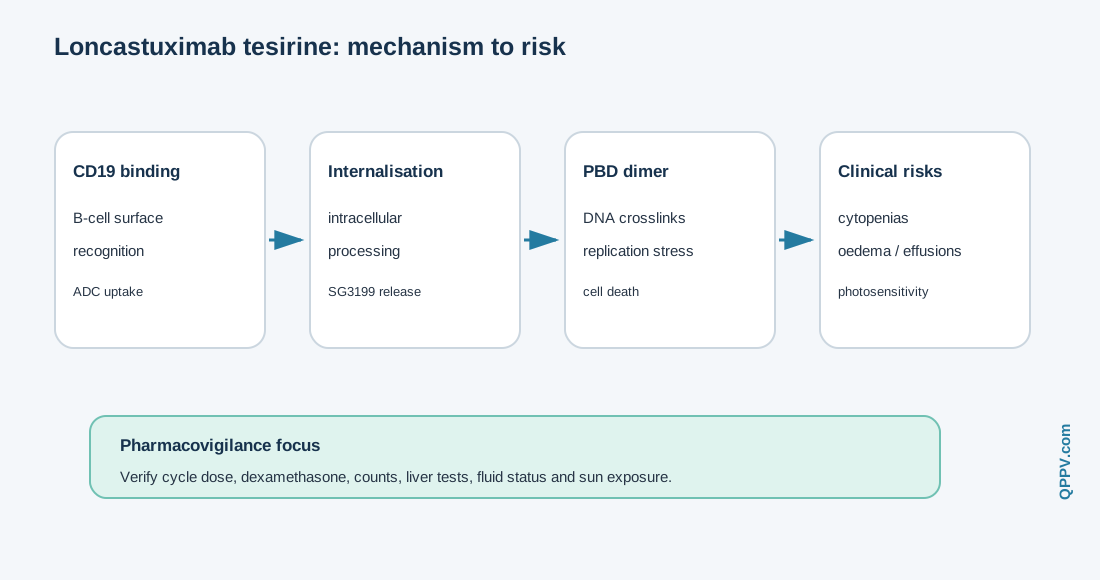
Loncastuximab tesirine is a humanised IgG1 antibody against CD19 linked to SG3199, a pyrrolobenzodiazepine (PBD) dimer. CD19 binding promotes internalisation; intracellular processing releases the payload. SG3199 forms DNA interstrand crosslinks that disrupt replication and transcription.[1,2]
CD19 is expressed on malignant and normal B-lineage cells. Targeting helps direct the conjugate, but systemic payload exposure and effects on normal tissues remain relevant. Mechanism supports plausibility but does not establish causality in an individual case.
1.2 Labelled population and status
The EU indication is adults with diffuse large B-cell lymphoma or high-grade B-cell lymphoma that has relapsed after, or is refractory to, at least two systemic lines. EU conditional marketing authorisation was granted on 20 December 2022. Conditional status means further evidence is required under the applicable authorisation conditions; it does not mean benefit-risk has not been assessed.[1]
Record histology, prior chemotherapy, anti-CD20 exposure, transplant or cellular therapy, baseline marrow involvement, infection history and prior cytopenias.
1.3 Administration and cycle dose
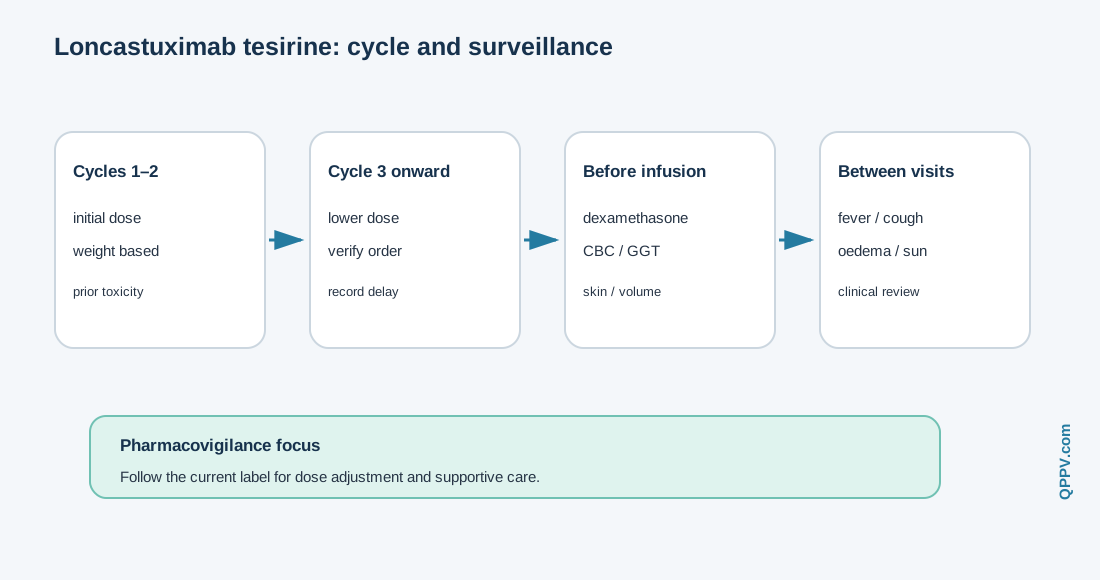
Treatment is given by IV infusion over 30 minutes every three weeks. The usual labelled body-weight-based sequence is 0.15 mg/kg every three weeks for cycles 1 and 2, then 0.075 mg/kg from cycle 3. Toxicity-related reduction can alter that sequence. Dexamethasone is given before each infusion according to the product information.[2]
Record the weight used, calculated dose, cycle, infusion date, premedication and any delay or reduction. Errors during transition to the later-cycle dose can alter exposure.
2. Mechanism-to-risk map
2.1 Payload and cell injury
PBD dimer payload causes DNA crosslinking after intracellular release. Cytopenias are clinically important in patients whose marrow may already be affected by lymphoma and previous treatment.
2.2 Labelled risk clusters
Common reactions include increased gamma-glutamyltransferase, neutropenia, fatigue, anaemia, thrombocytopenia, nausea, peripheral oedema and rash. Serious reactions include febrile neutropenia, abdominal pain, dyspnoea, pleural effusion and lung infection.[1,2] Photosensitivity and fluid retention deserve active follow-up alongside laboratory monitoring.
3. Clinical event interpretation
3.1 Cytopenia and infection
Assess grade, nadir, duration and recovery. For fever or suspected infection, preserve the temperature course, cultures, imaging, antimicrobial treatment, admission and outcome. In a heavily pretreated patient, infection can have several contributors; a positive culture does not exclude a treatment contribution.
3.2 Oedema, effusions and dyspnoea
Record weight change, peripheral oedema, abdominal distension, breathlessness, oxygen need, imaging, cardiac and renal status, albumin, fluid balance and diuretic use. Distinguish peripheral swelling from confirmed pleural or pericardial fluid. Evaluate infection, pulmonary embolism, lymphoma progression and cardiac or renal causes where clinically appropriate.
3.3 Photosensitivity and skin findings
For erythema, burning or blistering after light exposure, document distribution, severity, natural or artificial UV exposure, protective clothing, sunscreen and timing relative to infusion. The product information advises limiting sunlight and artificial UV exposure and using protective measures. Rash without a compatible exposure pattern should not automatically be called phototoxicity.
4. Case reconstruction
4.1 Product and treatment context
Capture lymphoma subtype, line, prior therapy, baseline disease and organ function, weight, cycle, dose, dexamethasone, infusion detail, concomitant medicines and event chronology. For oedema or dyspnoea, retain objective evidence of effusion and the differential diagnosis. For suspected phototoxicity, include exposed skin and timing.
4.2 Worked example
A patient develops ankle oedema and exertional dyspnoea after cycle 4. Preserve weight trajectory, oxygen saturation, imaging, albumin, renal and cardiac assessment, infection testing, disease status and response to dose interruption or diuresis. If imaging confirms pleural effusion, record it as a diagnosis and state whether it is considered part of one syndrome with the oedema.
A second patient has fever and severe neutropenia eight days after infusion. Capture nadir and recovery, infection source, cultures, admission, antibiotics, growth factor, dose change and outcome. This supports evaluation of febrile neutropenia without assuming a single mechanism.
5. Monitoring and risk minimisation
5.1 Before each cycle
Review blood count, liver enzymes and bilirubin, weight, fluid balance, skin symptoms and infection. Follow the current product-specific dose-modification rules. Confirm dexamethasone premedication and document dose and timing.[2]
5.2 Sun and fluid precautions
Counsel patients to avoid direct and indirect sunlight, reduce artificial UV exposure and use protective clothing and sunscreen as directed. The product information includes a patient alert card about photosensitivity and contacting a healthcare professional for a skin eruption. Ask about rapid weight gain, ankle swelling, abdominal distension and dyspnoea. These signs warrant clinical assessment for fluid retention and competing cardiac, renal, hepatic, infectious and malignant causes.
5.3 Case processing and aggregate review
Record active substance, presentation, lot, expiry, preparation, infusion time and body weight used for dosing. Suspected overdose, wrong cycle dose, preparation error or infusion interruption should be documented as a medicine-use issue as well as any clinical consequence.
Use current EU product information for expectedness. Seriousness is assessed separately. Aggregate review should define the event group and stratify by cycle, dose level, prior therapy, baseline cytopenia, steroid exposure, disease status and diagnostic certainty. Common enzyme elevation is not synonymous with clinically significant liver injury.
Conditional authorisation and confirmatory evidence requirements belong in periodic benefit-risk review. Spontaneous reports can identify hypotheses but do not provide a denominator or prove comparative risk.
Key points: verify cycle-specific dose; monitor counts, liver profile and fluid status; ask about sunlight exposure; retain objective diagnostic data.
References
[1] EMA, EPAR: loncastuximab tesirine.
[2] EMA, EU product information for loncastuximab tesirine.
[3] EMA, Good pharmacovigilance practices.
[4] EMA, ICH E2D(R1): Post-approval safety data management.
[5] ICH, E2C(R2): Periodic benefit-risk evaluation report.
Regulatory Note
Educational summary of EU regulatory information accessed 20 September 2026. It does not replace the current product information, clinical judgement, applicable national reporting requirements or local procedures. Confirm the label version in force for the exposure being assessed.