Margetuximab: Classification, Mechanism and Pharmacovigilance
Margetuximab combines HER2 binding with an engineered antibody Fc region. Its product-specific evidence should be interpreted with the chemotherapy regimen and the prior anti-HER2 treatment history in view.
1. Product identity and clinical context
Margetuximab-cmkb is the active substance in Margenza in the United States. The FDA indication is in combination with chemotherapy for adults with metastatic HER2-positive breast cancer who have received at least two prior anti-HER2 regimens, including at least one in the metastatic setting. It is given by intravenous infusion every three weeks; the accompanying chemotherapy depends on the selected regimen and its own prescribing information.[1]
HER2 is a cell-surface receptor. In some breast cancers, increased HER2 expression or gene amplification is associated with tumour growth and is used to define treatment eligibility. The assay, specimen and interpretation of HER2 status are therefore part of the treatment context, not incidental background.
Margetuximab was designed as an antibody-engineered alternative to trastuzumab in a later-line setting. The pivotal SOPHIA trial compared the two antibodies, each combined with chemotherapy. The primary progression-free-survival analysis favored margetuximab modestly; final overall-survival analysis did not show an overall-survival advantage. This distinction matters: one endpoint should not be presented as proof of superiority across all outcomes.[2,3]
2. Classification and mechanism
Margetuximab is a chimeric IgG1 monoclonal antibody with an Fc region engineered to alter binding to Fc gamma receptors. The antigen-binding region attaches to HER2, while Fc interactions can recruit immune effector cells, including natural-killer cells, to participate in antibody-dependent cellular cytotoxicity (ADCC).
The engineering was intended to strengthen interaction with activating FcγRIIIa and reduce interaction with inhibitory FcγRIIb compared with trastuzumab. These are proposed pharmacologic properties; they do not mean every patient will have a greater clinical response. Clinical outcome remains influenced by tumour biology, prior treatment, chemotherapy partner and other patient factors.[1,2]
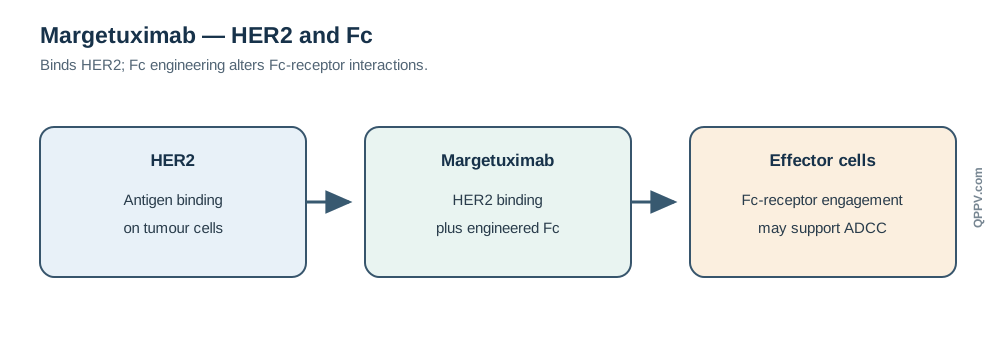
Figure 1. Margetuximab binds HER2 and has an engineered Fc region intended to modify immune-cell engagement; the diagram does not imply uniform clinical benefit.
3. Evidence and treatment exposure
SOPHIA was a randomised phase 3 trial in 536 patients with pretreated HER2-positive advanced breast cancer. It compared margetuximab plus chemotherapy with trastuzumab plus chemotherapy. The trial’s progression-free-survival result was statistically significant but modest in median duration; the later overall-survival analysis did not demonstrate an overall-survival benefit. These findings describe that trial population and do not establish a benefit for every chemotherapy partner or patient subgroup.[2,3]
For pharmacovigilance, preserve the exact chemotherapy combination, dose intensity, cycle dates, previous anti-HER2 therapies, HER2 test results, cardiac history and tumour status. A treatment interruption or dose delay can alter both exposure and disease control. If the cancer progresses, distinguish progression under treatment from a suspected adverse drug reaction.
4. Safety profile
The U.S. label carries a boxed warning for left ventricular dysfunction and embryo-fetal toxicity. Cardiac function should be evaluated before and during treatment according to the label; a clinically significant decline can require discontinuation. A report of reduced ejection fraction should include baseline and follow-up measurements, symptoms, timing, previous cardiotoxic therapies and the chemotherapy partner.[1]
The label also warns about infusion-related reactions and lists common adverse reactions observed with chemotherapy, including fatigue, gastrointestinal effects, fever, neuropathy, infusion reactions and hand-foot syndrome. Many events can arise from the combination regimen or advanced cancer. Record the investigator’s attribution while preserving the full treatment context rather than assigning all events to the antibody.
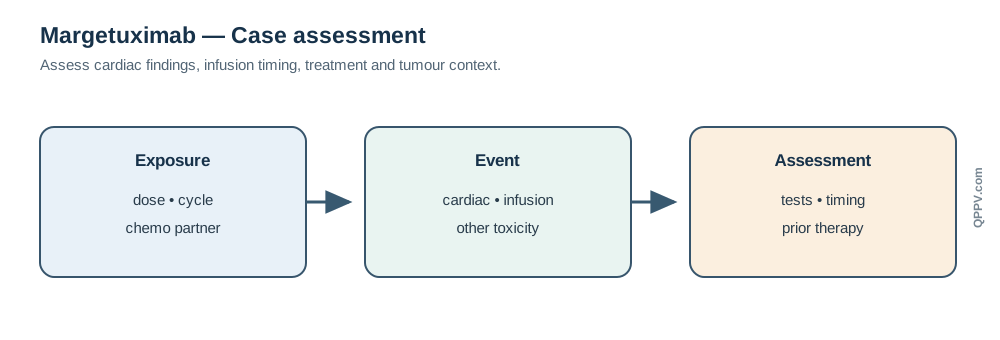
Figure 2. Cardiac and infusion-event assessment requires antibody exposure, chemotherapy, prior HER2 therapy, objective findings and outcome.
5. Pharmacovigilance case assessment
For suspected cardiac dysfunction, capture baseline cardiac disease, ejection fraction, symptoms, biomarkers if available, concurrent or recent cardiotoxic medicines, timing by cycle, treatment interruption and recovery. Distinguish asymptomatic measurement change from clinical heart failure. For an infusion-related event, record start time, rate, symptoms, severity, interventions, interruption or restart and subsequent-cycle recurrence.
For embryo-fetal exposure, document gestational timing, exposure interval, counselling and pregnancy outcome when known, using appropriate privacy protections. For common combination-regimen events, include all products, doses and timing. A safety database should preserve the suspect-product attribution supplied by the reporter while making the multi-drug context clear.
When evaluating effectiveness or lack of effect, include HER2 status and test method, prior anti-HER2 lines, chemotherapy partner, disease setting and assessment schedule. The modest progression-free-survival finding from SOPHIA and the absence of an overall-survival advantage at final analysis should remain separate in benefit-risk summaries.
6. Regulatory scope and practical use
Margetuximab’s cited indication and safety warnings are from the current U.S. label. They should not be treated as a harmonised EU indication or a substitute for another jurisdiction’s product information. Use the label version current at the time of exposure when assessing a historical case.[1]
Key takeaways
- Margetuximab binds HER2 and uses an engineered Fc region to alter Fc-receptor engagement.
- The U.S. indication is later-line metastatic HER2-positive breast cancer with chemotherapy.
- SOPHIA found a modest progression-free-survival difference; final overall-survival analysis did not show an overall-survival advantage.
- Cardiac function, pregnancy exposure, infusion events and the chemotherapy partner are core case-context fields.
References
- U.S. National Library of Medicine. Margenza: DailyMed prescribing information. Revised January 2025.
- Rugo HS, et al. Margetuximab versus trastuzumab in pretreated ERBB2-positive advanced breast cancer: SOPHIA phase 3 trial. JAMA Oncology. 2021.
- Rugo HS, et al. Final overall-survival results from the randomised phase 3 SOPHIA trial. Journal of Clinical Oncology. 2023.
- U.S. Food and Drug Administration. Margenza approval letter. 16 December 2020.
- European Medicines Agency. Good Pharmacovigilance Practices.
Regulatory Note
This educational article uses the U.S. prescribing information and clinical-trial publications cited above. Confirm the applicable local label and its revision date before making a clinical or regulatory assessment.