Marstacimab: Classification, Mechanism, Haemophilia Use and Pharmacovigilance
Marstacimab is a human monoclonal antibody that binds tissue factor pathway inhibitor (TFPI), an endogenous anticoagulant regulator. Instead of replacing the missing coagulation factor in haemophilia A or B, it reduces an inhibitory brake on thrombin generation. The result is a rebalancing therapy: haemostasis is improved by shifting the coagulation system toward clot formation despite deficiency of factor VIII or IX.
That distinction is fundamental. Replacement factor therapy supplies the deficient component. Marstacimab modifies a regulatory pathway. The pharmacovigilance question is therefore not simply whether factor levels rose or bleeding stopped; it is whether haemostatic balance has moved far enough to control bleeding without moving too far toward thrombosis.
- Marstacimab: Classification, Mechanism, Haemophilia Use and Pharmacovigilance
- Classification and Biological Rationale
- Why the Mechanism Changes Safety Assessment
- Clinical and Regulatory Context
- Safety Profile Through the Haemostatic Balance
- Practical Pharmacovigilance Assessment
- Signal Detection and Periodic Benefit-Risk Review
- Risk Controls and Practical Implementation
- Special Situations
- Illustrative Failure Modes
- Inspection and Governance Considerations
- Practical Checklist
- Key Takeaways
- References
- Regulatory Note
Classification and Biological Rationale
Marstacimab is an anti-TFPI monoclonal antibody and belongs to the broader class of non-factor haemophilia prophylaxis.
The extrinsic pathway as an entry point
Tissue factor exposed at sites of vascular injury forms a complex with activated factor VII, initiating coagulation and generating factor Xa. TFPI normally constrains this pathway. In haemophilia, the intrinsic tenase complex is impaired because factor VIII or IX is deficient; thrombin generation is therefore insufficient even when the tissue-factor pathway starts normally.
Blocking TFPI allows more factor Xa and downstream thrombin to be generated through the extrinsic pathway. This partially bypasses the intrinsic-pathway defect rather than correcting it directly.
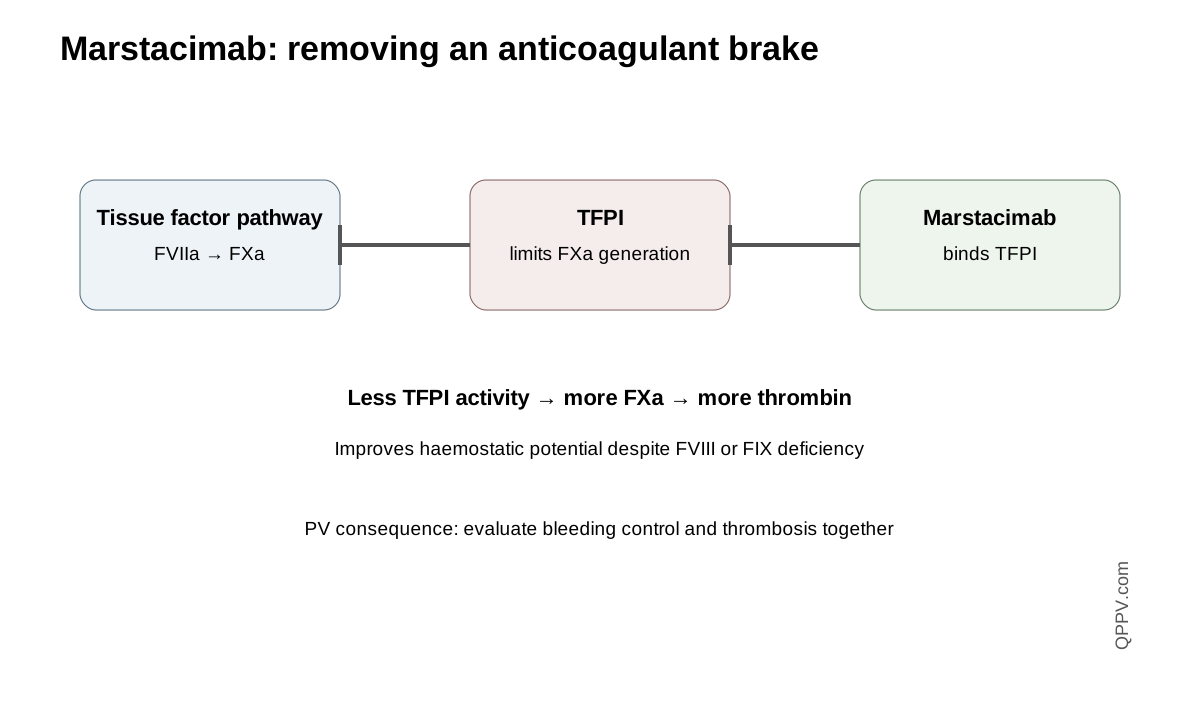
Figure 1. Marstacimab inhibits TFPI, reducing an anticoagulant brake on the tissue-factor pathway. The resulting increase in factor Xa and thrombin generation can compensate for deficient intrinsic-pathway amplification in haemophilia A or B.
Why the Mechanism Changes Safety Assessment
A therapy that enhances thrombin generation creates a different safety architecture from factor replacement. Breakthrough bleeding can still occur, so patients may require additional factor VIII, factor IX or other haemostatic therapy. But adding haemostatic agents on top of an already rebalanced system can increase thrombotic potential.
For this reason, a case involving thrombosis or unusually intensive breakthrough-bleed treatment should reconstruct all haemostatic exposures, not merely marstacimab dosing.
Clinical and Regulatory Context
Marstacimab is used for routine prophylaxis in haemophilia A and B. Current regional indications differ and have evolved. In the European Union the authorised population includes patients aged 12 years and older weighing at least 35 kg, with specified severe disease and inhibitor-status categories. In the United States, the indication was expanded in June 2026 to patients aged 6 years and older with haemophilia A or B with or without inhibitors.
This regulatory evolution matters because inhibitor-positive and inhibitor-negative haemophilia are not operationally identical populations. Concomitant rescue treatment, historical exposure and baseline thrombotic risk may differ.
Safety Profile Through the Haemostatic Balance
Thromboembolic events
Because TFPI inhibition increases thrombin-generating potential, thromboembolism is a mechanism-linked risk. Venous thrombotic events have been observed in clinical development and are addressed in current prescribing information. A thrombotic event should therefore be assessed together with independent risk factors such as previous thrombosis, immobility, surgery, central venous access, obesity, malignancy and concomitant prohaemostatic therapy.
A useful case captures event type and anatomical site, objective diagnostic confirmation, timing relative to the most recent dose, all rescue or replacement factor used, baseline thrombotic risk, anticoagulant treatment and outcome.
Breakthrough bleeding and rescue therapy
Breakthrough bleeding is not simply evidence of treatment failure. It may reflect trauma, surgery, severe baseline disease, inhibitor status, adherence, dosing interruption or a bleeding site whose haemostatic demands exceed prophylactic control.
When factor VIII or IX products or bypassing agents are used, the amount, timing and clinical response should be captured. This is particularly important when assessing subsequent thrombosis because the pharmacological system has temporarily shifted from one rebalancing intervention to combined haemostatic pressure.
Injection-site and hypersensitivity reactions
Subcutaneous administration introduces local reactions that are distinct from haemostatic efficacy. Cases should distinguish expected local erythema or pain from systemic hypersensitivity and should capture recurrence on re-exposure where available.
Immunogenicity and loss of effect
As with other therapeutic proteins, anti-drug antibodies can be clinically relevant if they alter exposure or pharmacodynamic effect. A suspected loss-of-efficacy case is more informative when bleeding frequency, adherence, dose history, inhibitor testing and anti-drug-antibody information are considered together.
Practical Pharmacovigilance Assessment
The most useful unit of analysis is the bleeding–rescue-treatment–thrombosis trajectory.
| Question | Information to capture |
|---|---|
| Was prophylaxis effective? | Baseline and on-treatment bleeding pattern, adherence, dose interruptions |
| Was rescue treatment needed? | Product, dose, timing, indication and response |
| Did thrombosis occur? | Objective diagnosis, site, severity and independent risk factors |
| Did inhibitor status matter? | FVIII/FIX inhibitor history, titres where relevant, treatment strategy |
| Did the route contribute? | Injection reaction, device issue, administration error |
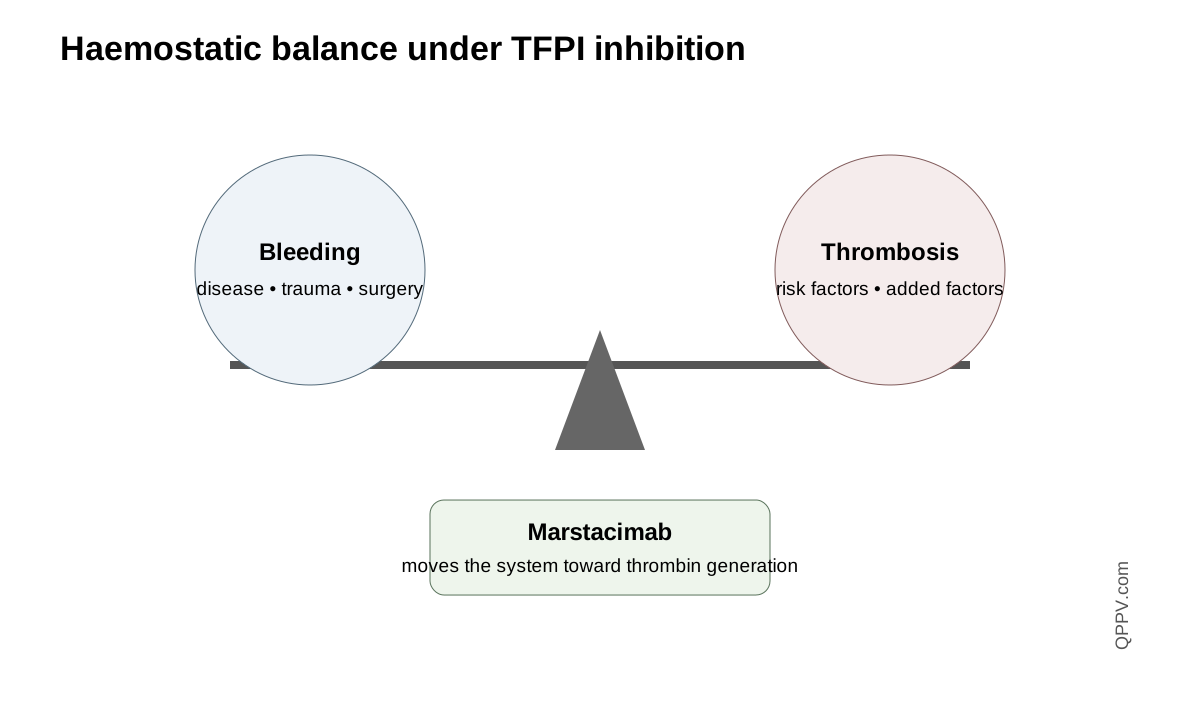
Figure 2. Marstacimab pharmacovigilance should evaluate bleeding control and thrombotic potential as two sides of one haemostatic balance, with rescue treatment and baseline risk factors modifying that balance.
Signal Detection and Periodic Benefit-Risk Review
Aggregate review should not analyse thrombotic events without denominator context or rescue-treatment exposure. A cluster of thromboses after intensive factor replacement would raise a different question from events occurring during stable prophylaxis alone.
Likewise, apparent loss of efficacy should be separated into adherence problems, inhibitor-related treatment complexity, surgery or trauma, pharmacokinetic variability and possible immunogenicity. Treatment persistence and breakthrough-bleed frequency can provide useful context for benefit-risk interpretation.
Risk Controls and Practical Implementation
Current regional product information should govern dosing, management around breakthrough bleeding and treatment interruption. Because the mechanism is not measured by a simple replacement-factor level, operational safety depends on clear treatment records and communication between haemophilia centres, emergency departments, surgeons and laboratories.
Recommended practice is to document the standing prophylaxis regimen prominently whenever a patient presents for acute bleeding or surgery. This reduces the risk that additional haemostatic therapy is prescribed as though the patient were receiving no baseline rebalancing treatment.
Special Situations
Surgery and invasive procedures
Perioperative haemostasis may require additional therapy and specialist planning. The PV record should capture the procedure, preoperative plan, additional factor or bypassing therapy, bleeding outcome and any thrombotic complication.
Inhibitor-positive haemophilia
Inhibitors alter the therapeutic options available for breakthrough bleeding and may change historical exposure to bypassing agents. Current regional labelling should be checked because authorised populations differ geographically and have evolved.
Illustrative Failure Modes
These are hypothetical examples.
Thrombosis without rescue-treatment history. A venous thrombosis is reported but the case omits several days of intensive factor replacement after surgery. The omission materially weakens causal interpretation.
Breakthrough bleed treated as loss of efficacy without adherence review. Recurrent bleeds are coded as drug ineffective, but delayed doses and a recent high-risk activity pattern are not captured.
Emergency treatment without recognition of baseline rebalancing therapy. Acute-care staff administer additional haemostatic therapy without knowing the patient is receiving TFPI inhibition. Even if no adverse outcome occurs, this is a meaningful medication-safety scenario.
Inspection and Governance Considerations
An effective system should demonstrate that thrombotic events, breakthrough bleeding, rescue treatment and inhibitor status are linked during case processing and aggregate review. Inspectors may examine whether follow-up forms obtain these data, whether serious thrombotic cases receive appropriate medical review, and whether evolving regional indications are reflected in procedures and educational material.
Practical Checklist
- Confirm haemophilia type, severity and inhibitor status.
- Record prophylaxis dose history and adherence.
- Characterise breakthrough bleeding by site, trigger, severity and outcome.
- Capture all additional factor or bypassing therapy with dose and timing.
- For thrombosis, document objective confirmation and independent risk factors.
- Review surgery and immobilisation as important modifiers.
- Assess suspected loss of effect against adherence, inhibitor status and immunogenicity.
- Keep regional indication differences visible in global case assessment.
Key Takeaways
Marstacimab does not replace factor VIII or IX. It rebalances coagulation by inhibiting TFPI and thereby increasing thrombin-generating capacity through the tissue-factor pathway.
The central PV model is therefore a dynamic balance: bleeding risk on one side, thrombotic potential on the other, and concomitant haemostatic therapy acting as a major modifier. High-quality surveillance follows these elements together rather than as disconnected adverse-event terms.
References
- European Medicines Agency. Hympavzi (marstacimab): EPAR and product information. Product information updated 16 July 2026. https://www.ema.europa.eu/en/medicines/human/EPAR/hympavzi
- U.S. Food and Drug Administration. Marstacimab prescribing information and approval history. https://www.accessdata.fda.gov/drugsatfda_docs/label/2025/761369s001lbl.pdf
- U.S. Food and Drug Administration. Orphan Drug Designations and Approvals: marstacimab; indication expansion approved 5 June 2026. https://www.accessdata.fda.gov/scripts/opdlisting/oopd/detailedIndex.cfm?cfgridkey=521916
- Mahlangu J, et al. Clinical development literature for anti-TFPI prophylaxis in haemophilia A and B.
Regulatory Note
Indications, age limits, inhibitor-status populations and instructions for concomitant haemostatic therapy differ by jurisdiction and may change. Current regional product information should always govern clinical use and formal regulatory assessment.