Meloxicam: Discovery, Development, Safety and Pharmacovigilance
Meloxicam is an oxicam-family non-steroidal anti-inflammatory drug (NSAID) used to relieve symptoms of inflammatory and degenerative joint disease. It illustrates an important drug-development paradox. Preferential inhibition of cyclooxygenase-2 (COX-2) was intended to retain anti-inflammatory efficacy while reducing some gastrointestinal toxicity associated with COX-1 inhibition. Short-term comparative trials supported better symptomatic gastrointestinal tolerability than selected older NSAIDs. Yet serious bleeding, perforation, renal injury and arterial thrombosis remain clinically important risks. The pharmacovigilance task is to interpret both findings without treating a relative tolerability advantage as proof of safety. [1–6]
- Meloxicam: Discovery, Development, Safety and Pharmacovigilance
- The medicinal-chemistry problem
- Pharmacology: why benefit and harm share a pathway
- Clinical development: efficacy and the limits of gastrointestinal claims
- Formulations, commercial evolution and practical prescribing
- A practical benefit–risk framework
- Safety profile: a systems-based assessment
- Dated US–French Mobic listedness comparison
- Drug interactions: distinguish pharmacology from clinical events
- From individual case to regulatory signal
- Signal detection, governance and inspection readiness
- Practical checklist
- Key Takeaways
- References
- Regulatory Note
The medicinal-chemistry problem
From aspirin and piroxicam to a new oxicam
The historical development of NSAIDs began long before molecular COX selectivity was understood. Aspirin and later agents demonstrated that inflammation and pain could be modified pharmacologically, but gastrointestinal injury limited treatment. Oxicams, including piroxicam, offered a chemically distinct enolic-acid family and long duration of action. Their efficacy did not remove the need to improve tolerability during repeated dosing.
Meloxicam arose from Boehringer Ingelheim's anti-inflammatory research, associated with its German Dr Karl Thomae research organisation. Its structure belongs to the enolic-acid oxicams and includes a thiazole-containing side group. The development rationale was to produce sustained anti-inflammatory and analgesic activity with a more favourable balance between inhibition of inducible inflammatory prostaglandin synthesis and constitutive prostaglandin functions. A contemporary company-authored pharmacological review describes meloxicam as relatively COX-2-selective, with anti-inflammatory efficacy in experimental models and a gastrointestinal-tolerability hypothesis carried into clinical development. That review is useful historical evidence, not independent proof of comparative long-term safety. [3]
The molecule should not be credited to a named individual inventor without primary patent or institutional evidence. Its history is better documented at the programme and company level. In France, the official medicines register records an original authorisation for Mobic 15 mg tablets on 8 May 1995. The current US Mobic prescribing information records initial US approval in 2000. These dates refer to different regulatory jurisdictions; the US approval must not be described as the world's first. [1,2]
How the brand became a molecule-level portfolio
Mobic became the best-known human meloxicam brand, but the INN meloxicam is the scientific subject. After originator commercialisation, generic tablets and other formulations broadened access. The development and safety history also includes oral liquids, alternative oral technologies and parenteral products in some markets. A product containing meloxicam together with another analgesic is not equivalent to a single-ingredient oral tablet; neither is an injectable formulation simply a different route for an interchangeable tablet dose. The reviewed US Mobic label explicitly cautions that its tablets are not interchangeable with other approved oral meloxicam formulations solely on a milligram-for-milligram basis. [2]
A further distinction concerns veterinary products. Meloxicam has animal-health applications, but their indications, species, doses, pharmacokinetics and regulatory safety evidence cannot be imported into human prescribing or case assessment. Product identification must therefore include species and veterinary-versus-human context where an initial report says only “Mobic” or “meloxicam.”
The long commercial lifecycle matters to surveillance. The denominator is no longer confined to originator-brand clinical-trial exposure; it spans many manufacturers, supply chains, strengths and markets. A signal involving one batch, tablet appearance or dispensing error may be product-specific even when the pharmacological risk is molecule-wide. Conversely, an NSAID class warning should not be attributed to a single manufacturer.
Pharmacology: why benefit and harm share a pathway
COX inhibition and prostanoid biology
COX enzymes catalyse steps in the conversion of arachidonic acid to prostanoid precursors. Downstream prostaglandins participate in inflammation, pain sensitisation and fever, but also in gastric mucosal defence, renal blood-flow adaptation and vascular homeostasis. Meloxicam inhibits prostaglandin synthesis with a relative preference for COX-2 under some experimental conditions. That preference is dose- and assay-dependent and does not make meloxicam a risk-free or exclusively COX-2 inhibitor. [2,3]
Suppressing inflammatory prostaglandins can reduce pain and swelling without modifying the underlying destructive biology of rheumatoid arthritis. This is symptomatic disease control, not disease modification. The same pharmacology explains why a patient may experience less pain while occult gastrointestinal bleeding, blood-pressure elevation or declining renal function develops. A lower frequency of dyspepsia is not a substitute for monitoring serious outcomes.
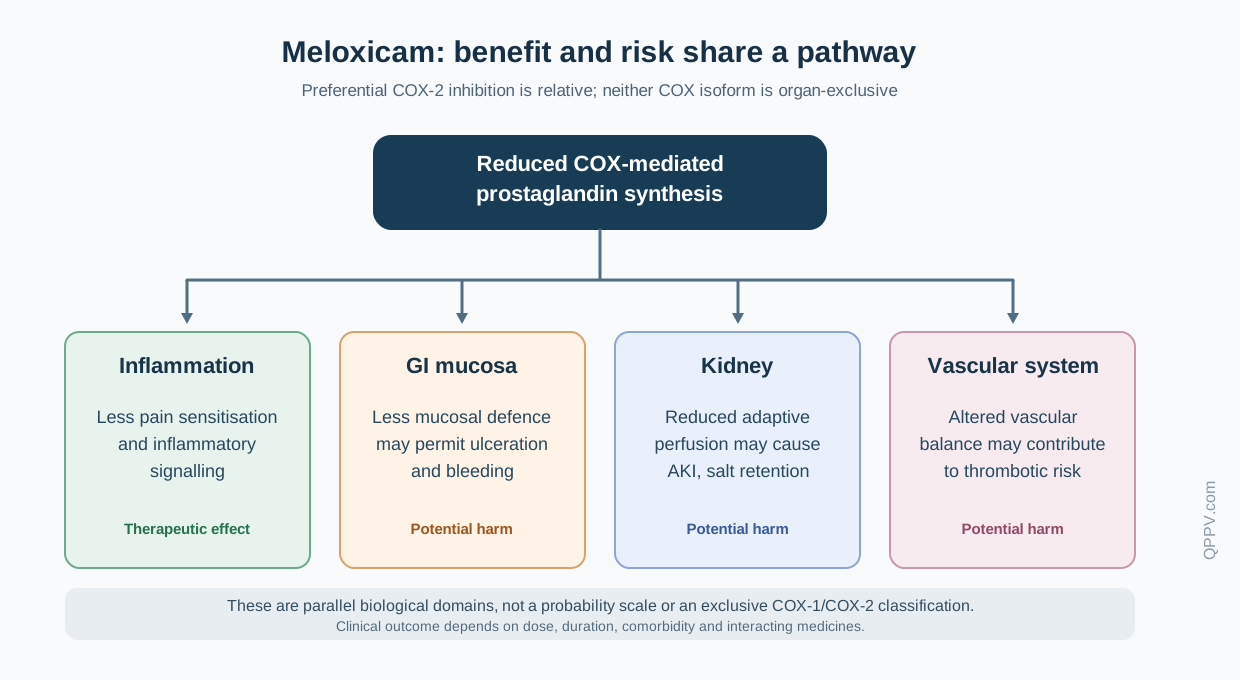
Figure 1. Meloxicam's COX-related benefit and risk domains. The figure represents distinct physiological consequences, not a ranking of event probabilities or proof that one COX isoform exclusively controls each organ.
Gastrointestinal, renal and vascular physiology
Prostaglandins contribute to mucosal blood flow and defence in the stomach and duodenum. Their suppression can impair protection against acid injury, leading to ulceration and bleeding, sometimes without prodromal dyspepsia. In volume depletion, heart failure, chronic kidney disease or concomitant renin–angiotensin system blockade, renal prostaglandins help maintain perfusion. NSAID inhibition may then precipitate acute kidney injury, sodium retention, oedema, hypertension and hyperkalaemia. [1,2]
Vascular risk is not explained by one simplistic “COX-2 causes thrombosis” rule. The balance among endothelial prostacyclin, platelet thromboxane, blood pressure, fluid retention and pre-existing atherosclerotic disease is clinically relevant. Meloxicam does not substitute for antiplatelet aspirin. The US boxed warning concerns serious cardiovascular thrombotic events, including myocardial infarction and stroke, and identifies possible early onset and increasing risk with duration. [2,6]
Pharmacokinetics and exposure
The oral drug is highly protein-bound and extensively metabolised, with CYP2C9 an important pathway and CYP3A4 a smaller contributor. The US label describes a mean elimination half-life of approximately 15–20 hours, supporting once-daily dosing. Metabolites are largely inactive; elimination is mainly as metabolites in urine and faeces. Protein binding, metabolic capacity, age, interacting medicines and organ function can modify exposure or tolerability. These features do not justify using the same regimen in every patient. [2]
The half-life is also important when reconstructing a suspected adverse event. Stopping a tablet does not immediately eliminate exposure; an adverse reaction may evolve while circulating drug remains. Conversely, a symptom beginning many weeks later requires assessment of cumulative exposure, new comorbidity and newly introduced co-medication rather than an assumption of direct temporal causality.
Clinical development: efficacy and the limits of gastrointestinal claims
Symptom control in arthritis
The US Mobic programme established symptomatic efficacy in osteoarthritis and rheumatoid arthritis, and included studies in juvenile rheumatoid arthritis. The reviewed US label covers adults with osteoarthritis or rheumatoid arthritis and patients with juvenile rheumatoid arthritis weighing at least 60 kg. The French Mobic 15 mg tablet authorisation has a different population and indication scope: short-term symptomatic treatment of osteoarthritis flares and longer-term symptomatic treatment of rheumatoid arthritis or ankylosing spondylitis, in adults and adolescents 16 years and older. These are not universal INN indications. [1,2]
In the United States, the adult oral-tablet regimen generally begins at 7.5 mg once daily and may increase to 15 mg once daily according to response. In the French SmPC, rheumatoid arthritis and ankylosing spondylitis commonly start at 15 mg daily with reduction when appropriate, while an osteoarthritis flare begins at 7.5 mg daily. Both labels emphasise the lowest effective dose for the shortest necessary period. A cross-border case therefore needs the actual local authorisation and prescriber instructions; a nominally identical 15 mg tablet does not erase different population restrictions. [1,2]
MELISSA: fewer common GI symptoms, not a definitive bleeding trial
The Meloxicam Large-scale International Study Safety Assessment (MELISSA) compared meloxicam 7.5 mg once daily with slow-release diclofenac 100 mg daily in a double-blind 28-day trial in symptomatic osteoarthritis. Among 9,323 treated patients, gastrointestinal adverse events were reported in approximately 13% versus 19%, respectively. Dyspepsia, abdominal pain, nausea/vomiting and diarrhoea contributed to the difference. Serious perforation, ulcer or bleeding events were uncommon—five versus seven, a non-significant difference. [4]
These results answer a narrower question than “Is meloxicam safer than other NSAIDs?” They demonstrate a difference in short-term tolerability for the selected regimens and population. They do not establish a durable reduction in life-threatening gastrointestinal events, do not compare all doses or all NSAIDs, and do not address cardiovascular risk adequately. The trial duration was too short to characterise many long-latency outcomes. A relative reduction in dyspepsia should never be represented as elimination of occult bleeding.
SELECT: a second comparator and the same evidentiary boundary
The Safety and Efficacy Large-scale Evaluation of COX-inhibiting Therapies (SELECT) trial randomised patients with osteoarthritis exacerbations to meloxicam 7.5 mg daily or piroxicam 20 mg daily for 28 days. Of 8,656 treated patients (4,320 and 4,336), gastrointestinal adverse events occurred in 10.3% versus 15.4%, with comparable symptomatic efficacy. The study reported fewer overall adverse events with meloxicam, but the numbers of complicated upper gastrointestinal events were too small to prove a reliable long-term difference in serious harm. [5]
Together, MELISSA and SELECT support a plausible short-term tolerability advantage at 7.5 mg against the selected comparators. They cannot be pooled casually with observational studies using different populations, exposure definitions, doses or outcome ascertainment. Nor does the word “selective” in an early paper confer the same regulatory status as a highly selective coxib. The later NSAID cardiovascular experience illustrates why physiological selectivity and a gastrointestinal hypothesis do not guarantee overall benefit–risk superiority.
Cardiovascular evidence beyond registration
A 2013 meta-analysis of observational studies reported a pooled relative risk for myocardial infarction with meloxicam of 1.25 (95% CI 1.04–1.49) compared with non-use in its included evidence. A separate population-based nested case-control study reported an adjusted odds ratio of 1.38 (1.17–1.63) for current versus remote meloxicam use. These are observational associations, not randomised proof of the exact causal effect in every patient; confounding by indication, comparator choice, comorbidity and exposure ascertainment remain concerns. [6,7]
The key interpretation is not to substitute either estimate for an individual's probability of infarction. The studies are directionally consistent with the NSAID class concern and reinforce risk stratification. They do not demonstrate that meloxicam is equivalent to diclofenac, naproxen or celecoxib for every endpoint, dose or patient. Comparative claims should specify the actual study design, comparator and confidence interval rather than quote a single “safety ranking.”
What later regulatory action changed
US NSAID warnings evolved as post-marketing and comparative evidence accumulated. The US Mobic label now carries boxed warnings for serious cardiovascular thrombotic and gastrointestinal bleeding, ulceration and perforation events. In 2020 FDA also required strengthened pregnancy information for NSAIDs because fetal renal dysfunction from exposure at about 20 weeks or later can cause oligohydramnios, sometimes after a relatively short exposure. The cardiovascular and fetal warnings are class-wide regulatory developments that affect meloxicam, not evidence that each signal was first discovered in a Mobic-specific trial. [2,8]
A separate, clinically important safety evolution concerns severe cutaneous adverse reactions. The November 2024 US Mobic label update highlights serious skin reactions, and its warnings include DRESS. The current French product information also warns about Stevens–Johnson syndrome, toxic epidermal necrolysis and fixed drug eruption, including avoidance of re-exposure after a meloxicam-associated severe skin reaction. The terminology and placement of these concepts differ between jurisdictions. [1,2]
Formulations, commercial evolution and practical prescribing
One INN, several product-specific instructions
Mobic tablets, generic tablets, oral suspensions, injectable meloxicam and combination analgesic products have different formulation characteristics and sometimes different indications. The reviewed comparison in this article is deliberately limited to single-ingredient oral Mobic tablets. A report of postoperative injectable meloxicam or a local-anaesthetic combination cannot inherit the oral-tablet listedness assessment without an explicit evidence gap. The US label's non-interchangeability statement is especially relevant to substitution or dispensing investigations. [2]
In a suspected overdose, document whether the reporter means “two 7.5 mg tablets,” “two 15 mg tablets,” a compounded liquid volume or an injectable dose. Also capture the timing of the last dose. A medication error is not automatically an adverse reaction; if harm occurred, both the error and the clinical consequence need assessment. The long half-life can increase concern when doses are repeated before the previous exposure has declined.
The business history without false precision
The originator's development and commercialisation established meloxicam internationally, while patent expiry and generic competition changed the product landscape. The article does not assign contemporary global sales of multiple branded and generic formulations to the original Mobic franchise or to the active ingredient as if these were interchangeable financial categories. The clinically useful commercial facts are the originator programme, differing regional authorisations, generic availability and the resulting need for manufacturer- and batch-level traceability. [1–3]
For pharmacovigilance, a brand switch can introduce new packaging, excipients or adherence problems while preserving the same active substance. A case series clustered around a particular presentation may reflect prescribing, dispensing or quality circumstances; a broad molecule-level analysis can conceal those patterns. Conversely, a class-wide risk can be present even if the individual brand's reporting rate is low.
A practical benefit–risk framework
| Patient or exposure feature | Expected therapeutic rationale | Risk requiring attention |
|---|---|---|
| Symptomatic osteoarthritis flare | Short-term pain and function relief | GI bleeding, fluid retention, drug duplication |
| Rheumatoid arthritis alongside disease-modifying therapy | Symptomatic control while underlying disease is managed separately | Renal injury, methotrexate toxicity, infection signs masked by analgesia |
| Older patient with hypertension and CKD | Potential pain relief but reduced physiological reserve | Acute kidney injury, hyperkalaemia, heart failure, loss of BP control |
| Anticoagulant or SSRI/SNRI co-treatment | No intrinsic improvement in anti-inflammatory efficacy | Increased bleeding risk |
| Pregnancy at or after approximately 20 weeks | No routine rationale to override fetal concerns without specialist assessment | Fetal renal dysfunction and oligohydramnios; later ductus-arteriosus risk |
This framework is a teaching aid, not a treatment algorithm. The exact local label, clinical circumstances and alternatives determine decisions. The safest effective regimen may be a shorter course, a different modality or no systemic NSAID; that judgement lies with the treating clinician rather than a pharmacovigilance case processor. [1,2,8]
Safety profile: a systems-based assessment
Gastrointestinal injury
Meloxicam can cause dyspepsia, abdominal discomfort, nausea and diarrhoea, but these symptoms are poor screening tests for serious gastrointestinal damage. Peptic ulceration, haemorrhage and perforation may present with melaena, haematemesis, anaemia, syncope or sudden abdominal pain—or be initially silent. Older age, prior ulcer or bleeding, concomitant anticoagulants, antiplatelet agents, corticosteroids and other NSAIDs can change the risk. A report should distinguish an endoscopically confirmed ulcer from an unspecified “stomach upset,” and should not treat absence of dyspepsia as reassuring. [1,2]
Cardiovascular and cardiorenal toxicity
Blood-pressure elevation, oedema, worsening heart failure, acute kidney injury and hyperkalaemia are connected through prostaglandin-mediated renal and vascular effects. A patient with heart failure may experience apparent fluid retention after NSAID initiation despite an unchanged diuretic prescription. In an older patient taking an ACE inhibitor or angiotensin receptor blocker and a diuretic, the addition of an NSAID may impair renal autoregulation and contribute to acute kidney injury. The three-drug exposure pattern is an important follow-up question, not proof of a drug interaction in every case. [1,2]
The US label's interaction section includes an important nuance: although NSAIDs may reduce the natriuretic effects of diuretics in some patients, meloxicam-specific pharmacodynamic studies with furosemide did not demonstrate reduced natriuresis. Clinical surveillance for renal function and diuretic efficacy remains advised. This distinction prevents a generic class interaction from being falsely reported as a positive meloxicam-specific trial finding. [2]
Skin, immune, hepatic and haematological reactions
Stevens–Johnson syndrome (SJS), toxic epidermal necrolysis (TEN), fixed drug eruption, anaphylaxis, hepatitis, cytopenias and other rare serious events appear in one or both regional labels. The US label has a specific DRESS warning in section 5.10, describing a potentially life-threatening multiorgan hypersensitivity syndrome. The reviewed French Mobic section 4.8 names SJS/TEN and fixed drug eruption but does not list DRESS as a separate adverse-reaction term. A case of fever, rash, eosinophilia and hepatitis needs clinical evaluation of DRESS, alternative diagnoses and concomitant drugs, regardless of whether a particular label table contains the term. [1,2]
The French label explicitly cautions against re-exposure after meloxicam-associated SJS/TEN or fixed drug eruption. For a severe cutaneous adverse reaction, a positive rechallenge would be medically inappropriate to seek; absence of rechallenge should never be treated as a defect in causality evidence. Photographs, dermatology assessment, mucosal involvement, skin detachment, biopsy if performed, laboratory findings and timing of all suspected drugs are valuable follow-up data. [1]
Pregnancy and reproductive safety
FDA's October 2020 communication identified fetal renal dysfunction and oligohydramnios after NSAID exposure around 20 weeks or later. The reviewed US Mobic label advises limiting use between approximately 20 and 30 weeks if necessary and avoiding use around 30 weeks and later because of fetal renal and ductus-arteriosus risks. The French SmPC contraindicates use in the third trimester and also addresses fetal renal effects from the twentieth week. These are jurisdiction-specific regulatory formulations, not evidence that the biological risk changes at a border. [1,2,8]
NSAID-associated inhibition of ovulation can contribute to reversible female infertility. When a pregnancy-exposure case arises, record gestational age at every dose, duration, prenatal imaging, amniotic-fluid measurements, neonatal renal function and outcomes; avoid concluding that fetal injury occurred merely because exposure occurred. Maternal indication and co-exposures also matter.
Dated US–French Mobic listedness comparison
Documents and scope, accessed 29 October 2026. The US reference is the FDA-approved Mobic 7.5 mg and 15 mg oral-tablet US Prescribing Information, NDA 020938, revised November 2024, sections 4–8. The European comparator is French Mobic 15 mg scored oral tablets, national SmPC published by the French medicines authority (ANSM), updated 2 March 2026, sections 4.3–4.8. France is an EU Member State, but this is a nationally authorised French SmPC, not an EMA centrally authorised EU-wide label. The documents describe related but not identical strengths, indications and populations. [1,2]
| Concept | US Mobic USPI (Nov 2024) | French Mobic SmPC (Mar 2026) | Listedness conclusion within the assessed scope |
|---|---|---|---|
| Common gastrointestinal symptoms | Section 6.1 trial tables: dyspepsia, diarrhoea, nausea, abdominal pain | Section 4.8: gastrointestinal disorders very common | Listed in both; EU frequency categories cannot be imported into US trial tables |
| GI bleeding, ulcer, perforation | Boxed warning and section 6.1 clinical-trial adverse reactions | Section 4.8: GI bleeding uncommon, gastroduodenal ulcers rare, perforation very rare | Listed in both, with different evidence presentation |
| Acute kidney injury / renal failure | Section 6.1 renal failure; section 5.6 renal warning; interstitial nephritis in 6.2 | Section 4.8: acute renal failure very rare in at-risk patients; renal test changes uncommon | Listed in both, not equivalent to proof of individual causality |
| Hypertension and oedema | Section 6.1 adverse reactions and sections 5.4–5.5 warnings | Section 4.8: raised BP and oedema uncommon | Listed in both |
| SJS / TEN | Section 6.2 postmarketing | Section 4.8: SJS and TEN rare | Listed in both; US spontaneous reports provide no reliable frequency |
| Fixed drug eruption | Section 6.2 postmarketing | Section 4.8: frequency not known | Listed in both |
| DRESS | Specific section 5.10 warning; not separately named in section 6.2 list | Not separately named in the reviewed section 4.8 | Warning mention in US; not a separately tabulated reaction in either assessed section. Do not infer unlistedness under company RSI |
| Cardiovascular thrombotic events | Prominent boxed warning; myocardial infarction also in section 6.1 | Section 4.8 overview and section 4.4 discuss arterial events; myocardial infarction is not assigned a distinct 4.8 frequency in this document | Distinguish explicit warnings from tabulated adverse reactions |
| Pregnancy | US warning/precautions around 20 and 30 weeks | Third-trimester contraindication; fetal risks also in 4.6 | Material contraindication-language difference |
| Other contraindications | Hypersensitivity, aspirin/NSAID allergy, CABG setting | Also severe heart failure, severe hepatic failure, severe non-dialysed renal failure, recurrent peptic ulcer/bleeding, under age 16, third trimester | Different jurisdictional scopes; do not equate a US warning with a French contraindication |
This table compares public product labels, not company core safety information. For a real case, listedness requires the exact event term, the applicable product/formulation, jurisdiction and label version, and documented medical equivalence where a reported term differs from the label wording. A label warning is not automatically a section-6 or section-4.8 adverse-reaction entry. “Frequency not known” is not a numerical risk estimate. Neither public listedness nor the absence of a named term establishes causality or determines clinical-trial expectedness against the applicable reference safety information (RSI). [1,2]
What should not be extrapolated
The French contraindication for severe non-dialysed renal impairment is not identical to the US warning-and-dosing approach. Conversely, the US CABG contraindication is explicit in the US label and must not be silently imported as identical wording in the French section 4.3. Paediatric US JRA eligibility at at least 60 kg does not create a French indication below age 16. Injectable, veterinary, generic and combination products require separate authorised documents. An unavailable label or absent frequency is an evidence gap, not a negative safety finding.
Drug interactions: distinguish pharmacology from clinical events
Interactions often explain why a familiar analgesic becomes hazardous after a treatment change. Anticoagulants, antiplatelet medicines and drugs affecting platelet serotonin can increase bleeding risk; aspirin used for cardiovascular prevention should not be replaced by meloxicam. ACE inhibitors, angiotensin receptor blockers and diuretics require attention to blood pressure, renal function and volume status. Lithium concentrations may rise through reduced renal clearance; methotrexate and pemetrexed can become more toxic in susceptible settings. The US Mobic label also addresses ciclosporin and other NSAIDs. [1,2]
The French SmPC contains more specific advice for some combinations. For pemetrexed in patients with creatinine clearance 45–79 mL/min, it advises interrupting meloxicam for at least five days before, the day of, and at least two days after pemetrexed. It also warns about methotrexate, lithium and calcineurin inhibitors. These product-label instructions are more precise than a general statement that “NSAIDs interact with chemotherapy”; apply the locally authorised text and relevant specialist protocol. [1]
When an interaction is suspected, capture not only the drug list but dates and dose changes, renal function before and after, measured drug concentrations where available, bleeding parameters and clinical consequences. A laboratory interaction signal without clinical harm should be described accurately rather than upgraded automatically to a serious adverse reaction.
From individual case to regulatory signal
Minimum high-value follow-up
A medically useful meloxicam report should establish the exact product, brand or generic manufacturer, strength, route, batch when available, indication, prescribed and actual doses, start/stop dates, concomitant NSAIDs, relevant co-medications, comorbidity and the sequence of events. For GI bleeding obtain haemoglobin, endoscopic findings, transfusions and other causes. For acute kidney injury obtain creatinine trajectory, urine output, fluid status, baseline CKD, infection, hypotension, ACE inhibitor/ARB and diuretic exposure. For SJS/TEN or DRESS document mucosal findings, skin extent, blood counts, liver tests and all suspect drugs.
Use the established case-validity and reporting processes applicable to the jurisdiction. EMA GVP Module VI and the ICH E2D(R1) framework address collection, validation, source classification and follow-up; they are regulatory guidance, not a licence to invent missing facts or infer causality from temporal sequence alone. Follow current EU implementation material where E2D(R1) affects older GVP terminology. [9,10]
Case example: a “stomach upset” that becomes a bleed
Illustrative, not a reported regulatory case. A 76-year-old with osteoarthritis starts meloxicam and develops fatigue and black stools. The first intake record says “dyspepsia.” Subsequent hospital documents show a falling haemoglobin and endoscopically confirmed ulcer bleeding. A competent follow-up changes the medical understanding of the case, records seriousness and treatment, preserves the reporter's original wording, checks aspirin/anticoagulant exposure, and assesses the exact label section. It does not retrospectively claim the initial report already contained a confirmed ulcer. An audit trail should show the chronology of information and any amended coding.
Case example: rising creatinine after a prescription change
Illustrative. A patient with heart failure and chronic kidney disease begins meloxicam while taking a diuretic and an angiotensin receptor blocker. Creatinine rises, weight increases and oedema worsens. Assessment should capture fluid intake, intercurrent illness, haemodynamics, potassium, diuretic efficacy, other nephrotoxins and treatment changes. An NSAID contribution is plausible because of renal prostaglandin inhibition, but dehydration, infection or progression of heart failure may also be causal. The interaction label does not prove a single patient's mechanism.
Case example: rash, fever and liver injury
Illustrative. A patient develops fever, diffuse rash and transaminase elevation several weeks after meloxicam initiation. The case must distinguish uncomplicated rash, DRESS, infection, viral hepatitis and reactions to other new drugs. The US DRESS warning prompts urgent medical review but does not justify coding DRESS without clinical evidence. Rechallenge should not be requested in a potentially severe hypersensitivity syndrome. If the case is medically confirmed, record the exact diagnosis, criteria used, outcome and all potential culprit exposures. [2]
Signal detection, governance and inspection readiness
Aggregate evidence and the denominator problem
Spontaneous reports are useful for detecting unexpected patterns, but report counts are influenced by prescribing volume, publicity, duplication and variable follow-up. A rising count of acute kidney injury reports after a new generic launch could reflect higher exposure, reporting stimulation, medication errors or a real product-quality problem. Analyse case quality, timing, exposure proxies, country, brand, batch, renal comorbidity and co-medication before attributing the trend. Reported cases divided by prescriptions are not automatically a valid incidence rate.
Signals concerning known NSAID risks may still matter if their severity, at-risk population, route or preventability changes. For example, persistent wrong-strength errors might support packaging review even when gastrointestinal bleeding is already labelled. A signal review should separate case-level evidence, comparative epidemiology, label history, product-quality findings and the decision taken. EMA GVP Module IX provides the signal-management framework; product-specific regulatory actions must be traced to the actual authority decision rather than invented from a theoretical scenario. [9]
A practical governance record
An inspection-ready assessment should preserve the search strategy and dates, source datasets, inclusion/exclusion criteria, duplicate handling, clinical review, comparator choice, confounding assessment, label versions, decision rationale, ownership and follow-up effectiveness checks. The quality system should distinguish a proposed risk-minimisation measure from an imposed authorisation condition. If an educational intervention is introduced to reduce duplicate NSAID exposure, evaluate whether the actual error rate changes rather than treating distribution of leaflets as proof of success.
The French health technology assessment record for Mobic shows that reimbursement or therapeutic-value decisions are separate from pharmacovigilance listedness: a national assessment of clinical value does not replace an authorised SmPC. Similarly, the FDA's strengthened 2015 NSAID cardiovascular communication is a class-wide safety action and should be described as such rather than a meloxicam-specific withdrawal or new indication. [11,12]
Practical checklist
Before concluding a meloxicam safety assessment, verify the exact formulation and local authorisation; reconstruct the dose and event chronology; document age, pregnancy status, GI/cardiovascular/renal risk factors and interacting medicines; separate serious event confirmation from symptoms; distinguish US section-6 adverse reactions from section-5 warnings and French section-4.8 frequencies; check alternative causes; retain the rationale for causality and listedness; and escalate emerging safety or quality concerns through the applicable governance process. This is recommended operational practice, not a universal statutory checklist.
Key Takeaways
Meloxicam was developed within the oxicam anti-inflammatory programme and authorised in Europe before its 2000 US approval. Its preferential COX-2 activity explains a rational development hypothesis, but cannot be equated with freedom from gastrointestinal, cardiovascular, renal, fetal or severe skin risks. MELISSA and SELECT support short-term gastrointestinal tolerability advantages against their chosen comparators, not demonstrated elimination of serious harm. The US and French Mobic tablet labels differ in indications, contraindications, adverse-reaction presentation and pregnancy wording. High-quality pharmacovigilance depends on exact product identity, documented medical events, interaction assessment and transparent distinction between spontaneous signals, comparative evidence and regulatory conclusions.
References
- French National Agency for Medicines and Health Products Safety (ANSM). Mobic 15 mg, comprimé sécable: Résumé des caractéristiques du produit, updated 2 March 2026; French public medicines database, accessed 29 October 2026. https://base-donnees-publique.medicaments.gouv.fr/medicament/65217119/extrait
- US Food and Drug Administration. Mobic (meloxicam) tablets, oral use: US Prescribing Information, NDA 020938, revised November 2024. https://www.accessdata.fda.gov/drugsatfda_docs/label/2024/020938s030lbl.pdf
- Ogino K, Saito K, Osugi T, Satoh H. Meloxicam (Mobic): a review of its pharmacological and clinical profile. Folia Pharmacologica Japonica. 2002;120:391–397. doi:10.1254/fpj.120.391. https://doi.org/10.1254/fpj.120.391
- Hawkey C et al. Gastrointestinal tolerability of meloxicam compared to diclofenac in osteoarthritis patients: MELISSA. British Journal of Rheumatology. 1998;37:937–945. doi:10.1093/rheumatology/37.9.937. https://doi.org/10.1093/rheumatology/37.9.937
- Dequeker J et al. Improvement in gastrointestinal tolerability of meloxicam compared with piroxicam: SELECT. British Journal of Rheumatology. 1998;37:946–951. doi:10.1093/rheumatology/37.9.946. https://pubmed.ncbi.nlm.nih.gov/9783758/
- Varas-Lorenzo C et al. Myocardial infarction and individual NSAIDs: meta-analysis of observational studies. Pharmacoepidemiology and Drug Safety. 2013;22:559–570. doi:10.1002/pds.3437. https://doi.org/10.1002/pds.3437
- Dalal D et al. Meloxicam and risk of myocardial infarction: a population-based nested case-control study. Rheumatology International. 2017. https://pmc.ncbi.nlm.nih.gov/articles/PMC8143590/
- US Food and Drug Administration. FDA recommends avoiding NSAIDs in pregnancy at 20 weeks or later because they can result in low amniotic fluid. Drug Safety Communication, 15 October 2020, updated 1 September 2022. https://www.fda.gov/drugs/drug-safety-and-availability/fda-recommends-avoiding-use-nsaids-pregnancy-20-weeks-or-later-because-they-can-result-low-amniotic
- European Medicines Agency. Good pharmacovigilance practices: Modules VI and IX and current implementation notes. https://www.ema.europa.eu/en/human-regulatory-overview/post-authorisation/pharmacovigilance-post-authorisation/good-pharmacovigilance-practices-gvp
- International Council for Harmonisation. ICH E2D(R1): Post-Approval Safety Data—Definitions and Standards for Management and Reporting. https://www.ich.org/page/efficacy-guidelines
- Haute Autorité de Santé. Mobic: Transparency Committee opinion, 21 February 2018, linked from the French public medicines record. https://base-donnees-publique.medicaments.gouv.fr/medicament/65217119/extrait
- US Food and Drug Administration. FDA strengthens warning that non-aspirin NSAIDs increase risk of heart attack or stroke. Drug Safety Communication, 9 July 2015. https://www.fda.gov/media/92768/download
Regulatory Note
This article is educational and is not a prescribing instruction, an individual causality determination or a substitute for current authorised product information. The US and French documents are dated, product- and jurisdiction-specific. Regulatory revisions, indications, formulations and risk-management requirements may change; verify the currently applicable label and local rules for each real assessment.