Meningococcal Group B Vaccine (Recombinant): fHbp Biology, Immunisation and Pharmacovigilance
The recombinant meningococcal group B vaccine is a protein-based bacterial vaccine designed to prevent invasive disease caused by Neisseria meningitidis serogroup B. Rather than using the group B capsular polysaccharide as its main antigen, it targets factor H binding protein (fHbp), a surface protein that helps meningococci interact with human complement regulation.
The vaccine contains two recombinant lipidated fHbp variants, one from subfamily A and one from subfamily B. This dual-antigen design broadens the immune response across the diversity of circulating fHbp variants, but it does not imply that every serogroup B strain will be equally susceptible to vaccine-induced antibody.
- Meningococcal Group B Vaccine (Recombinant): fHbp Biology, Immunisation and Pharmacovigilance
- Classification and Antigen Architecture
- Why fHbp Is a Useful Vaccine Target
- Current Regulatory Context
- Safety Profile and Case Interpretation
- Vaccine Failure Requires Microbiological Context
- Schedule, Co-administration and Medication Errors
- Product and Lot Traceability
- Product-Specific Case Assessment
- Aggregate Surveillance and Effectiveness Interpretation
- Illustrative Failure Modes
- Inspection and Governance Considerations
- Practical Checklist
- Key Takeaways
- References
- Regulatory Note
Classification and Antigen Architecture
This is a recombinant protein vaccine against meningococcal serogroup B. The two active antigens are lipidated fHbp proteins representing subfamilies A and B. In the European Union, the common name is meningococcal group B vaccine (recombinant, adsorbed).
The vaccine is not a live vaccine and does not contain whole replicating meningococci. Its purpose is to expose the immune system to selected surface-protein antigens that can generate functional bactericidal antibody.
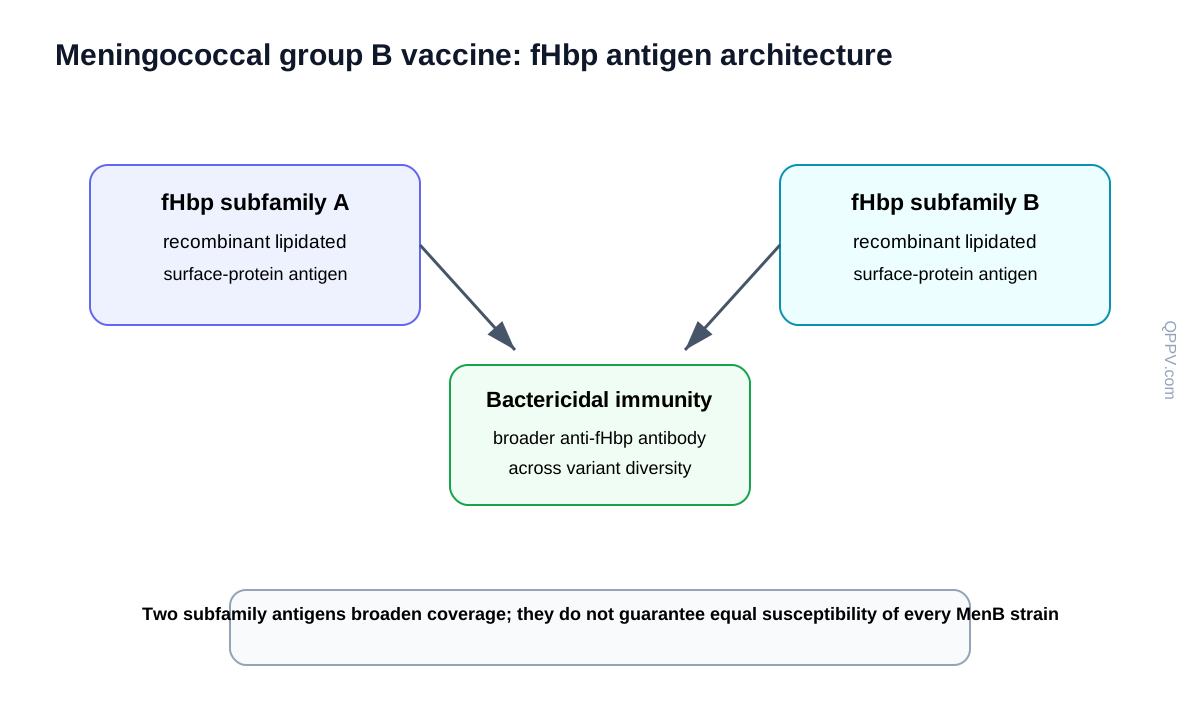
Figure 1. The vaccine combines lipidated fHbp variants from subfamilies A and B to broaden antibody recognition across meningococcal serogroup B strains.
Why fHbp Is a Useful Vaccine Target
Factor H is a human complement-regulatory protein that limits excessive alternative-pathway activation on host surfaces. Meningococcal fHbp can bind human factor H, helping the bacterium reduce complement-mediated killing. Antibodies induced against fHbp can recognise the bacterial surface and support complement-dependent bactericidal activity.
The vaccine therefore turns a bacterial immune-evasion protein into an antigenic vulnerability. Protection is functional rather than simply quantitative: antibody must be capable of killing or facilitating killing of susceptible meningococci in the presence of complement.
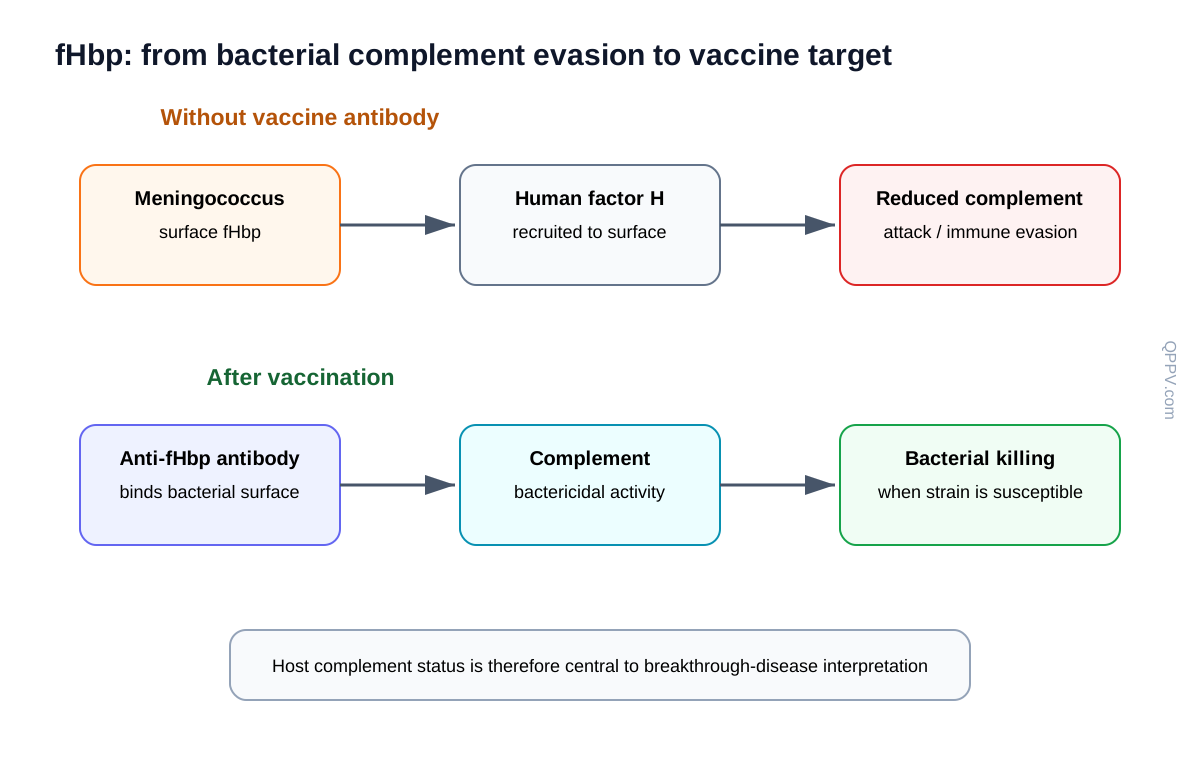
Figure 2. Meningococcal fHbp recruits human factor H to reduce complement attack; vaccine-induced anti-fHbp antibodies can redirect the system toward complement-mediated bacterial killing.
Current Regulatory Context
In the European Union, the vaccine is authorised for active immunisation of individuals 10 years and older to prevent invasive meningococcal disease caused by N. meningitidis serogroup B. Current EU product information was updated on 27 May 2026. Use should follow official recommendations.
In the United States, the vaccine is authorised for individuals 10 through 25 years of age. The difference illustrates why a PV case should preserve jurisdiction and patient age rather than assuming one globally identical authorised population.
Dose schedules can vary according to the applicable product information and risk context. Pharmacovigilance assessment of a suspected schedule error must therefore reconstruct the actual dose dates and compare them with the schedule applicable where vaccination occurred.
Safety Profile and Case Interpretation
Reactogenicity
Pain, redness or swelling at the injection site and systemic symptoms such as headache, fatigue, myalgia, chills or fever are expected vaccine reactions. Their frequency and clinical relevance depend partly on age and co-administered vaccines. Case assessment should preserve onset, severity, duration and whether the event interfered with normal activity rather than treating all post-vaccination symptoms as equivalent.
Hypersensitivity
Immediate hypersensitivity or anaphylaxis requires detailed chronology and objective clinical features. Previous vaccine allergies, onset after injection, respiratory or cardiovascular compromise, treatment, co-administered vaccines and outcome materially affect assessment. Large local reactions should not be automatically classified as systemic hypersensitivity.
Syncope and injury
The vaccine is commonly used in adolescents and young adults, an age group in which syncope can occur in association with injections. A post-vaccination faint should therefore be reconstructed around posture, prodrome, timing and injury. The injection procedure itself can be relevant even when there is no plausible antigen-specific mechanism.
Vaccine Failure Requires Microbiological Context
Invasive meningococcal disease after vaccination is clinically important, but the term “vaccine failure” should not end the investigation. Serogroup confirmation is essential. If serogroup B disease is confirmed, strain-level information about fHbp expression or variant characteristics may further inform biological interpretation when available through public-health laboratories.
Protection depends on more than simply belonging to serogroup B. The infecting strain must express vaccine-relevant fHbp sufficiently for vaccine-induced bactericidal antibodies to act effectively. Therefore, a breakthrough case should capture vaccination dates and schedule completion, age, immune status, complement deficiency or complement-inhibitor treatment, microbiological diagnosis, serogroup, strain information where available, clinical syndrome and outcome.
Complement-inhibitor therapy deserves particular attention because terminal-complement blockade creates a strong independent susceptibility to meningococcal disease even after vaccination. Such a case should not be interpreted as ordinary vaccine ineffectiveness without the treatment context.
Schedule, Co-administration and Medication Errors
Immunisation schedules differ according to jurisdiction, official recommendation and individual risk. High-quality PV therefore records every dose date rather than relying on “fully vaccinated” as an undocumented conclusion.
Operational errors can include incorrect interval, omitted dose, duplicate dose, wrong meningococcal vaccine, confusion between serogroup B and quadrivalent ACWY vaccines, administration outside the locally authorised age range, incomplete dose, wrong route or cold-chain excursion.
When several adolescent vaccines are administered at the same visit, all products, injection sites and lots should be preserved. This is particularly important when assessing fever, syncope, allergy or other acute systemic symptoms.
Product and Lot Traceability
A report stating only “meningococcal vaccine” is inadequate for product-level surveillance. Serogroup B protein vaccines and meningococcal conjugate vaccines have different antigenic architectures and schedules. Exact product and lot allow meaningful analysis of administration errors, adverse-event clusters and potential quality issues.
Product-Specific Case Assessment
| Scenario | High-value follow-up |
|---|---|
| Acute systemic reaction | Onset, severity, co-vaccines, treatment, recovery |
| Syncope | Timing, posture, prodrome, injury, previous syncope history |
| Anaphylaxis | Objective diagnostic features, treatment, prior allergy, co-vaccines |
| Invasive meningococcal disease | Dose history, serogroup, culture/PCR, strain/fHbp data if available, immune/complement status |
| Schedule error | Age, jurisdiction, intended schedule, all dose dates and clinical consequence |
| Lot cluster | Exact vaccine, lot, site/date of administration, phenotype and co-exposures |
The central PV distinction is between a post-vaccination event and an event that meaningfully tests the antigenic protection model. The latter requires microbiology, host susceptibility and vaccination history.
Aggregate Surveillance and Effectiveness Interpretation
Aggregate safety review should preserve age, dose number, schedule, co-administered vaccines and lot. Because adolescent vaccination visits commonly involve multiple vaccines, crude counts of fever, syncope or systemic reactions may be difficult to interpret if co-exposure information is lost.
Breakthrough invasive disease requires a separate effectiveness framework. Analysis should distinguish serogroup B from non-B meningococcal disease, confirm schedule completion and identify major host susceptibility factors such as complement deficiency or complement-inhibitor treatment. Where public-health laboratories provide strain or fHbp information, those data can help determine whether the infecting organism was biologically well matched to vaccine-induced immunity.
Illustrative Failure Modes
These are hypothetical operational scenarios rather than reported inspection findings.
- A case of meningococcal disease is called vaccine failure without serogroup confirmation.
- A breakthrough serogroup B case omits complement-inhibitor therapy from the medical history.
- A syncope cluster is interpreted as an antigen-specific signal without considering the vaccination procedure and age distribution.
- A schedule error is reviewed without reconstructing all dose dates or the applicable local recommendation.
- Reports record only “meningococcal vaccine,” preventing distinction between serogroup B and ACWY products.
- Lot-level clustering cannot be assessed because lot numbers were not sought.
Inspection and Governance Considerations
An inspector could examine whether the system preserves exact vaccine identity and lot, whether serious breakthrough disease triggers appropriate microbiological follow-up, and whether administration errors are assessed against the correct local schedule. Interfaces with public-health laboratories and epidemiology can be particularly important because strain characterisation may sit outside the spontaneous-reporting system.
For cases in people receiving complement inhibitors, governance should ensure that underlying susceptibility, vaccination history and antimicrobial measures are integrated into assessment rather than treating vaccination as an isolated exposure.
Practical Checklist
- Identify exact meningococcal vaccine and lot.
- Record age, jurisdiction, dose number and every dose date.
- Capture all co-administered vaccines.
- For syncope, document timing and any injury.
- For hypersensitivity, obtain objective clinical criteria and treatment.
- For invasive disease, confirm organism and serogroup.
- Seek strain/fHbp information when available and scientifically relevant.
- Record complement deficiency, asplenia, immunosuppression and complement-inhibitor therapy.
- Distinguish serogroup B breakthrough from disease caused by another meningococcal serogroup.
- Trend medication errors by schedule and product identity.
Key Takeaways
The recombinant meningococcal group B vaccine targets factor H binding protein using two lipidated antigens representing subfamilies A and B. Vaccine-induced antibodies support complement-mediated bactericidal activity against susceptible meningococcal strains.
Its pharmacovigilance therefore requires more than conventional reactogenicity monitoring. Serious breakthrough disease should preserve vaccination history + host complement status + microbiological serogroup + strain/antigen information when available. Product identity also matters because “meningococcal vaccine” can refer to biologically different serogroup B and conjugate vaccines.
References
- European Medicines Agency. Trumenba: EPAR and product information. Product information updated 27 May 2026. https://www.ema.europa.eu/en/medicines/human/EPAR/trumenba
- European Medicines Agency. Trumenba product details: recombinant lipidated fHbp subfamily A and subfamily B; common name meningococcal group B vaccine (recombinant, adsorbed). https://www.ema.europa.eu/en/medicines/human/EPAR/trumenba
- U.S. Food and Drug Administration. TRUMENBA — Meningococcal Group B Vaccine: current package insert and regulatory information. https://www.fda.gov/vaccines-blood-biologics/vaccines/trumenba
- U.S. Centers for Disease Control and Prevention. Meningococcal vaccination recommendations and clinical guidance. Current recommendations should be checked for jurisdiction-specific schedule decisions.
Regulatory Note
Authorised age ranges and recommended schedules differ by jurisdiction and risk group and may change. This article explains antigen biology and pharmacovigilance principles; current local product information and official immunisation recommendations remain controlling. Strain and fHbp characterisation are scientifically valuable where available but are not expected to be obtainable for every spontaneous report.