Meningococcal Group C Tetanus-Toxoid Conjugate Vaccine: Immunology and Pharmacovigilance
Meningococcal group C conjugate vaccines protect against invasive disease caused by Neisseria meningitidis serogroup C. A representative formulation uses purified group C capsular polysaccharide conjugated to tetanus toxoid and adsorbed to an aluminium-containing adjuvant.
The central scientific idea is the same principle that transformed several childhood bacterial vaccines: conjugation changes how the immune system handles a polysaccharide. The vaccine is therefore not simply 'meningococcal antigen plus tetanus protein'; the protein carrier changes the quality and persistence of the immune response.
- Meningococcal Group C Tetanus-Toxoid Conjugate Vaccine: Immunology and Pharmacovigilance
- Meningococcal Disease and the Group C Capsule
- Classification and Conjugate Design
- Clinical and Schedule Context
- Safety and Pharmacovigilance Domains
- Breakthrough Invasive Meningococcal Disease
- Medication Errors and Programme Transitions
- Product Quality and Lot Traceability
- Practical Pharmacovigilance Implementation
- Potential Failure Modes and Inspection Questions
- Governance
- Key Takeaways
- References
- Regulatory Note
Meningococcal Disease and the Group C Capsule
Neisseria meningitidis can colonise the nasopharynx without causing disease. In a minority of infections it invades the bloodstream or meninges, producing septicaemia, meningitis or other invasive syndromes. Capsular polysaccharides define major serogroups, including A, B, C, W and Y.
A group C vaccine targets the group C capsule specifically. Disease caused by another serogroup is therefore outside the direct antigenic coverage of the product and should not automatically be labelled vaccine failure.
Classification and Conjugate Design
The vaccine is a monovalent bacterial polysaccharide–protein conjugate vaccine. Purified serogroup C capsular polysaccharide is chemically linked to tetanus toxoid, which functions as a carrier protein rather than as the primary disease target.
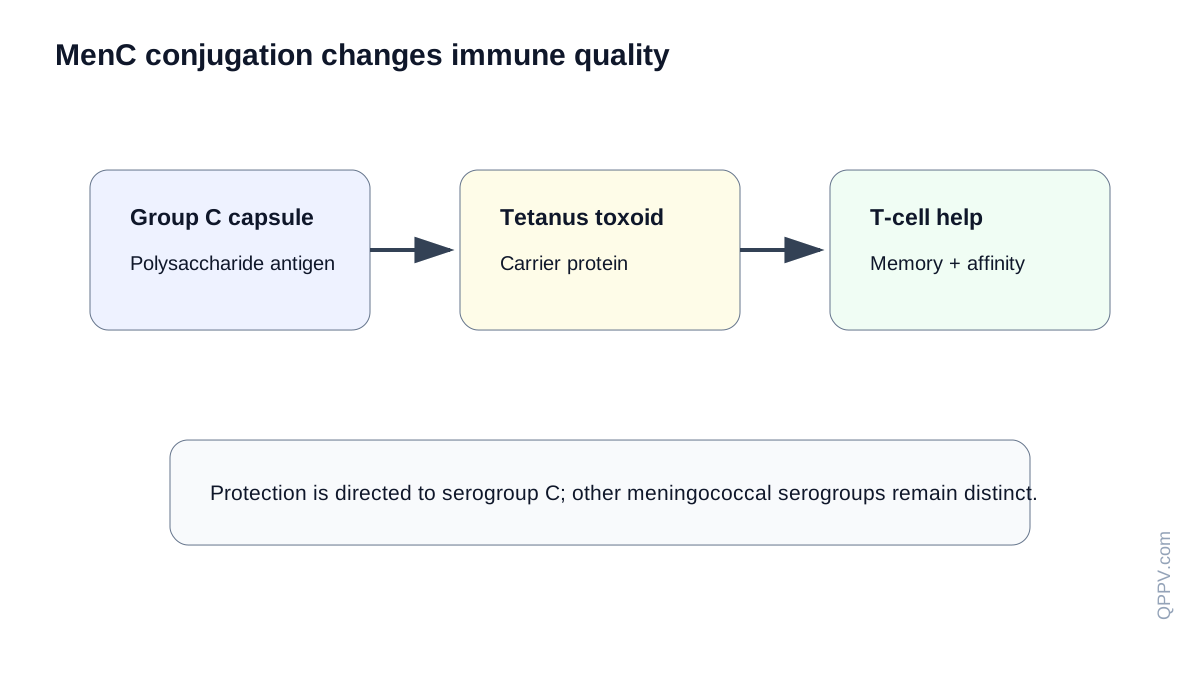
Figure 1. Serogroup C capsular polysaccharide is linked to tetanus toxoid so polysaccharide-specific B cells can recruit T-cell help and generate stronger immune memory.
Why conjugation matters in infancy
Unconjugated polysaccharides are relatively poor at inducing durable T-cell-dependent memory in young infants. Conjugation enables antigen processing of the carrier protein and recruitment of helper T cells. This promotes affinity maturation, immunoglobulin class switching and memory B-cell formation.
Clinical and Schedule Context
Meningococcal group C conjugate vaccines have been used in infant, childhood and catch-up immunisation programmes. Exact schedules differ by jurisdiction and can change as broader MenACWY or MenABCWY vaccines are introduced.
For PV, dose number and schedule are therefore not administrative details. A report following an infant primary dose is not equivalent to one following a booster years later, and the presence of other meningococcal vaccines in the programme can alter both exposure classification and effectiveness interpretation.
Safety and Pharmacovigilance Domains
Reactogenicity
Local pain, erythema and swelling, fever, irritability, drowsiness and reduced appetite are expected vaccine reactions whose frequency and expression vary with age. In infants, simultaneous administration of other routine vaccines is common and should be captured because it complicates attribution.
Hypersensitivity
Immediate hypersensitivity or anaphylaxis requires precise timing, clinical features, treatment and outcome. Reports should include relevant allergy history and all vaccines administered at the same visit.
Neurological events and temporal association
Seizures, syncope or other neurological events may be reported after vaccination, but temporal proximity alone does not establish causality. Fever, age-related background incidence, intercurrent infection and vaccination stress should be assessed where relevant.
Breakthrough Invasive Meningococcal Disease
Suspected vaccine failure should begin with confirmation of invasive meningococcal disease and identification of serogroup. A confirmed group C case after an appropriately completed schedule is fundamentally different from disease caused by group B, W or Y.
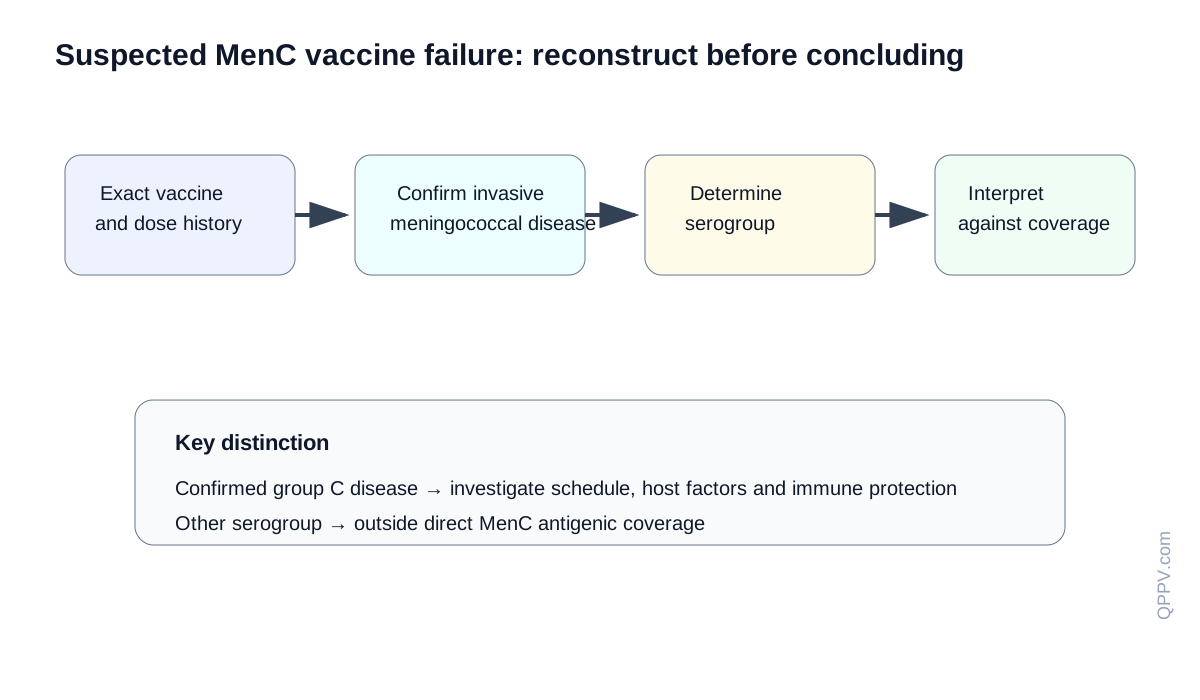
Figure 2. Breakthrough assessment separates exposure verification, schedule completion, microbiological confirmation and serogroup identification before conclusions about vaccine effectiveness are drawn.
Useful follow-up includes vaccination dates, product and lot, age at each dose, underlying complement deficiency or asplenia where relevant, immunosuppressive treatment, disease onset, culture or PCR result and serogroup.
Medication Errors and Programme Transitions
As immunisation programmes evolve from monovalent MenC vaccination toward broader multivalent products, wrong-product and schedule errors can occur. PV systems should retain the exact vaccine administered rather than mapping every meningococcal exposure to a generic category.
Product Quality and Lot Traceability
Lot information becomes particularly important in clusters of unexpected reactogenicity, suspected cold-chain failure or unusual breakthrough disease. Safety, quality and immunisation-programme data may need to be reviewed together.
Practical Pharmacovigilance Implementation
A useful adverse-event report should include exact product, lot, dose number, age, route, injection site, co-administered vaccines, onset, clinical course and relevant medical history. For suspected breakthrough disease, microbiological confirmation and serogroup are essential whenever available.
Aggregate review should distinguish expected reactogenicity from effectiveness surveillance. These are different questions: one concerns events caused or temporally associated with vaccination; the other concerns whether disease occurred despite appropriate antigenic coverage and schedule completion.
Potential Failure Modes and Inspection Questions
Illustrative failure modes include coding all meningococcal vaccines as interchangeable exposures, losing the distinction between MenC and multivalent vaccination, and assessing breakthrough disease without serogroup information.
An inspector could ask whether vaccine lot and dose sequence are recoverable, whether co-administration is preserved, how breakthrough disease is reconciled with laboratory surveillance, and how PV terminology is updated when national programmes move from monovalent to multivalent products.
Governance
Vaccine PV requires interfaces with immunisation programmes, microbiology, epidemiology, product quality and regulatory affairs. A strong system can trace an individual report from the administered vaccine through laboratory-confirmed disease and then place it in the context of population surveillance.
Key Takeaways
Meningococcal group C tetanus-toxoid conjugate vaccine is a monovalent bacterial conjugate vaccine. The tetanus-toxoid carrier transforms the immune response to the group C polysaccharide by enabling T-cell-dependent memory.
For PV, exact vaccine identity and serogroup are decisive. Disease caused by a non-C serogroup is not evidence that a MenC vaccine failed against its intended antigen.
References
- Current official product monograph for meningococcal group C tetanus-toxoid conjugate vaccine, accessed September 2026.
- World Health Organization. Meningococcal vaccine position papers and technical guidance.
- National immunisation authorities. Current meningococcal vaccination schedules and recommendations.
- Authoritative reviews of meningococcal conjugate-vaccine immunology, antibody persistence and population effectiveness.
Regulatory Note
Meningococcal vaccination schedules vary materially by jurisdiction and may change as broader multivalent vaccines are introduced. This article explains the immunological and pharmacovigilance framework and does not replace current local product information or immunisation recommendations.