Meningococcal Groups A, C, W and Y Tetanus-Toxoid Conjugate Vaccine: Immunology and Pharmacovigilance
MenACWY tetanus-toxoid conjugate vaccine protects against invasive meningococcal disease caused by Neisseria meningitidis groups A, C, W and Y. Each capsular polysaccharide is conjugated to tetanus toxoid, creating a four-antigen conjugate system that can generate T-cell-dependent immune responses from early infancy.
This vaccine should not be confused with pentavalent MenABCWY products. MenACWY contains no group B recombinant fHbp component. That distinction is central to pharmacovigilance because the expected antigenic coverage differs.
- Meningococcal Groups A, C, W and Y Tetanus-Toxoid Conjugate Vaccine: Immunology and Pharmacovigilance
- Disease Biology and Serogroup Coverage
- Classification and Molecular Architecture
- Why Conjugation Matters
- Regulatory and Clinical Context
- Safety and Pharmacovigilance Domains
- Breakthrough Invasive Meningococcal Disease
- Persistence, Booster Dosing and Waning Protection
- Medication Errors and Product Differentiation
- Lot and Cold-Chain Traceability
- Practical Pharmacovigilance Implementation
- Potential Failure Modes and Inspection Questions
- Governance
- Key Takeaways
- References
- Regulatory Note
Disease Biology and Serogroup Coverage
The meningococcal capsule is a major virulence determinant and the basis of serogroup classification. Antibodies directed against capsular polysaccharide can support complement-mediated bacterial killing. The four included polysaccharides therefore define the direct antigenic scope of the vaccine.
Group B disease is outside that scope. A post-vaccination group B infection cannot be interpreted as failure of MenACWY-induced protection.
Classification and Molecular Architecture
The product is a tetravalent bacterial polysaccharide–protein conjugate vaccine. Polysaccharides from groups A, C, W and Y are each coupled to tetanus toxoid carrier protein.
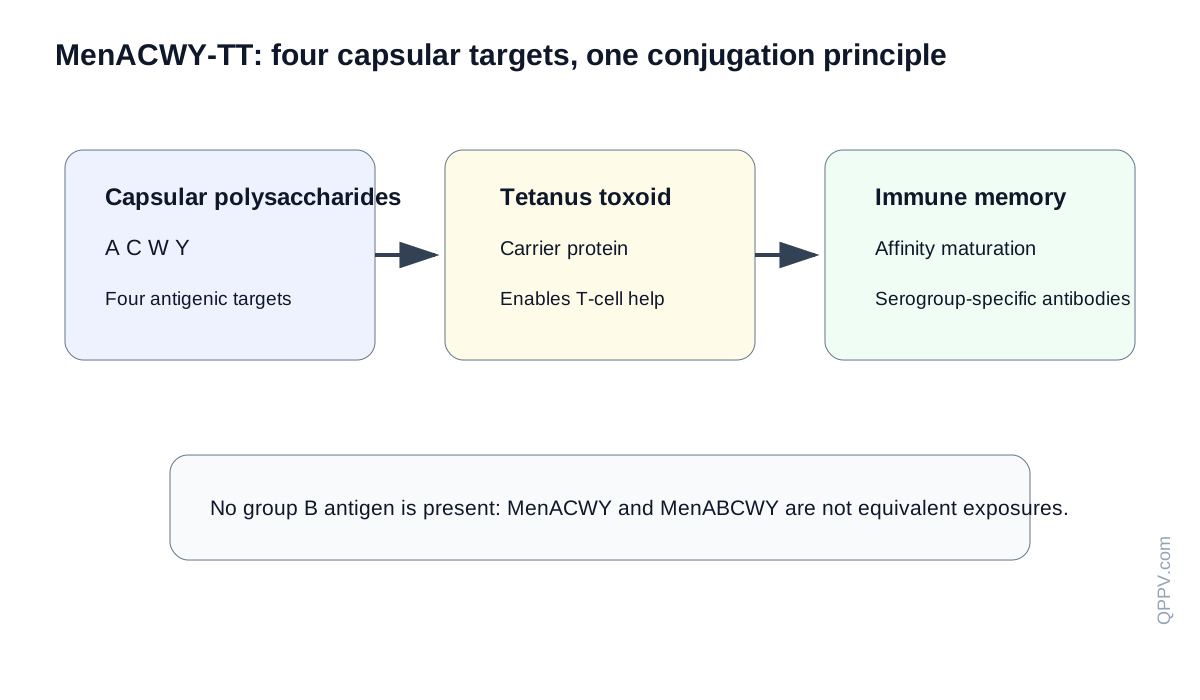
Figure 1. Four serogroup-specific capsular polysaccharides are independently represented but share the conjugation principle: linkage to tetanus toxoid converts the polysaccharide response into T-cell-supported immunity.
Why Conjugation Matters
Young infants respond poorly to many unconjugated polysaccharide antigens because these antigens can stimulate B cells without robust T-cell help. Conjugation provides carrier-derived peptides that can be presented to helper T cells, enabling immunological memory, class switching and affinity maturation.
The immune response remains polysaccharide-specific: tetanus toxoid is the carrier, not the meningococcal disease target.
Regulatory and Clinical Context
A current EU-authorised MenACWY tetanus-toxoid conjugate vaccine is indicated for active immunisation from 6 weeks of age against invasive disease caused by groups A, C, W and Y. Dose schedules vary by age and official recommendations, with booster dosing relevant to persistence of protection.
For PV, this makes age at each dose, interval, previous meningococcal vaccination and booster status part of the exposure record rather than optional background.
Safety and Pharmacovigilance Domains
Reactogenicity
Injection-site pain, redness and swelling, fever, headache, fatigue, irritability, drowsiness and reduced appetite are typical vaccine safety observations whose expression varies by age. Because paediatric doses are commonly given with other vaccines, co-administration should be preserved in the case narrative and exposure record.
Hypersensitivity and syncope
Immediate hypersensitivity requires precise latency, clinical phenotype, treatment and outcome. Syncope around vaccination, particularly in adolescents, should be distinguished from neurological disease and from anaphylaxis by clinical features and timing.
Breakthrough Invasive Meningococcal Disease
Effectiveness surveillance begins with laboratory confirmation and serogroup determination. A confirmed A, C, W or Y case after appropriate vaccination is potentially informative about vaccine-type breakthrough; group B disease is outside the product's direct coverage.
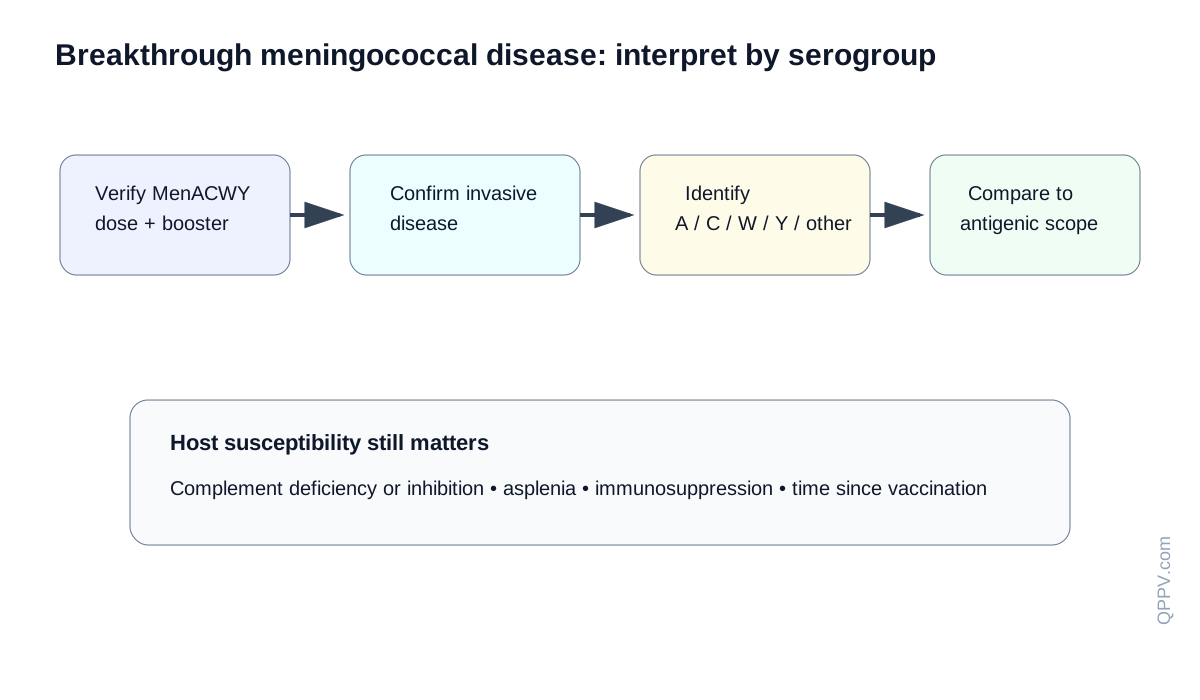
Figure 2. Product and schedule verification precede microbiological confirmation and serogroup-specific interpretation. Only disease caused by an included serogroup can directly test the expected antigenic coverage.
Host factors are also important. Complement deficiencies, complement-inhibiting medicines, asplenia and immunosuppression can markedly alter susceptibility to invasive meningococcal disease even after vaccination.
Persistence, Booster Dosing and Waning Protection
For a vaccine intended for use from infancy onward, antibody persistence is part of the benefit-risk model. A breakthrough event years after primary vaccination may raise different questions from disease shortly after a correctly completed series. Time since last dose and booster history therefore belong in effectiveness assessment.
Medication Errors and Product Differentiation
Meningococcal products can be monovalent, quadrivalent or pentavalent and can use different carrier proteins or recombinant antigens. Wrong-product reports must therefore identify the exact vaccine rather than relying on the abbreviation 'meningococcal vaccine'.
A MenACWY product given when a MenABCWY product was intended creates a meaningful antigenic-coverage difference even if no immediate adverse reaction occurs.
Lot and Cold-Chain Traceability
Clusters of reduced effectiveness or unusual reactogenicity require lot-level investigation and may involve storage or handling questions. Batch number, storage deviation and reconstitution details are therefore useful whenever a quality issue is suspected.
Practical Pharmacovigilance Implementation
Useful case follow-up includes exact vaccine, lot, dose number, age, vaccination dates, route and site, co-administered vaccines, previous meningococcal vaccination, relevant immune-risk conditions, onset and outcome. For suspected breakthrough disease, culture or molecular confirmation and serogroup should be sought whenever available.
Aggregate review should separate reactogenicity, administration errors and effectiveness surveillance. These data streams can interact but answer different questions and should not be collapsed into a single signal count.
Potential Failure Modes and Inspection Questions
Illustrative failure modes include confusing MenACWY with MenABCWY; failing to capture booster history; describing group B disease as failure of a vaccine that contains no group B antigen; and losing lot information in suspected clusters.
An inspector could ask whether the PV database preserves vaccine valency, whether serogroup information is systematically followed up for invasive disease, how co-administration is handled, and whether safety governance interfaces with epidemiology and immunisation-programme changes.
Governance
Meningococcal vaccine surveillance crosses pharmacovigilance, microbiology, epidemiology, product quality and public-health policy. A signal may begin as an individual case but require population incidence, circulating serogroups and programme-level exposure data for interpretation.
Key Takeaways
MenACWY tetanus-toxoid conjugate vaccine contains four capsular polysaccharides—A, C, W and Y—each conjugated to tetanus toxoid. The carrier improves immune quality; it does not broaden meningococcal coverage beyond those four groups.
Its most important PV disciplines are exact vaccine identification, age- and booster-aware exposure reconstruction, co-administration capture, and serogroup-specific assessment of breakthrough disease.
References
- European Medicines Agency. Current EPAR and product information for meningococcal groups A, C, W-135 and Y conjugate vaccine, including authorised use from 6 weeks of age. Accessed September 2026.
- European Medicines Agency. Assessment reports describing MenACWY tetanus-toxoid conjugate composition and antibody-persistence data.
- World Health Organization. Meningococcal vaccine position papers and technical guidance.
- Current national immunisation recommendations should be consulted for age-, risk- and booster-specific schedules.
Regulatory Note
The authorised indication and exact dosing schedule depend on jurisdiction, age and official immunisation recommendations. This article describes the current scientific and PV framework and does not replace locally applicable product information or vaccination guidance.