Mosunetuzumab: Classification, History, Mechanism of Action, Safety and Pharmacovigilance
- Mosunetuzumab: Classification, History, Mechanism of Action, Safety and Pharmacovigilance
- Multidimensional classification
- Follicular lymphoma and CD20
- Mechanism of T-cell redirection
- Development and regulatory history
- Major safety domains
- Pharmacokinetics and treatment duration
- Pharmacovigilance case assessment
- Signal detection and aggregate review
- Periodic benefit-risk evaluation
- Risk management and operational controls
- Potential failure modes
- Inspection and governance perspective
- Practical checklist
- Key Takeaways
- References
- Regulatory Note
Mosunetuzumab is a bispecific antibody that binds CD20 on B cells and CD3 on T cells. By engaging both targets at the same time, it redirects T cells toward CD20-positive lymphoma cells and creates a cytotoxic immune synapse. The result can be effective tumour-cell killing without requiring the patient's endogenous T-cell receptor to recognise a tumour-specific peptide.
The same mechanism creates the product's characteristic safety problems. Cytokine release syndrome (CRS), neurologic symptoms, tumour flare and tumour lysis all become more understandable when the medicine is viewed as a controlled immune-cell redirection system rather than simply as another anti-CD20 antibody.
Multidimensional classification
| Classification axis | Mosunetuzumab classification | Scientific or PV significance |
|---|---|---|
| Molecular class | Bispecific monoclonal antibody | Two binding specificities in one antibody-like molecule |
| Targets | CD20 and CD3 | Links B cells to T cells |
| Functional class | T-cell engager | Antitumour effect depends on induced T-cell activation |
| Disease context | Relapsed/refractory follicular lymphoma after multiple prior therapies in the EU | Baseline immune dysfunction and prior treatment confound safety interpretation |
| Dosing architecture | Step-up dosing followed by treatment cycles | Early-dose chronology is central to CRS assessment |
| Treatment duration | Fixed-duration strategy with response-dependent course | Late events should be interpreted against planned finite exposure |
| PV-critical risks | CRS, neurologic toxicity, tumour flare, TLS, infection and cytopenias | Require disease- and dose-aware follow-up |
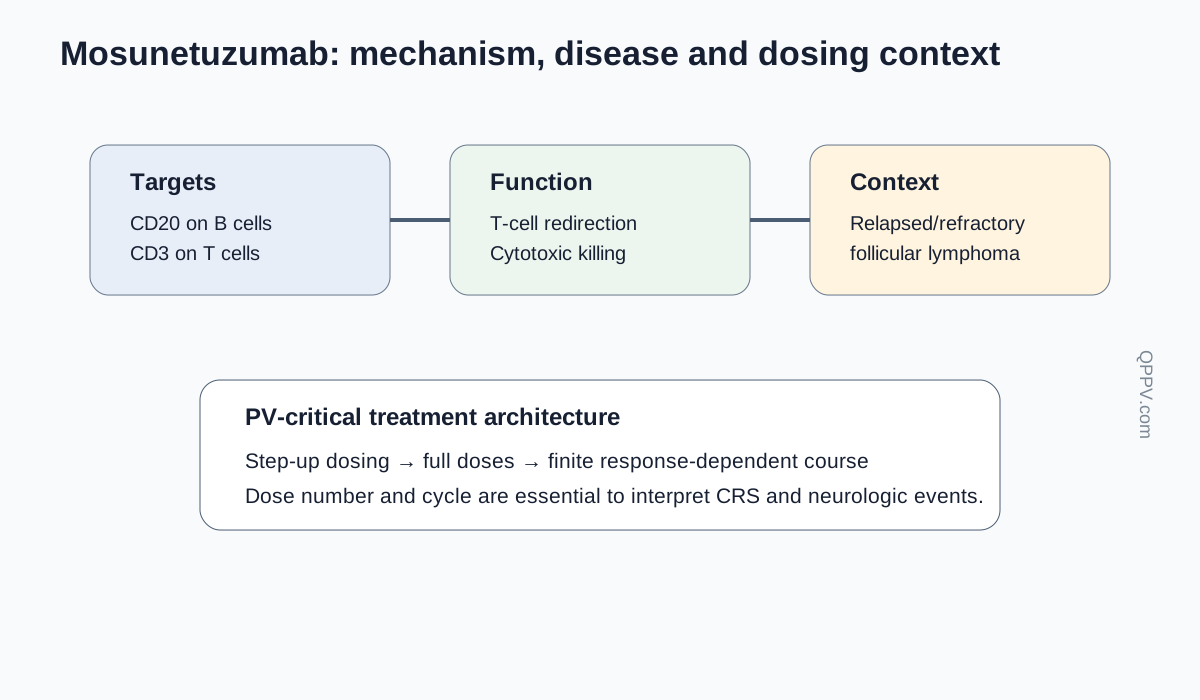
Figure 1. Mosunetuzumab is classified by its operation: CD20×CD3 T-cell engagement delivered through a step-up treatment architecture in a heavily pretreated follicular-lymphoma population.
Follicular lymphoma and CD20
Follicular lymphoma arises from germinal-centre B cells and usually retains CD20 expression. The disease is often indolent in tempo but can relapse repeatedly, and each successive line of therapy may alter marrow reserve, immune function and infection risk. These background changes matter in PV because a serious infection or cytopenia during mosunetuzumab therapy may reflect the cumulative treatment history as much as the current antibody.
CD20 is an attractive target because it is expressed on many malignant and normal mature B cells but not on haematopoietic stem cells. Targeting CD20 therefore permits B-cell-directed therapy while allowing later regeneration from earlier precursors.
Mechanism of T-cell redirection
One arm of mosunetuzumab binds CD20 and the other binds CD3. When both are engaged, the antibody stabilises proximity between a T cell and a B cell. This induces T-cell activation, release of cytotoxic granules and cytokines, and killing of the CD20-positive cell.
Unlike an ordinary anti-CD20 antibody, the central effector mechanism does not depend mainly on complement or Fc-receptor-bearing innate immune cells. The therapeutic engine is the recruited T cell itself.
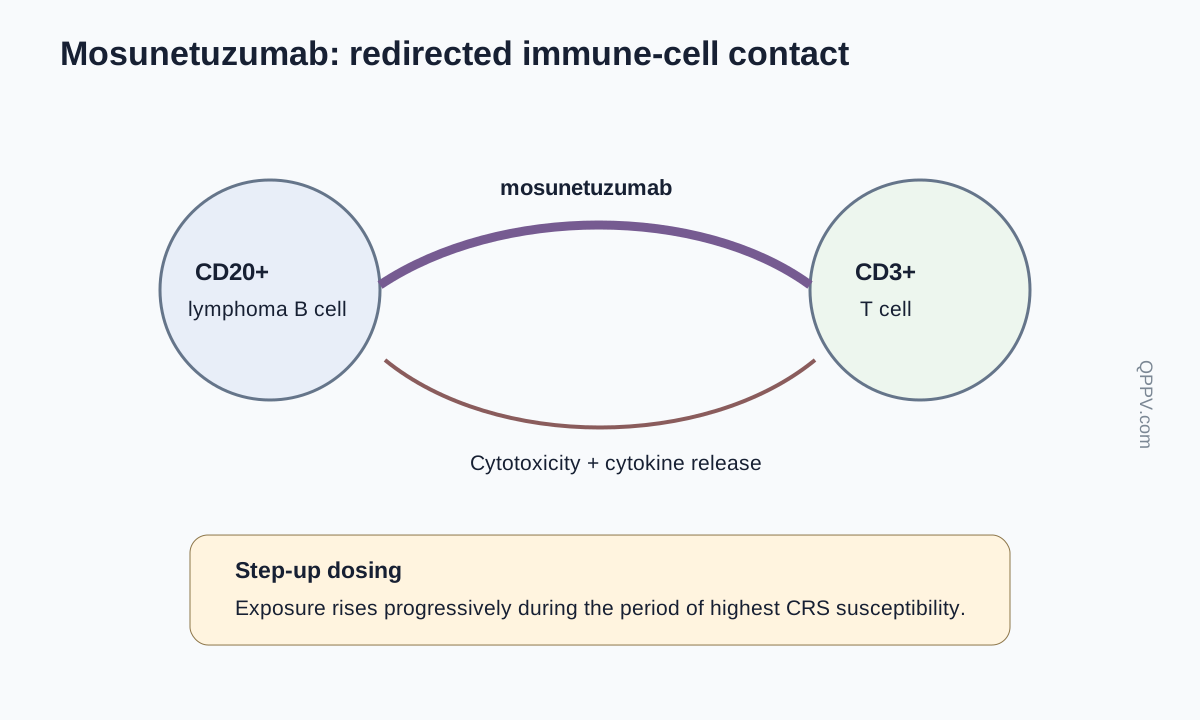
Figure 2. Mosunetuzumab bridges CD20-positive B cells and CD3-positive T cells. Step-up dosing progressively increases exposure during the period of greatest CRS susceptibility.
Development and regulatory history
Mosunetuzumab was developed as an off-the-shelf T-cell-redirecting therapy for B-cell malignancies. Its antibody format avoids the patient-specific cell-manufacturing process required for autologous CAR-T therapy, while still exploiting cytotoxic T-cell function.
The European Union granted conditional marketing authorisation in 2022 for adults with relapsed or refractory follicular lymphoma after at least two prior systemic therapies. The authorisation remains subject to ongoing evidence generation and periodic reassessment. Current EMA information available in 2026 continues to identify the product as under additional monitoring.
Major safety domains
Cytokine release syndrome
CRS is the central acute safety concern. It commonly begins with fever and may progress to hypotension, hypoxia or organ dysfunction. The probability and severity are influenced by dose sequence, tumour burden, immune-cell availability and supportive treatment.
For pharmacovigilance, CRS should be reconstructed dose by dose. A report that merely states “CRS during cycle 1” loses information needed to understand whether the event followed the first step-up dose, the next escalation or a later treatment dose. This chronology is also essential when assessing whether re-dosing or dose interruption altered the pattern.
Neurologic toxicity and ICANS
Neurologic symptoms can accompany CRS or occur separately. Confusion, aphasia, tremor, somnolence, seizure and encephalopathy require medical differentiation. ICANS is a defined immune-effector-cell neurotoxicity syndrome; it should not be inferred from any isolated neurologic complaint. Infection, metabolic disturbance, CNS lymphoma and concomitant medicines remain competing explanations.
Tumour flare
Inflammatory enlargement or pain at lymphoma sites may occur when immune cells enter tumour tissue. This can resemble progression, particularly if imaging is performed early. Anatomically sensitive disease—for example, near the airway or other constrained structures—requires special attention because transient swelling can still be clinically dangerous.
Tumour lysis syndrome
Rapid tumour killing can produce electrolyte disturbance, hyperuricaemia and acute kidney injury. Baseline tumour burden, renal function, prophylaxis, hydration and serial laboratory values determine whether a case represents laboratory TLS, clinical TLS or another cause of renal or metabolic deterioration.
Infection and immune depletion
Follicular-lymphoma patients may have impaired humoral immunity from the disease, previous anti-CD20 therapy, chemotherapy and repeated treatment. Mosunetuzumab further depletes CD20-positive B cells. Serious infection therefore requires assessment of pathogen, neutrophils, immunoglobulins where available, prophylaxis and prior treatment history.
Cytopenias
Neutropenia, anaemia and thrombocytopenia may reflect marrow involvement, cumulative prior therapy, infection or current treatment. Serial counts and recovery after interruption are more informative than a single nadir.
Pharmacokinetics and treatment duration
Mosunetuzumab is administered intravenously with step-up dosing at treatment initiation. The course is finite rather than automatically indefinite, with treatment duration influenced by response according to current product information. This changes interpretation of late adverse events: a delayed infection after the final dose may still be biologically plausible because B-cell and immune recovery lag behind plasma drug clearance.
Pharmacovigilance case assessment
A useful case should establish disease state, prior therapies, tumour burden, exact dose number, step-up stage, premedication and symptom onset. For CRS and neurologic events, those variables are more informative than the calendar date alone.
Event-specific follow-up priorities
| Event | High-value follow-up information |
|---|---|
| CRS | Dose number, onset, fever, blood pressure, oxygen requirement, grade, infection work-up, tocilizumab/corticosteroids, outcome |
| Neurologic event | Mental-status findings, ICE score where used, seizure, imaging/EEG, infection/metabolic work-up, treatment |
| Tumour flare | Site, swelling/pain, imaging, airway or organ compromise, subsequent response |
| TLS | Tumour burden, uric acid, potassium, phosphate, calcium, creatinine, prophylaxis, dialysis, outcome |
| Infection | Site/pathogen, neutrophils, immunoglobulins, previous anti-CD20 therapy, prophylaxis, hospital course |
| Cytopenia | Baseline/serial counts, marrow disease, previous chemotherapy, infection/bleeding consequences, recovery |
Signal detection and aggregate review
CRS analyses should be stratified by dose step and cycle. Neurologic cases should be medically adjudicated rather than relying on broad preferred-term groupings. Tumour flare and progression should be reviewed together when early radiology drives apparent lack-of-efficacy reporting.
Infection and cytopenia analyses require adjustment for prior therapy and baseline immune status. The heavily pretreated nature of the authorised population is part of the causal structure, not background noise.
Periodic benefit-risk evaluation
Periodic review should connect response durability and completion of planned treatment with CRS, neurologic toxicity, tumour flare, infection, cytopenias, tumour lysis and delayed immune consequences. Because treatment is finite, persistence of B-cell depletion and infection risk after the final dose should be considered separately from continuing drug exposure.
Conditional authorisation also makes evidence evolution particularly important. New comparative or confirmatory data may change the interpretation of benefit, sequencing and exposed populations even when the core mechanism remains unchanged.
Risk management and operational controls
Current product information specifies step-up dosing, premedication, monitoring and management of CRS and other serious risks. The EU patient card communicates symptoms of CRS and ICANS and when urgent medical care is needed. Pharmacovigilance operations should be capable of evaluating whether these controls are reflected in case recognition and reporting.
Useful controls include structured CRS/ICANS follow-up, mandatory dose-number capture, infection follow-up that includes prior B-cell-depleting therapy, and medical review of tumour flare versus progression.
Potential failure modes
The following are illustrative scenarios, not published inspection findings:
- CRS is recorded without identifying which step-up dose preceded it.
- A fever episode is classified as CRS without investigating infection.
- Confusion is coded as ICANS despite severe electrolyte disturbance.
- Early nodal enlargement is called treatment failure without considering tumour flare.
- An infection case omits prior anti-CD20 treatment and immunoglobulin status.
- A delayed post-treatment infection is dismissed because the last infusion was months earlier, despite persistent immune effects.
Inspection and governance perspective
An inspector could examine whether the safety system preserves step-up chronology, recognises CRS and neurologic syndromes, links patient-card risk minimisation to case quality, and distinguishes finite treatment exposure from delayed biological effects. Evidence may include targeted forms, coding guidance, escalation pathways, signal reviews and risk-minimisation effectiveness evaluations.
Practical checklist
For a mosunetuzumab case or aggregate analysis, confirm:
- follicular-lymphoma status and prior systemic therapies;
- tumour burden and disease sites;
- exact step-up dose and cycle;
- premedication and supportive treatment;
- objective CRS severity variables;
- neurologic examination and competing causes;
- TLS laboratory trajectory;
- infection, neutrophils and immunoglobulin context;
- product and batch information where relevant.
Key Takeaways
Mosunetuzumab redirects T cells to CD20-positive B cells. Its efficacy and acute immune toxicity therefore emerge from the same mechanism. Step-up dosing controls the intensity of early exposure but does not change the underlying T-cell-engagement biology.
Good pharmacovigilance is dose-aware and disease-aware. CRS, neurologic events, tumour flare, TLS, infection and cytopenias become interpretable only when the exact treatment sequence and heavily pretreated lymphoma context are retained.
References
- European Medicines Agency. Mosunetuzumab (Lunsumio): EPAR and current product information. Product information and procedural history current in 2026. https://www.ema.europa.eu/en/medicines/human/EPAR/lunsumio
- Budde LE, Sehn LH, Matasar M, et al. Safety and efficacy of mosunetuzumab, a bispecific antibody, in patients with relapsed or refractory follicular lymphoma: a single-arm, multicentre, phase 2 study. Lancet Oncol. 2022;23:1055-1065. doi:10.1016/S1470-2045(22)00335-7.
- Schuster SJ, Bartlett NL, Assouline S, et al. Mosunetuzumab induces complete remissions in poor prognosis non-Hodgkin lymphoma patients, including those who are resistant to or relapsing after chimeric antigen receptor T-cell therapies, and is active in treatment through multiple lines. Blood. 2019;134(Suppl 1):6.
Regulatory Note
Mosunetuzumab has conditional marketing authorisation in the EU. Authorised use, monitoring, patient-card requirements and confirmatory evidence obligations may evolve. This article does not replace current product information. Regulatory information was checked against EMA material available in September 2026.