Mosunetuzumab Subcutaneous Formulation: Dosing, Safety and Pharmacovigilance
Subcutaneous mosunetuzumab is a formulation of the same CD20×CD3 T-cell-engaging bispecific antibody used intravenously, but the route and dosing architecture are sufficiently different to create a separate pharmacovigilance problem. The U.S. subcutaneous presentation was approved in December 2025 for adults with relapsed or refractory follicular lymphoma after two or more lines of systemic therapy.
The approval was accompanied by explicit labelling changes intended to prevent confusion between intravenous mosunetuzumab and the subcutaneous product. That medication-error concern is not incidental: it is one of the clearest reasons to treat the formulation separately in PV systems.
- Mosunetuzumab Subcutaneous Formulation: Dosing, Safety and Pharmacovigilance
- Product Concept and Classification
- Why Step-Up Dosing Still Matters
- Safety Profile in the Subcutaneous Context
- Medication Errors: IV Versus SC Product
- Case Assessment Framework
- Aggregate Review
- Practical Controls and Failure Modes
- Inspection and Governance Considerations
- Key Takeaways
- References
- Regulatory Note
Product Concept and Classification
Mosunetuzumab remains a humanised IgG1 CD20×CD3 bispecific antibody. One arm binds CD20 on B-lineage cells and the other engages CD3 on T cells, creating an immune synapse that activates T-cell cytotoxicity. Subcutaneous delivery changes the absorption profile rather than the molecular target.
| Dimension | Subcutaneous implication |
|---|---|
| Molecular target | Same CD20×CD3 T-cell engagement |
| Route | Subcutaneous rather than intravenous |
| Dose architecture | Formulation-specific step-up regimen |
| Cytokine kinetics | Slower and reduced cytokine-release pattern relative to IV exposure in clinical pharmacology data |
| Product identity | Separate strengths/presentations; wrong-product use is a labelled concern |
| Local safety | Injection-site reactions require dedicated assessment |
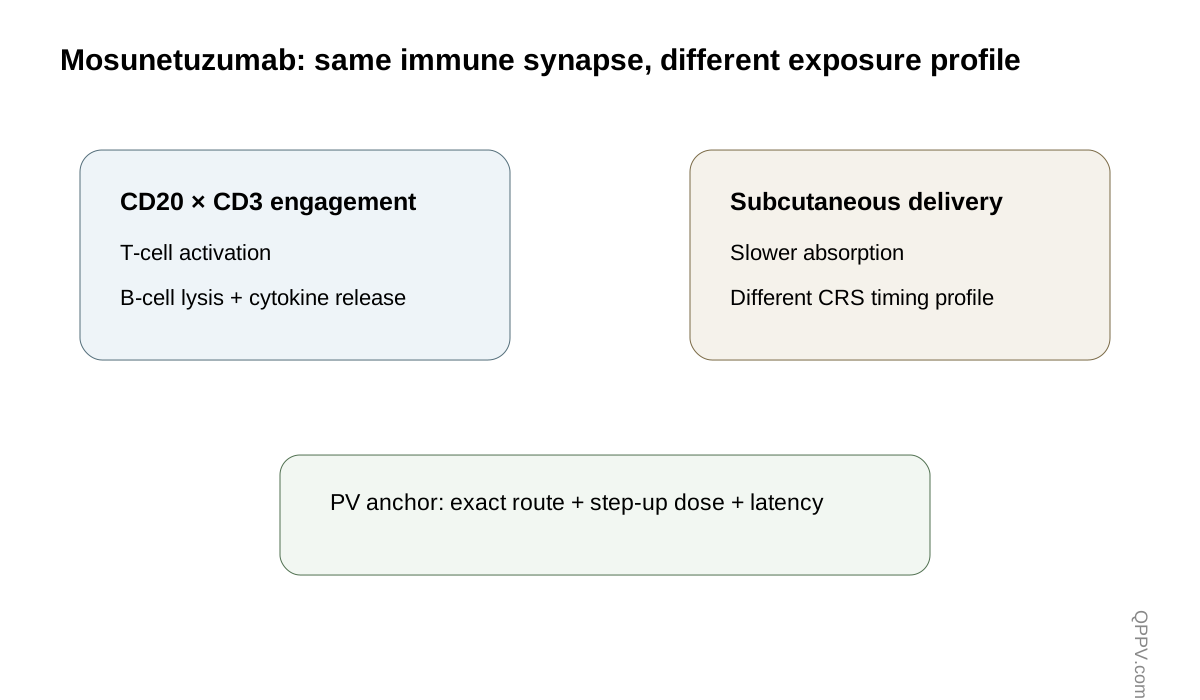
Figure 1. Subcutaneous delivery preserves the CD20×CD3 mechanism but changes absorption, dosing and the early cytokine-release profile.
Why Step-Up Dosing Still Matters
Step-up dosing remains central because the biological hazard is rapid T-cell activation in the presence of CD20-positive target cells. Subcutaneous absorption modifies the rate of exposure but does not abolish cytokine release syndrome (CRS). Current U.S. pharmacology information shows transient cytokine increases after subcutaneous dosing, with peak changes generally occurring later and appearing slower and reduced relative to intravenous administration.
The PV consequence is that timing windows should not simply be copied from the intravenous product. Reports should capture the exact formulation, step-up dose number, administration date and latency to symptoms.
Safety Profile in the Subcutaneous Context
Cytokine release syndrome
CRS remains a central risk. Case assessment should document the exact step-up or full dose, tumour burden where available, premedication, time to fever or hypotension, oxygen requirement, grading, anti-cytokine treatment and outcome. A route-specific analysis is useful because the temporal pattern after subcutaneous administration may differ from intravenous administration.
Neurologic toxicity and ICANS
Neurologic toxicity, including immune effector cell-associated neurotoxicity syndrome, remains part of the mosunetuzumab safety framework. Confusion, aphasia, altered consciousness or other neurologic symptoms require differentiation from infection, metabolic disturbance, CNS lymphoma and concomitant treatment effects.
Infection, B-cell depletion and hypogammaglobulinaemia
Subcutaneous mosunetuzumab still depletes CD20-positive B cells. Current U.S. pharmacodynamic data show profound peripheral B-cell depletion and reductions in IgG in a proportion of treated patients. These findings connect formulation-specific surveillance to the broader longitudinal immune-safety model described in the parent mosunetuzumab article.
Injection-site reactions
Local reactions are formulation-specific and should be captured separately from CRS or systemic hypersensitivity. Site, severity, duration, recurrence and whether the full dose was delivered are useful follow-up details.
Medication Errors: IV Versus SC Product
The 2025 U.S. approval explicitly added a warning on medication errors with incorrect product use and revised dosing sections to distinguish intravenous Lunsumio from subcutaneous Lunsumio Velo. This creates a clear PV expectation: reports should preserve product name, route, strength and step-up position, not merely the active substance.
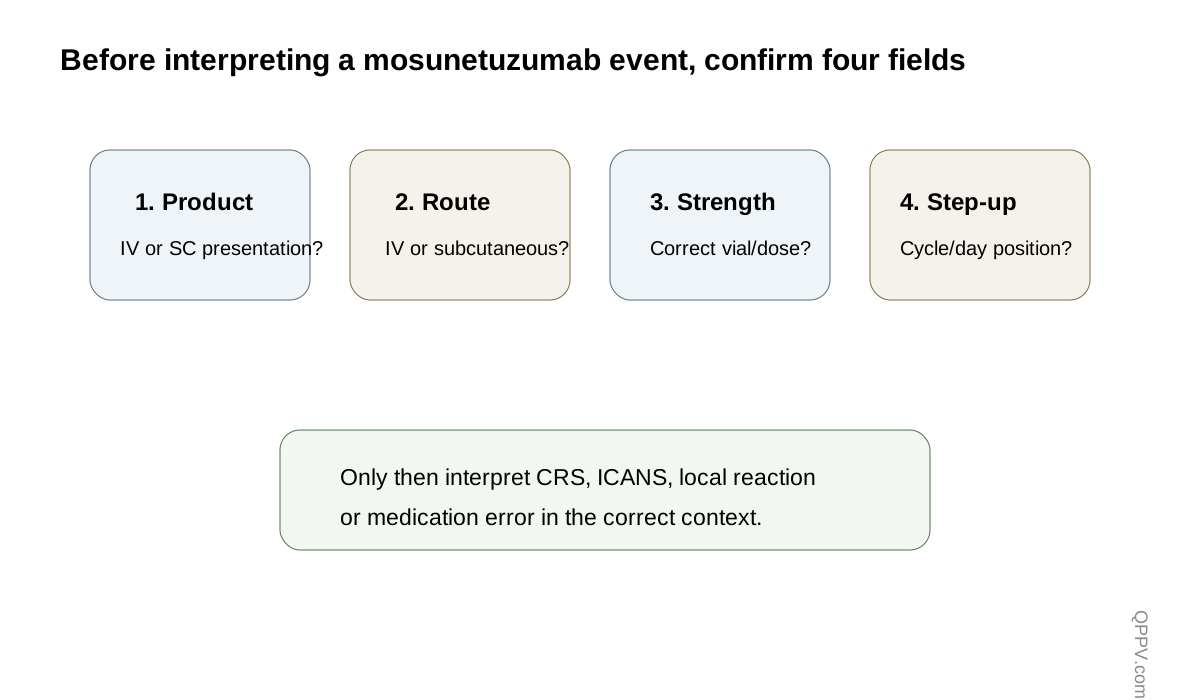
Figure 2. Correct PV reconstruction requires confirmation of product, route, strength and step-up position before the event can be interpreted.
Case Assessment Framework
| Follow-up field | Why it matters |
|---|---|
| Exact IV or SC product | Detects wrong-product use |
| Strength and dose | Reconstructs step-up regimen |
| Cycle/day and prior doses | Defines CRS susceptibility window |
| Injection site | Supports local-reaction assessment |
| Time to fever/hypotension/hypoxia | Supports CRS assessment |
| Neurologic examination/work-up | Supports ICANS differential diagnosis |
| Tumour burden and disease status | Important CRS and tumour-flare context |
| Infection studies and immunoglobulins | Supports immune-suppression assessment |
Aggregate Review
CRS and administration-event analyses should be stratified by route and step-up position. Infection, hypogammaglobulinaemia and B-cell-depletion consequences should be reviewed across the molecule's full treatment history, while preserving route as an analytical variable.
Practical Controls and Failure Modes
Operational controls should make the route difficult to lose. Safety databases and source documents should distinguish intravenous mosunetuzumab from the subcutaneous presentation, retain strength and cycle/day, and flag inconsistent route-dose combinations for review.
An illustrative failure mode is a report coded as “mosunetuzumab CRS” without the formulation or step-up dose. The case remains medically valid, but its usefulness for route-specific signal evaluation is sharply reduced. A second failure mode is to treat the subcutaneous product as merely a convenience presentation and omit dedicated medication-error surveillance despite the explicit product-differentiation warning.
Inspection and Governance Considerations
An inspector could examine whether procedures and database fields distinguish IV and SC products; whether cases reconstruct step-up position and route; whether medication errors are trended separately; and whether aggregate reviews explain differences in CRS timing and local reactions without fragmenting the underlying immune-safety dataset.
Key Takeaways
Subcutaneous mosunetuzumab preserves CD20×CD3 T-cell-engager biology but changes exposure kinetics, route, step-up dosing implementation and product-selection risks. CRS and neurologic toxicity remain central; injection reactions and medication errors add formulation-specific PV requirements. The strongest system links the SC product to the parent molecule's longitudinal immune-safety framework while keeping route-specific analyses visible.
References
- U.S. Food and Drug Administration. Lunsumio Velo (mosunetuzumab-axgb) supplemental BLA approval letter, BLA 761263/S-006. 19 December 2025.
- U.S. Food and Drug Administration. Lunsumio Velo prescribing information. 2025 label, including CRS, neurologic toxicity, medication-error warning, pharmacodynamics and pharmacokinetics.
- U.S. Food and Drug Administration. Cancer Accelerated Approvals: Lunsumio Velo formulation approval. Current status accessed September 2026.
- QPPV.com. Mosunetuzumab: Classification, History, Mechanism of Action, Safety and Pharmacovigilance. Parent molecule reference article.
Regulatory Note
This article is anchored to the U.S. subcutaneous formulation approved in December 2025. Mosunetuzumab routes, names, strengths and authorised uses differ by jurisdiction. The separate U.S. regulatory application for subcutaneous mosunetuzumab with polatuzumab vedotin in large B-cell lymphoma was under review in September 2026 and should not be treated here as an approved indication.