Moxetumomab Pasudotox: Classification, History, Mechanism, Safety and Pharmacovigilance
Moxetumomab pasudotox is a CD22-directed recombinant immunotoxin that was developed for relapsed or refractory hairy cell leukaemia (HCL). It belongs in an antibody-based biological series, but it should not be described as a conventional therapeutic monoclonal antibody. Its targeting component is an antibody variable fragment; its cytotoxic component is a truncated bacterial toxin derived from Pseudomonas exotoxin A.
That distinction is fundamental. The antibody portion determines which cell is recognised. The toxin portion determines how the recognised cell is killed. Safety therefore cannot be predicted from CD22 biology alone. Capillary leak syndrome (CLS), haemolytic uraemic syndrome (HUS), renal toxicity, electrolyte abnormalities and infusion-related reactions emerged as defining clinical management and pharmacovigilance issues.
The product is now historical. It received U.S. approval in September 2018 for adults with relapsed or refractory HCL after at least two prior systemic therapies, including a purine nucleoside analogue. The FDA Purple Book now lists the product as discontinued. The EU authorised it in February 2021, but the marketing authorisation was withdrawn in July 2021 at the holder's request for commercial reasons; the product had not been marketed in the EU.
- Moxetumomab Pasudotox: Classification, History, Mechanism, Safety and Pharmacovigilance
- Multidimensional classification
- Hairy cell leukaemia and CD22
- Molecular architecture and mechanism
- Development and regulatory history
- Safety architecture
- Cytopenias, infection and the disease background
- Immunogenicity and repeated-cycle exposure
- Treatment response and lack of efficacy
- Special situations
- Pharmacovigilance case assessment
- Signal detection and aggregate review
- Potential failure modes
- Inspection and governance perspective
- Practical checklist
- Key Takeaways
- References
- Regulatory Note
Multidimensional classification
| Classification axis | Moxetumomab pasudotox | Pharmacovigilance significance |
|---|---|---|
| Molecular format | Recombinant antibody-toxin fusion protein | Not a conventional full-length IgG monoclonal antibody |
| Targeting domain | Anti-CD22 antibody variable region | Directs the construct toward CD22-rich B cells |
| Cytotoxic domain | Truncated Pseudomonas exotoxin | Intracellular toxin biology drives cell killing and contributes to distinctive toxicity |
| Functional class | CD22-directed immunotoxin | Target recognition and cytotoxic mechanism must be assessed separately |
| Historical indication | Relapsed/refractory hairy cell leukaemia after multiple prior therapies | Heavily pretreated disease complicates cytopenia, renal and infection causality |
| Route/schedule | Intravenous administration on repeated days within treatment cycles | Hydration, laboratory monitoring and dose-day chronology are critical |
| Defining serious risks | Capillary leak syndrome and haemolytic uraemic syndrome | Both were prominent enough to appear in the U.S. boxed warning |
| Current status | Discontinued in the U.S.; EU authorisation withdrawn | Article is a historical PV reference, not current treatment guidance |
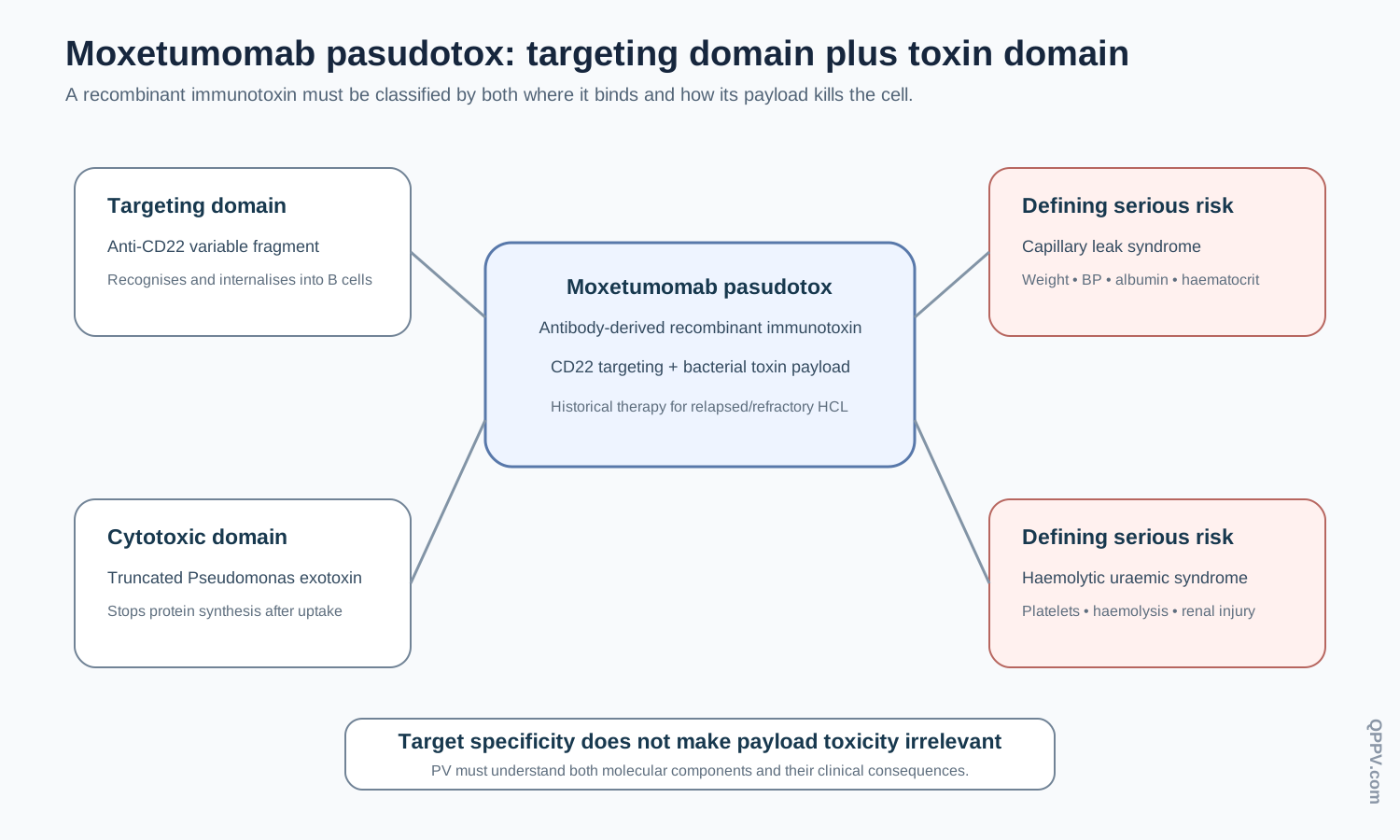
Figure 1. Moxetumomab pasudotox combines an antibody-derived CD22 targeting domain with a bacterial-toxin cytotoxic domain. Its classification and safety cannot be understood from either component alone.
Hairy cell leukaemia and CD22
Hairy cell leukaemia is a mature B-cell malignancy characterised by abnormal lymphoid cells with distinctive cytoplasmic projections, bone-marrow and splenic involvement, cytopenias and susceptibility to infection. The disease cells express B-cell surface proteins including CD22, often at high density.
CD22 is an attractive delivery marker because an antibody construct bound to the receptor can be internalised. For a conventional antibody, binding may alter signalling or recruit immune effector mechanisms. For an immunotoxin, internalisation has a different purpose: it carries a toxic enzymatic payload into the target cell.
Molecular architecture and mechanism
Moxetumomab pasudotox contains a high-affinity anti-CD22 antibody variable fragment fused to a truncated form of Pseudomonas exotoxin A. After the targeting domain binds CD22, the complex is internalised and processed intracellularly. The toxin domain reaches the cytosol and inactivates eukaryotic elongation factor 2 through ADP-ribosylation. Protein synthesis then stops, leading to cell death.
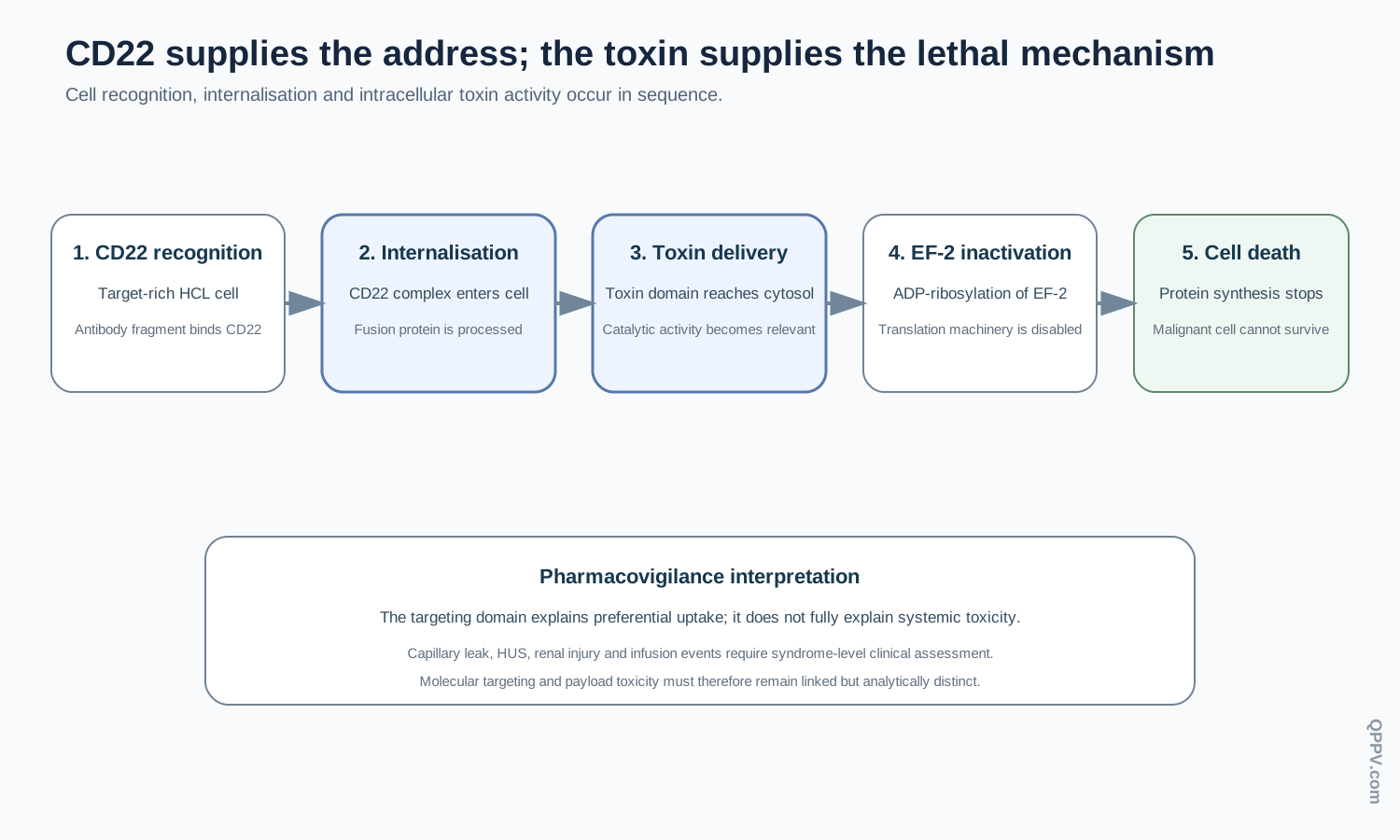
Figure 2. The antibody-derived domain provides cell recognition and internalisation; the toxin domain then inhibits elongation factor 2 and protein synthesis. This is targeted toxin delivery, not antibody-mediated cytotoxicity alone.
The design therefore separates two biological questions. Target specificity asks whether CD22-rich malignant cells preferentially take up the construct. Payload toxicity asks what happens after the bacterial toxin becomes active inside or around exposed tissues. Pharmacovigilance must retain both layers.
Development and regulatory history
The pivotal multicentre study enrolled heavily pretreated adults with relapsed or refractory HCL. Durable complete response was the primary efficacy endpoint. In the published 80-patient study, the durable complete-response rate was 30%, the complete-response rate 41% and the objective-response rate 75%. Serious treatment-related HUS and CLS were reported and became central to the product's risk framework.
FDA approved moxetumomab pasudotox-tdfk on 13 September 2018. The EU granted marketing authorisation on 8 February 2021 for adults with relapsed or refractory HCL after at least two prior systemic therapies, including a purine nucleoside analogue. The EU authorisation was withdrawn on 23 July 2021 at the holder's request for commercial reasons, and EMA states that the product had not been marketed in the EU. Current FDA Purple Book records list the U.S. biological as discontinued.
The lifecycle should therefore be taught as a historical safety and modality case study. Discontinuation does not erase the scientific value of understanding the product, nor does commercial withdrawal imply that its serious labelled risks were the reason for withdrawal.
Safety architecture
Capillary leak syndrome
Capillary leak syndrome occurs when vascular permeability increases and fluid shifts from the intravascular space into tissues. The clinical pattern can include hypotension, oedema, weight gain, hypoalbuminaemia and haemoconcentration. In a patient with HCL, several of these findings can also arise from infection, cardiac disease, renal dysfunction, intravenous fluids or disease-related physiology, so the syndrome requires a coherent clinical pattern rather than a single term.
For pharmacovigilance, high-value variables include baseline and serial weight, blood pressure, albumin, haematocrit, oedema, oxygenation, fluid administration, renal function, cardiac assessment, dose number and timing from infusion. The historical U.S. label contained a boxed warning for CLS, including life-threatening cases, and specified dose delay or discontinuation according to severity.
The practical lesson extends beyond this product. A syndrome-level risk should be reconstructed as a cluster of physiological changes over time, not merely as whichever individual preferred terms happen to be reported.
Haemolytic uraemic syndrome
HUS was the second defining boxed-warning risk. The syndrome combines microangiopathic haemolytic anaemia, thrombocytopenia and organ injury, especially acute kidney injury. Moxetumomab-associated HUS could therefore resemble other causes of thrombotic microangiopathy or severe illness.
A suspected case should capture platelet trajectory, haemoglobin, schistocytes where assessed, lactate dehydrogenase, bilirubin, haptoglobin, creatinine, urine findings, blood pressure, infection evaluation, transfusion, renal replacement therapy and outcome. Dose chronology is important because treatment discontinuation was required when HUS occurred.
The differential diagnosis is particularly important in heavily pretreated haematology patients. Sepsis, severe hypertension, other antineoplastic medicines and disease-related complications can produce overlapping renal and haematological abnormalities. Causality assessment requires syndrome reconstruction and competing-cause evaluation.
Renal toxicity, fluid balance and electrolytes
Renal function and fluid status were closely linked to the safe administration of moxetumomab pasudotox. Changes in creatinine, fluid balance and electrolytes could occur in the context of HUS, CLS, dehydration, tumour burden or supportive treatment. Hydration practices and oral fluid intake were therefore clinically relevant exposure-context variables rather than background details.
A renal event report should include baseline renal function, serial creatinine, fluid intake and intravenous fluids, blood pressure, concomitant nephrotoxins, urinalysis where available and evidence for HUS or CLS. Recording “acute kidney injury” alone can obscure the mechanism that matters most.
Infusion-related reactions and hypersensitivity
The medicine was given intravenously on multiple days within each cycle. Fever, chills, nausea, headache, hypotension or allergic manifestations could therefore occur around infusion. The narrative should preserve the exact dose day, onset from infusion, rate, interruption, premedication, supportive treatment and response to re-exposure.
Because CLS can also produce hypotension and systemic symptoms, an early reaction should not automatically be classified as an isolated infusion reaction if later oedema, haemoconcentration or hypoalbuminaemia emerges.
Cytopenias, infection and the disease background
HCL itself commonly causes cytopenias and impaired immune function. Prior purine nucleoside analogues, anti-CD20 therapy and other treatments can add prolonged immunosuppression. This means neutropenia, anaemia, thrombocytopenia and infection have substantial competing explanations even before an immunotoxin is administered.
Case assessment should therefore compare baseline counts with post-dose trends. A platelet fall accompanied by haemolysis and renal injury raises a different concern from chronic marrow-related thrombocytopenia. Similarly, fever with neutropenia requires infection assessment rather than being attributed solely to an infusion reaction.
Immunogenicity and repeated-cycle exposure
Moxetumomab pasudotox contains non-human toxin-derived protein sequences and an antibody-derived targeting region, creating a biologically plausible setting for anti-drug antibodies. Immunogenicity can alter pharmacokinetics and potentially reduce exposure or complicate hypersensitivity assessment. When anti-drug-antibody testing is available in a case or study, it should be interpreted alongside treatment cycle, exposure and clinical response rather than as an isolated laboratory result.
Treatment response and lack of efficacy
HCL response assessment involves more than peripheral blood counts. Bone-marrow findings, spleen size, recovery of cytopenias and minimal residual disease can all contribute to understanding response. A report of treatment failure should therefore specify how failure was defined, number of cycles received, dose interruptions, anti-drug antibodies where available and subsequent therapy.
The pivotal development programme emphasised durable complete response because transient count improvement is not equivalent to durable disease control. This illustrates a broader PV principle: the clinical endpoint used to judge effectiveness must reflect the disease and intended treatment effect.
Special situations
Medication errors could involve incorrect dose calculation, reconstitution, dilution, administration on the wrong cycle day or failure to implement hydration and monitoring instructions. A useful report reconstructs preparation and administration rather than stopping at the error term.
For pregnancy exposure, the historical oncology context and cytotoxic mechanism require careful documentation of gestational timing, treatment dates, disease status, other antineoplastic exposure and maternal/fetal outcome. Historical product information should be consulted for the exact precautions that applied at the time.
Because the medicine is no longer marketed, many future reports will be retrospective. Historical case assessment should use the label and risk-management framework applicable during the exposure period, not current treatment standards for HCL.
Pharmacovigilance case assessment
Moxetumomab pasudotox cases require unusually strong syndrome discrimination. Oedema, hypotension, thrombocytopenia, anaemia and renal impairment can occur in several clinically different combinations. The medical reviewer should therefore ask whether the event fits CLS, HUS, infection, underlying HCL, another medicine or a mixed process.
A practical chronology should include cycle and dose day, infusion time, pre- and post-dose hydration, baseline weight and laboratory values, onset of symptoms, serial blood pressure, albumin, haematocrit, platelet count, haemolysis markers, creatinine and treatment given. This is more informative than a list of isolated laboratory adverse events.
Signal detection and aggregate review
Aggregate review should preserve the two defining serious syndromes as coherent clinical entities. Searching only for the exact preferred terms “capillary leak syndrome” or “haemolytic uraemic syndrome” may miss incompletely diagnosed cases. Broader retrieval can improve sensitivity, but expert case review is needed to avoid turning nonspecific oedema, anaemia or renal impairment into false syndrome counts.
Dose-cycle analysis can also be informative. Repeated exposure, immunogenicity, cumulative prior therapy and disease response may change the clinical context over time. Serious renal or vascular-permeability events should therefore retain cycle number and dose day.
Because the product is discontinued, contemporary signal work is primarily historical and educational. Archived aggregate data remain useful for understanding immunotoxin class effects, but they should not be presented as current exposure surveillance.
Potential failure modes
The following are illustrative scenarios, not published inspection findings:
- Hypotension after infusion is coded only as an infusion reaction despite subsequent weight gain, hypoalbuminaemia and oedema consistent with CLS.
- Thrombocytopenia and rising creatinine are recorded separately without evaluating haemolysis and the possibility of HUS.
- Acute kidney injury is attributed to HUS without platelet or haemolysis evidence.
- Baseline cytopenias from HCL are mistaken for treatment-emergent marrow toxicity because pre-dose counts are missing.
- A medication-error report omits the calculated dose, preparation method, cycle day and hydration plan.
- Commercial withdrawal of the EU authorisation is described as a regulatory safety withdrawal.
- The molecule is called simply a “monoclonal antibody”, obscuring the toxin payload that determines much of its pharmacology.
Inspection and governance perspective
A reviewer examining the historical safety system could assess whether CLS and HUS cases were actively recognised and followed up as syndromes; whether renal, fluid-balance and laboratory data were captured longitudinally; whether dose modifications and discontinuations followed the applicable product information; and whether the exact antibody-toxin modality was represented correctly in safety documents.
The article also illustrates a documentation principle relevant to modern ADCs and immunotoxins: targeting specificity does not make the payload irrelevant to pharmacovigilance. Safety governance must understand both the targeting component and the cytotoxic component, including how internalisation and intracellular processing connect them.
Practical checklist
For a historical moxetumomab pasudotox case, confirm:
- HCL diagnosis, prior therapies and baseline cytopenias;
- exact cycle and dose day;
- dose, preparation and infusion chronology;
- hydration and fluid-intake information;
- baseline and serial weight and blood pressure;
- albumin and haematocrit for suspected CLS;
- platelet count, haemoglobin, haemolysis markers and renal function for suspected HUS;
- infection and other thrombotic-microangiopathy differentials;
- infusion-reaction features and management;
- treatment interruption or permanent discontinuation;
- anti-drug-antibody results where available;
- response assessment and subsequent HCL treatment.
Key Takeaways
Moxetumomab pasudotox was not a conventional monoclonal antibody. It was a CD22-targeted recombinant immunotoxin in which an antibody-derived variable fragment delivered a truncated bacterial toxin to malignant B cells. The toxin inactivated elongation factor 2 and stopped protein synthesis.
Its pharmacovigilance was dominated by syndrome-level risks, especially capillary leak syndrome and haemolytic uraemic syndrome, alongside renal, electrolyte and infusion-related complications. The product is now discontinued, but it remains a valuable reference for understanding how targeting domains and cytotoxic payloads create a combined safety architecture.
References
- U.S. Food and Drug Administration. Lumoxiti (moxetumomab pasudotox-tdfk) prescribing information. Initial approval 2018; boxed warnings for capillary leak syndrome and haemolytic uraemic syndrome. https://www.accessdata.fda.gov/drugsatfda_docs/label/2018/761104s000lbl.pdf.
- U.S. Food and Drug Administration. Purple Book: Lumoxiti, BLA 761104. Original approval 13 September 2018; current marketing status listed as discontinued. https://purplebooksearch.fda.gov/index.cfm?blaNo=761104&event=productdetails. Accessed 15 September 2026.
- European Medicines Agency. Lumoxiti: EPAR. EU marketing authorisation issued 8 February 2021 and withdrawn 23 July 2021 at the holder's request for commercial reasons. https://www.ema.europa.eu/en/medicines/human/EPAR/lumoxiti.
- European Medicines Agency. Orphan designation: moxetumomab pasudotox for hairy cell leukaemia. Description of the anti-CD22 variable region fused to truncated Pseudomonas exotoxin 38. https://www.ema.europa.eu/en/medicines/human/orphan-designations/eu-3-08-592.
- Kreitman RJ, Dearden C, Zinzani PL, et al. Moxetumomab pasudotox in relapsed/refractory hairy cell leukemia. Leukemia. 2018;32:1768-1777. PMID:30030507.
- Kreitman RJ, Dearden C, Zinzani PL, et al. Moxetumomab pasudotox in heavily pre-treated patients with relapsed/refractory hairy cell leukemia: long-term follow-up from the pivotal trial. J Hematol Oncol. 2021;14:35. PMID:33627164.
Regulatory Note
This article is a historical educational pharmacovigilance reference. Moxetumomab pasudotox is not presented as a currently marketed treatment. Historical indications, dosing, monitoring and risk-management measures should be interpreted using the product information applicable at the time of exposure. Commercial withdrawal or discontinuation should not be represented as proof that a specific safety concern caused the lifecycle decision unless an authoritative source states that explicitly.