Necitumumab: Classification, EGFR Mechanism, EU History and Pharmacovigilance
Necitumumab's EU use is historical: its authorisation expired after the holder did not seek renewal.
- Necitumumab: Classification, EGFR Mechanism, EU History and Pharmacovigilance
1. Necitumumab and its historical EU status
Necitumumab is a recombinant human IgG1 monoclonal antibody directed against the epidermal growth factor receptor (EGFR). In the EU, Portrazza was authorised on 15 February 2016 for use with gemcitabine and cisplatin in adults with locally advanced or metastatic squamous non-small-cell lung cancer (NSCLC).[1,2]
The EU marketing authorisation expired on 18 February 2021 after the marketing authorisation holder chose not to apply for renewal. EMA records the product as no longer authorised. This is an expiry following non-renewal; it should not be misdescribed as a safety-based withdrawal or revocation. Necitumumab is not currently authorised in the EU, although historic exposures remain relevant for case processing and scientific review.
A report from the authorised period must be interpreted against the label that applied then. Product identity, dates, regimen and treatment line are needed to distinguish necitumumab-related questions from the effects of chemotherapy, cancer progression and co-morbidity.
2. EGFR blockade and combination treatment
EGFR is a cell-surface receptor involved in signalling that can support tumour-cell growth and survival. Necitumumab binds EGFR and can interfere with ligand-dependent activation. This biological rationale supported the historical use in a specific squamous NSCLC population, alongside gemcitabine and cisplatin. A plausible pathway does not establish that an event in an individual patient was caused by necitumumab.
The combination context is central. Cytotoxic chemotherapy may contribute to marrow suppression, infection, renal injury, electrolyte changes and other events. The case narrative should identify the component suspected by the reporter but should independently evaluate necitumumab and each concomitant treatment.
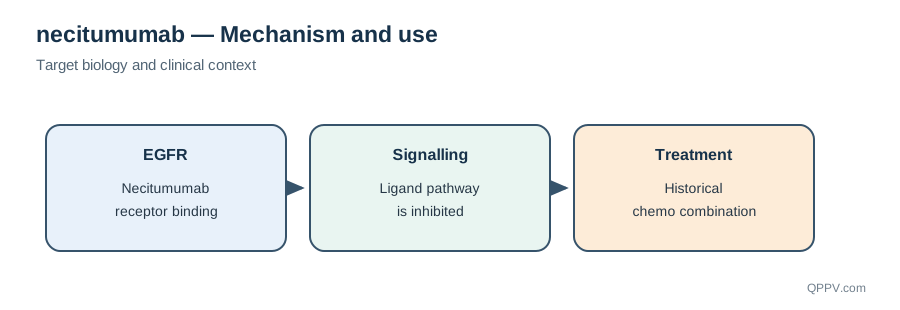
Figure 1. Necitumumab binds EGFR in its historical chemotherapy-combination setting; this mechanism diagram does not establish individual causality.
2.1 Historical treatment context
Portrazza was administered intravenously with gemcitabine and cisplatin under the EU label. Capture cycle, dose, infusion date, chemotherapy dates and any interruption or dose modification. The indication and regimen are historical and should not be presented as current EU treatment advice.
3. Safety profile and case assessment
3.1 Cardiopulmonary and thromboembolic events
The historical product information addressed cardiopulmonary arrest, cardiopulmonary events and thromboembolic events. These outcomes require careful reconstruction in patients with advanced cancer, who may also have baseline cardiovascular disease, infection, pulmonary disease, immobility and chemotherapy exposure. Document the clinical diagnosis, onset, observations, investigations, treatment and outcome rather than coding an isolated symptom as a confirmed event.
For a cardiac arrest or acute cardiopulmonary deterioration, record the timing relative to necitumumab and chemotherapy infusions, known cardiac risk factors, concurrent medicines, electrolyte abnormalities and resuscitation details where available. A close temporal relationship warrants assessment but does not alone prove causation.
3.2 Skin, infusion and electrolyte events
EGFR inhibition can be associated with dermatological reactions. The historical label also described infusion-related reactions and clinically relevant electrolyte disturbances, including hypomagnesaemia. Preserve rash morphology and severity, distribution, onset, infection or mucosal involvement, treatment and recovery. For electrolyte events, record serial magnesium, potassium and calcium results, renal function, replacement therapy and timing relative to each treatment cycle.[2]
An infusion reaction should be supported by chronology and clinical findings. Distinguish a reaction during administration from later dyspnoea, fever or hypotension caused by infection, pulmonary embolism, disease progression or another medicine.
4. Minimum follow-up and traceability
For a case involving historic necitumumab exposure, seek:
- Product identity, batch/lot when available, dose, route, infusion date/time and source documents.
- Tumour histology, stage, treatment line and clinical course.
- Gemcitabine and cisplatin doses and dates, cycle number, dose changes and supportive medicines.
- Event chronology, seriousness criteria, investigations, treatment, dechallenge and outcome.
- For skin reactions: description, grade if documented, distribution, mucosal involvement and intervention.
- For electrolyte events: magnesium and related laboratory trends, renal status and replacement.
- For cardiopulmonary or thromboembolic events: diagnostic evidence, risk factors and competing causes.
Expectedness should be judged using the relevant historical reference safety information for the exposure period. Seriousness, expectedness and causality are separate determinations. Applicable reporting requirements remain relevant to valid historical exposure reports received by the MAH.
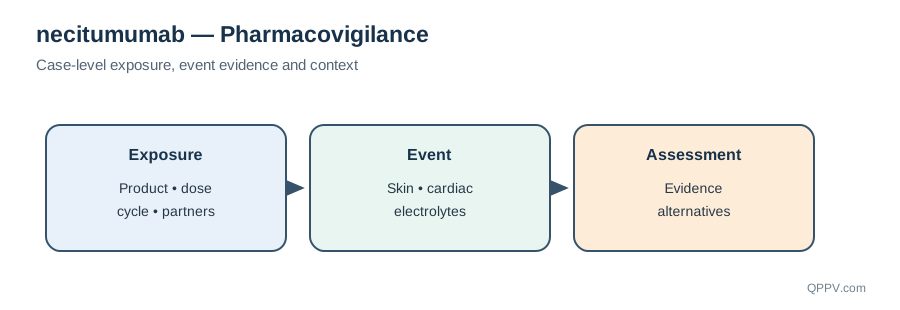
Figure 2. Necitumumab case review aligns exposure in the chemotherapy combination with the event phenotype and clinical alternatives.
5. Aggregate review and governance
Aggregate review should preserve regimen and treatment-period context. Consider stage, chemotherapy exposure, cycle, dose intensity, baseline cardiovascular risk, electrolyte values, tumour progression and concomitant medicines. Raw spontaneous-report counts do not establish incidence or comparative safety.
Because the EU authorisation expired after non-renewal, current EU authorisation status and historical use must be reported separately. Inspection-ready records should show the product and regimen, label version used for expectedness, follow-up, medical assessment and submission decision. Common failures include treating expiry as a safety finding, omitting chemotherapy exposure, losing electrolyte trends and inferring causality from EGFR biology alone.
6. Key takeaways
Necitumumab is an anti-EGFR antibody with a historical EU indication in combination with gemcitabine and cisplatin for squamous NSCLC. Its EU authorisation expired on 18 February 2021 after non-renewal. Historical cases require product- and cycle-level exposure reconstruction and careful evaluation of cardiopulmonary, thromboembolic, skin and electrolyte events in the context of chemotherapy and cancer.
References
- European Medicines Agency. Portrazza: European Public Assessment Report. EU indication, original authorisation and expiry after non-renewal on 18 February 2021. Accessed 24 September 2026.
- European Medicines Agency. Portrazza: historical EU product information. Historical indication, administration, warnings and adverse reactions. Accessed 24 September 2026.
- European Medicines Agency. GVP Module VI: Collection, management and submission of reports of suspected adverse reactions. Apply the current module and addenda.
- European Commission. Commission Implementing Regulation (EU) No 520/2012. EU pharmacovigilance requirements, as amended.
Regulatory Note
This article concerns necitumumab's historical EU-authorised use. Portrazza's marketing authorisation expired on 18 February 2021 because the holder did not apply for renewal. This is not described by EMA as a safety-based withdrawal. The article is educational and does not replace historical product information, current regulation or clinical judgement.