Nemolizumab: Mechanism, Clinical Safety and Pharmacovigilance
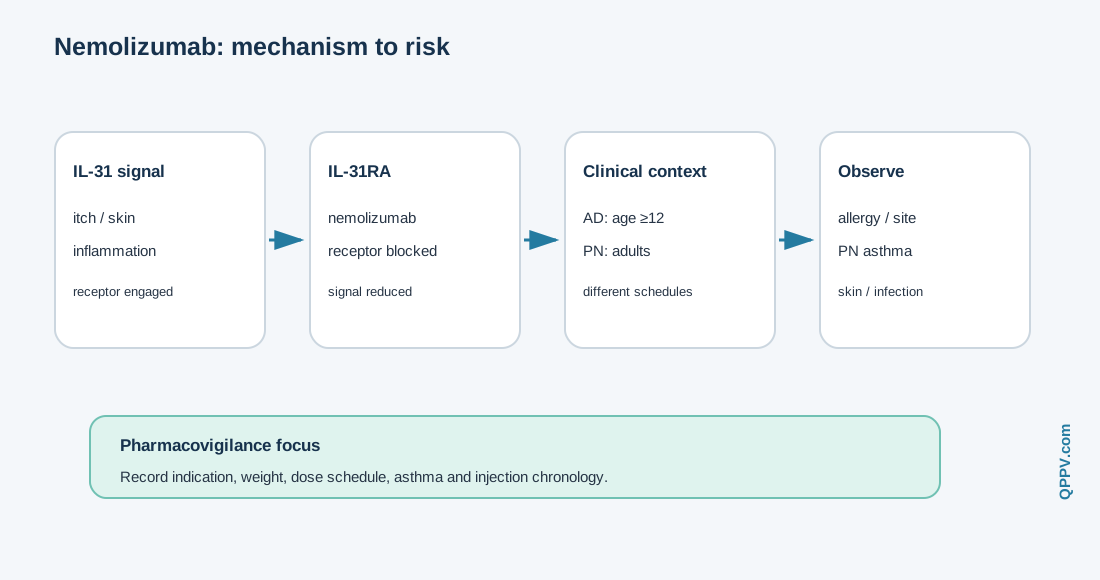
Nemolizumab blocks signalling through interleukin-31 receptor alpha (IL-31RA), a pathway involved in itch, inflammation, epidermal dysregulation and fibrosis. EU use covers two conditions with different populations and schedules: moderate-to-severe atopic dermatitis (AD) and prurigo nodularis (PN).
Safety assessment must retain indication, age, body weight where relevant, loading and maintenance doses, baseline asthma and skin disease, injection chronology and background topical treatment. Pooling AD and PN without these variables can obscure a dose-related or indication-specific pattern.
1. Molecular identity and EU indication
1.1 Target and pathway
Nemolizumab is a humanised IgG2 monoclonal antibody that binds IL-31RA and inhibits IL-31 signalling. The cytokine contributes to pruritus, inflammation, epidermal changes and fibrosis. This targeted pathway blockade should not be described as broad immunosuppression. Anti-drug antibodies were commonly detected in studies, without observed impact on pharmacokinetics, efficacy or safety in the product information.[1]
1.2 Labelled populations
The EU indication is moderate-to-severe AD in patients aged 12 years and older who are candidates for systemic therapy, and moderate-to-severe PN in adults who are candidates for systemic treatment.[1] Eligibility, dosing and response review differ between indications.
Record diagnosis, severity, age, weight, prior treatment, topical corticosteroid or calcineurin inhibitor use and baseline asthma or other respiratory disease. For PN, weight determines maintenance dose. Record whether the week-16 response review occurred.
1.3 Indication-specific schedule
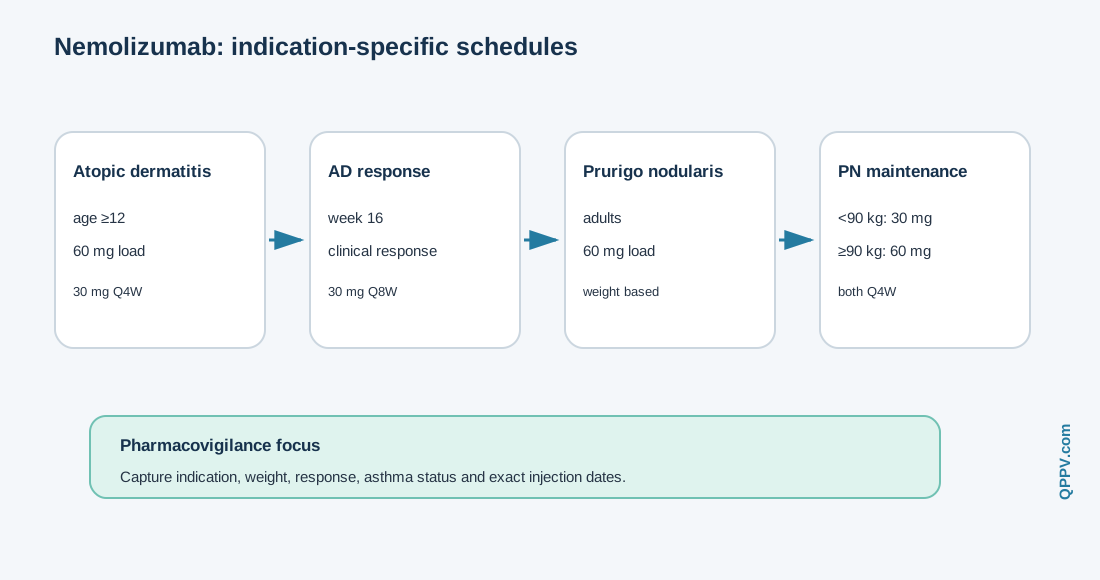
For AD, the regimen begins with 60 mg, followed by 30 mg every four weeks for 16 weeks. In patients with clinical response, maintenance is 30 mg every eight weeks. For PN, both weight groups receive a 60-mg loading dose; patients under 90 kg receive 30 mg every four weeks, while patients at least 90 kg receive 60 mg every four weeks. Consider stopping at week 16 when the relevant response criterion is not met.[1]
Administration is subcutaneous. A patient or caregiver may self-inject after appropriate training when suitable. Record presentation, lot, dose, date, site, missed doses, training and handling issues.
2. Mechanism-linked safety
2.1 Disease response and skin findings
Blocking IL-31 signalling can improve itch and related skin disease. Worsening itch, dermatitis or eczema should be described against baseline disease and response rather than automatically attributed to treatment failure or toxicity.
2.2 Labelled adverse reactions
Common reactions include type I hypersensitivity and injection-site reactions. In PN, additional reactions include headache, atopic dermatitis, eczema, nummular eczema, superficial fungal infections and worsening asthma. Bullous pemphigoid is listed from post-marketing reporting as uncommon.[1]
In PN studies involving patients with pre-existing asthma, worsening asthma was observed after treatment initiation. This is a specific patient-context risk, not a presumption that every asthma flare is drug-related.
3. Warnings and clinical management
3.1 Hypersensitivity
Type I hypersensitivity, including urticaria and angioedema, has been reported and may be immediate or delayed. Document onset, rash, airway or facial symptoms, blood pressure, treatment and outcome. For systemic hypersensitivity, follow the product information’s direction to discontinue treatment and initiate appropriate therapy.[1]
3.2 Asthma and respiratory symptoms
Record baseline asthma control, recent exacerbations, inhaler use and respiratory measurements when available. New wheeze, dyspnoea or reduced peak expiratory flow requires assessment for asthma worsening and competing causes such as infection or cardiopulmonary disease. In PN, note body weight and whether the 60-mg every-four-week schedule was used.
3.3 Vaccines and pregnancy
Complete age-appropriate vaccinations before treatment where possible and avoid concurrent live vaccines as stated in the product information. Evidence on non-live vaccine responses is limited to studied vaccines and conditions; do not generalise it to all vaccines.[1] Pregnancy data are limited and label guidance should be followed.
4. Case reconstruction
4.1 Minimum context
Capture indication, age, weight, dose, injection dates, response, topical therapy, asthma history, vaccination, other medicines, event latency and outcome. For hypersensitivity, record timing and phenotype. For worsening skin disease, preserve baseline severity, response trajectory, infection status and rescue treatment.
4.2 Worked example
An adult with PN weighing 94 kg reports wheeze during the first two months of therapy. Record the 60-mg every-four-week regimen, pre-treatment asthma control, exacerbation history, peak flow, inhaler changes, infection assessment and response to asthma treatment. Weight and temporal association are relevant but neither proves causality.
A patient with AD develops urticaria and periocular swelling the day after injection. Capture airway symptoms, blood pressure, timing, treatment, resolution and whether another dose was given. Preserve the diagnosis and distinguish systemic allergy from a local injection-site reaction.
5. Monitoring and pharmacovigilance
5.1 Response and traceability
Use the labelled week-16 review to describe treatment phase. Assess AD response before switching to every-eight-week maintenance; assess PN pruritus and continued benefit before carrying on. Record product name, batch number, lot, dose, injection site, missed doses, storage and device issue.[1]
5.2 Avoid misleading pooling
AD and PN differ in age eligibility and schedule. In PN, body weight determines maintenance dose and asthma history changes interpretation. Aggregate review should stratify by indication, weight group, dose, treatment phase, asthma history, skin infection and hypersensitivity phenotype. A pooled rate without exposure denominators cannot establish incidence.
5.3 Signal evaluation and medication errors
For hypersensitivity, assess latency, phenotype, treatment and recurrence. For asthma worsening, review baseline control, dose, weight, infection, rescue therapy and outcome. For bullous pemphigoid or another serious skin event, obtain diagnostic confirmation and treatment details.
A missed loading dose, wrong indication schedule, incorrect weight band, duplicate injection or device failure can alter exposure. Record medication error and clinical consequence through applicable pathways. Do not infer a product defect from an administration error without evidence.
Key points: keep schedules separate; capture PN weight; review asthma status; distinguish systemic allergy from local reaction and baseline skin disease.
References
[1] EMA, EU product information for nemolizumab.
[2] EMA, EPAR: nemolizumab.
[3] EMA, Good pharmacovigilance practices.
[4] EMA, ICH E2D(R1): Post-approval safety data management.
[5] ICH, E2C(R2): Periodic benefit-risk evaluation report.
Regulatory Note
Educational summary of EU regulatory information accessed 20 September 2026. It does not replace the current product information, clinical judgement, applicable national reporting requirements or local procedures. Confirm the label version in force for the exposure being assessed.