Nipocalimab: Classification, History, Mechanism of Action, Safety and Pharmacovigilance
- Nipocalimab: Classification, History, Mechanism of Action, Safety and Pharmacovigilance
- Multidimensional classification
- Why FcRn matters
- From molecular mechanism to disease mechanism
- Development and regulatory history
- Clinical use and indication-specific context
- Major safety domains
- Special situations
- Pharmacovigilance case assessment
- Signal detection and aggregate review
- Periodic benefit-risk evaluation
- Risk management and operational controls
- Potential failure modes
- Inspection and governance perspective
- Practical checklist
- Key Takeaways
- References
- Regulatory Note
Nipocalimab is a monoclonal antibody directed against the neonatal Fc receptor (FcRn). Unlike antibodies that neutralise a cytokine or bind a disease-associated cell surface antigen, nipocalimab changes the life cycle of immunoglobulin G (IgG) itself. FcRn normally rescues IgG from intracellular degradation and returns it to the circulation. Blocking FcRn therefore shortens IgG persistence and lowers circulating IgG, including disease-causing IgG autoantibodies.
That mechanism creates an unusual pharmacovigilance problem. The therapeutic target is not one inflammatory mediator but a physiological recycling system used by the entire IgG compartment. The expected benefit depends on reducing pathogenic antibodies, while safety assessment must consider what else changes when total IgG falls, including infection susceptibility, vaccine-related considerations, laboratory changes and indication-specific consequences.
Multidimensional classification
| Classification axis | Nipocalimab classification | Scientific or PV significance |
|---|---|---|
| Molecular class | Fully human monoclonal antibody | A biological medicinal product with target-specific FcRn binding |
| Target | Neonatal Fc receptor (FcRn) | Alters IgG recycling rather than directly neutralising one autoantibody clone |
| Functional class | FcRn antagonist / IgG-lowering therapy | Reduces total IgG and pathogenic IgG autoantibodies |
| Immune effect | Humoral immunomodulation | Therapeutic effect and safety both arise from changing IgG persistence |
| Established disease settings | Generalised myasthenia gravis; warm autoimmune haemolytic anaemia in the United States as of August 2026 | Different diseases share pathogenic IgG but have different clinical endpoints and background risks |
| Administration | Intravenous infusion | Creates infusion-related and hypersensitivity surveillance requirements |
| PV-critical domains | Infection, infusion reactions, laboratory changes, lipid changes, disease-specific complications | Aggregate analyses should remain stratified by indication and treatment context |
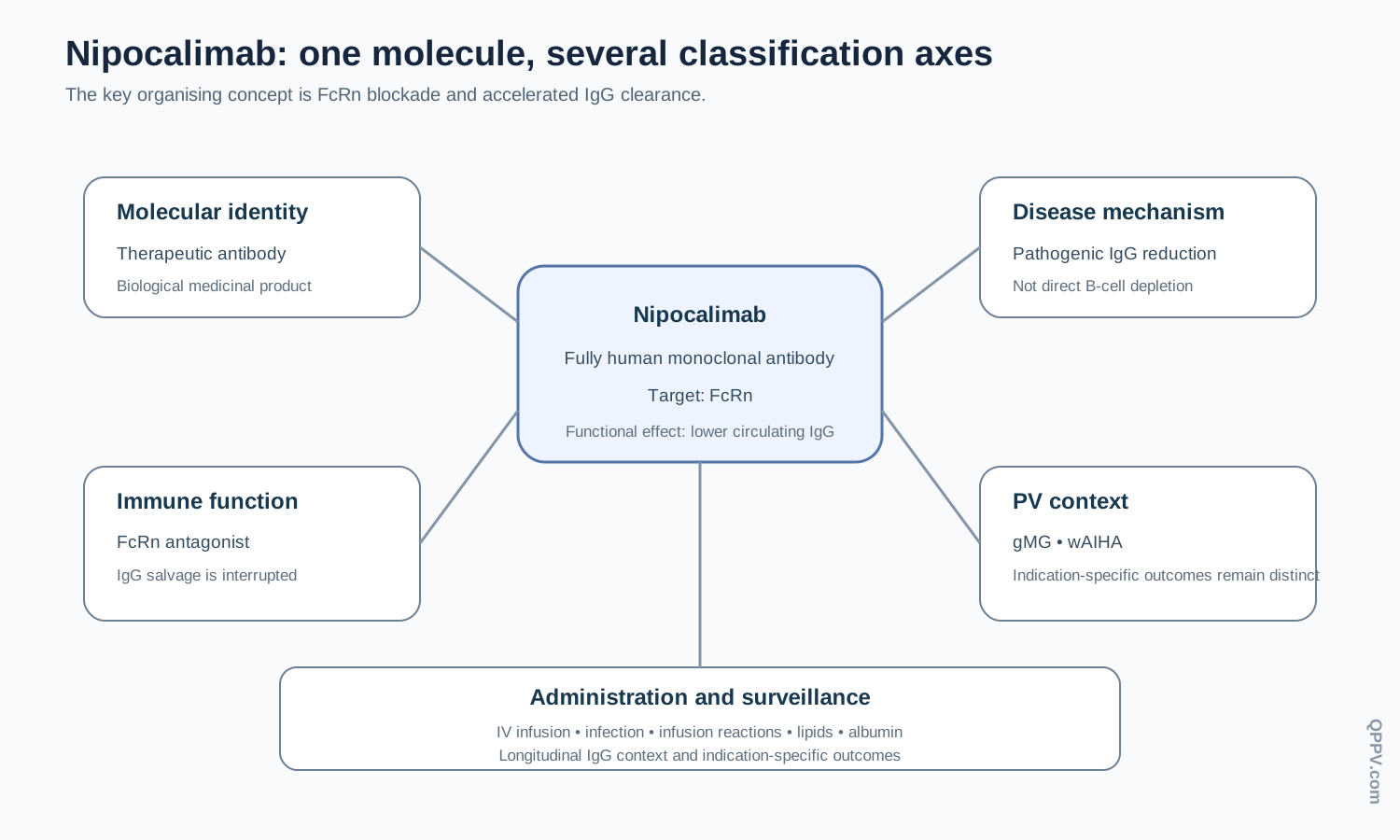
Figure 1. Nipocalimab is best understood as an FcRn-blocking, IgG-lowering monoclonal antibody. The same molecular mechanism can be applied to different IgG-mediated autoimmune diseases, but each indication creates a different benefit-risk context.
Why FcRn matters
IgG molecules are continuously taken up into cells by nonspecific endocytosis. Without a salvage mechanism, a large fraction would be degraded in lysosomes. FcRn binds IgG in the acidic environment of the endosome and redirects it away from degradation. The FcRn-IgG complex returns toward the cell surface, where neutral extracellular pH promotes release of IgG back into the circulation.
This recycling pathway helps explain the unusually long half-life of IgG compared with many other plasma proteins. It also means that pathogenic IgG autoantibodies benefit from the same protection as useful protective antibodies.
Blocking salvage rather than antibody production
Nipocalimab binds FcRn and prevents effective IgG recycling. More internalised IgG therefore proceeds toward degradation rather than being returned to plasma. Circulating IgG concentrations fall, including the fraction that recognises self-antigens.
This is mechanistically different from B-cell depletion. Nipocalimab does not primarily eliminate the B lymphocyte or plasma cell producing an antibody; it changes the rate at which circulating IgG is removed. Antibody production may continue, but steady-state concentration falls because clearance increases.
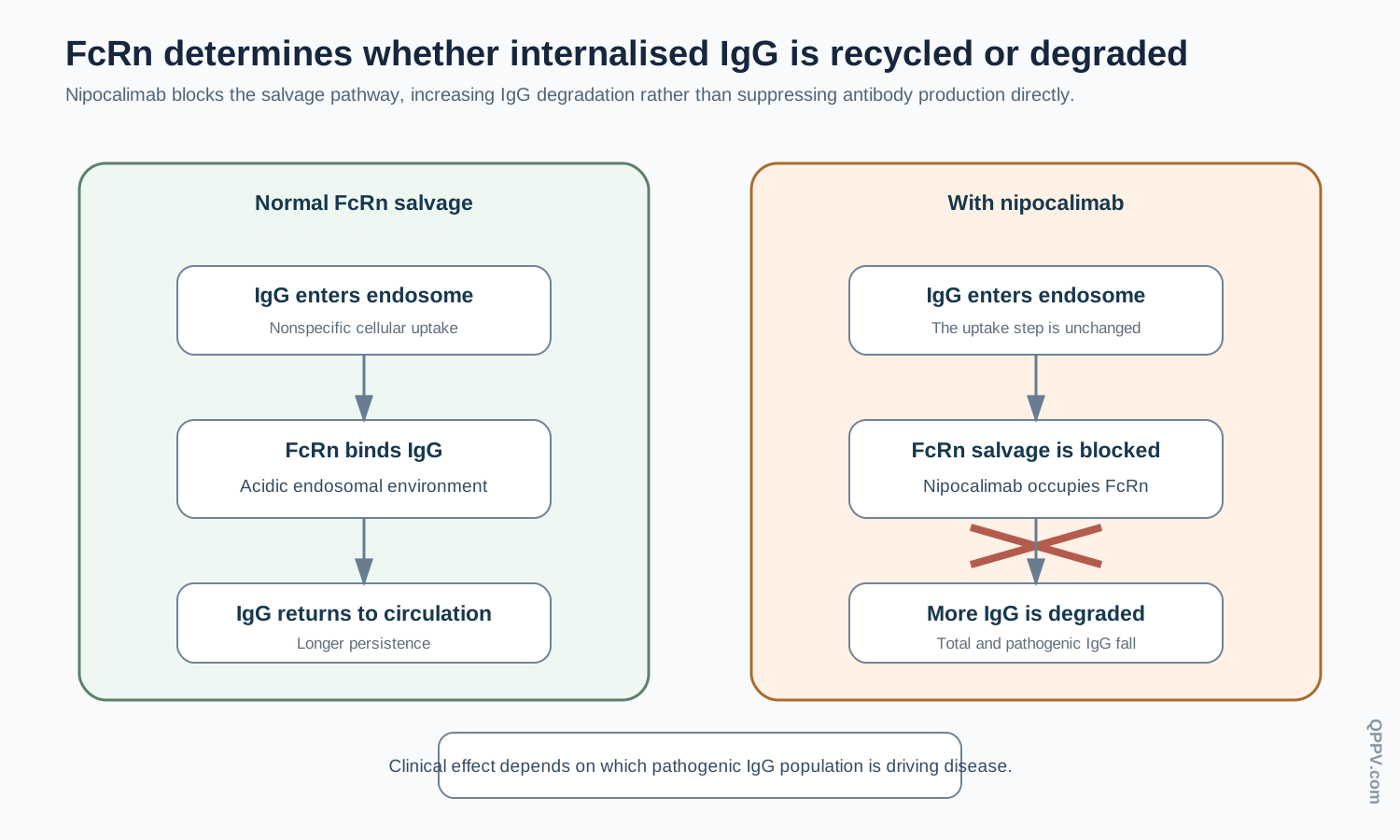
Figure 2. FcRn normally rescues endocytosed IgG from lysosomal degradation and returns it to the circulation. Nipocalimab blocks that salvage route, increasing IgG degradation and reducing both total and pathogenic IgG concentrations.
From molecular mechanism to disease mechanism
Generalised myasthenia gravis
Generalised myasthenia gravis is a neuromuscular-junction disorder in which pathogenic IgG can interfere with proteins required for nerve-to-muscle transmission. The current EU indication covers patients aged 12 years and older who are positive for antibodies against the acetylcholine receptor (AChR) or muscle-specific tyrosine kinase (MuSK), as add-on therapy to standard treatment.
Lowering pathogenic IgG reduces the antibody pressure on the neuromuscular junction. Clinical benefit is assessed through changes in muscle weakness and function rather than through IgG concentration alone; the pharmacodynamic biomarker and the clinical endpoint are related but not interchangeable.
Warm autoimmune haemolytic anaemia
In warm autoimmune haemolytic anaemia, IgG binds red blood cells and marks them for immune-mediated destruction. In August 2026 the U.S. FDA approved nipocalimab for patients aged 12 years and older with warm autoimmune haemolytic anaemia who are currently or previously treated with corticosteroids. Here, lowering pathogenic IgG is intended to reduce red-cell destruction, so haemoglobin response and markers of haemolysis become central clinical measures.
The mechanistic bridge between the two diseases is therefore IgG, not organ system. One disease expresses pathogenic IgG at the neuromuscular junction; the other expresses its effect through antibody-coated erythrocytes and haemolysis.
Development and regulatory history
Clinical development of FcRn antagonism followed increasing recognition that pathogenic IgG could be reduced without removing the entire B-cell compartment. Nipocalimab progressed through studies in several autoantibody-mediated diseases, including generalised myasthenia gravis and warm autoimmune haemolytic anaemia.
The phase 3 Vivacity-MG3 study evaluated adults with generalised myasthenia gravis and supported the gMG development programme. The European Union authorised nipocalimab in November 2025 as add-on therapy for AChR- or MuSK-antibody-positive gMG in adults and adolescents from 12 years of age. Current EU product information was updated in August 2026.
The U.S. indication landscape subsequently expanded. FDA first approved nipocalimab for gMG in April 2025 and approved warm autoimmune haemolytic anaemia in August 2026. Pharmacovigilance systems should therefore preserve jurisdiction and indication because a report may arise from a use that is authorised in one region but not another.
Clinical use and indication-specific context
Nipocalimab is administered intravenously. For pharmacovigilance, the infusion date and dose matter, but so does the reason the patient is receiving treatment. In gMG, worsening weakness, dysphagia or respiratory symptoms may represent disease fluctuation, infection, treatment failure or another adverse event. In warm autoimmune haemolytic anaemia, fatigue, dyspnoea or tachycardia may instead reflect ongoing haemolysis, anaemia, infection or treatment-related effects.
A single aggregate pool that ignores indication can therefore obscure medically important differences. Disease-specific baseline risk should be retained throughout case processing and signal evaluation.
Major safety domains
Infusion-related and hypersensitivity reactions
Intravenous biologicals can produce infusion-associated symptoms and hypersensitivity. High-value follow-up includes timing relative to infusion, symptoms, vital signs, treatment, interruption or discontinuation, recurrence on later doses and whether the phenotype was consistent with immediate hypersensitivity, a nonspecific infusion reaction or another acute illness.
A reaction occurring during administration should not automatically be coded as anaphylaxis. The clinical syndrome, objective findings and treatment determine the medically meaningful diagnosis.
Infection and IgG lowering
IgG contributes to humoral protection against infection. FcRn blockade lowers total IgG as part of its intended pharmacology, so infection surveillance should be interpreted in the context of the depth and duration of IgG reduction, concomitant immunosuppressive therapy, vaccination history, age and underlying disease.
The main scientific question is not simply whether an infection followed treatment. It is whether the infection pattern, severity, recurrence or organism suggests clinically important impairment of host defence beyond what would be expected from the underlying disease and concomitant treatment.
Vaccination and immune protection
Because treatment alters IgG persistence, vaccination questions should be managed through current product information and immunisation guidance. Pharmacovigilance records should distinguish vaccination before treatment, vaccination during treatment, infection despite vaccination and adverse events temporally associated with vaccination. These are different questions and should not be collapsed into one category.
Lipid changes
EMA identified increased blood lipids as an important long-term safety consideration in gMG. This matters because treatment may begin in adolescence and continue for prolonged periods. Lipid abnormalities should therefore be assessed longitudinally rather than as isolated laboratory values, with baseline measurements, cardiovascular risk factors, concomitant medicines and management documented where available.
Albumin and peripheral oedema
Decreased serum albumin and peripheral oedema are recognised clinical observations in the current EU safety profile. Their interpretation depends on indication and competing causes. In wAIHA, for example, anaemia, inflammation and other therapies may alter fluid balance; in gMG, reduced mobility or comorbidity can also contribute. A useful case distinguishes laboratory hypoalbuminaemia from clinically significant oedema and documents renal, hepatic and cardiac alternatives.
Disease-specific safety context in warm autoimmune haemolytic anaemia
The 2026 U.S. approval identified peripheral oedema, diarrhoea and pyrexia among common adverse reactions in the wAIHA study. These observations should be interpreted against the disease background, corticosteroid exposure and haemolysis status. A fall in haemoglobin after treatment is not automatically an adverse drug reaction; it may indicate persistent or recurrent haemolysis and should be reconstructed with direct antiglobulin testing, bilirubin, lactate dehydrogenase, haptoglobin and reticulocyte data when available.
Venous thromboembolism as an assessment question
During U.S. regulatory review of the gMG programme, venous thromboembolic events were examined because events including pulmonary embolism occurred in exposed patients. That regulatory assessment is important evidence, but it should not be converted into a stronger claim than the approved product information supports. In pharmacovigilance, thromboembolic cases merit targeted review of timing, immobility, prior thrombosis, malignancy, oestrogen exposure, central lines, corticosteroids and other risk factors.
This is an example of the distinction between an observed regulatory review concern and an established labelled adverse reaction or identified risk. Aggregate surveillance should preserve that distinction.
Special situations
Adolescents
Use from 12 years of age makes developmental context relevant. Weight, pubertal status where clinically relevant, vaccination history, concomitant immunosuppression and long anticipated duration of treatment can affect interpretation of lipid and infection findings.
Pregnancy and placental IgG transport
FcRn participates in IgG handling and maternal-fetal antibody transfer. Pregnancy exposures therefore require careful documentation and assessment against current product information. Maternal disease control, timing by trimester, neonatal infection history and infant vaccination planning may all be relevant. Mechanistic plausibility alone should not be used to invent a clinical effect that has not been demonstrated.
Switching between immune therapies
Patients with gMG may have prior complement inhibitors, corticosteroids, conventional immunosuppressants, intravenous immunoglobulin or plasma exchange. The temporal relationship between therapies matters because lingering pharmacodynamic effects can complicate attribution. The same principle applies in wAIHA after corticosteroids, rituximab or other immunomodulatory therapy.
Pharmacovigilance case assessment
A nipocalimab case should be reconstructed around four variables: indication, infusion chronology, immune-treatment context and objective disease measures. The same symptom can mean different things in gMG and wAIHA, and the same infection can have different significance depending on total IgG, concomitant immunosuppression and treatment duration.
Event-specific follow-up priorities
| Event or issue | High-value follow-up information |
|---|---|
| Infusion reaction | Dose number, infusion timing, symptoms, vital signs, treatment, interruption, recurrence, outcome |
| Serious/recurrent infection | Organism/site, severity, hospitalization, IgG level if available, concomitant immunosuppression, vaccination status, outcome |
| Lipid increase | Baseline and serial lipids, age, cardiovascular risk factors, treatment duration, management |
| Oedema/hypoalbuminaemia | Albumin trend, distribution of oedema, renal/hepatic/cardiac evaluation, disease status, concomitant medicines |
| gMG worsening | AChR/MuSK status, MG-ADL or other clinical measures, bulbar/respiratory involvement, infection, missed doses, rescue therapy |
| wAIHA worsening | Haemoglobin, bilirubin, LDH, haptoglobin, reticulocytes, DAT, transfusion, corticosteroid exposure |
| Thromboembolism | DVT/PE phenotype, timing, immobility, previous VTE, malignancy, hormonal therapy, other risk factors |
| Pregnancy | Trimester, maternal disease activity, exposure dates, concomitant therapy, pregnancy and neonatal outcome |
Signal detection and aggregate review
Signal detection should preserve indication because the underlying diseases create different event backgrounds. Respiratory symptoms in gMG require separation of infection from neuromuscular respiratory weakness. Anaemia-related symptoms in wAIHA require separation of haemolysis from treatment-emergent conditions.
IgG reduction itself is a pharmacodynamic effect rather than an adverse event. Aggregate review should ask whether its magnitude or persistence correlates with clinically important infections or other outcomes. Similarly, laboratory lipid changes become clinically meaningful when assessed as trajectories, not isolated abnormal values.
Periodic benefit-risk evaluation
Periodic review should integrate disease-specific benefit with the common consequences of FcRn blockade. For gMG, this includes functional improvement, crisis/worsening events, infection, IgG reduction, lipid changes and infusion reactions. For wAIHA, durable haemoglobin response and reduction in haemolysis should be evaluated alongside infection, oedema, infusion reactions and transfusion or rescue-treatment requirements.
Regional indication differences must remain visible. As of September 2026, the EU authorisation is for AChR- or MuSK-antibody-positive gMG in patients aged 12 years and older, whereas the United States also authorises wAIHA in patients aged 12 years and older meeting the labelled treatment-history criteria.
Risk management and operational controls
Current regional product information determines exact dosing, laboratory monitoring, vaccination precautions and management of infusion reactions. Useful operational controls include indication-specific case forms, preservation of antibody status in gMG, structured haemolysis data in wAIHA, longitudinal IgG/lipid review where available and clear documentation of concomitant immunosuppressive treatment.
Biological-product traceability remains necessary. Product name, dose, batch where available and administration date should be captured, particularly for clusters of infusion reactions or product-quality complaints.
Potential failure modes
The following are illustrative scenarios, not published inspection findings:
- A respiratory event in gMG is coded as infection without assessing myasthenic weakness or crisis.
- Falling haemoglobin in wAIHA is treated as generic lack of efficacy without haemolysis markers.
- Total IgG reduction is counted as toxicity without linking it to clinical consequences.
- Lipid elevations are reviewed cross-sectionally despite long-term treatment beginning in adolescence.
- A thromboembolic case is assessed without baseline VTE risk factors.
- Reports from different jurisdictions are pooled without preserving whether the treated indication was locally authorised.
Inspection and governance perspective
An inspector examining nipocalimab pharmacovigilance could ask whether the system distinguishes pharmacodynamic IgG lowering from clinically adverse immune suppression, whether serious infections can be related to longitudinal IgG and concomitant therapy, whether gMG and wAIHA data remain stratifiable, and whether emerging review questions such as thrombosis are handled without prematurely converting uncertainty into an established risk.
The effectiveness test is whether the PV system can follow a mechanism that is shared across diseases while still preserving the different clinical endpoints and competing risks of each disease.
Practical checklist
For a nipocalimab case or aggregate analysis, confirm:
- authorised indication and jurisdiction;
- age, weight and infusion chronology;
- pathogenic antibody status in gMG;
- objective neuromuscular measures for worsening gMG;
- objective haemolysis measures for wAIHA;
- concomitant immunosuppression and recent rescue therapy;
- total IgG and infection history where available;
- baseline and serial lipid values for long-term safety review;
- infusion-reaction phenotype and management;
- VTE risk factors for thromboembolic events;
- pregnancy timing and neonatal follow-up when relevant;
- exact biological product and batch where available.
Key Takeaways
Nipocalimab blocks FcRn and thereby accelerates IgG degradation. Its central pharmacological concept is therefore not direct suppression of one cytokine or one immune-cell lineage, but manipulation of the recycling pathway that normally gives IgG its long persistence in the circulation.
That shared mechanism can treat diseases as different as generalised myasthenia gravis and warm autoimmune haemolytic anaemia because both are mediated by pathogenic IgG. Pharmacovigilance must consequently combine mechanism-level surveillance for IgG lowering, infection, infusion reactions and laboratory changes with indication-specific assessment of neuromuscular weakness or haemolysis.
References
- European Medicines Agency. Nipocalimab (Imaavy): EPAR and current product information. Product information updated 21 August 2026. https://www.ema.europa.eu/en/medicines/human/EPAR/imaavy
- European Medicines Agency. Nipocalimab: European Public Assessment Report. EMA/CHMP/290491/2025. https://www.ema.europa.eu/en/documents/assessment-report/imaavy-epar-public-assessment-report_en.pdf
- Antozzi C, Vu T, Ramchandren S, et al. Safety and efficacy of nipocalimab in adults with generalised myasthenia gravis (Vivacity-MG3): a phase 3, randomised, double-blind, placebo-controlled study. Lancet Neurol. 2025;24:105-116. doi:10.1016/S1474-4422(24)00498-8.
- U.S. Food and Drug Administration. FDA Approves First Drug for Warm Autoimmune Hemolytic Anemia. 25 August 2026. https://www.fda.gov/drugs/news-events-human-drugs/fda-approves-first-drug-warm-autoimmune-hemolytic-anemia
- U.S. Food and Drug Administration. Integrated Review: Imaavy (nipocalimab), BLA 761430. 2025. https://www.accessdata.fda.gov/drugsatfda_docs/nda/2025/761430Orig1s000IntegratedR.pdf
Regulatory Note
Authorised indications, age ranges, dosing, monitoring requirements and labelled safety information differ by jurisdiction and may change. This article explains the scientific and pharmacovigilance framework and does not replace current regional product information or specialist guidance. Regulatory information was checked against EMA and FDA material current in September 2026.