Nirsevimab: Classification, History, Mechanism of Action, Safety and Pharmacovigilance
Nirsevimab is a long-acting monoclonal antibody used to prevent respiratory syncytial virus (RSV) lower respiratory tract disease in infants and in selected children who remain vulnerable during a second RSV season. It is often discussed alongside vaccines because both are preventive interventions, but the immunology is fundamentally different. A vaccine teaches the recipient's immune system to generate its own response. Nirsevimab supplies a preformed neutralising antibody directly.
That distinction changes pharmacovigilance. Protection begins from administered antibody exposure rather than from development of adaptive immunity, and effectiveness depends on dose, body weight, timing relative to the RSV season, persistence of antibody concentrations and viral susceptibility. A breakthrough RSV infection is therefore not interpreted in the same way as vaccine failure.
- Nirsevimab: Classification, History, Mechanism of Action, Safety and Pharmacovigilance
- Multidimensional classification
- RSV fusion biology
- Extended half-life engineering
- Development and regulatory history
- Why passive prophylaxis changes case interpretation
- Clinical safety framework
- Breakthrough RSV infection
- Viral susceptibility and resistance
- High-risk children and second-season use
- Current post-marketing signal surveillance
- Immunogenicity and waning exposure
- Product and lot traceability
- Pharmacovigilance case assessment
- Signal detection and aggregate review
- Benefit-risk evaluation
- Risk management and operational controls
- Potential failure modes
- Inspection and governance perspective
- Practical checklist
- Key Takeaways
- References
- Regulatory Note
Multidimensional classification
| Classification axis | Nirsevimab classification | Scientific or PV significance |
|---|---|---|
| Molecular format | Human IgG1 kappa monoclonal antibody with YTE Fc substitutions | Fc engineering extends serum half-life and supports seasonal protection from one dose |
| Target | Prefusion RSV F protein, antigenic site Ø | Blocks the fusion machinery needed for viral entry |
| Functional class | Long-acting virus-neutralising antibody | Provides passive immunity rather than active vaccination |
| Population | Infants in the first RSV season; selected vulnerable children through a second season | Age, weight and clinical vulnerability determine dosing context |
| Route | Intramuscular injection | Injection-site events and bleeding risk may be relevant |
| Major PV domains | Hypersensitivity, breakthrough RSV, administration error and evolving post-marketing signals | Effectiveness and safety both depend on detailed exposure context |
| Key distinction | Antibody prophylaxis versus vaccine | No requirement for the infant to generate the administered neutralising antibody |
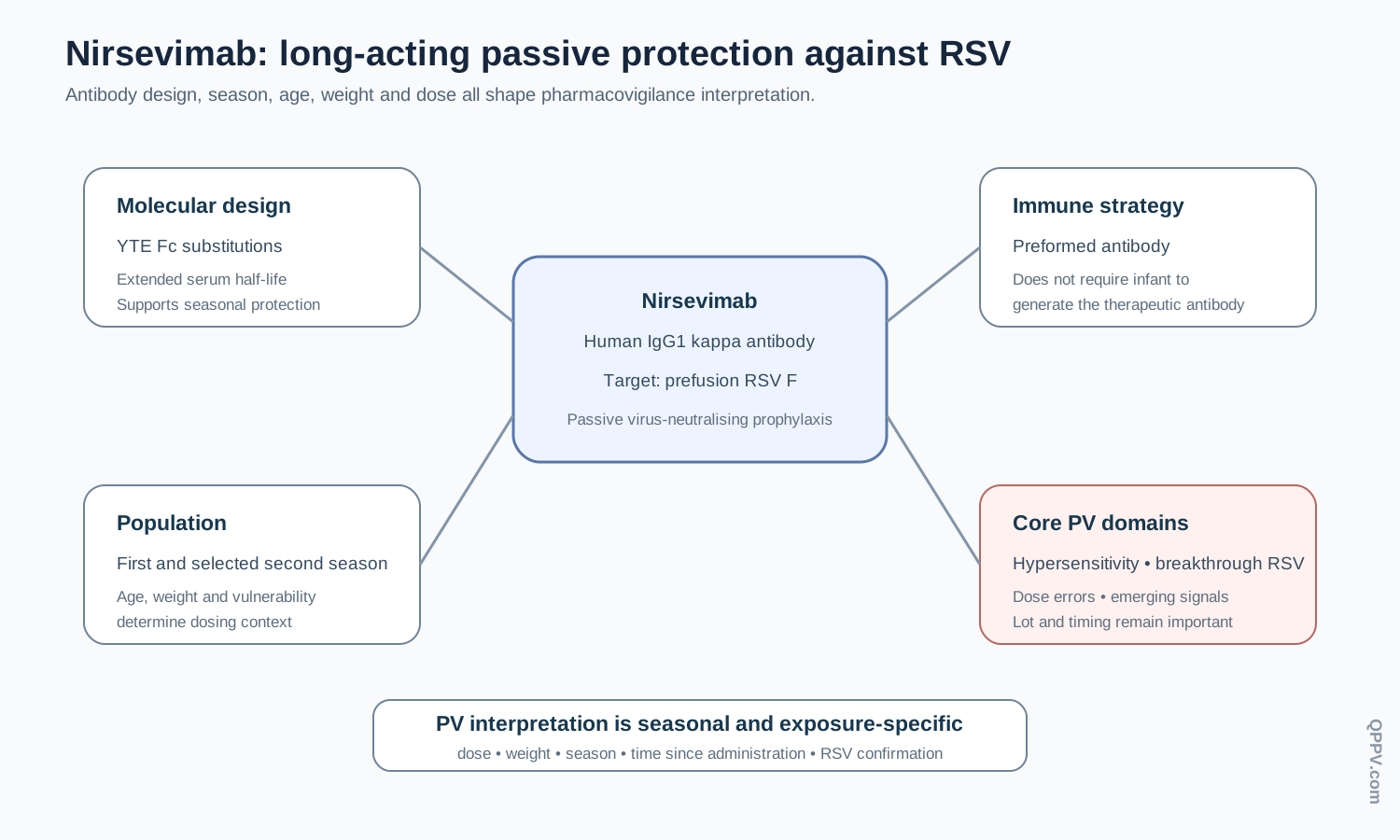
Figure 1. Nirsevimab is a long-acting passive-immunisation antibody. Its interpretation depends on viral target, Fc half-life engineering, age/weight, RSV season and the distinction between prophylactic antibody and vaccine.
RSV fusion biology
RSV enters respiratory epithelial cells using its fusion (F) protein. Before membrane fusion, the F protein adopts a metastable prefusion conformation. During cell entry it undergoes a major structural rearrangement into a postfusion form, bringing viral and host-cell membranes together.
The prefusion F structure contains highly neutralisation-sensitive epitopes. Nirsevimab binds a conserved region known as antigenic site Ø on prefusion F. By stabilising the virus in a non-fusogenic state, the antibody prevents efficient viral-cell membrane fusion and therefore blocks an early step in infection.
This mechanism is extracellular and virus-directed. Nirsevimab does not enter infected cells to inhibit viral replication and does not stimulate infant B cells to manufacture the therapeutic antibody.
Extended half-life engineering
Conventional IgG antibodies have half-lives measured in weeks. To provide protection across an RSV season from a single administration, nirsevimab contains three Fc amino-acid substitutions—commonly described as YTE modifications—that enhance recycling through the neonatal Fc receptor and extend systemic persistence.
The pharmacological concept is analogous to increasing the time a protective shield remains present rather than asking the host to rebuild the shield continuously. This is why timing before or at the beginning of an RSV season is clinically meaningful.
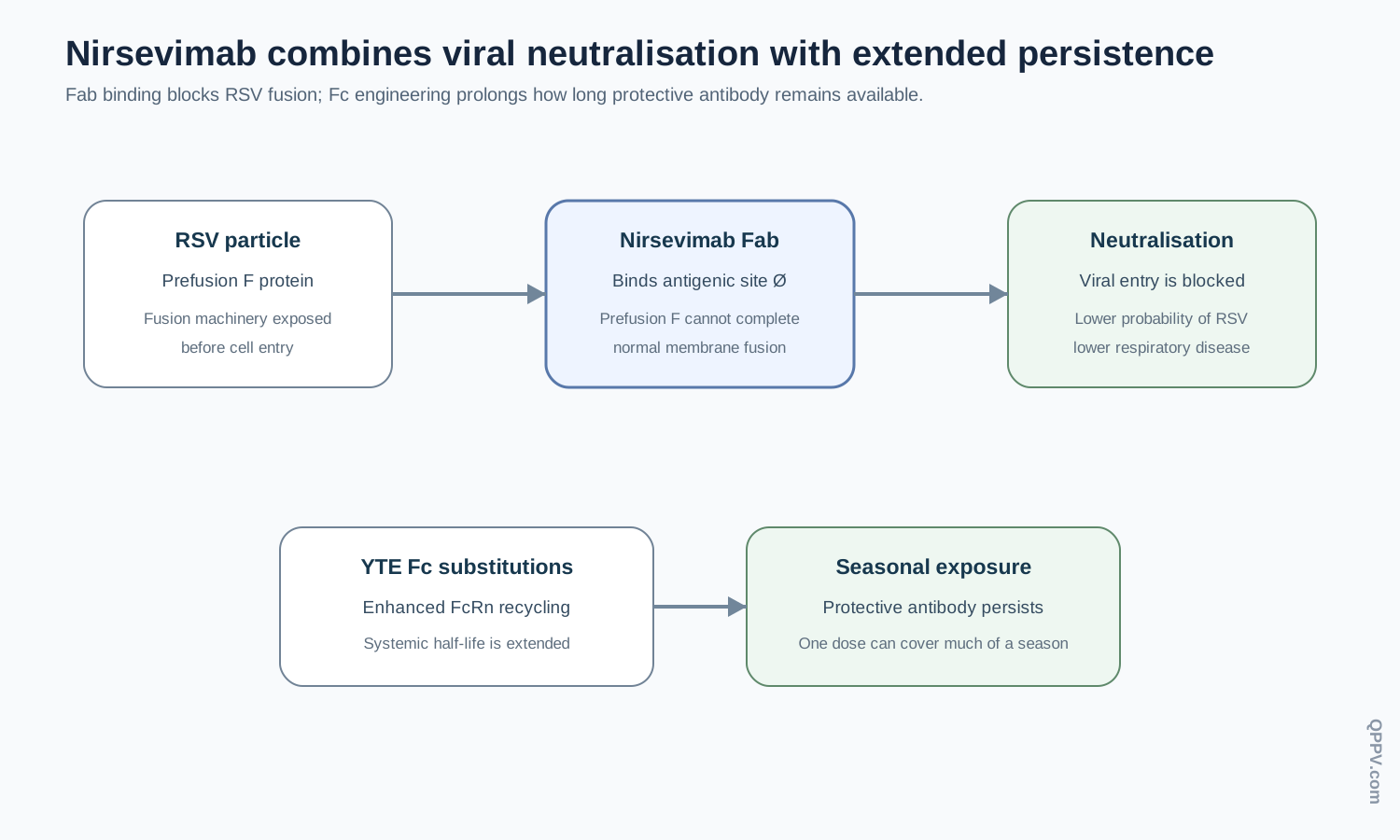
Figure 2. Nirsevimab combines prefusion-F neutralisation with Fc half-life extension. The Fab region blocks viral fusion, while Fc engineering prolongs circulating exposure so one dose can cover a typical RSV season.
Development and regulatory history
The European Union authorised nirsevimab in October 2022. Current EU use covers neonates and infants during their first RSV season and children up to 24 months of age who remain vulnerable to severe RSV disease through their second season. The United States authorised the product in 2023 for comparable first- and second-season prevention.
First-season dosing is weight based. In current U.S. labeling, infants under 5 kg receive 50 mg and those at least 5 kg receive 100 mg. Children who remain vulnerable through a second season receive 200 mg as two 100 mg injections. Current EU recommendations should be followed from regional product information.
The development programme included placebo-controlled studies in preterm and term/late-preterm infants and comparative data in higher-risk infants and children. The central efficacy endpoint was medically attended RSV lower respiratory tract infection over the protection period.
Why passive prophylaxis changes case interpretation
Breakthrough RSV does not automatically mean the biological failed. A useful evaluation asks whether the child received the correct dose, whether administration occurred at an appropriate point in the season, whether sufficient time had elapsed since dosing, whether the infection was laboratory confirmed, whether the child had unusually high baseline vulnerability, and whether viral resistance or escape is plausible.
Conversely, apparent protection cannot be inferred simply because no RSV event was reported. Exposure to RSV varies by season and geography. Product-effectiveness analysis therefore requires a population denominator and appropriate comparator, not individual absence of disease.
Clinical safety framework
Nirsevimab is administered to a predominantly healthy or medically vulnerable paediatric population for prevention rather than treatment. That raises the evidentiary threshold for safety interpretation: events are often temporally close to routine infant illnesses, vaccinations and developmental milestones, so background incidence must be considered carefully.
Hypersensitivity
Serious hypersensitivity reactions have been reported post-authorisation. Current U.S. labeling includes serious hypersensitivity, including anaphylaxis, as a warning and contraindicates use in children with a history of serious hypersensitivity to the product or its excipients.
A useful case should capture onset after injection, skin findings, respiratory symptoms, cyanosis or hypotonia, cardiovascular status, treatment, outcome and prior exposure. Because infants cannot describe subjective symptoms, caregiver observations and objective clinical signs are especially important.
Rash, fever and injection-site reactions
Rash and local injection-site reactions are recognised adverse reactions; fever is also described in EU materials. These are usually clinically straightforward, but temporal clustering with routine immunisations can complicate causality assessment.
If several preventive interventions are administered at the same visit, the case should preserve each product, route, anatomical site and timing rather than assigning causality to the most novel intervention by default.
Intramuscular administration and bleeding risk
As with other intramuscular injections, administration in children with thrombocytopenia, coagulation disorders or anticoagulant exposure requires caution. A post-injection haematoma or bleeding event should therefore include baseline haemostasis, concomitant medicines and injection technique.
Breakthrough RSV infection
What constitutes a meaningful effectiveness case
Breakthrough infection is expected to occur in a proportion of recipients because no preventive intervention is completely effective. A medically useful report should document:
- exact nirsevimab date and dose;
- weight at dosing;
- first versus second RSV season;
- gestational age and major comorbidities;
- date of RSV symptom onset;
- laboratory confirmation and assay type;
- severity, hospitalisation and respiratory support;
- and local season timing where relevant.
A positive RSV test soon after the expected protection window has waned has a different interpretation from severe laboratory-confirmed disease shortly after correctly dosed prophylaxis.
Diagnostic testing
Current U.S. labeling states that nirsevimab does not interfere with RT-PCR or with commonly available rapid-antigen assays that use antibodies to RSV F-protein antigenic sites I, II or IV. If an immunological assay is negative despite a clinical picture strongly suggestive of RSV, confirmation with RT-PCR is recommended.
This illustrates a useful PV principle: when evaluating apparent lack of efficacy, the diagnostic method is part of the exposure-outcome evidence chain.
Viral susceptibility and resistance
A monoclonal antibody exerts selective pressure on a defined viral epitope. Mutations that reduce antibody binding can therefore affect susceptibility. Resistance surveillance is not equivalent to ordinary adverse-event counting; it requires linkage of clinical breakthrough cases with viral sequencing or neutralisation data when available.
A single breakthrough infection without sequence information should not be labelled resistant RSV. Conversely, recurring sequence patterns across severe breakthrough cases may warrant targeted virological review.
High-risk children and second-season use
Children qualifying for second-season prophylaxis are not comparable with the general first-season infant population. Chronic lung disease of prematurity, congenital heart disease, immune compromise and other vulnerability factors can independently increase hospitalisation and severe-RSV risk.
Safety and effectiveness analyses should therefore stratify first- and second-season populations rather than pooling them. A higher absolute event rate in a high-risk group can coexist with meaningful treatment benefit.
Current post-marketing signal surveillance
In the first quarter of 2026, FDA listed immune thrombocytopenia as a potential serious-risk signal under evaluation for nirsevimab. This is not equivalent to an established causal adverse reaction. FDA's public signal list explicitly indicates that evaluation is ongoing.
A mature pharmacovigilance article must preserve that distinction. Potential-signal status means the regulator has identified information warranting further assessment; it does not establish causality, incidence or a labeling change.
For suspected thrombocytopenia cases, useful data include baseline platelet count, timing, bleeding phenotype, infection, recent vaccination, other medicines, immune thrombocytopenia work-up and recovery.
Immunogenicity and waning exposure
Anti-drug antibodies and pharmacokinetic variability can theoretically influence exposure. In an individual breakthrough case, formal anti-drug antibody testing is rarely available, but it becomes relevant when investigating unexpected low drug concentrations or repeated effectiveness concerns.
The more common explanation for late-season breakthrough may simply be declining antibody concentration as time from dosing increases. Time since administration should therefore always be retained.
Product and lot traceability
Because nirsevimab is a biological used at population scale, exact product, lot and presentation are valuable in hypersensitivity, quality complaints, administration errors and cluster investigations. Weight-based first-season dosing also makes dose-strength selection an important medication-error variable.
Pharmacovigilance case assessment
A useful nirsevimab case reconstruction links age, weight, RSV season, dose, timing and clinical phenotype. These variables determine whether a report represents an administration issue, an expected breakthrough infection, a hypersensitivity event or a potential emerging safety signal.
Event-specific follow-up priorities
| Event or issue | High-value follow-up information |
|---|---|
| Serious hypersensitivity | Dose, onset, respiratory/cutaneous/cardiovascular signs, emergency treatment, outcome and prior exposure |
| Breakthrough RSV | Weight-based dose, administration date, RSV test method, symptom onset, hospitalisation, oxygen/ventilation and comorbidity |
| Suspected thrombocytopenia | Baseline and nadir platelets, bleeding, infection, recent vaccines/medicines, repeat counts, haematology assessment and recovery |
| Injection-site reaction | Anatomical site, timing, local signs, coadministered vaccines and outcome |
| Administration error | Age, weight, season, intended dose, actual dose, injection number, product presentation and clinical consequence |
| Second-season effectiveness concern | High-risk condition, prior RSV history, 200 mg dosing completion, timing within season and confirmed RSV severity |
| Apparent diagnostic failure | Assay type, sampling timing, repeat RT-PCR and alternative respiratory pathogens |
| Quality complaint | Lot, storage, syringe integrity, delivered volume and linked clinical event |
Signal detection and aggregate review
Effectiveness analyses should distinguish first-season infants from children receiving second-season prophylaxis because the latter have substantially different baseline risks. Weight-based first-season dosing should also be preserved so underdosing, incorrect presentation selection or documentation errors can be identified.
Breakthrough RSV cases should be medically reviewed rather than counted as a homogeneous lack-of-efficacy series. Useful stratifiers include time since administration, laboratory confirmation, RSV subtype or sequence where available, prematurity, cardiopulmonary disease and immune compromise.
Hypersensitivity should remain separate from common local or febrile reactions. Potential immune thrombocytopenia cases should be reviewed as a focused case series while regulatory evaluation is ongoing, with clear separation between signal under evaluation and an established labelled causal reaction.
Benefit-risk evaluation
Nirsevimab's benefit is prevention of medically attended and severe RSV lower respiratory tract disease during a defined period of vulnerability. The benefit therefore depends on seasonal epidemiology and baseline disease risk as well as biological efficacy.
The preventive setting requires particular discipline in safety interpretation. Large numbers of infants receive routine vaccines and experience common infections during the same months in which nirsevimab is administered. Temporal association alone can therefore generate substantial background noise. Observed-versus-expected analyses and appropriately designed post-authorisation studies can be more informative than spontaneous-report counts alone for common paediatric outcomes.
Risk management and operational controls
Current regional product information governs age/weight eligibility, dosing, second-season use, contraindications and administration precautions. Recommended operational PV controls include structured capture of body weight and dose, RSV-season number, diagnostic method, lot traceability and coadministered vaccines.
For severe breakthrough cases, retaining time from administration to infection and viral sequence information where available supports investigation of waning exposure or reduced viral susceptibility. For suspected thrombocytopenia, standardised haematological follow-up supports assessment of the potential signal without presuming causality.
Potential failure modes
The following are illustrative scenarios, not published inspection findings:
- A first-season infant weighing more than 5 kg is recorded as receiving prophylaxis without documenting dose strength.
- Severe RSV eight months after administration is pooled with breakthrough disease occurring two weeks after dosing.
- A positive antigen test is dismissed because antibody prophylaxis is assumed to invalidate all RSV assays.
- A low platelet count is described as a confirmed product reaction merely because FDA has listed immune thrombocytopenia as a potential signal under evaluation.
- Events after coadministration with routine vaccines are assigned to nirsevimab without preserving the complete vaccination exposure.
- First- and second-season populations are compared without accounting for the much greater baseline vulnerability of children selected for second-season prophylaxis.
Inspection and governance perspective
An inspector or quality reviewer could examine whether the system captures age, weight, season and dose consistently; whether severe breakthrough infections retain laboratory confirmation and clinical severity; whether emerging regulatory signals are represented with the correct evidentiary status; and whether administration errors can be distinguished from true lack of efficacy.
The effectiveness question is whether the safety system can evaluate a preventive monoclonal antibody as both a biological exposure and a seasonal public-health intervention, without confusing background infant morbidity with product-related events.
Practical checklist
For a nirsevimab case or aggregate analysis, confirm:
- age, gestational age and body weight at dosing;
- first versus second RSV season;
- qualifying high-risk condition where relevant;
- exact dose, injection number and administration date;
- RSV-season timing and local epidemiological context where available;
- laboratory-confirmed RSV and diagnostic method;
- severity, hospitalisation and respiratory support;
- coadministered vaccines and recent medicines;
- platelet data for suspected thrombocytopenia;
- product presentation, lot and storage information;
- viral sequencing or neutralisation data where available in breakthrough clusters.
Key Takeaways
Nirsevimab is a long-acting monoclonal antibody that binds prefusion RSV F protein and provides passive neutralising immunity. YTE Fc engineering extends persistence so a single dose can provide protection across much of an RSV season.
Its pharmacovigilance differs from both therapeutic antibodies and vaccines. Age, weight, season, dose and time since administration are essential to assessment of breakthrough infection, while hypersensitivity and administration errors remain product-specific safety concerns. The 2026 FDA listing of immune thrombocytopenia is a potential serious-risk signal under evaluation, not proof of a causal adverse reaction.
References
- European Medicines Agency. Nirsevimab: EPAR and current product information. EU marketing authorisation issued 31 October 2022. https://www.ema.europa.eu/en/medicines/human/EPAR/beyfortus
- U.S. National Library of Medicine / DailyMed. Nirsevimab current U.S. prescribing information. Label revised 2026. https://dailymed.nlm.nih.gov/dailymed/lookup.cfm?setid=2f08fa60-f674-432d-801b-1f9514bd9b39
- U.S. Food and Drug Administration. Potential Signals of Serious Risks/New Safety Information Identified by the FDA Adverse Event Reporting System, January–March 2026. Immune thrombocytopenia listed for nirsevimab for further evaluation.
- Hammitt LL, Dagan R, Yuan Y, et al. Nirsevimab for prevention of RSV in healthy late-preterm and term infants. N Engl J Med. 2022;386:837-846. doi:10.1056/NEJMoa2110275.
- Griffin MP, Yuan Y, Takas T, et al. Single-dose nirsevimab for prevention of RSV in preterm infants. N Engl J Med. 2020;383:415-425. doi:10.1056/NEJMoa1913556.
Regulatory Note
Eligibility, age and weight criteria, second-season recommendations, dose presentations and immunisation policy can differ by jurisdiction and may change between RSV seasons. This article explains the scientific and pharmacovigilance framework and does not replace current regional product information or national RSV-immunisation guidance. Regulatory information was checked against EMA and current U.S. labeling and FDA safety-signal materials available in September 2026.