Nivolumab: Classification, History, Mechanism of Action, Safety and Pharmacovigilance
- Nivolumab: Classification, History, Mechanism of Action, Safety and Pharmacovigilance
- Multidimensional classification
- Development and regulatory role
- Clinical use and treatment-context map
- Safety profile through mechanism and clinical phenotype
- Pharmacokinetic and pharmacodynamic interpretation
- Product and administration traceability
- Pharmacovigilance case assessment
- Signal detection and aggregate review
- Periodic benefit-risk evaluation
- Risk management and operational controls
- Potential failure modes
- Inspection and governance perspective
- Practical checklist
- Key Takeaways
- References
- Regulatory Note
Nivolumab is a fully human immunoglobulin G4 (IgG4) monoclonal antibody directed against programmed cell death protein 1 (PD-1). PD-1 is an inhibitory receptor expressed on activated immune cells, particularly T lymphocytes. By binding PD-1, nivolumab prevents its interaction with programmed death-ligand 1 and 2 (PD-L1 and PD-L2). The treatment therefore changes the regulatory environment in which immune cells respond to tumour-associated antigens; it does not function as a conventional cytotoxic agent that directly destroys malignant cells.
That distinction determines the pharmacovigilance approach. A patient may develop pneumonitis, colitis, hepatitis, thyroid dysfunction, myocarditis or another immune-mediated event after treatment, but the event cannot be interpreted from the product name alone. The reviewer must reconstruct the indication, tumour status, combination regimen, previous immune therapy, timing of exposure, alternative causes and clinical response to immunosuppression. The same immune activation that contributes to tumour control can also injure normal organs.
Multidimensional classification
| Classification axis | Nivolumab | Pharmacovigilance significance |
|---|---|---|
| Molecular class | Fully human IgG4 monoclonal antibody | A biological product with product-specific identity and quality attributes |
| Target | PD-1 on activated immune cells | Removes an inhibitory signal rather than directly killing tumour cells |
| Functional class | Immune-checkpoint inhibitor | Immune-mediated adverse reactions may occur across different organs |
| Primary pathway | PD-1–PD-L1/PD-L2 interaction | Tumour, host immune state and tissue context modify the effect |
| Fc behaviour | IgG4 framework with limited effector-cell intent compared with cytotoxic IgG subclasses | The therapeutic concept is checkpoint blockade, not antibody-dependent cellular cytotoxicity |
| Use context | Monotherapy and multiple combination regimens | Attribution requires regimen-level exposure reconstruction |
| Product category | Biological medicinal product | Batch, presentation and administration details matter in quality investigations |
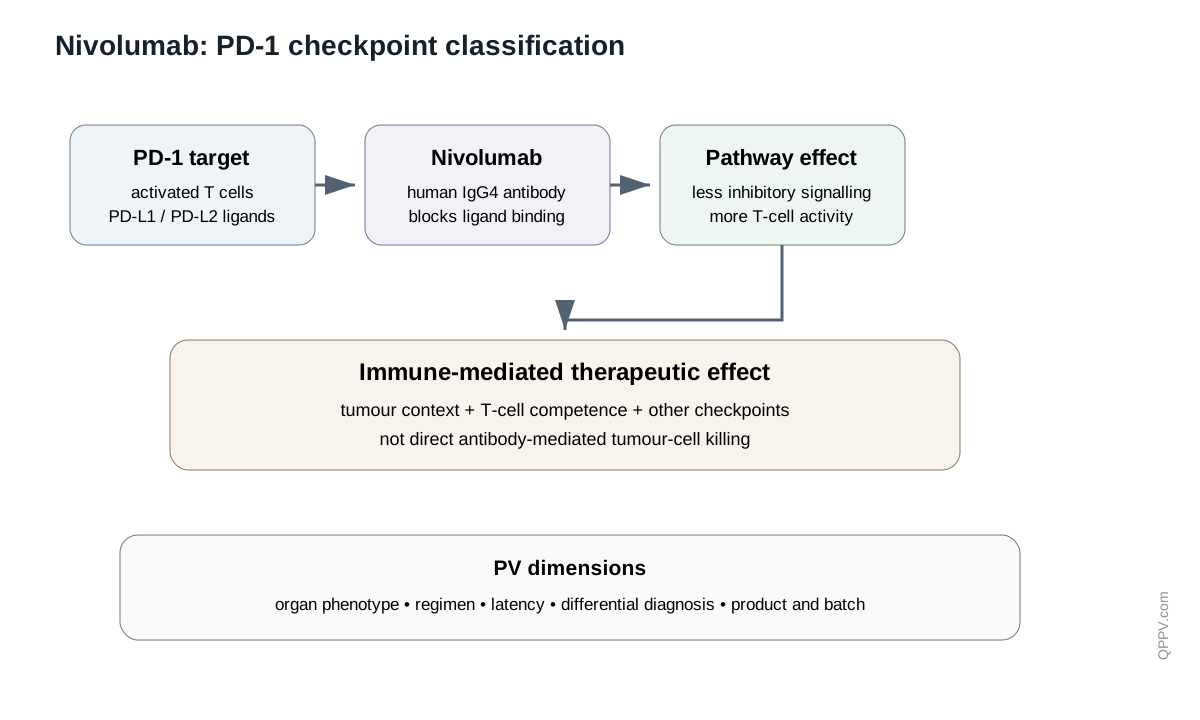
Figure 1. Nivolumab is defined by its PD-1 target, checkpoint-blocking function and immune-mediated therapeutic effect. The classification is multidimensional: no single label captures the full pharmacovigilance context.
PD-1 is an inhibitory receptor
T-cell activation requires balancing stimulatory and inhibitory signals. This balance allows immune cells to respond to abnormal cells while limiting unnecessary tissue injury. PD-1 contributes to the inhibitory side of that balance. When PD-1 engages PD-L1 or PD-L2, intracellular signals can reduce T-cell proliferation, cytokine production and effector activity.
Tumours may exploit this pathway by expressing PD-L1 or by creating a microenvironment in which inhibitory signals dominate. Nivolumab binds PD-1 and prevents ligand engagement. The resulting effect depends on whether tumour-specific T cells are present, whether they can recognise relevant antigens and whether other suppressive mechanisms remain active. PD-1 blockade is therefore not equivalent to nonspecific immune stimulation.
Why the IgG4 classification matters
Nivolumab is an IgG4 antibody. Its clinical purpose is to occupy PD-1, not to recruit a strong Fc-mediated killing response against every PD-1-expressing cell. This does not mean that Fc properties are irrelevant. Antibody structure, Fc interactions, target distribution and manufacturing attributes remain part of product characterisation. It does mean that the principal safety hypothesis begins with altered immune regulation rather than target-cell depletion.
This distinction helps separate nivolumab from antibodies directed against CD20, CD38 or other targets where depletion or cellular cytotoxicity is central. Similar events may occur across biological therapies, but the causal pathways and follow-up requirements differ.
Development and regulatory role
Nivolumab entered clinical development as a PD-1-directed immunotherapy and subsequently acquired indications across several tumour types and treatment settings. Current European product information describes use as monotherapy and in combination with other anticancer medicines, with eligibility sometimes dependent on tumour characteristics such as PD-L1 expression, histology, stage or prior treatment.
The breadth of the authorised programme creates a pharmacovigilance challenge. A pooled “nivolumab” analysis may combine adjuvant treatment in patients without measurable disease, treatment of metastatic disease, and combination treatment in patients with substantial tumour burden. These settings have different background rates of infection, organ dysfunction, disease progression and exposure to cytotoxic or targeted medicines. Indication and treatment intent should therefore remain visible in the safety data.
The current Summary of Product Characteristics (SmPC), United States Prescribing Information and any applicable local label govern authorised uses, dosing, warnings and monitoring. They are regulatory sources for their respective jurisdictions; operational recommendations in this article should not be read as additional legal requirements.
Clinical use and treatment-context map
Nivolumab is administered in several clinically distinct contexts. It may be used alone, with ipilimumab, with cytotoxic chemotherapy, with a targeted agent such as cabozantinib, or in other authorised combinations. It may also be used before surgery, after surgery or for advanced disease. Every co-administered component changes the interpretation of a subsequent event.
Monotherapy
During monotherapy, an immune-mediated event may be more readily associated with checkpoint blockade, but the conclusion still requires clinical reconstruction. Lung cancer can itself produce respiratory symptoms; liver metastases can alter liver tests; infection can mimic colitis or pneumonitis; and endocrine abnormalities may be caused by disease, prior therapy or unrelated autoimmune illness.
Combination with ipilimumab
Combined PD-1 and CTLA-4 blockade acts at different stages of T-cell regulation. The regimen can increase antitumour activity in selected indications but may also increase the intensity, multiplicity or early recognition burden of immune-mediated toxicity. The case record should identify both active substances, the combination schedule and the date of each administration. Treating the event as exposure to “immunotherapy” alone loses information needed for attribution and aggregate analysis.
Combination with chemotherapy or targeted therapy
Chemotherapy can cause cytopenias, infection, mucosal injury, nausea and organ toxicity. Targeted medicines can add hypertension, diarrhoea, liver injury, renal effects or other product-specific risks. If nivolumab is administered within the same treatment cycle, the PV assessment must separate expected toxicity from a possible immune-mediated phenotype without assuming that one explanation excludes the other.
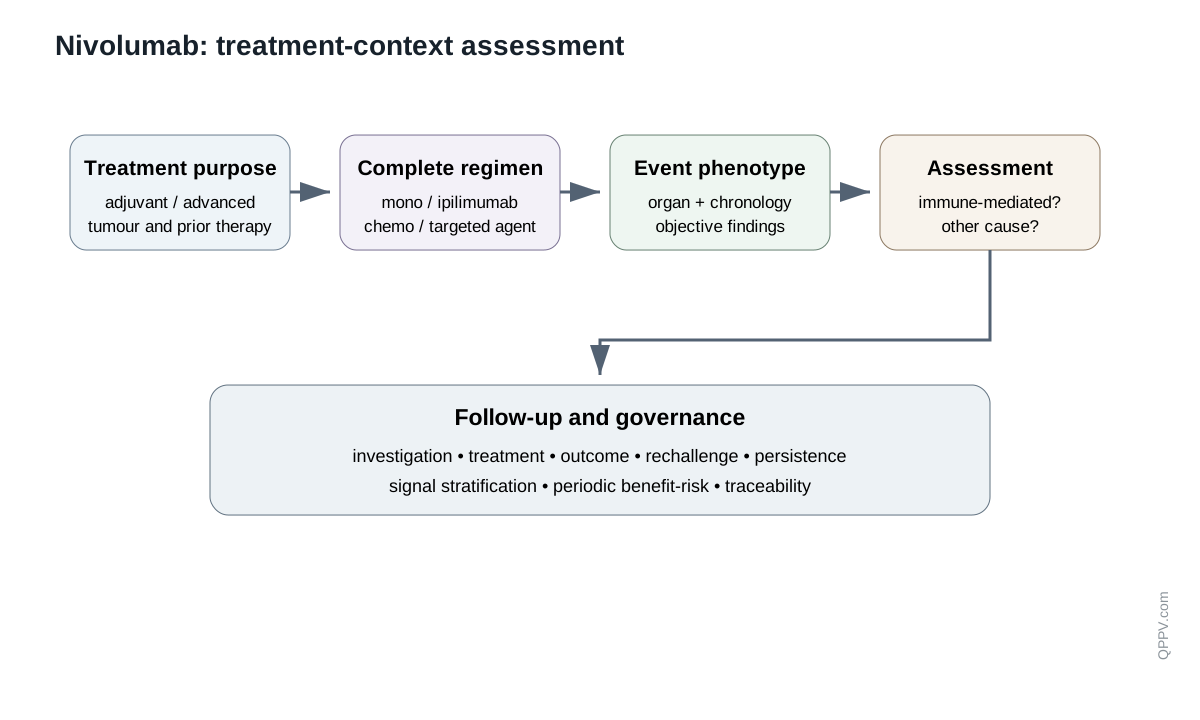
Figure 2. Nivolumab case assessment begins with the regimen and treatment purpose, then links the event phenotype to timing, alternative causes and objective investigation.
Safety profile through mechanism and clinical phenotype
Immune-mediated adverse reactions
Immune-mediated adverse reactions may involve the lungs, gastrointestinal tract, liver, endocrine organs, kidneys, skin, heart, nervous system or other tissues. The term describes a clinically useful pattern, not a substitute for diagnosis. A report of “immune toxicity” should be expanded into the affected organ, objective findings, differential diagnosis, treatment and outcome.
Pneumonitis requires attention to symptom onset, oxygenation, imaging, infection testing, tumour progression, radiation history and other pneumotoxic medicines. Colitis requires stool studies where appropriate, imaging or endoscopy when clinically indicated, severity, hydration and treatment. Hepatitis requires the trajectory of alanine aminotransferase, aspartate aminotransferase, bilirubin, viral testing, liver metastases, obstruction and concomitant hepatotoxic exposures.
Endocrine and renal events
Hypophysitis, thyroid dysfunction, adrenal insufficiency, diabetes and other endocrine events may develop gradually and may be recognised through laboratory testing rather than a dramatic presentation. The record should preserve baseline thyroid and endocrine status, symptoms, replacement therapy and whether treatment continued or was interrupted.
Nephritis is a diagnosis of context. A rise in creatinine may instead reflect dehydration, sepsis, obstruction, contrast exposure, tumour-related disease or another nephrotoxic medicine. Urinalysis, medication history, fluid status and renal imaging may be important in distinguishing these possibilities.
Cardiovascular and neurological events
Myocarditis, pericardial disease, vasculitis, arrhythmia and neurological syndromes are uncommon but potentially serious. A suspected myocarditis case should capture symptoms, troponin, electrocardiography, echocardiography or cardiac magnetic resonance where performed, concomitant causes and outcome. Neurological events require precise phenotype and evolution because peripheral neuropathy, myasthenic syndromes, encephalitis, meningitis and cerebrovascular disease have different diagnostic pathways.
Infusion-related reactions and hypersensitivity
Infusion-related reactions can occur during or shortly after administration. The chronology should include infusion number, rate, interruption, premedication, symptoms, vital signs, treatment and rechallenge. Hypersensitivity and immune-mediated toxicity are not interchangeable labels. An acute reaction temporally related to administration requires a different evaluation from pneumonitis appearing several weeks later.
Pharmacokinetic and pharmacodynamic interpretation
Nivolumab has a long biological effect relative to the time required to administer an infusion. PD-1 occupancy and downstream immune changes may persist after the last recorded dose, so temporal association must not be restricted to the infusion day. Conversely, a long interval does not establish causality: the background incidence of cancer complications and infections remains relevant.
Tumour response, progression and immune-related events may occur in the same patient. Apparent radiological progression can represent true progression, inflammatory change or mixed response, and the distinction is clinical rather than a simple pharmacovigilance coding exercise. Safety analyses should preserve the assessment made by the treating team and the evidence supporting it.
Product and administration traceability
Nivolumab cases should retain the exact product presentation, dose, batch or lot when available, route, infusion date, preparation information and any administration deviation. This is particularly important when several checkpoint products are used in the same institution or when an acute reaction clusters around one batch or preparation process.
Product traceability also supports reconciliation between pharmacovigilance, quality, medical-information and complaints systems. A suspected lack of efficacy may represent disease biology, incorrect regimen, administration error, product quality issue or an event unrelated to product potency. The relevant records should permit those hypotheses to be evaluated.
Pharmacovigilance case assessment
A useful nivolumab case narrative reconstructs four linked domains: the disease and treatment intent, the complete regimen, the event phenotype and the evidence supporting alternative explanations. This approach is more informative than assigning a broad “immune-related adverse event” label.
Event-specific follow-up priorities
| Event or concern | High-value follow-up information |
|---|---|
| Pneumonitis | Onset, oxygenation, imaging, infection work-up, tumour status, radiation, other pneumotoxic exposure, corticosteroid treatment and outcome |
| Colitis or diarrhoea | Stool frequency and blood, infection testing, imaging/endoscopy, hydration, concomitant medicines and treatment response |
| Hepatitis | Serial liver tests, bilirubin, viral testing, metastases or obstruction, alcohol and concomitant hepatotoxic drugs |
| Endocrine event | Baseline and follow-up hormones, symptoms, imaging where relevant, replacement therapy and persistence |
| Nephritis or creatinine rise | Baseline renal function, urinalysis, fluid status, imaging, contrast and nephrotoxic medicines |
| Myocarditis or arrhythmia | Symptoms, troponin, ECG, echocardiography, cardiac imaging, competing causes and outcome |
| Acute infusion reaction | Infusion chronology, rate, premedication, vital signs, symptoms, treatment and rechallenge |
| Suspected product-quality issue | Product presentation, batch, storage, preparation, administration system and associated cases |
Signal detection and aggregate review
Signal detection should stratify by indication, treatment line, monotherapy or combination, treatment intent and relevant tumour characteristics. The same preferred term can have different clinical meaning in adjuvant treatment, metastatic disease or combination therapy. An analysis that pools all exposures may lose the denominator needed to identify a real change in risk.
Known immune-mediated risks remain relevant to signal management. A new question may concern latency, severity, recurrence after rechallenge, multi-organ involvement, a particular combination or a new patient subgroup. Such a question is a hypothesis for evaluation, not a conclusion created by disproportionality alone.
Aggregate review should also consider diagnostic ascertainment. Increased clinical awareness and more intensive testing can increase reporting of endocrine or cardiac events without necessarily indicating a change in underlying incidence. The reviewer should compare case definitions, exposure, investigation intensity and outcome quality.
Periodic benefit-risk evaluation
Periodic reports should connect identified and potential risks with indication-specific benefit. Important safety domains may include immune-mediated pneumonitis, colitis, hepatitis, endocrine disorders, nephritis, myocarditis, neurological syndromes, severe skin reactions, infusion reactions, infection, pregnancy exposure and administration or traceability errors.
The benefit assessment must distinguish tumour response, disease control, survival, pathological response and recurrence prevention according to the authorised setting. A safety signal observed in a curative-intent adjuvant population may have a different clinical weight from the same signal in heavily pretreated metastatic disease. The benefit-risk conclusion should make that context explicit.
Risk management and operational controls
Current regional product information and the applicable pharmacovigilance legislation establish the regulatory baseline. Recommended operational controls include:
- structured capture of indication, line of therapy, treatment intent and combination;
- organ-specific follow-up forms for suspected immune-mediated events;
- chronology linking nivolumab and all co-administered medicines;
- documented medical review of alternative diagnoses;
- outcome and rechallenge fields;
- reconciliation with quality complaints and medical-information contacts;
- monitoring of delayed events after treatment discontinuation;
- clear product and batch traceability.
These controls support compliance and effective practice, but the exact configuration remains a system-design decision unless a specific regulatory source makes it mandatory.
Potential failure modes
The following are illustrative scenarios, not published inspection findings:
- A case is coded as immune-mediated pneumonitis without imaging or infection information.
- A hepatitis case is attributed to nivolumab without considering liver metastases, obstruction or concomitant therapy.
- Combination exposure is collapsed into a single “immunotherapy” field.
- A delayed endocrine event is rejected because it did not occur during infusion.
- A myocarditis case lacks serial troponin and ECG information.
- A signal analysis combines adjuvant and metastatic populations without preserving treatment intent.
- A cluster of infusion reactions cannot be assessed because batch and preparation data were not requested.
Inspection and governance perspective
An inspector evaluating nivolumab pharmacovigilance would examine whether the system can demonstrate effective recognition, follow-up and aggregate assessment of immune-mediated events. Relevant evidence may include case-processing conventions, targeted questionnaires, medical-review criteria, signal-detection methodology, periodic reports, product dictionaries, reconciliation records and documented escalation decisions.
The key question is effectiveness. A procedure may require organ-specific follow-up, but the system is not effective if cases routinely contain only the phrase “immune toxicity.” A signal process may require stratification, but its implementation is weak if the database cannot identify combination exposure or treatment intent.
Practical checklist
For a nivolumab case or aggregate review, confirm:
- exact product, presentation, dose, batch and administration date where available;
- indication, treatment line and curative or palliative intent;
- all co-administered anticancer and immunosuppressive medicines;
- event chronology relative to each component;
- organ-specific objective evidence and differential diagnosis;
- treatment, dechallenge, rechallenge and outcome;
- evidence for delayed events after treatment cessation;
- whether the event phenotype differs from the labelled or expected pattern;
- appropriate stratification in signal and periodic analyses.
Key Takeaways
Nivolumab is a fully human IgG4 anti-PD-1 antibody. Its principal action is to prevent PD-1 interaction with PD-L1 and PD-L2, thereby changing inhibitory immune signalling rather than directly destroying tumour cells.
The pharmacovigilance profile is consequently defined by immune-mediated organ injury, treatment-context complexity and delayed biological effects. Meaningful assessment requires organ-specific clinical evidence, complete regimen reconstruction, careful differential diagnosis and product-level traceability.
References
- European Medicines Agency. Opdivo (nivolumab): EPAR and current product information. https://www.ema.europa.eu/en/medicines/human/EPAR/opdivo
- U.S. Food and Drug Administration. Opdivo (nivolumab) prescribing information. https://www.accessdata.fda.gov/drugsatfda_docs/label/
- European Medicines Agency. Guideline on good pharmacovigilance practices (GVP), Module I: Pharmacovigilance systems and their quality systems. https://www.ema.europa.eu/en/human-regulatory-overview/research-development/pharmacovigilance-research-and-development/good-pharmacovigilance-practices
- European Medicines Agency. GVP Module V: Risk management systems. https://www.ema.europa.eu/en/documents/scientific-guideline/guideline-good-pharmacovigilance-practices-module-v-risk-management-systems-rev-2_en.pdf
- European Medicines Agency. GVP Module IX: Signal management. https://www.ema.europa.eu/en/documents/scientific-guideline/guideline-good-pharmacovigilance-practices-gvp-module-ix-signal-management-rev-1_en.pdf
- Topalian SL, Hodi FS, Brahmer JR, et al. Safety, activity, and immune correlates of anti-PD-1 antibody in cancer. N Engl J Med. 2012;366:2443–2454. doi:10.1056/NEJMoa1200690.
Regulatory Note
Authorised indications, dosing, warnings, monitoring and combination requirements vary by jurisdiction and may change. This article explains scientific and pharmacovigilance principles and does not replace current regional product information. Regulatory requirements and operational recommendations are intentionally distinguished. Current EMA product information was checked in September 2026.