Nonacog Alfa: Classification, Mechanism, Safety and Pharmacovigilance
Nonacog alfa is a recombinant human coagulation factor IX used to replace the deficient clotting factor in haemophilia B. Unlike non-factor therapies that rebalance coagulation, nonacog alfa acts by restoring a missing component of the physiological coagulation cascade. Pharmacovigilance therefore has to evaluate both adverse reactions and whether the expected haemostatic effect was achieved.
- Nonacog Alfa: Classification, Mechanism, Safety and Pharmacovigilance
- Classification and haemophilia B context
- Recombinant structure and mechanism
- Development and regulatory history
- Major safety and effectiveness domains
- Surgery and major bleeding
- Pharmacovigilance implementation
- Illustrative failure modes
- Inspection and governance considerations
- Practical checklist
- Key Takeaways
- References
- Regulatory Note
Classification and haemophilia B context
Haemophilia B is caused by quantitative or functional deficiency of factor IX. Activated factor IX (FIXa), together with activated factor VIII, phospholipid surfaces and calcium, forms the intrinsic tenase complex that activates factor X. Without adequate factor IX activity, thrombin generation is impaired and stable fibrin clot formation is reduced.
Nonacog alfa is a standard-half-life recombinant factor IX rather than a plasma-derived concentrate or an extended-half-life fusion/modified factor IX product. That classification matters because pharmacokinetic recovery, dosing interval and product switching cannot be assumed to be interchangeable across all factor IX products.
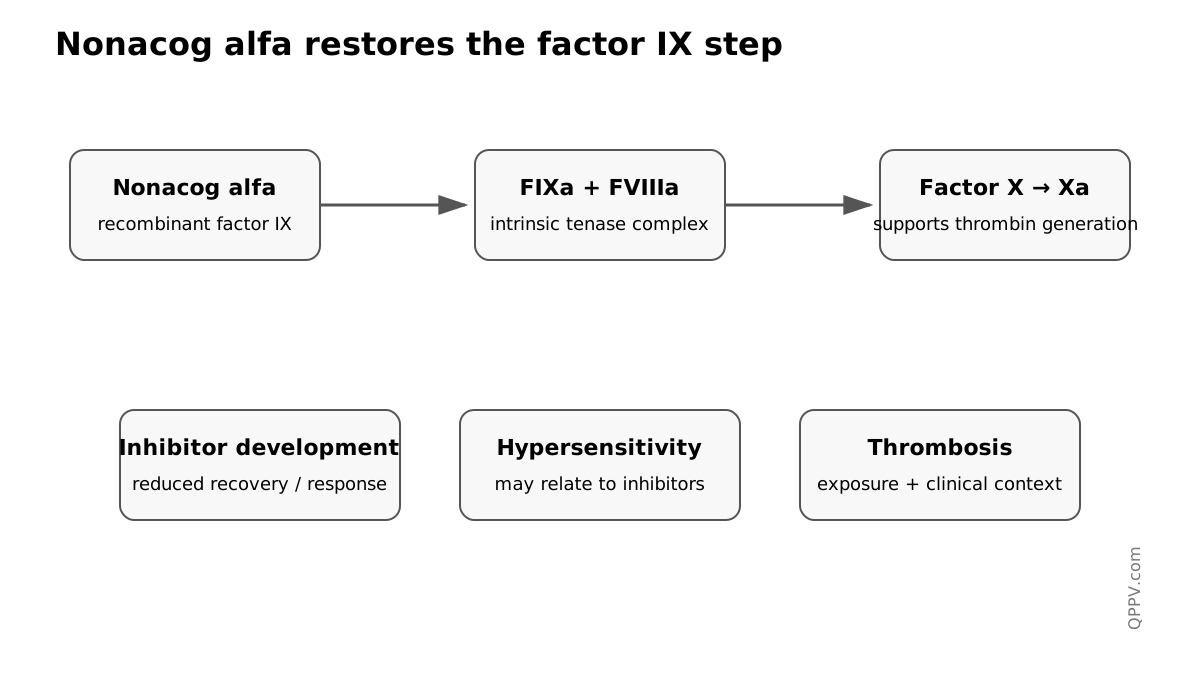
Figure 1. Nonacog alfa replaces factor IX, restoring the FIXa–FVIIIa tenase step that activates factor X and supports downstream thrombin generation.
Recombinant structure and mechanism
Nonacog alfa is produced by recombinant DNA technology rather than extraction from human plasma. After intravenous administration, it circulates as replacement factor IX and can be activated within the coagulation cascade. The therapeutic objective is temporary restoration of sufficient factor IX activity for prophylaxis, treatment of bleeding or perioperative haemostatic coverage.
Development and regulatory history
Nonacog alfa was among the earliest recombinant factor IX therapies to enter clinical practice and received EU marketing authorisation in 1997. Its long regulatory history is important for PV because contemporary surveillance spans changing standards of prophylaxis, home treatment, surgery and availability of newer extended-half-life and non-factor therapies.
Long product history does not reduce the importance of biological traceability. Brand and batch capture remain relevant because safety evaluation may involve product switching, manufacturing history or an apparent change in clinical response.
Major safety and effectiveness domains
Inhibitor development
Neutralising antibodies to factor IX can reduce or abolish expected clinical response. Suspected inhibitor development should be considered when bleeding is not controlled despite apparently adequate dosing or when measured recovery is unexpectedly low. Follow-up should include inhibitor testing, assay method, treatment history, previous product exposure and clinical response.
Factor IX inhibitors are particularly important because they may be associated with allergic or anaphylactic reactions. A hypersensitivity report in a patient with haemophilia B therefore warrants attention to inhibitor status rather than being evaluated only as an isolated infusion reaction.
Hypersensitivity and anaphylaxis
Useful follow-up includes timing during infusion, skin, respiratory and cardiovascular manifestations, previous exposures, prior reactions, inhibitor testing, treatment given and rechallenge information. Product contamination should not be inferred from temporal association alone; manufacturing-quality investigation is appropriate only when case features or clustering support it.
Thrombotic risk
Replacement therapy aims to correct deficiency, but excessive or inappropriate exposure can shift coagulation towards thrombosis, particularly in susceptible clinical contexts. Reports should capture dose, measured factor IX activity where available, central venous access, surgery, liver disease, disseminated intravascular coagulation and other thrombotic risk factors.
Inadequate recovery or lack of efficacy
A report of “product ineffective” is not clinically interpretable without dose, body weight, timing of factor-level measurement, assay method, bleeding site, inhibitor status and adherence. In home therapy, reconstitution or administration errors can mimic pharmacological failure.
Nephrotic syndrome in immune-tolerance settings
Nephrotic syndrome has been reported in haemophilia B patients with factor IX inhibitors undergoing immune-tolerance procedures. Such cases require specialist clinical context; immune tolerance is not equivalent to routine prophylaxis.
Surgery and major bleeding
Perioperative use converts pharmacovigilance into a time-dependent haemostatic assessment. The relevant sequence is preoperative factor level and dose, procedure, intraoperative blood loss, postoperative factor levels, repeated dosing, thrombosis surveillance and clinical haemostasis.
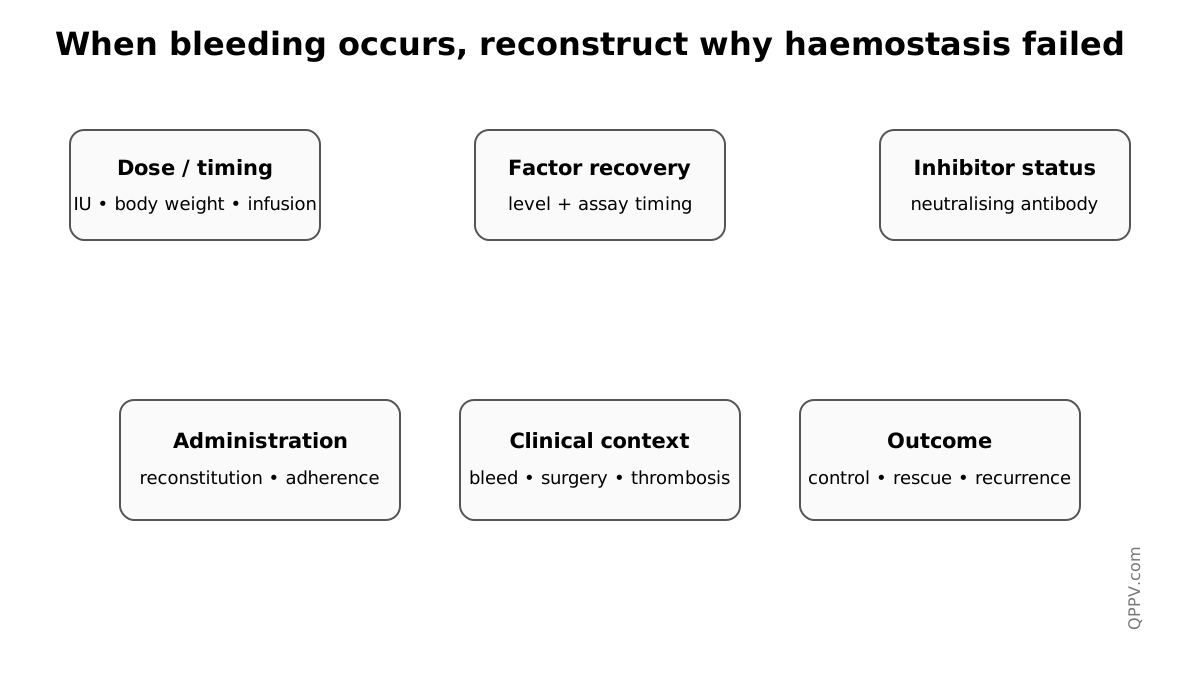
Figure 2. Lack of efficacy, hypersensitivity and thrombotic events should be interpreted against inhibitor status, factor recovery, dose, assay timing and clinical context.
Pharmacovigilance implementation
The core case-assessment question is whether an unexpected clinical event reflects an adverse reaction, insufficient replacement, inhibitor development, dosing error, assay interpretation, disease severity or another haemostatic factor. Capture treatment indication, prophylaxis versus on-demand use, dose, body weight, infusion timing, factor IX activity, assay timing, inhibitor status, bleeding outcome and concomitant haemostatic therapy.
Home treatment deserves specific attention. Reconstitution errors, incomplete transfer of diluent, incorrect dose calculation, delayed infusion and missed prophylaxis can all appear as lack of efficacy. The PV system should distinguish product quality complaints, medication errors and clinical adverse events while linking them when they arise from the same episode.
Illustrative failure modes
An illustrative failure mode is a breakthrough bleed coded as lack of efficacy without documenting the last prophylactic dose or factor IX level. Another is anaphylaxis followed up without inhibitor testing. A third is a thrombotic event assessed without perioperative dosing or central-line information.
These are hypothetical examples of weak evidence capture, not descriptions of real inspection findings.
Inspection and governance considerations
An inspector could examine whether lack-of-efficacy reports trigger inhibitor and recovery follow-up, whether hypersensitivity cases are linked to inhibitor status, whether medication-error reports from home treatment are reconciled with product complaints, and whether batch traceability is maintained for a biological medicinal product.
Practical checklist
- Capture exact indication: prophylaxis, bleeding treatment or surgery.
- Record dose, body weight, timing and product/batch where available.
- Investigate unexpected lack of efficacy for inhibitor development and administration error.
- Link hypersensitivity assessment with inhibitor status.
- Characterise thrombosis using factor exposure and competing risk factors.
- Record laboratory assay timing relative to infusion.
- Reconcile home-treatment errors with clinical outcomes and product complaints.
Key Takeaways
Nonacog alfa PV is inseparable from haemostatic effectiveness. Inhibitor development, hypersensitivity, thrombosis and apparent treatment failure can only be interpreted when dose, recovery, laboratory timing and treatment context are reconstructed. Long clinical experience does not remove the need for batch traceability and structured follow-up.
References
- European Medicines Agency. BeneFIX (nonacog alfa): EPAR and product information. Current EU regulatory information, accessed September 2026.
- European Medicines Agency. BeneFIX: post-authorisation procedural history. Current through 2025–2026.
- White GC II, et al. Recombinant factor IX in the treatment of haemophilia B. Blood. 1997.
- World Federation of Hemophilia. Guidelines for the Management of Hemophilia. 3rd edition.
Regulatory Note
Dosing, laboratory monitoring, perioperative targets and management of inhibitors must follow the current locally applicable product information and specialist haemophilia guidance. This article describes pharmacovigilance principles rather than individual treatment instructions.