Obiltoxaximab: Classification, Mechanism, Regulatory Evidence and Pharmacovigilance
Obiltoxaximab is a chimeric IgG1 kappa monoclonal antibody directed against the protective antigen (PA) component of Bacillus anthracis toxin. In the United States it is authorised for treatment of inhalational anthrax in adults and children in combination with appropriate antibacterial drugs, and for prophylaxis when alternative therapies are not available or are not appropriate. Its development is unusual because human efficacy trials in inhalational anthrax are neither ethical nor feasible; efficacy was therefore established under the FDA Animal Rule. [1,2]
- Obiltoxaximab: Classification, Mechanism, Regulatory Evidence and Pharmacovigilance
Anthrax toxin biology and mechanism
B. anthracis produces toxin components that use protective antigen to gain access to host cells. PA binds host-cell receptors and participates in delivery of the enzymatic toxin factors that cause cellular injury. Obiltoxaximab binds PA and prevents this toxin-entry process. It therefore neutralises a virulence mechanism rather than killing the bacterium itself. [2,3]
That distinction determines how the medicine is used. Obiltoxaximab has no direct antibacterial activity and, for treatment of inhalational anthrax, is used with appropriate antibacterial therapy. Toxin neutralisation and bacterial eradication are complementary therapeutic goals. The product is also not expected to cross the blood-brain barrier sufficiently to prevent or treat anthrax meningitis. [3]
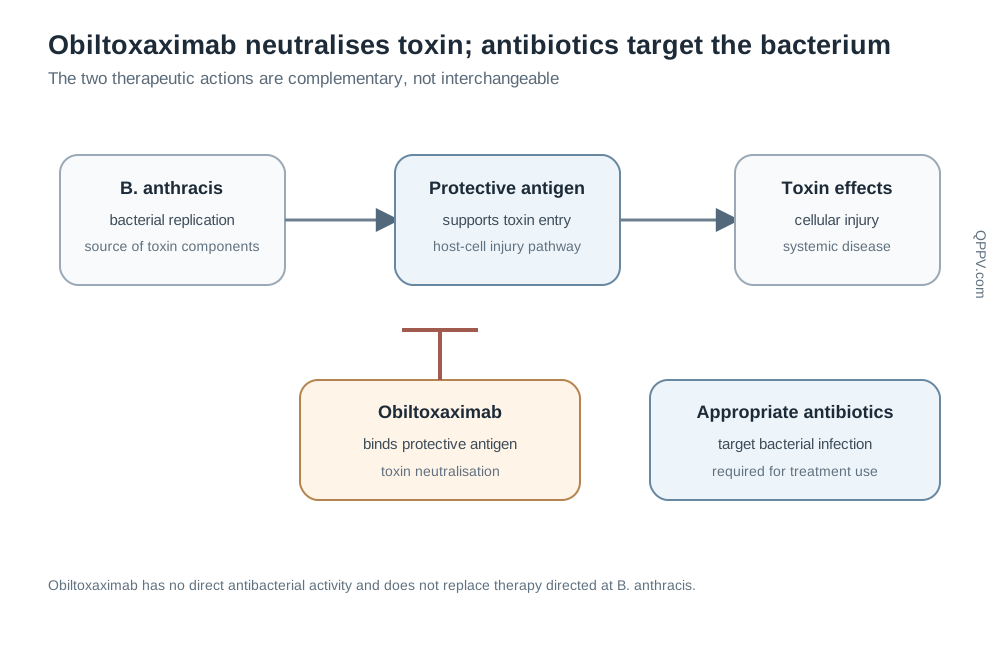
Figure 1. Obiltoxaximab and antibacterial therapy act at different points. The antibody neutralises protective antigen-mediated toxin activity; it does not replace antibacterial treatment.
The FDA Animal Rule evidence model
FDA approved obiltoxaximab on 18 March 2016 under regulations that permit animal efficacy data to support approval when adequate and well-controlled human efficacy studies cannot ethically or feasibly be conducted. Animal studies in established inhalational-anthrax models demonstrated improved survival compared with placebo, including evidence supporting use with antibacterial therapy. Human studies supplied safety, pharmacokinetic and immunogenicity information rather than direct anthrax efficacy evidence. [1,4]
This evidence structure should be explicit whenever the benefit-risk profile is discussed. “No human efficacy trial” does not mean “no efficacy evidence”; it means the causal efficacy evidence comes from validated animal models linked to human exposure through pharmacokinetic and other bridging analyses. Conversely, animal survival data should not be described as though they were observed human treatment outcomes.
The current FDA anthrax-products page continues to list obiltoxaximab as an approved anthrax product, and the FDA Purple Book lists the licensed biological product as marketed. [5,6]
Human safety and pharmacokinetic evidence
Human safety was characterised primarily in healthy volunteers. FDA labelling describes hypersensitivity as the most important acute safety concern, including anaphylaxis during or immediately after infusion. In the principal safety programme, hypersensitivity reactions occurred in 34 of 320 obiltoxaximab recipients and anaphylaxis occurred in three subjects. Administration therefore requires a monitored setting able to manage anaphylaxis. Premedication with diphenhydramine is recommended in the U.S. label, but it does not eliminate the risk and may mask or delay symptoms. [3]
A pooled report of five healthy-volunteer studies found a terminal half-life of approximately 17 to 23 days after intravenous dosing and low-titre treatment-emergent anti-obitoxaximab antibodies in a minority of participants. These studies support exposure bridging and safety characterisation; they do not reproduce the physiological setting of severe inhalational anthrax. [7]
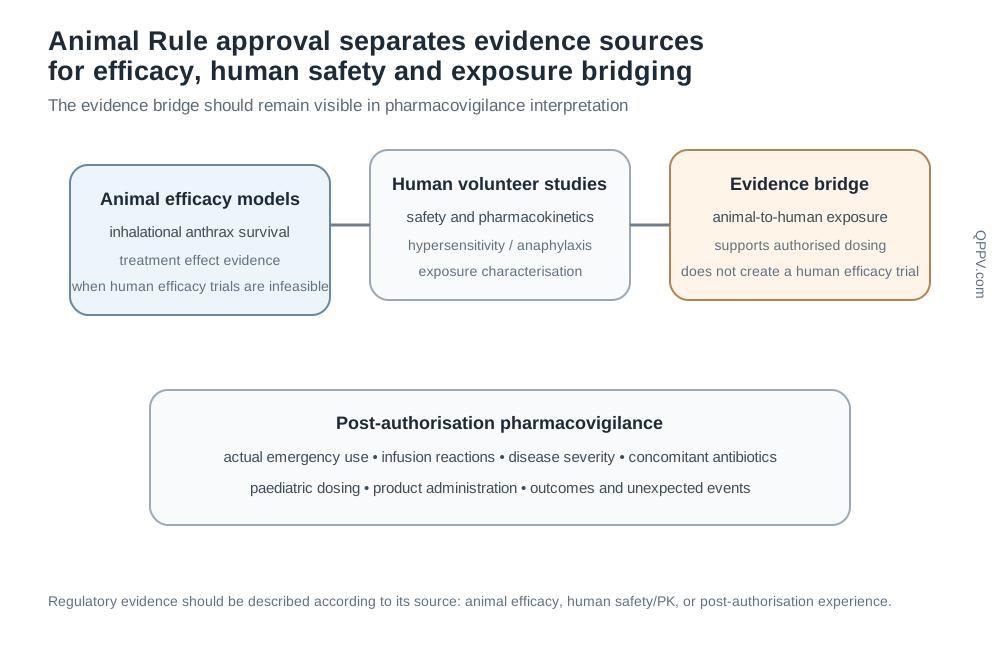
Figure 2. The Animal Rule evidence package separates the source of efficacy evidence from the source of human safety and pharmacokinetic evidence. Post-authorisation pharmacovigilance adds experience from actual use.
Pharmacovigilance in an emergency-treatment context
Real-world use may occur during a public-health emergency, when patients are critically ill, multiple antimicrobials and supportive therapies are administered together, and exposure histories may initially be incomplete. This makes causality assessment difficult but increases the value of disciplined chronology.
For a suspected infusion reaction, record the start of obiltoxaximab administration, premedication, exact onset of symptoms, vital signs, respiratory and cutaneous manifestations, interruption, emergency treatment and outcome. Distinguish anaphylaxis from symptoms caused by severe infection, sepsis, respiratory failure or another simultaneously administered medicine.
For hepatic, renal, neurological or cardiovascular events, the underlying infection and critical illness are strong competing causes. A useful case should show the clinical state before infusion, the sequence of antibacterial and supportive treatments, laboratory and imaging changes, and the trajectory after the event.
Treatment failure and disease progression
Progression of inhalational anthrax after obiltoxaximab does not by itself demonstrate product failure. Timing of toxin production, bacterial burden, adequacy and timing of antibacterial therapy, development of meningitis and delay from exposure to treatment all affect outcome. Product-quality concerns, dosing errors and administration problems should nevertheless be investigated when clinically plausible.
Paediatric evidence
The U.S. indication includes paediatric patients, but direct paediatric safety and pharmacokinetic studies were not used to establish efficacy. Paediatric dosing was derived using pharmacokinetic modelling intended to achieve exposures comparable with adults. [3] A paediatric report should therefore capture age, weight, calculated dose and actual administered dose carefully, especially in emergency conditions where dosing errors are possible.
European regulatory lifecycle
The European Union granted marketing authorisation under exceptional circumstances on 18 November 2020 for treatment of inhalational anthrax in combination with appropriate antibacterial drugs and for post-exposure prophylaxis when alternative therapies were not appropriate or available. The authorisation was subject to annual reassessment because comprehensive data could not be obtained under ordinary conditions. [8]
On 2 August 2024, the European Commission withdrew the marketing authorisation at the holder’s request. EMA states that the decision not to market the product in the EU was for commercial reasons. The withdrawal should therefore not be represented as a regulatory finding that the medicine was unsafe or ineffective. The EPAR remains useful for understanding the historical EU assessment, but the EU authorisation is no longer valid. [8,9]
This is a useful pharmacovigilance distinction: “withdrawn” describes regulatory status, not automatically the reason. Safety databases, periodic reports and educational material should preserve the documented reason rather than allowing a commercial withdrawal to be reinterpreted as a safety signal.
Governance and inspection considerations
For a product developed under the Animal Rule, traceability between the evidence sources is particularly important. A pharmacovigilance system should be able to show which statements arise from animal efficacy studies, which arise from healthy-volunteer human safety studies, and which arise from actual post-authorisation use.
Emergency-use reports may initially be sparse. Follow-up procedures should prioritise identity and timing of exposure, infusion reaction details, antibacterial therapy, disease severity, meningitis status, outcome and batch information where obtainable. Missing data should be documented as missing rather than inferred.
Practical checklist
- Confirm whether use was treatment or prophylaxis and record the exposure scenario.
- For treatment, document concomitant antibacterial therapy and its timing.
- Record dose, weight, infusion timing, premedication and batch where available.
- For hypersensitivity, capture phenotype, onset, treatment and outcome in detail.
- Distinguish anthrax progression, sepsis and meningitis from treatment-related events.
- In paediatric cases, verify weight-based dose calculation and actual administered dose.
- Keep U.S. Animal Rule status separate from the historical EU authorisation under exceptional circumstances.
- Do not describe the 2024 EU withdrawal as a safety withdrawal.
Key takeaways
- Obiltoxaximab neutralises anthrax protective antigen and has no direct antibacterial activity.
- U.S. efficacy was established under the Animal Rule using animal survival data bridged to human exposure; human studies characterised safety and pharmacokinetics.
- Hypersensitivity and anaphylaxis are the central acute labelled safety concerns.
- Emergency use creates major confounding from severe infection and concomitant therapy, making chronology essential.
- The EU marketing authorisation was withdrawn in 2024 for commercial reasons and is no longer valid.
References
- U.S. Food and Drug Administration. FDA approves new treatment for inhalation anthrax. 21 March 2016. https://www.fda.gov/news-events/press-announcements/fda-approves-new-treatment-inhalation-anthrax
- U.S. Food and Drug Administration. Animal Rule Information. https://www.fda.gov/emergency-preparedness-and-response/preparedness-research/animal-rule-information
- U.S. Food and Drug Administration. ANTHIM (obiltoxaximab) prescribing information, FDA label revision 2019. https://www.accessdata.fda.gov/drugsatfda_docs/label/2019/125509s015lbl.pdf
- U.S. Food and Drug Administration. Clinical Review, BLA 125509, obiltoxaximab. https://www.fda.gov/files/drugs/published/125509-Obiltoxaximab-Clinical-PREA.pdf
- U.S. Food and Drug Administration. Products Approved for Anthrax. https://www.fda.gov/drugs/bioterrorism-and-drug-preparedness/products-approved-anthrax
- U.S. Food and Drug Administration. Purple Book: Anthim (obiltoxaximab), BLA 125509. https://purplebooksearch.fda.gov/index.cfm?blaNo=125509&event=productdetails
- Nagy CF, Leach TS, Hoffman JH, et al. Pharmacokinetics and Tolerability of Obiltoxaximab: A Report of 5 Healthy Volunteer Studies. Clin Ther. 2016;38:2083-2097.e7. PMID: 27568215. https://pubmed.ncbi.nlm.nih.gov/27568215/
- European Medicines Agency. Nyxthracis (obiltoxaximab): EPAR. https://www.ema.europa.eu/en/medicines/human/EPAR/nyxthracis
- European Medicines Agency. Public statement: withdrawal of the marketing authorisation for Nyxthracis in the European Union. 4 September 2024. https://www.ema.europa.eu/en/documents/public-statement/public-statement-nyxthracis-withdrawal-marketing-authorisation-european-union_en.pdf
Regulatory Note
Regulatory status was checked on 1 October 2026. Obiltoxaximab remains listed by FDA as an approved U.S. anthrax product. The former EU marketing authorisation was withdrawn on 2 August 2024 for commercial reasons and is no longer valid. This article is educational and does not replace current prescribing information or emergency-response guidance.