Ocrelizumab: Classification, History, Mechanism of Action, Safety and Pharmacovigilance
- Ocrelizumab: Classification, History, Mechanism of Action, Safety and Pharmacovigilance
- Multidimensional classification
- Why B cells matter in multiple sclerosis
- Mechanism of B-cell depletion
- Development and route evolution
- Safety profile through mechanism and treatment context
- Pharmacokinetic and pharmacodynamic duration
- Pharmacovigilance case assessment
- Signal detection and aggregate review
- Periodic benefit-risk evaluation
- Risk management and operational controls
- Potential failure modes
- Inspection and governance perspective
- Practical checklist
- Key Takeaways
- References
- Regulatory Note
Ocrelizumab is a humanised monoclonal antibody directed against CD20 and used specifically in multiple sclerosis. Its target is familiar from oncology and rheumatology, but the pharmacovigilance problem is different. In multiple sclerosis, the therapeutic objective is not elimination of a malignant B-cell clone. It is modification of an autoimmune network in which B cells contribute to antigen presentation, cytokine production, antibody-related immune organisation and interactions with T cells within peripheral and central nervous system compartments.
This distinction prevents duplication with general anti-CD20 articles. The same molecular act—depleting CD20-positive B cells—has different clinical meaning when the disease outcome is relapse prevention, MRI inflammatory activity or slowing of disability progression. Safety interpretation must therefore include the patient's MS phenotype, prior disease-modifying therapy, immune history, vaccination status and route of administration.
Multidimensional classification
| Classification axis | Ocrelizumab classification | Scientific or PV significance |
|---|---|---|
| Molecular class | Humanised glycosylated IgG1 monoclonal antibody | Biological product with Fc-mediated effector activity and long systemic persistence |
| Target | CD20 on pre-B and mature B lymphocytes | Produces selective B-cell depletion while allowing later reconstitution |
| Functional class | B-cell-depleting immunotherapy | Alters autoimmune immune networks rather than directly suppressing one soluble cytokine |
| Disease class | Multiple-sclerosis disease-modifying therapy | Benefit-risk interpretation depends on RMS versus PPMS and baseline inflammatory activity |
| Route/presentation | Intravenous and, in the EU, authorised subcutaneous presentation containing recombinant human hyaluronidase | Route changes administration time, reaction phenotype and medication-error possibilities |
| Product category | Biological medicinal product | Exact presentation, route and batch matter for traceability and quality assessment |
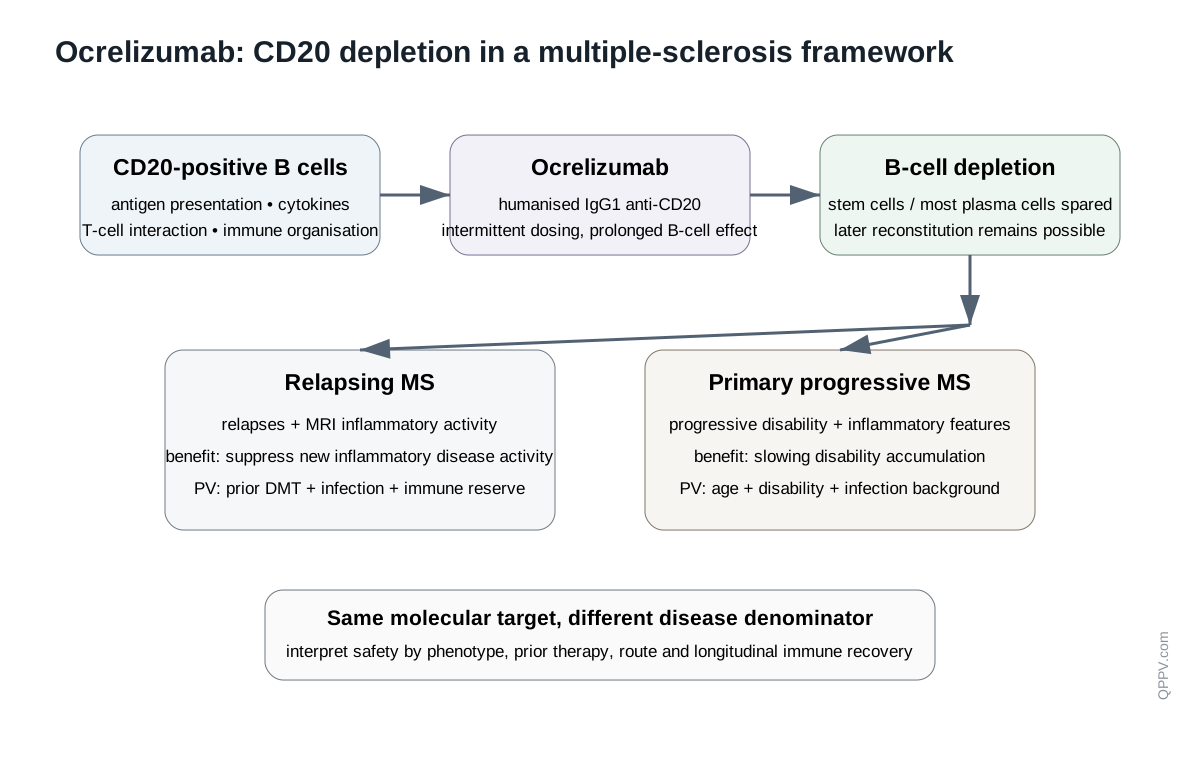
Figure 1. Ocrelizumab shares the CD20 target with other antibodies but occupies a distinct clinical framework: B-cell depletion is used to modify the immune network that drives multiple sclerosis rather than to eradicate a malignant B-cell population.
Why B cells matter in multiple sclerosis
Multiple sclerosis is an inflammatory and neurodegenerative disease in which immune-mediated injury affects myelin, oligodendrocytes, axons and broader CNS tissue. T cells are important, but B cells are not passive antibody factories. They can present antigen to T cells, produce pro- and anti-inflammatory cytokines, organise lymphoid-like immune structures and differentiate into antibody-producing cells.
CD20 is expressed on a broad population of B cells before terminal plasma-cell differentiation. Depleting these cells can therefore interrupt B-cell/T-cell interactions and inflammatory signalling without immediately removing most existing plasma cells or pre-existing circulating antibody. This helps explain why clinical effects can appear more rapidly than would be expected if the mechanism depended only on gradual disappearance of autoantibodies.
The blood compartment is also an incomplete picture. Peripheral CD19-positive B-cell depletion is a convenient pharmacodynamic marker, but B-cell trafficking and persistence differ across lymphoid tissue and CNS-associated compartments. A normal or recovering blood count does not by itself prove that the entire immune network has returned to baseline.
Mechanism of B-cell depletion
Ocrelizumab binds CD20 on B cells and promotes cell depletion through Fc-dependent immune-effector mechanisms and complement-associated pathways. Compared with rituximab, its humanised structure and epitope/effector profile differ, but these distinctions should not be exaggerated into a claim that one mechanism exclusively determines clinical activity.
The therapeutically relevant result is reduction of circulating CD20-positive B cells. Stem cells and early precursors that do not express CD20 remain available for later reconstitution, while most terminal plasma cells are initially spared. This creates an immune intervention that is deep but potentially reversible.
Relapsing versus primary progressive disease
Current EMA product information authorises ocrelizumab for adults with relapsing forms of MS with active disease and for adults with early primary progressive MS with features of inflammatory activity. These are not interchangeable populations.
In relapsing disease, treatment is largely aimed at reducing inflammatory attacks and new lesion formation. In primary progressive disease, the clinically important question is whether treatment can slow disability accumulation in a population where overt relapses may be absent. Baseline age, disease duration, MRI inflammatory activity and prior treatment therefore alter both expected benefit and the interpretation of adverse events.
Development and route evolution
Ocrelizumab was developed as a humanised anti-CD20 antibody for chronic immune-mediated disease. Pivotal trials established efficacy in relapsing MS and demonstrated benefit in primary progressive MS, leading to EU authorisation in 2018.
The treatment system subsequently expanded beyond intravenous infusion. The EU now includes a 920 mg subcutaneous presentation formulated with recombinant human hyaluronidase. The active antibody is the same, but route changes the administration process and the phenotype of acute reactions. PV databases should therefore not collapse intravenous infusion reactions and subcutaneous injection reactions into one undifferentiated category.
Route also changes medication-error possibilities. Wrong presentation, wrong route, preparation errors and confusion between antibody-only intravenous product and hyaluronidase-containing subcutaneous product require exact product identification.
Safety profile through mechanism and treatment context
Infusion and injection reactions
Intravenous ocrelizumab can cause infusion reactions with symptoms such as pruritus, rash, throat irritation, dyspnoea, flushing, hypotension, fever or nausea. Their interpretation depends on onset from infusion start, infusion number, premedication, infusion rate, treatment and recurrence. Early doses often have a different reaction context from later exposure because circulating B-cell burden is higher before depletion.
The subcutaneous presentation introduces a related but distinct reaction pattern. Local erythema, swelling, pain or other injection-site manifestations should be separated from systemic hypersensitivity or systemic administration reactions. Route, presentation and administration setting must therefore be retained in the case narrative and structured data.
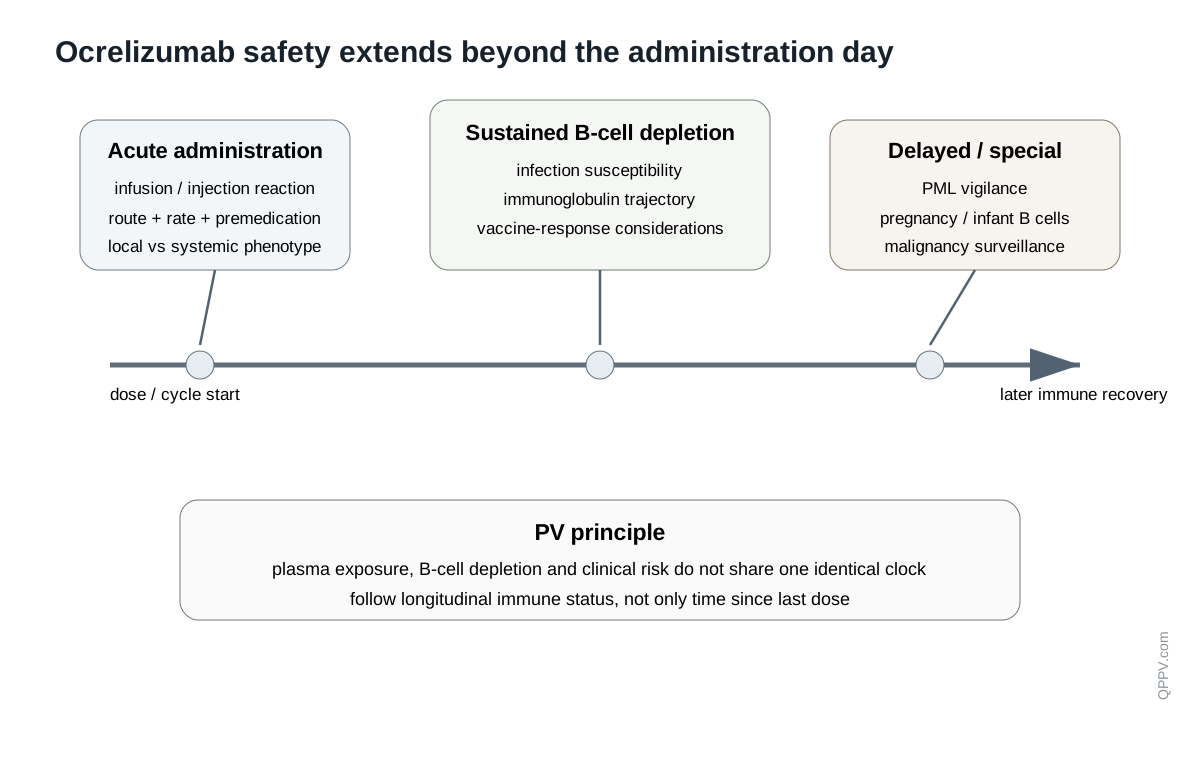
Figure 2. Ocrelizumab safety is longitudinal: acute administration reactions occur around dosing, while infection risk, immunoglobulin decline, PML vigilance, vaccine response and pregnancy/infant considerations extend across and beyond treatment cycles.
Infection and immune reserve
B-cell depletion can impair humoral immune responses and modify vaccine effectiveness. Infection risk is influenced by prior and concomitant immunosuppression, age, disability, respiratory function, urinary dysfunction, comorbidity and cumulative treatment exposure. A serious infection case therefore requires more than a pathogen name.
High-value information includes infection site and organism, cultures or molecular tests, hospital course, neutrophil and lymphocyte counts, immunoglobulin concentrations where available, prior disease-modifying therapy, corticosteroid exposure and recurrent-infection history. Repeated infections may be more informative when analysed alongside falling IgG than when treated as independent cases.
Hepatitis B reactivation
As with other anti-CD20 therapies, prior hepatitis B infection is relevant because weakening humoral immune control can permit viral replication to resume. PV follow-up should preserve pretreatment serology, HBV DNA where relevant, prophylactic antiviral therapy, liver tests and timing from treatment. Hepatic injury should not be labelled HBV reactivation without virological evidence.
Progressive multifocal leukoencephalopathy
PML is caused by JC-virus infection of the CNS and can be fatal or severely disabling. Current product information recognises postmarketing PML in ocrelizumab-treated patients, including cases without the classic carry-over scenario from another medicine. This makes new neurological deterioration an important differential-diagnosis problem.
MS itself complicates recognition. Weakness, visual disturbance, cognitive change, gait dysfunction and sensory symptoms may be interpreted as relapse or progression. High-quality case assessment therefore requires temporal evolution, MRI characteristics, CSF JC-virus testing where performed, prior immunosuppressive therapy and neurological review. A presumed MS relapse should not be accepted uncritically if the pattern is atypical.
Reduction in immunoglobulins
Repeated B-cell depletion can reduce immunoglobulin concentrations in some patients. The clinical significance is not captured by one laboratory value. The important relationship is longitudinal: immunoglobulin trend, recurrent or serious infections, treatment duration and need for replacement therapy where clinically indicated.
Current prescribing information emphasises immunoglobulin assessment before treatment and monitoring during and after treatment, particularly when serious or recurrent infection is suspected. For PV, this creates a useful causal bridge between mechanism and outcome: falling immunoglobulin levels can help explain why infection susceptibility changes over time.
Vaccination
B-cell depletion can reduce the immune response to non-live vaccines and creates safety considerations for live vaccines. The treatment timeline therefore intersects with vaccination planning before therapy and with infant vaccination after maternal exposure.
A case concerning vaccine failure, breakthrough infection or inadvertent live-vaccine administration should capture vaccine type, timing relative to ocrelizumab, B-cell status if known, prior immunisation history and clinical outcome. The question is not merely whether the vaccine was given but whether the immune system had the capacity to mount an adequate response.
Pregnancy and infant B-cell effects
IgG antibodies can cross the placenta, especially later in pregnancy. Fetal exposure to a B-cell-depleting antibody can therefore produce transient neonatal B-cell depletion. Pregnancy cases should capture dose dates, gestational timing, maternal disease activity, co-medications, pregnancy outcome and neonatal blood counts where available.
The infant vaccination question follows directly from this biology. If neonatal B cells are depleted, live-vaccine decisions may need to await immune recovery according to current product information and specialist assessment. PV follow-up should therefore extend beyond delivery when infant immune consequences are plausible.
Malignancy surveillance
Clinical development identified an imbalance in malignancies, including breast cancer, that led to continued surveillance. This should be interpreted carefully. A warning or post-authorisation surveillance programme does not by itself establish a simple causal mechanism. Aggregate review should consider age, sex, screening history, background incidence, treatment duration and prior immunosuppression rather than counting all neoplasms as one undifferentiated signal.
Immune-mediated colitis and liver injury
Postmarketing experience has expanded the recognised safety spectrum to include immune-mediated colitis and clinically significant liver injury in some regulatory information. These events illustrate why established biologics still require active signal detection after years of use. Diarrhoea in an MS patient should not automatically be attributed to infection or another medicine, and hepatic injury requires structured exclusion of viral, metabolic, obstructive and drug-related alternatives.
Pharmacokinetic and pharmacodynamic duration
Ocrelizumab is dosed intermittently, but its pharmacodynamic effect is prolonged because B-cell reconstitution takes time. Plasma concentration therefore does not define the duration of immunological effect. This is especially important for infection, vaccination and pregnancy assessments made months after the last administration.
Peripheral B-cell recovery is variable. A fixed post-dose interval is therefore an imperfect substitute for actual immune recovery when individual clinical decisions depend on B-cell status.
Pharmacovigilance case assessment
Ocrelizumab case assessment should preserve the MS phenotype, prior disease-modifying therapy, route/presentation, immune reserve and the long pharmacodynamic interval after dosing. The key error to avoid is treating every neurological event as either MS activity or drug toxicity before reconstructing objective evidence.
Event-specific follow-up priorities
| Event | High-value follow-up information |
|---|---|
| Infusion/injection reaction | Route, presentation, dose number, premedication, onset, local/systemic features, rate, treatment and rechallenge |
| Serious/recurrent infection | Site/pathogen, hospitalisation, IgG/IgM, prior DMTs, corticosteroids, disability-related risk factors, outcome |
| PML concern | Symptom evolution, MRI, CSF JCV testing, prior natalizumab/immunosuppression, neurological assessment |
| Hypogammaglobulinaemia | Baseline and serial immunoglobulins, infection history, treatment duration, replacement therapy if used |
| Vaccine-related case | Vaccine type, live/non-live, timing relative to treatment, B-cell status, immune response and outcome |
| Pregnancy/infant exposure | Dose dates, gestational timing, maternal disease activity, neonatal B cells, infection and vaccination follow-up |
| Colitis | Stool frequency, infection studies, endoscopy/biopsy if performed, treatment and outcome |
| Liver injury | Serial ALT/AST/ALP/bilirubin, viral studies, co-medications, imaging and alternative causes |
| Product-quality/medication error | Exact IV/SC product, batch, route, storage, preparation and administration details |
Signal detection and aggregate review
Signal detection should stratify by relapsing versus primary progressive disease, route, age, prior immunosuppressive therapy and cumulative exposure. The background disease itself changes the denominator: older PPMS populations can have more comorbidity and disability-related infection risk than younger relapsing populations.
Longitudinal analyses are especially important for immunoglobulin decline and recurrent infection. A cross-sectional count can miss the relationship between repeated treatment cycles, progressive IgG reduction and changing infection severity.
PML surveillance requires careful separation of true new cases from carry-over effects of previous therapy, while not assuming that absence of a classic prior exposure excludes the diagnosis. Malignancy surveillance similarly requires background-rate and screening-context interpretation rather than simple case accumulation.
Periodic benefit-risk evaluation
Periodic evaluation should connect exposure to MS phenotype, route and treatment duration. Important safety domains include administration reactions, serious and opportunistic infection, HBV reactivation, PML, immunoglobulin decline, malignancy, immune-mediated colitis, liver injury, pregnancy and infant outcomes, vaccine-related events, medication errors and product-quality complaints.
Benefit evaluation should distinguish relapse/MRI control in active relapsing disease from disability progression in PPMS. This prevents a generic statement of “MS efficacy” from obscuring population-specific benefit-risk questions.
Risk management and operational controls
Current regional product information governs screening, vaccination, treatment delay, administration, monitoring and management of adverse reactions. Pharmacovigilance operations should support these requirements but should not convert one jurisdiction's detailed clinical instructions into a universal legal standard.
Recommended controls include route-specific case forms, longitudinal immunoglobulin tracking, structured PML follow-up, prior-DMT capture, pregnancy-to-infant follow-up and explicit vaccine timing fields. Product dictionaries should distinguish intravenous ocrelizumab from the hyaluronidase-containing subcutaneous presentation.
Potential failure modes
The following are illustrative scenarios, not published inspection findings:
- A subcutaneous injection reaction is coded as an intravenous infusion reaction because route was not captured.
- Recurrent respiratory infections are evaluated separately without recognising a progressive decline in IgG.
- New cognitive and visual symptoms are recorded as MS relapse without documenting MRI or PML evaluation.
- A vaccine breakthrough case omits the interval from the last ocrelizumab dose.
- Maternal exposure follow-up ends at delivery despite neonatal B-cell depletion being clinically relevant.
- A malignancy aggregate analysis ignores age, sex and screening history.
- Diarrhoea is assumed infectious without considering postmarketing immune-mediated colitis.
Inspection and governance perspective
An inspector assessing ocrelizumab PV would be interested in whether the system can demonstrate longitudinal immune surveillance rather than merely process isolated cases. Evidence may include immunoglobulin trends, infection follow-up, PML case conventions, pregnancy/infant follow-up, vaccine case handling, route-specific dictionaries, signal-assessment records and post-authorisation study outputs.
The effectiveness question is whether these controls generate interpretable evidence. A procedure that requests immunoglobulins is weak if recurrent-infection cases routinely lack the values. A pregnancy procedure is incomplete if it cannot connect maternal treatment timing to neonatal B-cell status and vaccination considerations.
Practical checklist
For an ocrelizumab case or aggregate review, confirm:
- RMS versus PPMS and current inflammatory activity;
- prior and concomitant disease-modifying therapy;
- exact IV or SC presentation and administration details;
- infection history and longitudinal immunoglobulin results;
- hepatitis B history when relevant;
- objective neurological work-up for atypical deterioration;
- vaccine type and timing relative to B-cell depletion;
- pregnancy timing and infant immune follow-up where applicable;
- route-specific local versus systemic reaction phenotype;
- product and batch for traceability or quality issues.
Key Takeaways
Ocrelizumab is a humanised anti-CD20 IgG1 antibody used in active relapsing and early primary progressive multiple sclerosis. Its therapeutic action derives from depletion of CD20-positive B cells within an autoimmune network rather than from direct cytotoxicity against CNS tissue.
Its PV profile is longitudinal. Acute infusion or injection reactions occur around administration, while infection susceptibility, immunoglobulin decline, PML vigilance, vaccine responsiveness and pregnancy/infant B-cell effects can extend well beyond an individual dose. Current EU availability of both intravenous and subcutaneous presentations makes route and product identity essential safety variables.
References
- European Medicines Agency. Ocrelizumab: EPAR and current product information. Product information last updated 20 August 2026. https://www.ema.europa.eu/en/medicines/human/EPAR/ocrevus
- European Medicines Agency. Assessment report for the subcutaneous ocrelizumab presentation. EMA/CHMP/227886/2024. https://www.ema.europa.eu/en/documents/variation-report/ocrevus-h-c-004043-x-0039-epar-assessment-report-variation_en.pdf
- U.S. Food and Drug Administration. Ocrelizumab prescribing information. Revised August 2025. https://www.accessdata.fda.gov/drugsatfda_docs/label/2025/761053s036lbl.pdf
- Hauser SL, Bar-Or A, Comi G, et al. Ocrelizumab versus interferon beta-1a in relapsing multiple sclerosis. N Engl J Med. 2017;376:221-234. doi:10.1056/NEJMoa1601277.
- Montalban X, Hauser SL, Kappos L, et al. Ocrelizumab versus placebo in primary progressive multiple sclerosis. N Engl J Med. 2017;376:209-220. doi:10.1056/NEJMoa1606468.
Regulatory Note
Authorised indications, presentations, vaccination instructions, infection precautions, pregnancy recommendations and monitoring requirements vary by jurisdiction and may change. This article does not replace current regional product information. Regulatory statements were checked against current EMA and FDA sources available in September 2026. Operational recommendations are pharmacovigilance practice unless explicitly identified as regulatory requirements.