Ocrelizumab and Hyaluronidase Subcutaneous Formulation: Safety and Pharmacovigilance
Subcutaneous ocrelizumab with recombinant hyaluronidase retains the anti-CD20 biology of ocrelizumab but changes the administration system. The pharmacovigilance problem therefore has two layers: long-term B-cell-depletion risks that follow ocrelizumab regardless of route, and formulation-specific risks created by subcutaneous delivery.
- Ocrelizumab and Hyaluronidase Subcutaneous Formulation: Safety and Pharmacovigilance
Product Concept and Regulatory Context
The U.S. subcutaneous presentation contains 920 mg ocrelizumab with 23,000 units recombinant human hyaluronidase in 23 mL. It is authorised for adult relapsing forms of multiple sclerosis and primary progressive multiple sclerosis, the same broad disease contexts as intravenous ocrelizumab.
Hyaluronidase enables dispersion of the large subcutaneous volume. It does not change the therapeutic target: ocrelizumab still binds CD20-positive B cells and produces prolonged peripheral B-cell depletion.
| Dimension | Subcutaneous implication |
|---|---|
| Target biology | Same CD20-directed mechanism |
| Route | Injection rather than infusion |
| Dose architecture | Fixed formulation-specific dose |
| Local safety | Injection reactions become a major tolerability endpoint |
| Long-term safety | Infections, PML, immunoglobulin reduction, malignancy, liver injury and vaccination considerations remain relevant |
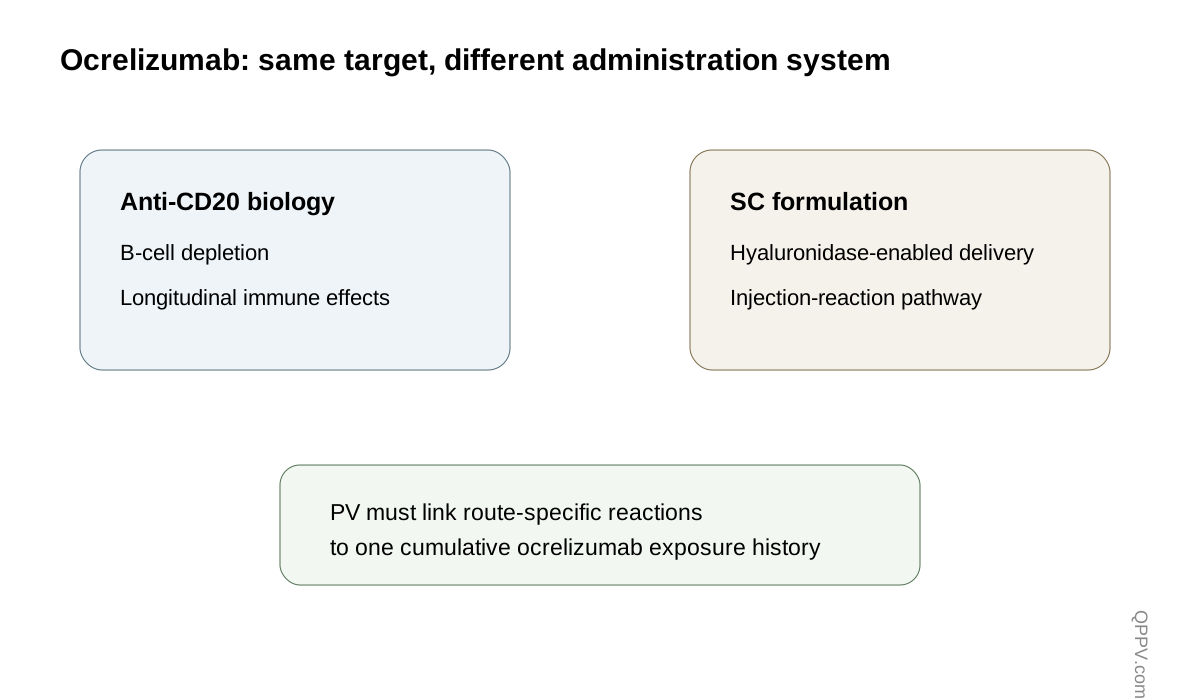
Figure 1. The formulation changes route and administration without changing the CD20-directed biological target.
Why Route Matters to PV
Intravenous ocrelizumab is associated with infusion reactions; the subcutaneous presentation shifts this operational focus toward injection reactions. In current U.S. information, injection reactions are the most common adverse reaction with the subcutaneous product.
This does not mean the formulation should be analysed in isolation. A patient may switch between intravenous and subcutaneous ocrelizumab, so exposure chronology should preserve route at each administration while maintaining one longitudinal immune-safety record.
Safety Assessment Across Two Layers
Injection reactions
Injection reactions may include local pain, erythema, swelling and systemic symptoms. Case assessment should capture injection site, timing, duration, recurrence, treatment, outcome and whether symptoms were confined locally or accompanied by systemic features.
Infections and immunoglobulin reduction
The route does not remove the consequences of sustained B-cell depletion. Serious and opportunistic infections, hepatitis B considerations, progressive multifocal leukoencephalopathy vigilance and declining immunoglobulin concentrations remain longitudinal risks. For these events, the relevant exposure history is cumulative ocrelizumab treatment, not merely the most recent route.
Liver injury
The U.S. prescribing information was updated in 2025 to include clinically significant liver injury for ocrelizumab products. PV follow-up should therefore capture baseline and event liver tests, competing viral or drug causes, dose timing, treatment interruption and recovery. The signal is molecule-level rather than unique to the subcutaneous route.
Immune-mediated colitis and malignancy
These remain part of the labelled safety framework. Their assessment should preserve route but avoid falsely attributing route-specific causation without supporting evidence.
Vaccination and Pregnancy
B-cell depletion can alter vaccine response, and fetal or neonatal B-cell effects are biologically plausible after maternal anti-CD20 exposure. The formulation does not change the underlying immunological reasoning. What changes operationally is product identification and documentation at each administration.
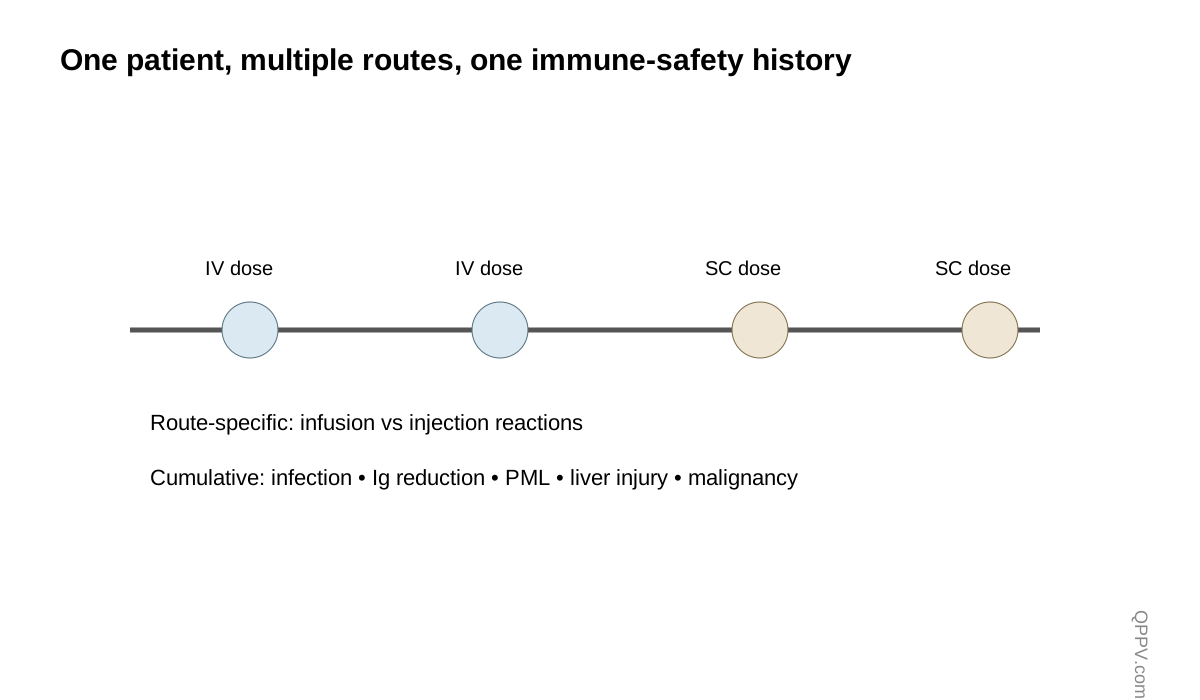
Figure 2. Route-specific administration reactions should be stratified, while cumulative immune consequences are reviewed across the patient's complete ocrelizumab exposure history.
Case Assessment Framework
| Follow-up field | Purpose |
|---|---|
| Exact presentation and route | Distinguishes SC from IV exposure |
| Dose/date/site | Supports injection-reaction assessment |
| Prior ocrelizumab doses and route | Reconstructs cumulative exposure |
| Immunoglobulins and infection history | Assesses immune depletion consequences |
| HBV status where relevant | Supports reactivation risk evaluation |
| Liver tests and alternative causes | Supports liver-injury assessment |
| Vaccination timing | Clarifies immune-response context |
| Concomitant immunosuppression | Identifies additive infection risk |
Signal Detection
Administration-reaction analyses should be route-stratified. Infection, immunoglobulin, malignancy, PML and liver-injury analyses may require pooled molecule-level review with formulation stratification where a route-specific hypothesis exists. This distinction prevents both under-detection of formulation signals and artificial fragmentation of long-term anti-CD20 safety data.
Practical Controls and Failure Modes
The principal operational controls are accurate product selection, route-specific administration procedures, preservation of route and batch in safety records, and longitudinal linkage of immune outcomes across all ocrelizumab presentations.
An illustrative failure mode is to code recurrent injection-site reactions simply as “ocrelizumab administration reaction” without route. This can obscure a subcutaneous tolerability pattern. The converse error is to analyse serious infections only within the subcutaneous product and thereby ignore the patient's preceding intravenous anti-CD20 exposure.
Inspection and Governance Considerations
An inspector could examine whether exposure records support reconstruction of route switches, whether injection reactions are analysed separately from infusion reactions, whether longitudinal risks are assessed across formulations, and whether safety communications such as the 2025 liver-injury update were incorporated consistently into procedures, case follow-up and aggregate review.
Key Takeaways
Subcutaneous ocrelizumab-hyaluronidase changes administration, not target biology. Pharmacovigilance therefore requires a dual perspective: presentation-level surveillance for injection and medication-use issues, and molecule-level longitudinal surveillance for infection, immunoglobulin reduction, PML, malignancy, liver injury and other consequences of B-cell depletion.
References
- Genentech. Ocrevus Zunovo (ocrelizumab and hyaluronidase-ocsq): Information for Healthcare Providers and Full Prescribing Information. Current online product information accessed September 2026.
- U.S. Food and Drug Administration. Ocrevus Zunovo BLA 761371 product-quality and labelling review.
- Genentech. Important Drug Warning: Risks with Ocrevus and Ocrevus Zunovo — Liver Injury. August 2025.
- QPPV.com. Ocrelizumab: Classification, History, Mechanism of Action, Safety and Pharmacovigilance. Parent molecule reference article.
Regulatory Note
This article uses current U.S. product information as the principal formulation-specific anchor. Ocrelizumab presentations and authorised age groups may differ between jurisdictions. Local approved product information should be used for operational dosing and administration decisions.