Ofatumumab: Classification, History, Mechanism of Action, Safety and Pharmacovigilance
Ofatumumab is a fully human monoclonal antibody directed against CD20, a surface protein expressed on many B lymphocytes. Binding CD20 leads to depletion of susceptible B cells through immune-effector mechanisms. In modern neurological practice, ofatumumab is administered subcutaneously for relapsing forms of multiple sclerosis (MS), where repeated B-cell depletion reduces inflammatory disease activity.
The molecule has an unusually instructive regulatory history. Ofatumumab was first developed as an intravenous oncology antibody for chronic lymphocytic leukaemia (CLL). That EU oncology authorisation was withdrawn in 2019 for commercial reasons. The molecule later returned in a different therapeutic context: lower-dose subcutaneous administration for relapsing MS, authorised in the EU in 2021. The pharmacovigilance lesson is that a molecule does not have one context-free safety profile. Dose, route, disease, co-medication and baseline immune status can substantially alter how the same target biology is expressed clinically.
- Ofatumumab: Classification, History, Mechanism of Action, Safety and Pharmacovigilance
- Multidimensional classification
- CD20 biology
- Mechanism of action
- Development and regulatory history
- Clinical use and exposure context
- Major safety domains
- Immunogenicity and treatment response
- Product use, self-injection and medication error
- Pharmacovigilance case assessment
- Signal detection and aggregate review
- Periodic benefit-risk evaluation
- Risk management and operational controls
- Potential failure modes
- Inspection and governance perspective
- Practical checklist
- Key Takeaways
- References
- Regulatory Note
Multidimensional classification
| Classification axis | Ofatumumab classification | Scientific or PV significance |
|---|---|---|
| Molecular class | Fully human monoclonal antibody | Therapeutic protein with potential immunogenicity despite human sequence |
| Target | CD20 on B lymphocytes | Produces selective B-cell depletion without directly targeting plasma cells |
| Functional class | Cell-directed depleting antibody | Safety interpretation centres on depth and duration of B-cell suppression |
| Current EU therapeutic setting | Relapsing forms of multiple sclerosis with active disease | Neurological disease and prior disease-modifying therapy shape baseline risk |
| Historical EU setting | Intravenous treatment of CLL; authorisation withdrawn in 2019 for commercial reasons | Historical oncology safety data arose from different doses and a different patient population |
| Current route | Subcutaneous self-injection | Injection-related and device/use issues become relevant to PV |
| Principal safety themes | Infection, HBV reactivation, PML vigilance, immunoglobulins, vaccination, pregnancy, injection reactions | Directly linked to B-cell depletion and treatment context |
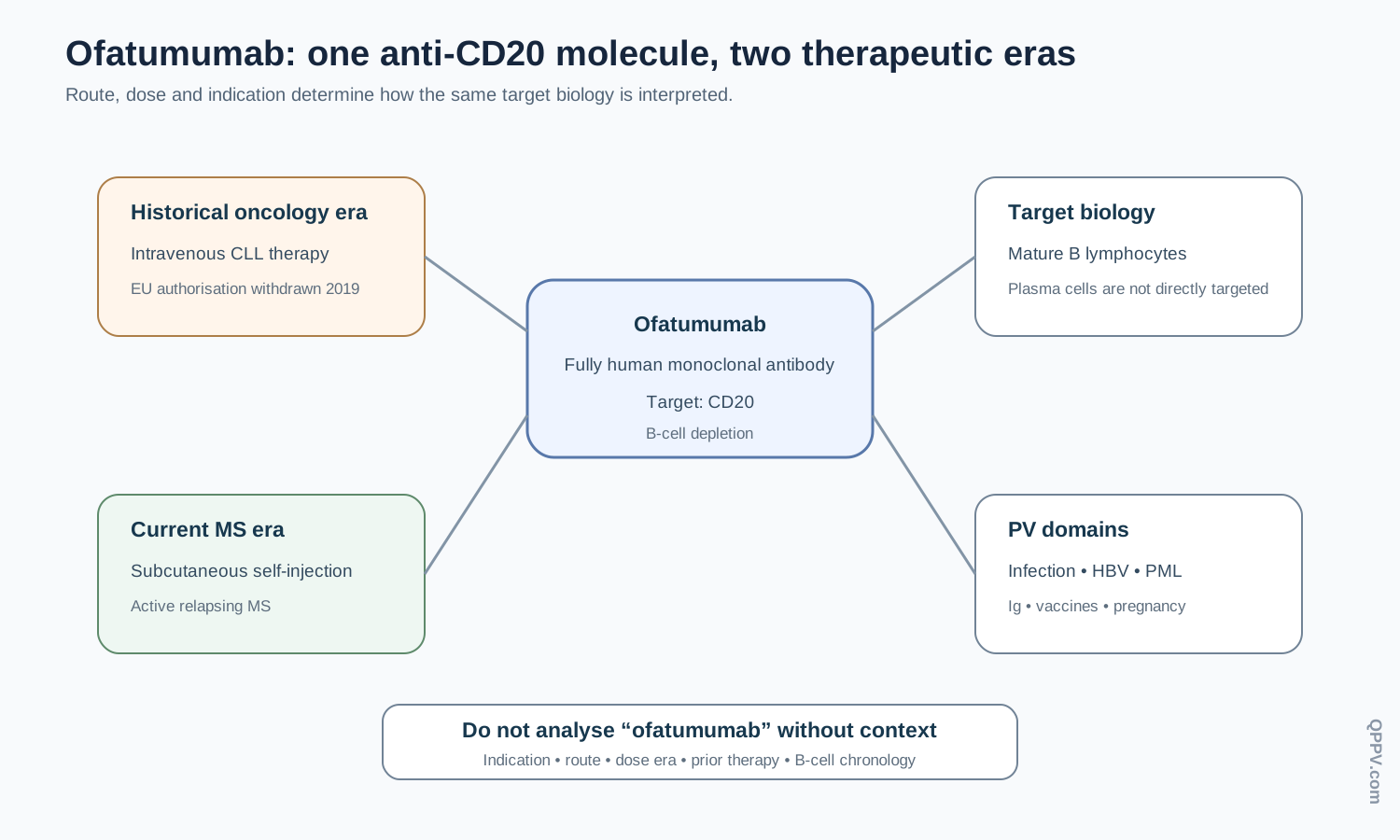
Figure 1. Ofatumumab is the same anti-CD20 molecule across two very different therapeutic eras: historical intravenous oncology use and current subcutaneous multiple-sclerosis treatment. Pharmacovigilance must preserve that context.
CD20 biology
CD20 is expressed on B cells from intermediate stages of B-cell development through mature B lymphocytes. It is not expressed on haematopoietic stem cells and is generally absent from terminally differentiated plasma cells. This distribution explains why anti-CD20 therapy can markedly reduce circulating B cells while allowing eventual repopulation from earlier progenitors and without directly eliminating all antibody-producing plasma cells.
B cells contribute to multiple sclerosis through more than antibody production. They can present antigen, produce cytokines and participate in inflammatory interactions with T cells and other immune populations. Depleting CD20-positive B cells therefore reduces inflammatory activity even though MS is not conventionally classified as a B-cell malignancy.
Why CD20 depletion does not equal global immunosuppression
The immune effect is selective but substantial. T cells, innate immune cells and long-lived plasma cells remain, yet humoral immune responses can still be altered because B-cell populations needed for new antibody responses are depleted. This is why infection, vaccination, immunoglobulin concentrations and pregnancy require attention even though the treatment does not erase the entire immune system.
Mechanism of action
Ofatumumab binds a membrane-proximal epitope on CD20 and promotes B-cell lysis through complement-dependent cytotoxicity and antibody-dependent cellular mechanisms. The clinically important result is sustained reduction of circulating CD20-positive B cells.
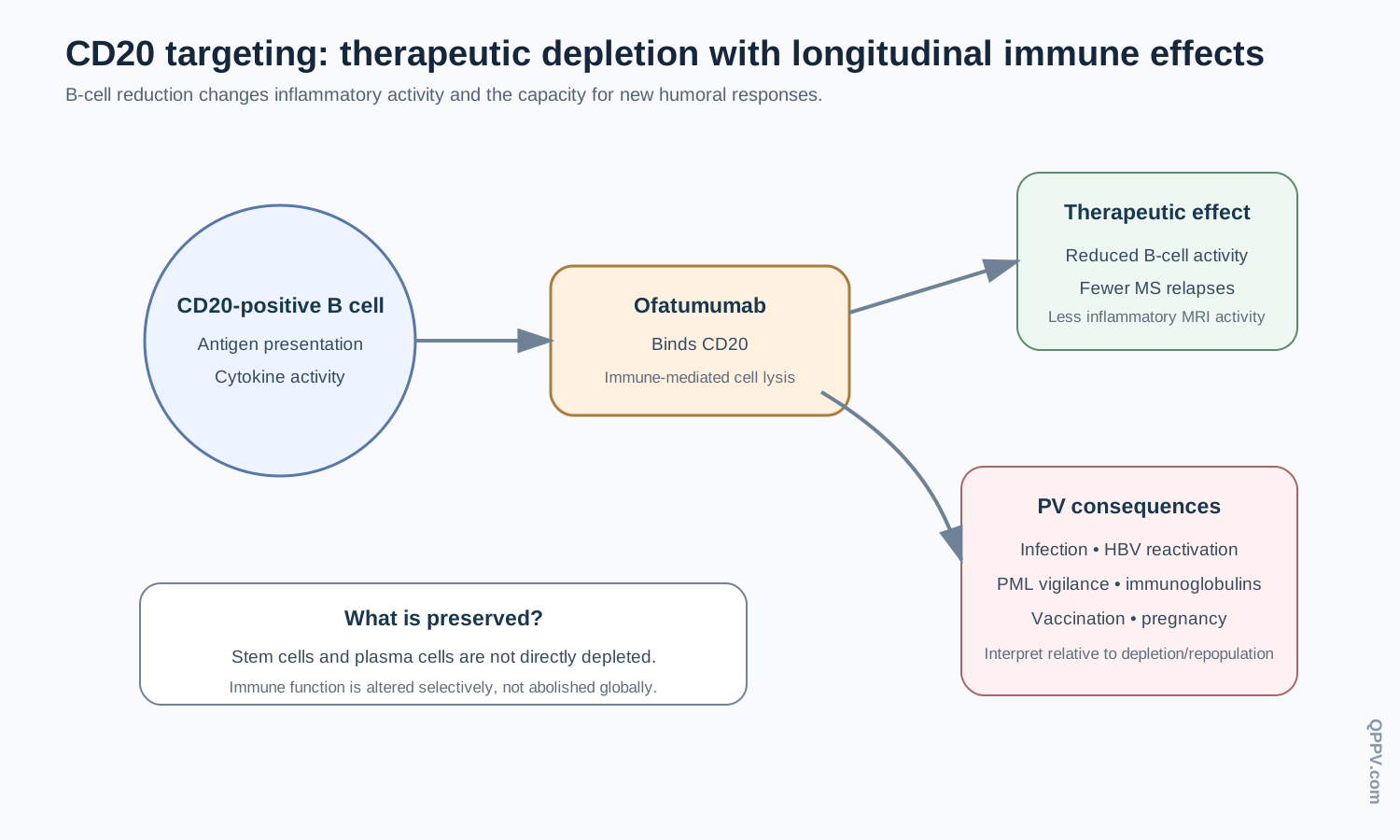
Figure 2. Ofatumumab binds CD20 on B lymphocytes and drives immune-mediated B-cell depletion. Reduced inflammatory B-cell activity supports efficacy in relapsing MS, while reduced B-cell availability shapes infection, vaccination and immunoglobulin surveillance.
Development and regulatory history
Ofatumumab first reached the European market as an intravenous oncology product for CLL. The EU oncology marketing authorisation was granted in 2010 and withdrawn in February 2019 at the holder’s request for commercial reasons. That withdrawal did not establish that the molecule was unsafe or ineffective; it ended that specific authorised product lifecycle.
The molecule was subsequently developed for multiple sclerosis using a different dosing strategy and route. The EU authorised subcutaneous ofatumumab for adults with active relapsing forms of MS in March 2021. Current EU product information was updated in August 2026 and the product remains under additional monitoring.
This history matters operationally. A spontaneous report that merely says “ofatumumab” without formulation, indication or treatment era may be clinically uninterpretable. Safety systems should preserve whether the case concerns current subcutaneous MS use, historical oncology exposure or another setting.
Clinical use and exposure context
Current EU use is subcutaneous treatment of adults with active relapsing forms of multiple sclerosis. The regimen begins with more closely spaced initial injections and then continues at monthly intervals. Patients may self-inject after training, which makes injection technique, device handling and treatment adherence part of the exposure record.
A patient with MS may also have received several previous disease-modifying therapies with long-lasting immune effects. Infection or lymphocyte abnormalities after starting ofatumumab therefore cannot be interpreted without reconstructing prior treatment, washout intervals and baseline immune status.
Major safety domains
Infection
Because ofatumumab depletes B cells, infection is a central mechanistic safety concern. Current product information recommends evaluation of immune status before therapy and delay of administration in patients with active infection until the infection resolves.
A serious infection report should include site, organism, microbiological confirmation where available, severity, hospitalisation, prior immunosuppressive therapy, immunoglobulin concentrations, lymphocyte counts and outcome. Common respiratory infections should not be interpreted in the same way as opportunistic infection, severe herpesvirus disease or recurrent bacterial infection.
Hepatitis B virus reactivation
HBV reactivation is a recognised concern with anti-CD20 antibodies. Current EU product information requires HBV screening before initiation, including at least hepatitis B surface antigen and hepatitis B core antibody testing. Positive serology requires specialist assessment and appropriate monitoring or management.
A PV report should distinguish chronic active infection, resolved prior infection and true reactivation. Useful variables include baseline serology, HBV DNA, antiviral prophylaxis, liver tests, clinical hepatitis and timing relative to B-cell depletion and repopulation.
Progressive multifocal leukoencephalopathy
Progressive multifocal leukoencephalopathy (PML) is caused by JC virus and has been reported with anti-CD20 therapies and other immunosuppressive treatments. Current ofatumumab product information advises vigilance for clinical or MRI findings suggestive of PML and suspension of treatment while the diagnosis is evaluated.
The historical oncology experience is relevant but must not be transferred uncritically to the current MS regimen. Oncology patients received substantially higher doses and had different disease and treatment backgrounds. A PML assessment therefore requires indication, dose history, prior therapies, MRI evolution, CSF JC-virus testing and competing neurological explanations.
Immunoglobulins and humoral immunity
B-cell depletion can alter immunoglobulin concentrations, particularly with sustained exposure. Immunoglobulin data are most useful longitudinally: baseline concentration, nadir, infection chronology, repeated low values and treatment interruptions together provide more information than a single laboratory result.
Hypogammaglobulinaemia is clinically important when it is linked to recurrent or severe infection, but low immunoglobulin alone does not establish that the medicine caused every subsequent infection. Prior immune-modifying therapy and underlying disease remain relevant.
Vaccination
B-cell depletion can reduce the ability to mount new antibody responses. Current EU guidance recommends completion of live or live-attenuated vaccines at least four weeks before treatment and, whenever possible, inactivated vaccines at least two weeks before initiation. Live vaccines are not recommended during treatment and until B-cell repletion.
PV follow-up should record vaccine type, date, treatment timing and whether the event concerns vaccine safety, apparent lack of vaccine response or infection with the pathogen the vaccine was intended to prevent.
Injection-related reactions
Systemic injection-related reactions occur most commonly around early doses and may include fever, headache, myalgia, chills and fatigue. Local reactions can include erythema, swelling, itching and pain. The first injection is performed under guidance of an appropriately trained healthcare professional in the current EU framework.
These events should be separated from true hypersensitivity. Timing, symptom constellation, treatment, recurrence and dose number help determine whether a report is a predictable injection-related reaction or a less common allergic event.
Pregnancy and fetal/neonatal B-cell effects
IgG antibodies can cross the placenta, particularly later in pregnancy. Because ofatumumab depletes B cells, exposure during pregnancy raises the possibility of fetal or neonatal B-cell depletion and altered response to live vaccines after birth.
Pregnancy surveillance therefore requires maternal treatment dates, gestational timing, pregnancy outcome, neonatal blood counts where available, infections, vaccination history and recovery of B-cell populations. The EMA lists post-authorisation pregnancy and infant-outcome studies, illustrating that pregnancy safety remains an active evidence-generation area.
Immunogenicity and treatment response
Anti-drug antibodies are possible but have not defined the major safety profile. Apparent treatment failure should first be reconstructed using adherence, injection chronology, MRI activity, clinical relapses, prior disease trajectory and actual dose delivery.
Because B-cell depletion is measurable, peripheral B-cell counts may sometimes help interpret unusual treatment-response patterns, although clinical decisions should follow the authorised product framework rather than an improvised PV threshold.
Product use, self-injection and medication error
Self-administration introduces operational failure modes: missed loading doses, incorrect interval, incomplete injection, storage errors, device malfunction and confusion about when to restart after interruption. These reports should capture intended regimen, actual doses, device or presentation and whether the error altered clinical exposure.
A medication error should not automatically be counted as lack of efficacy or adverse reaction. The PV record should preserve both the error and its clinical consequence.
Pharmacovigilance case assessment
Ofatumumab cases should be reconstructed around indication, route, dose era, prior immune therapy and B-cell-depletion chronology. Those variables separate current MS use from historical oncology exposure and help explain whether an event is biologically plausible for the treatment context.
Event-specific follow-up priorities
| Event or issue | High-value follow-up information |
|---|---|
| Serious infection | Site, organism, severity, immunoglobulins, lymphocyte/B-cell status, prior immunosuppressants, treatment and outcome |
| HBV reactivation | Baseline HBsAg/HBcAb, HBV DNA, antiviral prophylaxis, liver tests, specialist management and outcome |
| Suspected PML | Neurological phenotype, MRI findings, CSF JC-virus testing, prior MS therapies, dose history and alternative diagnoses |
| Hypogammaglobulinaemia | Baseline and serial IgG/IgM, infection chronology, prior therapies, treatment interruptions and recovery |
| Injection reaction | Dose number, onset, systemic versus local phenotype, treatment, recurrence and device/presentation |
| Pregnancy exposure | Maternal dose dates, gestational timing, pregnancy outcome, neonatal B cells, infection and vaccination follow-up |
| Vaccination issue | Vaccine type, date, interval from treatment, immune response if measured and subsequent infection history |
| Lack of efficacy | Clinical relapses, MRI activity, adherence, injection chronology, dose delivery and prior disease trajectory |
Signal detection and aggregate review
Analyses should not pool historical high-dose oncology exposure with modern subcutaneous MS exposure without stratification. The target is the same but background immunosuppression, cumulative dose, route and competing disease risks differ substantially.
Infection analyses should separate common community infections from opportunistic infection and infections occurring with low immunoglobulin concentrations. HBV should be analysed as a specific medically coherent topic rather than being absorbed into all hepatic adverse events.
PML surveillance requires especially disciplined case confirmation because MS itself produces neurological symptoms and MRI abnormalities. A spontaneous term of “PML suspected” should not be treated as confirmed disease without virological and neuroradiological context.
Periodic benefit-risk evaluation
Periodic evaluation should integrate relapse and MRI control with infection, immunoglobulin trends, hepatitis B reactivation, PML surveillance, injection reactions, pregnancy evidence, vaccination questions and medication-error patterns. The interpretation should account for increasing cumulative exposure and the evolving population of patients previously treated with other high-efficacy MS therapies.
The historical oncology lifecycle is relevant for mechanism and long-term knowledge, but current benefit-risk conclusions must be grounded in the authorised MS regimen rather than assumed from former CLL use.
Risk management and operational controls
Current product information governs HBV screening, infection precautions, vaccination timing, pregnancy advice and management of suspected PML. Recommended operational practice can include structured capture of prior disease-modifying therapies, baseline immunoglobulins, injection chronology and neonatal follow-up after pregnancy exposure.
These measures should be distinguished from binding requirements unless they form part of an applicable regulatory condition or authorised product information.
Potential failure modes
The following are illustrative scenarios, not published inspection findings:
- An infection case is assessed without prior MS treatment history or immunoglobulin values.
- A historical oncology PML report is combined with current MS exposure without dose or indication stratification.
- Positive hepatitis B core antibody is coded as reactivation without HBV DNA or clinical evidence.
- A neurological relapse is misclassified as PML without MRI or CSF evaluation.
- Pregnancy exposure is closed at delivery without neonatal B-cell or infection follow-up.
- Apparent treatment failure is assessed without confirming loading doses or monthly self-injection adherence.
Inspection and governance perspective
An inspector reviewing ofatumumab pharmacovigilance could ask whether the system distinguishes historical and current formulations, whether HBV and PML cases receive targeted medical follow-up, whether immunoglobulin data can be linked longitudinally to infection, and whether pregnancy surveillance extends to relevant neonatal outcomes.
The effectiveness question is whether anti-CD20 biology has been translated into structured surveillance rather than reduced to a generic “immunosuppression” label.
Practical checklist
For an ofatumumab case or aggregate analysis, confirm:
- current MS versus historical oncology exposure;
- route, dose and treatment chronology;
- prior and concomitant immune-modifying therapy;
- baseline HBV screening and virological evidence when relevant;
- MRI and JC-virus testing for suspected PML;
- baseline and serial immunoglobulin concentrations;
- infection organism and severity;
- vaccination timing relative to B-cell depletion;
- pregnancy timing and neonatal follow-up;
- injection device, dose delivery and adherence;
- exact biological product and batch where available.
Key Takeaways
Ofatumumab is a fully human anti-CD20 monoclonal antibody that depletes B lymphocytes. Its modern use in relapsing multiple sclerosis differs materially from its historical intravenous oncology use, so indication, route and dose era are essential pharmacovigilance variables.
The principal safety logic follows B-cell biology: infection, hepatitis B reactivation, PML vigilance, immunoglobulin changes, vaccination and pregnancy all become interpretable when linked to the timing and depth of B-cell depletion.
References
- European Medicines Agency. Ofatumumab for relapsing multiple sclerosis: EPAR and current product information. EU marketing authorisation issued March 2021; product information updated August 2026. https://www.ema.europa.eu/en/medicines/human/EPAR/kesimpta
- European Medicines Agency. Ofatumumab product information. https://www.ema.europa.eu/en/documents/product-information/kesimpta-epar-product-information_en.pdf
- European Medicines Agency. Historical oncology ofatumumab EPAR. EU oncology marketing authorisation withdrawn in February 2019 for commercial reasons. https://www.ema.europa.eu/en/medicines/human/EPAR/arzerra
- Hauser SL, Bar-Or A, Cohen JA, et al. Ofatumumab versus teriflunomide in multiple sclerosis. N Engl J Med. 2020;383:546-557. doi:10.1056/NEJMoa1917246.
Regulatory Note
Authorised indications, formulations, monitoring advice and vaccination or pregnancy recommendations can change and differ between regions. This article distinguishes current subcutaneous multiple-sclerosis use from the historical intravenous oncology product and does not replace current regional product information or neurological guidance. Regulatory information was checked against EMA material current in September 2026.