Olaratumab: Classification, PDGFRα Mechanism, EU History and Pharmacovigilance
Olaratumab's conditional EU authorisation depended on confirmatory evidence that did not verify a survival benefit.
- Olaratumab: Classification, PDGFRα Mechanism, EU History and Pharmacovigilance
1. Olaratumab and the conditional-authorisation lifecycle
Olaratumab is a human IgG1 monoclonal antibody that binds platelet-derived growth factor receptor alpha (PDGFRα). Lartruvo was authorised in the EU on 9 November 2016, under a conditional marketing authorisation, in combination with doxorubicin for adults with advanced soft tissue sarcoma who were not eligible for curative treatment with surgery or radiotherapy and had not previously been treated with doxorubicin.[1,2]
The authorisation followed promising but limited evidence from a relatively small study. The condition required further evidence from the confirmatory ANNOUNCE study. In April 2019, EMA concluded that the confirmatory study did not show that adding olaratumab to doxorubicin prolonged survival compared with doxorubicin alone. EMA recommended withdrawal, and the European Commission revoked the marketing authorisation.[1,3]
This lifecycle is an example of an authorisation decision changing when confirmatory evidence does not verify the expected benefit. It should not be rewritten as proof that every patient lacked response, nor should the initial study be treated as definitive after the larger trial failed to confirm the survival benefit.
2. Target biology and evidence context
PDGFRα is a receptor tyrosine kinase involved in cellular signalling. Olaratumab's binding to the receptor was intended to inhibit ligand-mediated signalling relevant to tumour growth. The mechanistic rationale supported clinical investigation, but it did not substitute for confirmation of clinical benefit in the target population.
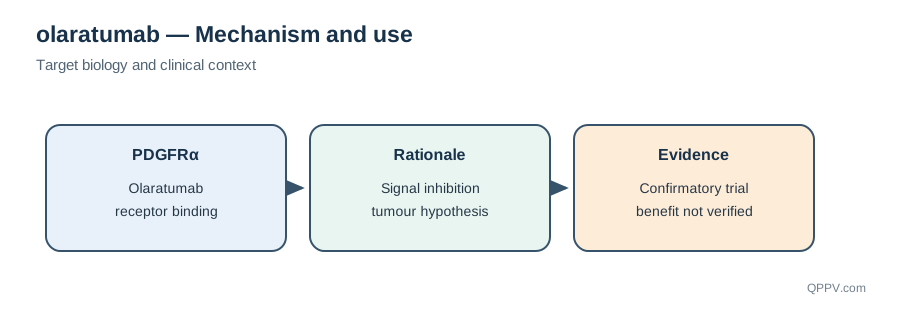
Figure 1. Olaratumab's receptor-targeting rationale was followed by a conditional authorisation and confirmatory evidence review; the sequence does not imply that mechanism predicts clinical benefit.
2.1 Historical combination
Olaratumab was administered with doxorubicin according to the historical label. For a case or aggregate review, preserve the doxorubicin exposure, cycle, cumulative anthracycline context, prior sarcoma therapy, histology and disease course. An adverse event or tumour outcome in a combination setting cannot be assigned to olaratumab by timing alone.
3. Safety profile and individual case assessment
3.1 Infusion and hypersensitivity reactions
The historical product information included infusion-related reactions and hypersensitivity as important precautions. Record infusion start and stop, rate, symptom onset, observations, interruption or rechallenge, premedication, intervention and outcome. Separate an event during infusion from fever, dyspnoea or hypotension arising later from infection, tumour burden, thromboembolism or doxorubicin toxicity.
3.2 Combination-specific context
Doxorubicin has established cardiac, marrow and mucosal toxicity; advanced malignancy also contributes to symptoms, organ dysfunction and deterioration. A report should preserve baseline cardiac status, cumulative anthracycline exposure where known, blood counts, concomitant treatments and investigations. Clinical event attribution should reflect the evidence and uncertainty.
For suspected lack of effectiveness, include tumour histology, measurable disease, response assessments, treatment dates, doxorubicin exposure and alternatives. One patient's progression neither establishes nor refutes the result of the confirmatory study.
4. Regulatory evidence as part of safety interpretation
The conditional authorisation period, the confirmatory study and the revocation are material to aggregate review and benefit–risk communication. Historical reports should be grouped and interpreted with their authorisation period, eligibility context, regimen and evidence base visible. The revocation was tied to the failure to confirm clinical benefit; it should not be attributed to an unrelated safety signal unless a source supports that separate claim.[3]
Follow-up should distinguish adverse reactions, lack of efficacy, disease progression and treatment discontinuation. For a suspected safety event, collect seriousness, diagnosis, investigations, management and outcome. For a suspected lack of effect, collect the assessment schedule and criteria, imaging or pathology reports when available, and the clinician's view.
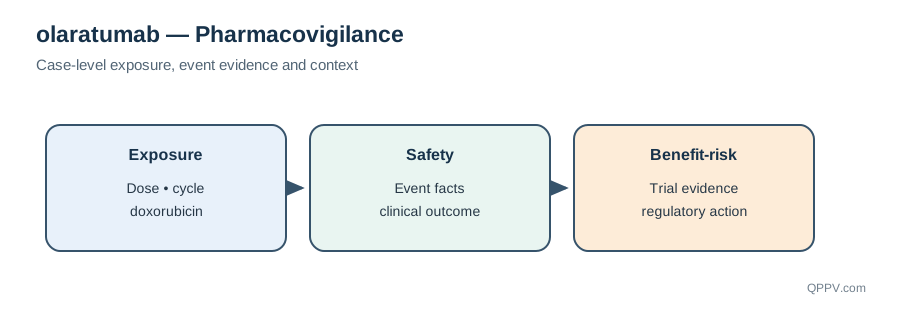
Figure 2. A complete historical assessment connects regimen exposure and patient outcomes to both case-level safety evidence and the regulatory evidence timeline.
5. Aggregate review and governance
Aggregate evaluation should not combine all olaratumab use without distinguishing doxorubicin exposure, histology, prior treatment, response assessment and authorisation period. The confirmatory trial evidence and the original study answer different evidentiary questions; the later trial informed whether the earlier observed benefit was confirmed.
Inspection-ready records should link the safety database, clinical-trial and literature evidence, product information version, signal or benefit–risk assessment and regulatory actions. Common weaknesses include describing the conditional authorisation as full confirmation, equating receptor blockade with proven survival benefit, presenting revocation as a patient-level causality finding, and omitting the anthracycline context.
6. Key takeaways
Olaratumab is an anti-PDGFRα antibody whose EU authorisation was conditional and required confirmatory evidence. The ANNOUNCE study did not show an overall survival advantage for olaratumab plus doxorubicin over doxorubicin alone, after which the authorisation was revoked. Pharmacovigilance accounts should preserve the evidence timeline and combination context, separating safety events, tumour progression and regulatory benefit–risk conclusions.
References
- European Medicines Agency. Lartruvo: European Public Assessment Report. Authorisation history and record that the authorisation was revoked. Accessed 24 September 2026.
- European Medicines Agency. Lartruvo: historical EU product information. Historical product information and authorised indication.
- European Medicines Agency. Lartruvo referral: EMA recommends withdrawal after ANNOUNCE. Confirmatory-study assessment and recommendation to revoke the authorisation. Accessed 24 September 2026.
- European Medicines Agency. GVP Module VI: Collection, management and submission of reports of suspected adverse reactions. Apply the current module and addenda.
- European Commission. Commission Implementing Regulation (EU) No 520/2012. EU pharmacovigilance requirements, as amended.
Regulatory Note
This article describes olaratumab's historical EU authorisation and regulatory lifecycle. Lartruvo's authorisation was revoked after the confirmatory study did not verify improved survival with doxorubicin. This educational reference does not replace the historical product information, applicable legislation, regulatory guidance or clinical judgement.