Omalizumab: Classification, History, Mechanism of Action, Safety and Pharmacovigilance
- Omalizumab: Classification, History, Mechanism of Action, Safety and Pharmacovigilance
- Multidimensional classification
- IgE biology and the therapeutic target
- Receptor down-regulation: the second layer of mechanism
- Development history and expansion across allergic disease
- Clinical use and indication-specific dosing logic
- Pharmacokinetics and biomarker interpretation
- Safety profile and pharmacovigilance implications
- Product identity, biosimilars and traceability
- Pharmacovigilance case assessment
- Signal detection and aggregate review
- Periodic benefit-risk evaluation
- Risk management and operational controls
- Potential failure modes
- Inspection and governance perspective
- Practical checklist
- Key Takeaways
- References
- Regulatory Note
Omalizumab is a humanised monoclonal antibody directed against immunoglobulin E (IgE), the antibody class that links allergen recognition to mast-cell and basophil activation. It does not bind an allergen, destroy mast cells or neutralise histamine directly. Instead, it binds circulating free IgE at a region required for interaction with the high-affinity IgE receptor FcεRI. This reduces the amount of free IgE available to occupy FcεRI and, over time, reduces FcεRI density on several effector-cell populations.
The mechanism produces an unusual pharmacovigilance paradox. Omalizumab is used to reduce allergic disease and, in some jurisdictions, to reduce allergic reactions after accidental food exposure, yet the medicine itself can cause serious hypersensitivity including anaphylaxis. A report of "anaphylaxis in a patient receiving omalizumab" therefore cannot be interpreted without establishing whether the event followed omalizumab administration, followed allergen exposure, represented uncontrolled underlying disease, or involved another medicine.
Multidimensional classification
| Classification axis | Omalizumab classification | Scientific or PV significance |
|---|---|---|
| Molecular class | Humanised IgG1 kappa monoclonal antibody | Biological product with Fc-containing structure and product-specific quality attributes |
| Target | Free human IgE | Reduces IgE available to bind high- and low-affinity IgE receptors |
| Binding consequence | Blocks IgE-FcεRI interaction | Reduces sensitisation of mast cells and basophils to allergen-triggered activation |
| Secondary pharmacodynamic effect | Down-regulation of FcεRI | Reduces receptor density as free IgE falls, modifying cell responsiveness over time |
| Functional class | Anti-IgE immunomodulator | Acts upstream of multiple allergic effector pathways rather than blocking one mediator |
| Therapeutic contexts | Allergic asthma, chronic spontaneous urticaria, chronic rhinosinusitis with nasal polyps; additional jurisdiction-specific uses | Disease mechanism and dosing logic differ between indications |
| Route | Subcutaneous injection | Administration setting, self-administration and device use become PV variables |
| Product category | Biological medicinal product with reference and biosimilar products in some regions | Brand, batch and presentation matter for traceability and switching investigations |
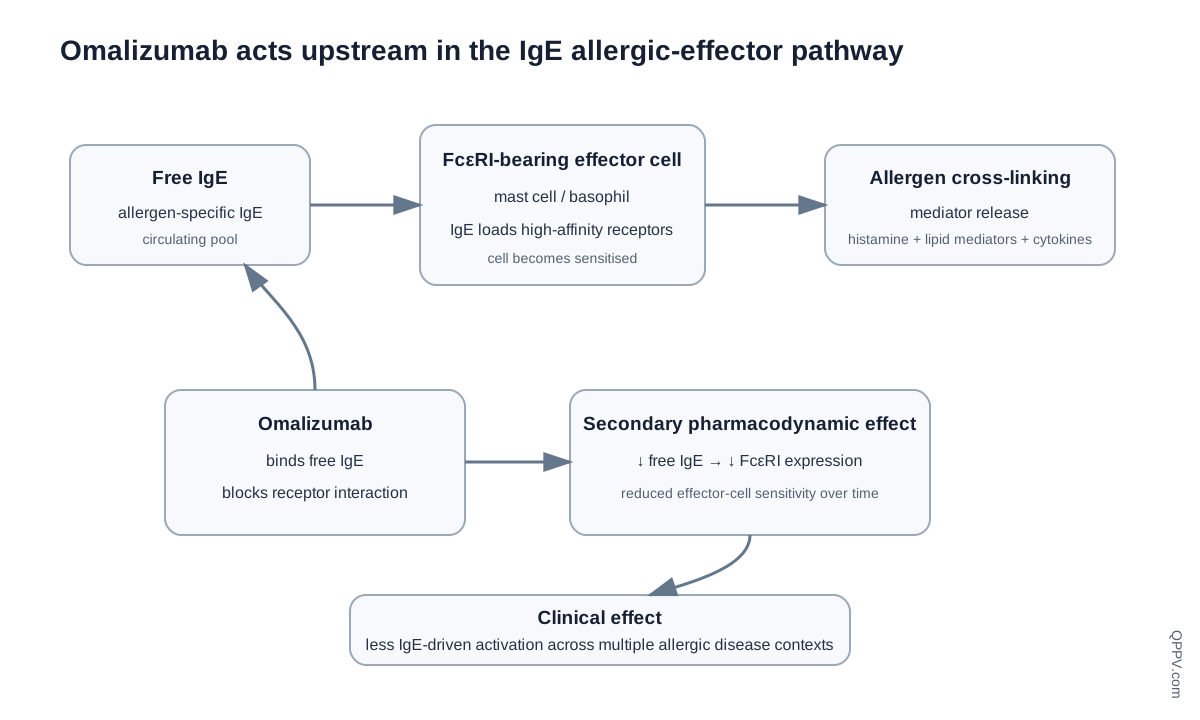
Figure 1. Omalizumab acts upstream in the IgE system by binding free IgE, reducing FcεRI occupancy and subsequently reducing FcεRI expression. The clinical effect is therefore broader than simple blockade of one downstream allergic mediator.
IgE biology and the therapeutic target
IgE is present at much lower circulating concentrations than IgG but has disproportionate biological potency because it binds FcεRI with high affinity. FcεRI is expressed prominently on mast cells and basophils and is also found on selected antigen-presenting cells. Once IgE occupies FcεRI, the cell is sensitised. Subsequent allergen exposure can cross-link receptor-bound IgE molecules, triggering signalling that releases histamine, leukotrienes, prostaglandins, proteases, cytokines and other mediators.
This creates a two-stage allergic system. Sensitisation occurs when allergen-specific IgE is produced and loaded onto effector cells. The immediate reaction occurs later when allergen cross-links that surface-bound IgE. Omalizumab primarily intervenes before the cross-linking step by lowering the pool of free IgE available to maintain receptor occupancy.
Why omalizumab does not usually trigger mast-cell degranulation by binding IgE
The therapeutic antibody recognises an epitope on the Cε3 region of IgE that overlaps functionally with receptor-binding sites. IgE already bound to FcεRI adopts a receptor-associated configuration in which the relevant binding relationship is altered. Omalizumab is therefore designed to bind free IgE rather than cross-link FcεRI-bound IgE on mast cells in the manner of an allergen.
This molecular selectivity is essential. An anti-IgE antibody that efficiently cross-linked receptor-bound IgE could theoretically provoke widespread mast-cell activation rather than suppress it.
Receptor down-regulation: the second layer of mechanism
Reducing free IgE has a downstream consequence: FcεRI surface expression falls on basophils, mast cells and some dendritic-cell populations. IgE itself stabilises FcεRI at the cell surface. When free IgE concentrations decline, receptor expression is no longer maintained at the same level.
This means omalizumab changes both ligand availability and receptor density. The first effect can occur relatively quickly; receptor down-regulation evolves over time and differs between cell types and tissues. Basophil receptor density may fall faster than tissue mast-cell receptor density. Clinical response therefore cannot be reduced to a single serum concentration at one time point.
The mechanism also explains an important laboratory issue: total IgE measured by routine assays can rise during treatment because circulating omalizumab-IgE complexes contribute to measured total IgE and have altered clearance. Free IgE, not total IgE during treatment, is the pharmacologically relevant pool, and pretreatment IgE values rather than on-treatment total IgE are used for dose determination in indications where dosing depends on IgE.
Development history and expansion across allergic disease
Omalizumab was developed as an upstream anti-allergic strategy: rather than suppressing airway inflammation broadly or antagonising a single mediator after release, it aimed to reduce the IgE signal that prepares effector cells for allergen-driven activation. Clinical development first established benefit in allergic asthma, leading to early-2000s authorisations.
The therapeutic concept subsequently broadened. Chronic spontaneous urticaria often lacks an identifiable external allergen and has heterogeneous autoimmune and autoallergic mechanisms, yet anti-IgE therapy showed substantial efficacy. This demonstrated that omalizumab's usefulness could extend beyond classical inhaled-allergen disease even when the exact contribution of IgE to pathogenesis was less straightforward.
Further development established benefit in chronic rhinosinusitis with nasal polyps. In the United States, omalizumab was additionally approved in February 2024 for IgE-mediated food allergy in certain adults and children to reduce allergic reactions, including the risk of anaphylaxis, after accidental exposure. This use does not replace food avoidance and is not emergency treatment for an ongoing allergic reaction.
The regulatory history therefore illustrates a broader principle: one upstream immunological mechanism can be clinically useful across diseases that share parts of the IgE-effector network but differ substantially in phenotype, dosing logic and outcome measures.
Clinical use and indication-specific dosing logic
Omalizumab should not be understood as one fixed dose used for all allergic disease. In allergic asthma and chronic rhinosinusitis with nasal polyps, authorised dosing is determined from pretreatment total IgE and body weight within product-specific dosing tables. Chronic spontaneous urticaria uses a different dosing concept that is not based on body weight or pretreatment IgE. Jurisdiction-specific food-allergy dosing also uses pretreatment IgE and body weight. These differences matter in pharmacovigilance because an apparent "dose error" cannot be assessed without the indication and the correct dosing framework.
Allergic asthma
In severe allergic asthma, omalizumab is an add-on therapy for patients with convincing IgE-mediated disease who remain inadequately controlled despite appropriate background treatment. The clinically relevant outcome is not simply a lower IgE concentration but reduction in exacerbations and improvement in control within the authorised population.
Asthma itself creates important confounding. Dyspnoea, wheeze, chest tightness, emergency treatment and even anaphylaxis-like respiratory symptoms can occur because of uncontrolled asthma, infection, allergen exposure or another drug. A post-injection respiratory event therefore requires careful chronology and objective assessment rather than automatic attribution.
Chronic spontaneous urticaria
Chronic spontaneous urticaria (CSU) is characterised by recurrent wheals, angioedema or both without a reproducible external trigger. IgE-related mechanisms may include autoallergic IgE and interactions with autoimmune pathways, but no single mechanism explains all patients or all response patterns.
This uncertainty is pedagogically important. Omalizumab efficacy in CSU should not be used as proof that every case is a simple IgE-allergen disease. Pharmacovigilance assessment should preserve disease phenotype, baseline urticaria activity, angioedema history and response to prior antihistamine therapy because spontaneous fluctuations can complicate dechallenge and rechallenge interpretation.
Chronic rhinosinusitis with nasal polyps
In chronic rhinosinusitis with nasal polyps, anti-IgE therapy is used as add-on treatment in selected severe disease. Here, background intranasal corticosteroids, prior surgery, asthma comorbidity and other type-2 inflammatory disease can influence both response and adverse-event interpretation.
IgE-mediated food allergy in jurisdictions where authorised
In the United States, omalizumab is authorised to reduce allergic reactions, including the risk of anaphylaxis, after accidental exposure to one or more foods in selected patients. It is not an emergency rescue treatment and does not eliminate the requirement for allergen avoidance.
This creates a particularly important case-processing distinction. If a patient receiving omalizumab develops an allergic reaction after accidental food exposure, the case may primarily represent breakthrough disease or incomplete protection rather than an adverse reaction caused by omalizumab. Conversely, an event beginning after the injection without allergen exposure may support treatment-related hypersensitivity. The narrative must therefore capture both injection timing and allergen-exposure timing.
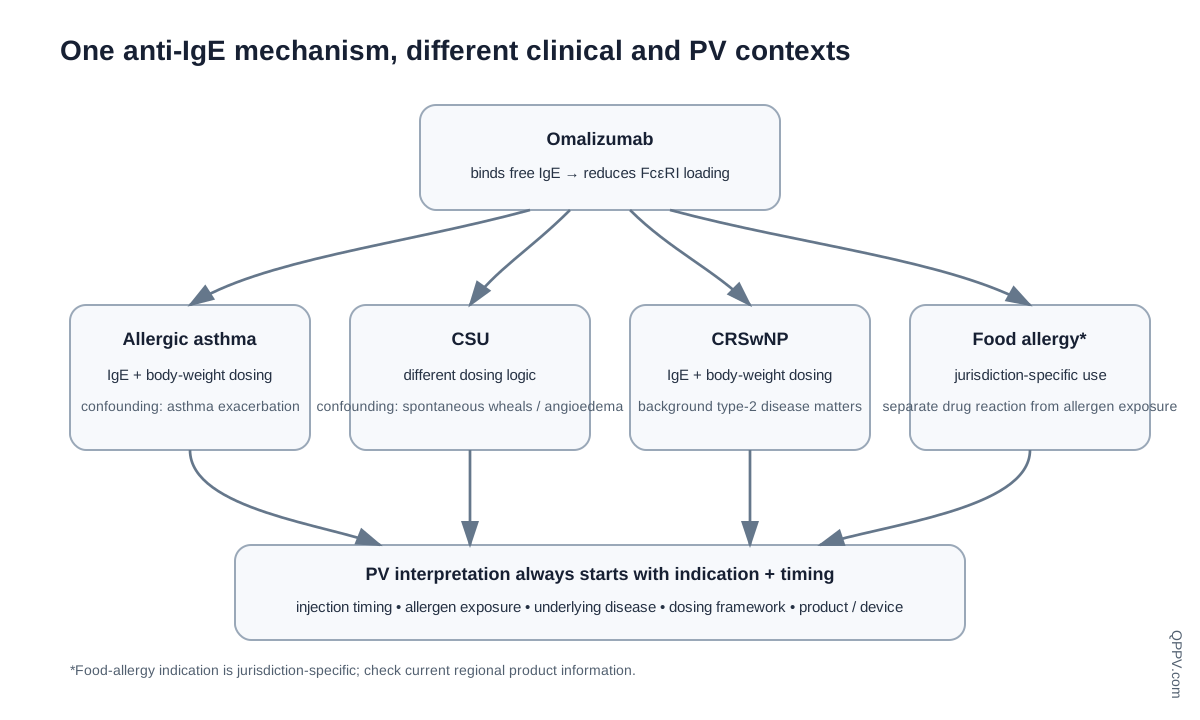
Figure 2. Omalizumab uses one molecular mechanism across several diseases, but dosing logic and the interpretation of allergic events differ by indication. Pharmacovigilance therefore begins with the indication and exposure context.
Pharmacokinetics and biomarker interpretation
Following subcutaneous administration, omalizumab is absorbed gradually and, like other IgG antibodies, is eliminated largely through catabolic pathways. It forms complexes with IgE that differ in clearance from free IgE. The pharmacokinetic and pharmacodynamic system is therefore partly target-mediated.
Total IgE rises while free IgE falls
One of the most important concepts for non-specialist readers is that total IgE can increase after treatment even though omalizumab is successfully suppressing IgE-mediated biology. Routine total-IgE assays detect both free IgE and IgE within circulating omalizumab-IgE complexes. These complexes persist longer than unbound IgE, so measured total IgE may rise.
This does not mean omalizumab has caused more bioactive free IgE. Free IgE falls. Consequently, on-treatment total IgE should not be interpreted as a simple measure of pharmacological failure or used casually to recalculate dosing where product information specifies pretreatment values.
Safety profile and pharmacovigilance implications
Anaphylaxis and serious hypersensitivity
Anaphylaxis is the defining serious acute risk. It can occur after early doses but delayed occurrence after prolonged treatment has also been reported. Manifestations may include bronchospasm, hypotension, syncope, urticaria and angioedema involving the throat or tongue.
A high-quality anaphylaxis case should collect:
- exact time of injection and symptom onset;
- administration number and whether there had been a treatment gap;
- setting of administration and observation period;
- respiratory, cardiovascular, cutaneous and gastrointestinal manifestations;
- objective vital signs and oxygenation;
- epinephrine and other treatment given;
- known allergen exposure around the event;
- asthma status before the injection;
- previous anaphylaxis unrelated to omalizumab;
- outcome, hospitalisation and any rechallenge.
The central causal question is whether the event followed drug exposure with a plausible latency and whether a stronger alternative trigger exists. Because patients receiving omalizumab are intrinsically enriched for allergic disease, background anaphylaxis risk is not negligible.
Self-administration and risk selection
Prefilled presentations may be suitable for self-administration in selected patients after appropriate training and risk assessment according to regional product information. This changes the pharmacovigilance environment. Events may occur away from a healthcare setting, administration technique may vary, and the initial description may lack objective observations.
A case involving self-administration should capture who administered the dose, device or presentation, injection site, training status where relevant, administration error, availability and use of emergency treatment, and whether the event occurred during or after injection.
Serum-sickness-like reactions
A constellation of fever, arthralgia, rash and lymphadenopathy resembling serum sickness has been reported. Such events usually require a broader differential diagnosis that includes infection, autoimmune disease and the underlying allergic condition.
Case assessment should preserve latency, recurrence after repeat dosing, complement or immune-complex investigations if performed, inflammatory markers, rash description, joint involvement and response to discontinuation or treatment.
Eosinophilic conditions and vasculitic syndromes
Patients with asthma may develop systemic eosinophilic conditions, sometimes in the setting of corticosteroid reduction. The relationship can be difficult to interpret because improved asthma control may permit reduction of corticosteroids that had previously suppressed an evolving eosinophilic disorder.
For cases involving eosinophilia, vasculitic rash, neuropathy, pulmonary infiltrates or cardiac complications, collect corticosteroid taper chronology, eosinophil counts before and after treatment, organ manifestations, ANCA testing if relevant, imaging and specialist diagnosis. The event should not be attributed solely to omalizumab without considering unmasking of underlying disease.
Malignancy observations and uncertainty
An imbalance in malignancies was observed in early clinical development, while later observational and pooled analyses have not established a clear causal conclusion. This is a useful example of how pharmacovigilance should handle uncertainty: preserve the historical safety question, continue appropriate surveillance, but do not present an unproven causal relationship as established fact.
Cardiovascular and cerebrovascular observations
Post-authorisation observational data raised questions about cardiovascular and cerebrovascular events, while pooled randomised-trial analyses were limited by smaller event numbers and shorter follow-up. Aggregate review should therefore consider the totality of evidence and baseline cardiovascular risk rather than converting one observational association into a definitive product effect.
Injection-site reactions and other common events
Injection-site pain, swelling, erythema and pruritus are expected local events. Headache, arthralgia and indication-specific common adverse events also occur. Their PV significance increases when severity, unusual phenotype, recurrence, product switching or device issues suggest a pattern beyond expected local tolerability.
Product identity, biosimilars and traceability
Omalizumab now exists as a reference biological product and authorised biosimilar products in some regions. Biosimilarity means high similarity with no clinically meaningful differences in approved conditions of use; it does not remove the need for product traceability.
For hypersensitivity, immunogenicity, administration error, device complaint or quality issue, reports should seek the exact product name, batch/lot number, presentation, route, device, storage history and whether a switch occurred. An active-substance-only record may be adequate for some aggregate analyses but is insufficient for product-specific investigation.
Pharmacovigilance case assessment
Omalizumab case assessment is strongest when it begins with the underlying allergic disease and reconstructs two timelines in parallel: the timeline of omalizumab administration and the timeline of allergen exposure or disease activity. This is especially important for anaphylaxis, asthma deterioration, urticaria and food-allergy breakthrough events because the same clinical phenotype may represent treatment-related hypersensitivity, uncontrolled disease or an external allergen trigger.
Event-specific follow-up priorities
| Event | High-value follow-up information |
|---|---|
| Anaphylaxis / severe hypersensitivity | Injection time, onset, administration number, treatment gap, allergen exposure, asthma status, objective signs, epinephrine, hospitalisation, prior anaphylaxis, rechallenge |
| Asthma exacerbation | Baseline control, trigger, infection, allergen exposure, adherence to background therapy, timing from injection, rescue treatment, hospitalisation |
| Food-allergy breakthrough reaction | Food involved, amount/exposure circumstances, injection timing, adherence, emergency treatment, severity, co-factors such as exercise or illness |
| Eosinophilic/vasculitic syndrome | Eosinophil trend, corticosteroid taper, pulmonary/neurologic/cardiac findings, rash, ANCA, imaging, specialist diagnosis |
| Serum-sickness-like reaction | Fever, rash, arthralgia, lymphadenopathy, latency, recurrence, infection work-up, complement studies if available |
| Injection-site reaction | Product/presentation, site, technique, severity, recurrence, switch or device issue |
| Product-quality complaint | Exact product, batch, device, storage, preparation, administration circumstances |
Signal detection and aggregate review
Signal detection should stratify by indication because allergic asthma, CSU, CRSwNP and food allergy differ in baseline anaphylaxis risk, age distribution, dosing logic and outcome measures. A cluster of "allergic reactions" cannot be interpreted without knowing whether events followed injection or external allergen exposure.
Background disease as confounding structure
Omalizumab populations are selected precisely because they have allergic or mast-cell-related disease. This makes confounding by indication unusually important. Spontaneous urticaria, angioedema, wheeze and anaphylaxis-like episodes may occur independently of treatment. Aggregate evaluation should therefore examine latency from injection, recurrence on rechallenge, trigger documentation and comparison with pre-treatment disease phenotype.
Known risk versus changed pattern
A known risk such as anaphylaxis may still generate a signal if its timing, severity, frequency, route association or patient risk factors appear to change. Self-administration, new device presentations or switching between reference and biosimilar products can create new operational questions even when the underlying event term is already labelled.
Periodic benefit-risk evaluation
Periodic safety evaluation should connect cumulative exposure and indication to the evolving evidence for anaphylaxis and hypersensitivity, serum-sickness-like reactions, eosinophilic/vasculitic conditions, cardiovascular and cerebrovascular observations, malignancy surveillance, injection-site and device-related events, medication errors and product-quality complaints.
The benefit side must also remain indication-specific. Preventing severe asthma exacerbations, controlling CSU symptoms, improving CRSwNP and reducing accidental food-allergy reactions are different clinical benefits and should not be collapsed into one generic measure of "allergy control".
Risk management and operational controls
Current regional product information governs patient selection, dosing, administration, self-administration criteria and management of hypersensitivity. Pharmacovigilance operations should support those requirements while distinguishing local regulatory instructions from globally recommended practice.
Useful controls include targeted anaphylaxis follow-up, explicit capture of allergen exposure, structured fields for pretreatment IgE and body weight where dosing depends on them, indication-aware dose validation, training and device fields for self-administration, and product/batch capture for biological traceability.
Potential failure modes
The following are illustrative scenarios rather than published inspection findings:
- An anaphylaxis case is attributed to omalizumab without documenting that the patient ate a known allergen shortly before symptoms.
- A food-allergy breakthrough event is coded as a drug adverse reaction even though chronology supports accidental food exposure with incomplete protection rather than treatment-induced allergy.
- An apparent overdose is flagged using the asthma dosing table even though the patient was treated for CSU under a different dosing framework.
- On-treatment total IgE is interpreted as increased biologically active IgE and used incorrectly to infer treatment failure.
- Eosinophilic vasculitis is attributed solely to omalizumab without collecting the corticosteroid taper that may have unmasked the disease.
- A serious hypersensitivity cluster cannot be traced to a specific product or batch because biosimilar switching was not captured.
- Self-administration events omit device and technique information, preventing evaluation of medication error or product malfunction.
Inspection and governance perspective
An inspector assessing omalizumab pharmacovigilance would be interested in whether the system can distinguish disease events from treatment-related hypersensitivity, apply indication-specific dosing logic and maintain product traceability. Evidence could include targeted follow-up forms, dose-validation rules, self-administration case conventions, signal analyses stratified by indication, product dictionaries capable of distinguishing reference and biosimilar products, and documented medical-review criteria for anaphylaxis.
Effectiveness is shown when those controls influence real case quality. A procedure that instructs staff to collect "allergy history" is insufficient if anaphylaxis cases still lack allergen exposure, injection timing or prior reactions.
Practical checklist
For an omalizumab case or aggregate review, confirm:
- the exact indication and authorised dosing framework;
- pretreatment total IgE and body weight when relevant to dosing;
- exact product, presentation, batch and self- versus healthcare-provider administration;
- injection date/time and event onset;
- potential allergen exposure and underlying disease activity;
- objective criteria supporting anaphylaxis or other serious hypersensitivity;
- corticosteroid taper and eosinophil history for systemic eosinophilic events;
- device, technique and storage information for administration or quality complaints;
- clinically meaningful dechallenge and rechallenge;
- whether the event represents a known risk, breakthrough disease, dosing/medication error, product issue or a potentially new pattern.
Key Takeaways
Omalizumab is a humanised IgG1 anti-IgE antibody that binds free IgE, prevents FcεRI engagement and secondarily down-regulates FcεRI expression on allergic effector cells. It therefore acts upstream of mast-cell and basophil activation rather than blocking a single mediator after release.
Its pharmacovigilance profile is defined by the coexistence of treated allergic disease and treatment-related hypersensitivity risk. Anaphylaxis requires precise timing and allergen-exposure assessment; total IgE during treatment must be interpreted mechanistically; dosing logic varies by indication; and biosimilar or device-related cases require exact product traceability. The quality of PV assessment depends on distinguishing what the medicine caused from what the underlying allergic disease would have caused anyway.
References
- European Medicines Agency. Omalizumab (Xolair): EPAR and current product information. Product information updated 8 June 2026. https://www.ema.europa.eu/en/medicines/human/EPAR/xolair
- U.S. Food and Drug Administration. FDA approves omalizumab for IgE-mediated food allergy. 16 February 2024. https://www.fda.gov/news-events/press-announcements/fda-approves-first-medication-help-reduce-allergic-reactions-multiple-foods-after-accidental
- U.S. Food and Drug Administration. Omalizumab product labelling / biosimilar class safety information. Current labelling, 2026. https://www.accessdata.fda.gov/drugsatfda_docs/label/2026/761399s004lbl.pdf
- Maurer M, Rosén K, Hsieh HJ, et al. Omalizumab for the treatment of chronic idiopathic or spontaneous urticaria. N Engl J Med. 2013;368:924-935. doi:10.1056/NEJMoa1215372.
- Prussin C, Griffith DT, Boesel KM, et al. Omalizumab treatment downregulates dendritic cell FcεRI expression. J Allergy Clin Immunol. 2003;112:1147-1154. doi:10.1016/j.jaci.2003.10.003.
- MacGlashan DW Jr, Bochner BS, Adelman DC, et al. Down-regulation of FcεRI expression on human basophils during in vivo treatment of atopic patients with anti-IgE antibody. J Immunol. 1997;158:1438-1445. PMID:9013989.
- Davies AM, Allan EG, Keeble AH, et al. Allosteric mechanism of action of the therapeutic anti-IgE antibody omalizumab. J Biol Chem. 2017;292:9975-9987. doi:10.1074/jbc.M117.776476.
Regulatory Note
Authorised indications, age ranges, dosing tables, self-administration criteria, warnings and risk-minimisation instructions vary by jurisdiction and may change. Food-allergy use described in this article is specifically identified as a United States authorisation and should not be assumed to apply in the European Union or other regions. Regulatory statements were checked against current EMA and FDA sources available in September 2026. This article does not replace current regional product information, and operational recommendations are pharmacovigilance practice unless explicitly identified as regulatory requirements.