Ongericimab: Classification, Mechanism, Evidence and Pharmacovigilance
Ongericimab is a fully human IgG1 monoclonal antibody targeting proprotein convertase subtilisin/kexin type 9 (PCSK9). China’s NMPA authorised it in February 2025 with statin therapy, with or without ezetimibe, for adults with non-familial primary hypercholesterolaemia or mixed dyslipidaemia who remain above their recommended low-density lipoprotein cholesterol (LDL-C) target despite moderate- or high-dose statin treatment. [1]
Ongericimab is a distinct active substance from other anti-PCSK9 antibodies. A shared target does not make two molecules biosimilars or make their labels interchangeable.
Classification and lipid biology
PCSK9 binds the LDL receptor (LDLR) on hepatocytes and promotes receptor degradation. LDLR removes circulating LDL particles. By binding PCSK9, ongericimab prevents PCSK9-mediated receptor degradation, leaving more LDLR available at the cell surface to clear LDL-C. This is the mechanism described in the NMPA notice. [1]
Ongericimab is a biologic antibody, not a small-molecule lipid-lowering drug. In the China indication it complements background lipid-lowering therapy; the NMPA specifies use with statin alone or statin plus ezetimibe. [1]
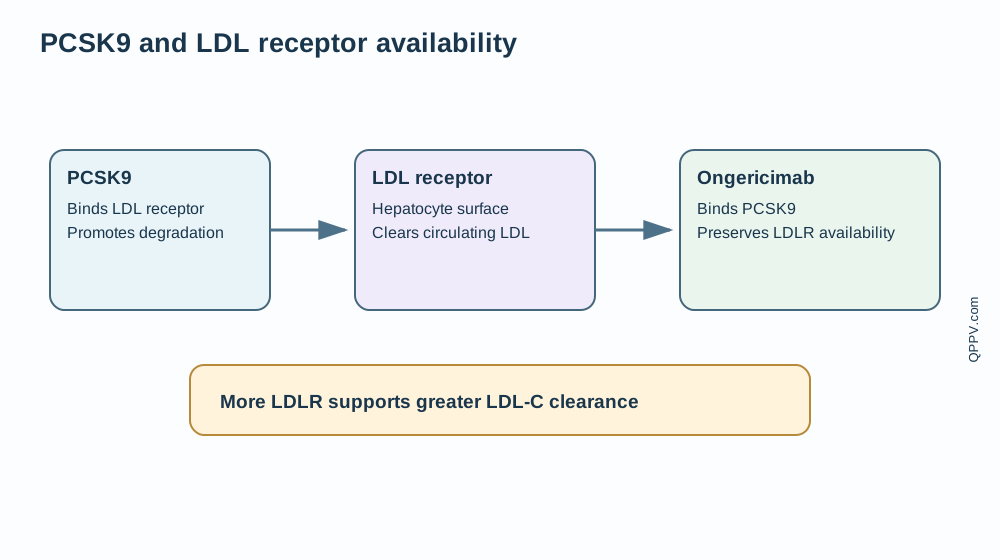
Figure 1. Simplified hepatic LDL-receptor pathway; not every lipid transport mechanism is shown.
Authorised population and boundaries
The China indication is for adults with non-familial primary hypercholesterolaemia or mixed dyslipidaemia who do not achieve the recommended LDL-C target after moderate- or high-dose statins. It specifies combination use with statins, alone or with ezetimibe. [1]
Do not extrapolate this wording to familial hypercholesterolaemia, statin-intolerant patients, monotherapy or cardiovascular event reduction unless current local product information supports the claim. Trials in other populations may inform development but do not expand the authorisation. A reduction in LDL-C is a biomarker outcome, not itself evidence of fewer product-attributable cardiovascular events.
Phase 3 evidence
A randomised, double-blind phase 3 study enrolled 806 Chinese adults with primary hypercholesterolaemia or mixed dyslipidaemia who remained above LDL-C targets on stable, optimised lipid-lowering therapy. Participants received ongericimab 150 mg every two weeks or 300 mg every four weeks, with matching placebo groups, for 52 weeks. The primary endpoint was percentage change in LDL-C from baseline to week 24. [2]
At week 24, placebo-adjusted least-squares mean differences were −67.7% for 150 mg every two weeks and −61.2% for 300 mg every four weeks. The reductions were sustained through week 52, and overall adverse-event incidence was similar between groups. [2] These findings concern LDL-C in the studied population; the trial did not establish a product-specific cardiovascular event reduction.
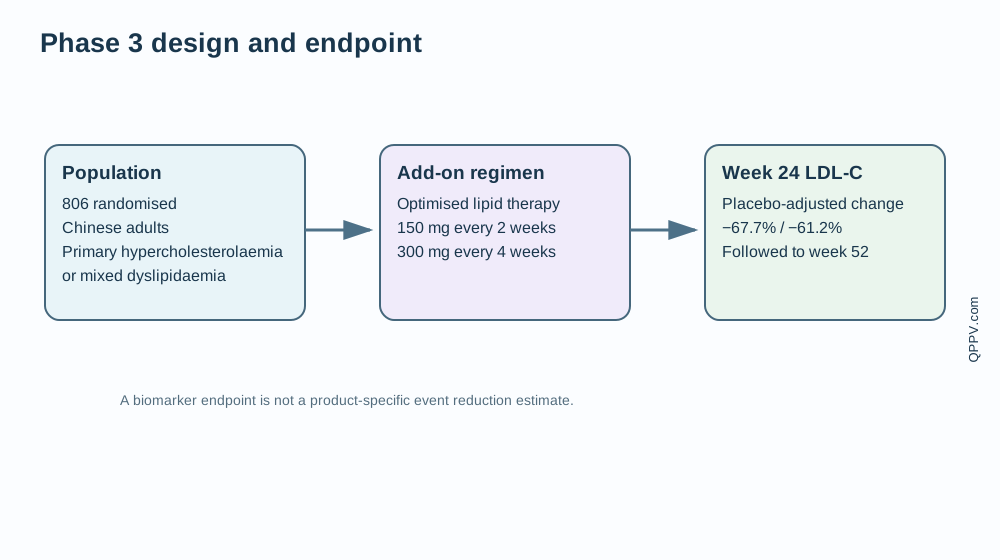
Figure 2. The 52-week study evaluated LDL-C change at week 24; it was not a cardiovascular-outcomes trial.
Interpretation should account for background treatment, eligibility, baseline risk, adherence and missing data. Do not describe a placebo-adjusted biomarker estimate as a clinical event effect.
Safety and case assessment
The pivotal publication reported similar overall adverse-event incidence, but this cannot exclude rare or delayed risks. Use the current Chinese product information for complete precautions and known reactions; an NMPA approval notice does not substitute for the full label. [1,2]
For injection-site symptoms or hypersensitivity, record dose, route, onset, treatment and outcome. A muscle complaint in a patient also using a statin may have multiple plausible causes; document statin dose, changes, laboratory values and clinical evaluation rather than assigning causality automatically.
For suspected lack of efficacy, capture baseline and follow-up LDL-C with dates, background therapy, administration history, adherence and possible secondary causes of dyslipidaemia. Keep a lipid-target report distinct from a cardiovascular event report.
Operational pharmacovigilance
Record exact substance, dose interval, indication, batch if known, background lipid medicines, baseline disorder and event chronology. For cardiovascular events, include event type, diagnostic evidence, onset, risk factors, history, concomitant treatment and outcome.
Aggregate review can examine injection-related events, hypersensitivity, muscle complaints, laboratory signals, medication errors and inadequate lipid lowering. Stratify by schedule and background therapy. Spontaneous-report counts do not provide incidence, and reports of low LDL-C do not establish prevention of myocardial infarction or stroke.
Inspection perspective
For “high cholesterol despite treatment,” the audit trail should show verified values, dose and administration history, concomitant therapy, adherence, possible secondary causes and follow-up. Reconcile device complaints and missed doses with adverse-event and product-quality pathways so a delivery problem is not automatically classified as pharmacological failure.
Key takeaways
- Ongericimab is a fully human anti-PCSK9 IgG1 antibody that preserves LDL-receptor availability.
- China’s 2025 indication is add-on therapy for specified adults above LDL-C target despite moderate- or high-dose statins.
- Phase 3 evidence showed placebo-adjusted LDL-C change sustained through 52 weeks.
- The trial endpoint was a biomarker, not a product-specific cardiovascular outcome.
- Case review should document values, adherence, treatment exposure and alternative causes.
References
- China National Medical Products Administration. Ongericimab Injection Approved for Marketing by China NMPA. 19 February 2025. https://english.nmpa.gov.cn/2025-02/19/c_1073652.htm
- Zhang Y, et al. Efficacy and safety of ongericimab in Chinese patients with primary hypercholesterolemia and mixed dyslipidemia. J Am Heart Assoc. 2024. PMID: 38818934. https://pubmed.ncbi.nlm.nih.gov/38818934/
- ClinicalTrials.gov. Ongericimab phase 3 study, NCT04781114. https://clinicaltrials.gov/study/NCT04781114
Regulatory Note
Regulatory status and evidence were checked on 25 September 2026. The indication described is the China NMPA indication in the cited notice. Product information and reporting obligations vary by jurisdiction. This article is educational, not a substitute for clinical assessment.