Pemivibart: Classification, Mechanism and Pharmacovigilance
Pemivibart is a preventive SARS-CoV-2 antibody whose use is governed by an Emergency Use Authorization (EUA), defined patient eligibility and the susceptibility of circulating viral variants. Its regulatory status and evidence must not be described as if it were a routinely FDA-approved treatment.
1. Identity and classification
Pemivibart is a recombinant human IgG1-lambda monoclonal antibody that targets the receptor-binding domain (RBD) of the SARS-CoV-2 spike protein. It belongs to the virus-neutralising antibody class. By binding the viral surface protein, it is intended to prevent viral attachment and entry; it does not stimulate the recipient to generate their own vaccine response.[1]
The current U.S. EUA covers pre-exposure prophylaxis for adults and adolescents aged 12 years and older who weigh at least 40 kg, have moderate-to-severe immune compromise, and are unlikely to mount an adequate response to COVID-19 vaccination. The individual must not be currently infected or have a known recent exposure.[1] Eligibility is narrower than “immunocompromised” in a general sense and must be checked against the current FDA fact sheet.
2. Target biology and variant dependence
Pemivibart binds the SARS-CoV-2 spike RBD, the region used to engage the human ACE2 receptor. Neutralisation depends on the antibody recognising a sufficiently conserved target. Mutations can reduce binding or neutralising activity, so evidence from one variant cannot be assumed to apply to a later lineage.[1]
The FDA fact sheet makes authorization conditional: use is permitted only when the combined national frequency of variants with substantially reduced susceptibility is at or below 90%, based on available susceptibility and surveillance information.[1] This is a live regulatory condition, not a fixed clinical characteristic of the molecule. The fact sheet also states that pemivibart is not a substitute for recommended vaccination and is not authorised for treatment or post-exposure prophylaxis.
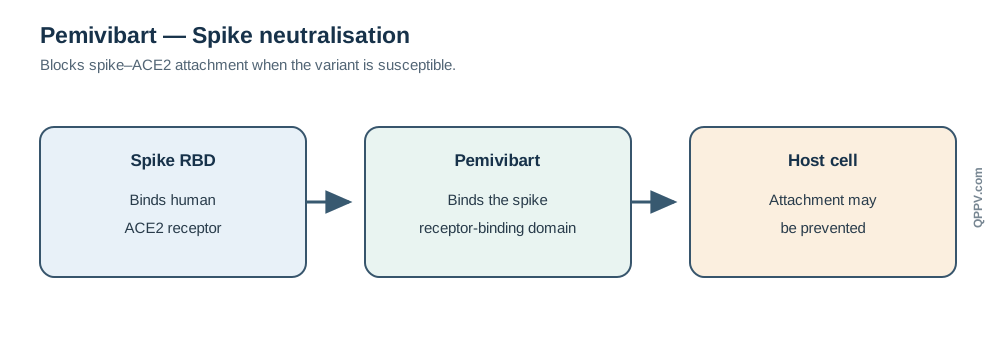
Figure 1. Pemivibart blocks spike–ACE2 attachment only when the circulating virus remains sufficiently susceptible.
3. EUA use and evidence
The authorised regimen is 4,500 mg by intravenous infusion, repeated every three months. The EUA does not make pemivibart FDA-approved. It applies only to the prophylactic use and population set out in the current fact sheet.[1]
The supporting CANOPY programme included two cohorts: an open-label, single-arm cohort of adults with moderate-to-severe immune compromise and a randomised placebo-controlled cohort without that degree of immune compromise. The EUA fact sheet states that its primary supporting data came from the immunocompromised cohort. The regulatory rationale used immunobridging: neutralising antibody titres were compared with titres associated with efficacy for earlier SARS-CoV-2 antibodies, including data generated before Omicron-lineage variants.[1,2]
This evidence supports a reasonable belief in potential benefit under the EUA; it is not a direct estimate of current-variant clinical effectiveness from a large placebo-controlled trial in the authorised immunocompromised population. The FDA fact sheet states that potential benefit may vary with variant susceptibility and national variant frequency.[1] A case report of infection after exposure should therefore preserve date, location, circulating lineage where available, and the variant-susceptibility conditions in force at that time.
4. Safety profile and administration
The FDA fact sheet carries a boxed warning for anaphylaxis. Anaphylaxis occurred in 4 of 623 participants (0.6%) in a clinical trial, during first or second infusion; two reactions were described as life-threatening. Administration must occur where staff can treat anaphylaxis, with clinical monitoring during infusion and for at least two hours afterward. A patient with anaphylaxis or a severe systemic reaction should not receive further pemivibart under the fact sheet.[1]
Infusion-related reactions and hypersensitivity are additional concerns. Record infusion rate, onset relative to infusion, symptoms, treatment and whether the infusion was stopped or restarted. Do not merge anaphylaxis, other hypersensitivity and non-allergic infusion reactions into a single undifferentiated event term.
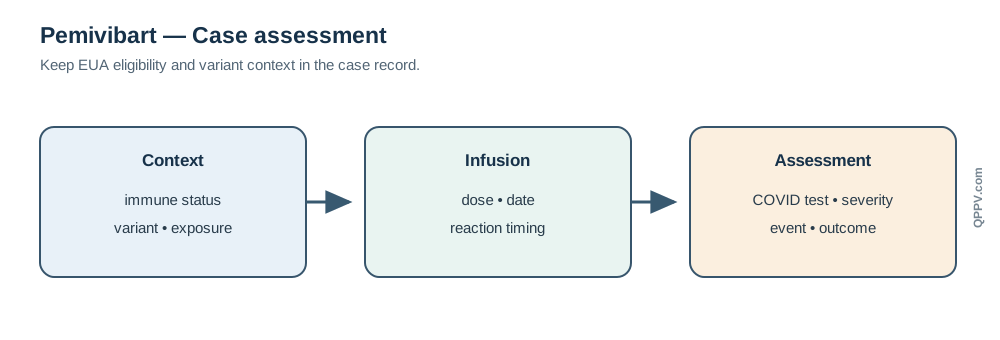
Figure 2. Case review joins eligibility and variant context to infusion chronology, event phenotype and outcome.
5. Pharmacovigilance case assessment
For a suspected adverse reaction, capture the reason for EUA eligibility, vaccination history, immune-compromising condition or treatment, dose and infusion details, event chronology, acute management and outcome. For a breakthrough COVID-19 case, record diagnostic method, symptom onset, severity, treatment, hospitalisation, prior infection or recent exposure, time since the last dose and viral lineage if available.
The EUA’s variant-susceptibility threshold makes date and place clinically important evidence. Reconstruct the relevant national variant-frequency information and FDA authorization status at the time of administration. A positive test after prophylaxis does not, by itself, prove that neutralisation failed: exposure intensity, timing, host response, dose interval and viral susceptibility may all matter.
When assessing benefit or lack of effect, separate individual case facts from population-level immunobridging. Neutralising antibody titres and laboratory susceptibility are evidence about biological activity, but do not establish a patient’s protection with certainty. Preserve uncertainty explicitly.
6. Regulatory status and practical safeguards
As of the FDA fact sheet checked on 25 September 2026, pemivibart remained authorised under an EUA for specified pre-exposure prophylaxis use and was not FDA-approved for any use. Treatment and post-exposure use are outside the authorised scope. The fact sheet’s variant threshold can change whether the EUA supports use as surveillance changes; verify the current fact sheet before administration or regulatory interpretation.[1] CDC guidance published in February 2026 also describes pemivibart as an option for eligible moderately or severely immunocompromised people.[3]
For case assessment, retain the version of the EUA fact sheet and variant information consulted. This allows reviewers to distinguish a reaction to an administered product from questions about whether use met the authorization conditions and whether the circulating virus was susceptible.
Key takeaways
- Pemivibart is an anti-spike neutralising antibody under an FDA EUA, not a fully FDA-approved medicine.
- Its current U.S. authorised role is pre-exposure prophylaxis in a defined immunocompromised population; it is not treatment or post-exposure prophylaxis.
- The EUA is explicitly conditional on circulating-variant susceptibility.
- Anaphylaxis is a boxed warning; record infusion chronology and post-infusion observation.
- Breakthrough infection assessment needs exposure timing, variant context and the authorization conditions in effect.
References
- U.S. Food and Drug Administration. PEMGARDA Emergency Use Authorization: Fact Sheet for Healthcare Providers. Includes authorization limitations, anaphylaxis warning, immunobridging rationale and variant-susceptibility conditions; fact sheet major change dated September 2025.
- U.S. Food and Drug Administration. Scientific review documents supporting the PEMGARDA EUA.
- U.S. Centers for Disease Control and Prevention. COVID-19 Treatment Clinical Care for Outpatients. Updated 5 February 2026.
- Schmidt P, et al. Immunobridging for Pemivibart, a Monoclonal Antibody for Prevention of Covid-19. New England Journal of Medicine. 2024.
- ClinicalTrials.gov. CANOPY study (NCT06039449).
Regulatory Note
This article describes the U.S. EUA and publicly available CDC guidance checked on 25 September 2026. An EUA is not FDA approval. This educational reference is not a treatment recommendation or a substitute for the current FDA fact sheet, applicable law or clinical judgement.