Pertuzumab: Classification, History, Mechanism of Action, Safety and Pharmacovigilance
- Pertuzumab: Classification, History, Mechanism of Action, Safety and Pharmacovigilance
- Multidimensional classification
- Development history and the dimerisation concept
- Mechanism of action in detail
- Clinical use and treatment-context map
- Pharmacokinetics and exposure
- Safety profile through mechanism and regimen
- Product identity, formulations and medication-error risk
- Pharmacovigilance case assessment
- Signal detection and aggregate review
- Periodic benefit-risk evaluation
- Risk management and operational controls
- Potential failure modes
- Inspection and governance perspective
- Practical checklist
- Key Takeaways
- References
- Regulatory Note
Pertuzumab is a humanised monoclonal antibody directed against human epidermal growth factor receptor 2 (HER2). Its importance is easiest to understand by placing it beside, but not collapsing it into, trastuzumab. Both antibodies bind HER2, yet they recognise different extracellular regions and alter HER2 biology in different ways. Trastuzumab binds extracellular subdomain IV, close to the cell membrane. Pertuzumab binds subdomain II, the region that participates directly in receptor dimerisation. The therapeutic logic of combining the two antibodies therefore rests on complementary interference with the same oncogenic receptor system.
That distinction matters for pharmacovigilance. A safety report arising during pertuzumab treatment often involves concurrent trastuzumab and chemotherapy, so the presence of a plausible HER2-class effect does not establish which medicine caused the event. Cardiac dysfunction, diarrhoea, febrile neutropenia, infusion reactions, hypersensitivity and pregnancy exposure must be reconstructed in the context of the complete regimen, treatment sequence, baseline risk and timing. The antibody should therefore be understood simultaneously as a molecularly targeted therapy, one component of a multidrug regimen and a biological product requiring exact product and batch traceability.
Multidimensional classification
Pertuzumab occupies several classifications at once. These dimensions are not alternatives; each explains a different aspect of efficacy, safety or product oversight.
| Classification axis | Pertuzumab classification | Why it matters |
|---|---|---|
| Molecular class | Recombinant humanised IgG1 kappa monoclonal antibody | Humanised variable regions reduce, but do not eliminate, immunogenic potential; the IgG1 Fc can recruit immune effector mechanisms |
| Target | HER2/ERBB2 extracellular domain | Restricts pharmacology to tumours dependent on HER2 overexpression or amplification |
| Epitope | HER2 extracellular subdomain II | This is the receptor dimerisation interface and distinguishes pertuzumab mechanistically from trastuzumab |
| Proximal mechanism | Inhibition of ligand-dependent HER2 heterodimerisation | Particularly relevant to HER2 partnering with HER3 and other ERBB receptors |
| Therapeutic class | HER2-directed antineoplastic monoclonal antibody | Places the medicine within a broader class that shares some cardiac and reproductive safety considerations |
| Treatment architecture | Combination therapy, especially dual HER2 blockade | Attribution requires assessment of pertuzumab, trastuzumab, chemotherapy and disease-related causes together |
| Product category | Biological medicinal product | Product identity, formulation and batch information remain relevant to case assessment and quality investigation |
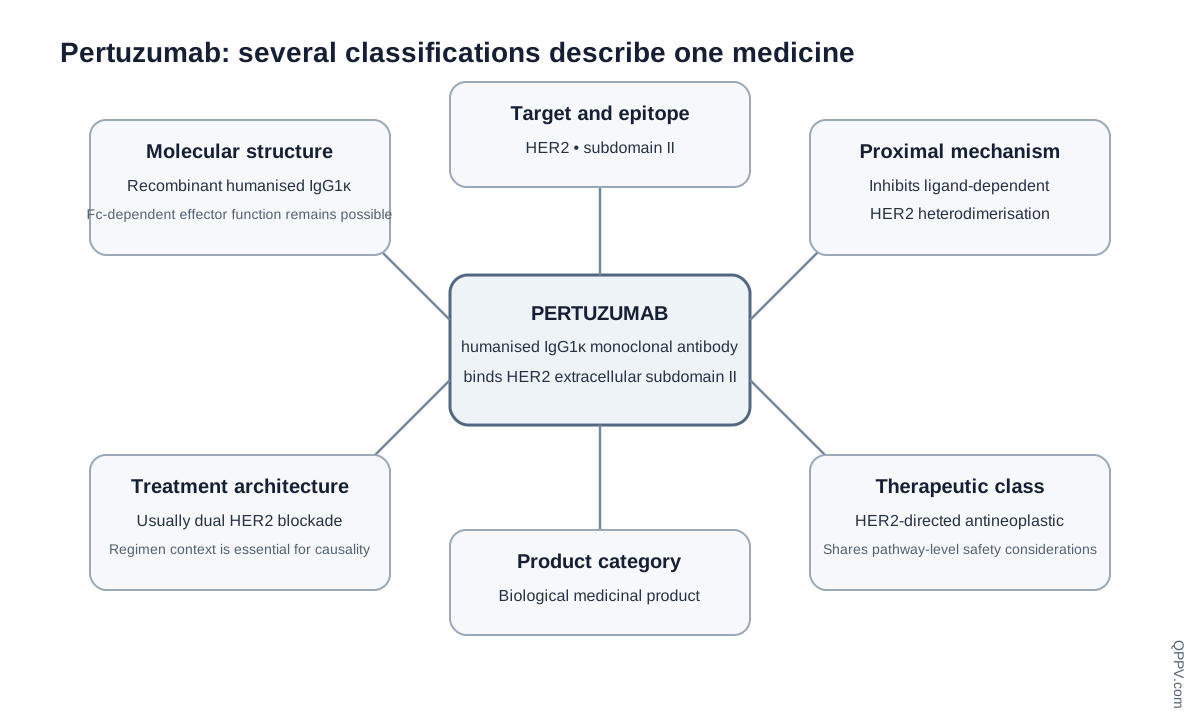
Figure 1. Pertuzumab is defined simultaneously by antibody structure, HER2 target, subdomain-II epitope, dimerisation-inhibition mechanism and combination-treatment context. The figure distinguishes these complementary classification axes rather than presenting them as a single hierarchy.
HER2 as a receptor-system target
HER2 is one of four members of the ERBB receptor tyrosine kinase family: EGFR/HER1, HER2, HER3 and HER4. These receptors transmit extracellular growth signals by forming dimers. In many receptor systems, ligand binding first changes receptor conformation and then exposes a dimerisation interface. HER2 is unusual because its extracellular domain is constitutively poised in a conformation favourable for dimerisation. This makes HER2 a preferred partner for other activated ERBB receptors.
HER3 is especially important in HER2-positive breast cancer because HER3 has multiple docking sites for phosphatidylinositol 3-kinase despite weak intrinsic kinase activity. A HER2-HER3 pair can therefore form an efficient signalling unit: HER2 supplies strong kinase activity and HER3 supplies a potent platform for downstream PI3K-AKT signalling. HER2 amplification increases the density of HER2 at the cell surface and shifts the probability of productive receptor pairing toward persistent growth and survival signalling.
Pertuzumab does not inhibit the intracellular kinase directly. Instead, it binds the extracellular dimerisation arm of HER2 and sterically interferes with ligand-dependent heterodimer formation. The intervention can be thought of as blocking an external coupling surface rather than switching off the intracellular catalytic machinery itself.
Why pertuzumab is not simply another trastuzumab
The two antibodies target different HER2 extracellular subdomains. Trastuzumab binds subdomain IV and influences HER2 signalling, receptor behaviour and immune-mediated effects through a mechanism that is not identical to pertuzumab. Pertuzumab binds subdomain II and is particularly effective at preventing ligand-activated HER2 from partnering with other ERBB receptors.
This difference created the rationale for dual HER2 blockade. If two antibodies obstruct different functional surfaces of the same oncogenic receptor system, their effects can be complementary rather than redundant. The clinical consequence is that the benefit-risk profile of pertuzumab is usually generated in a combination context. For safety evaluation, an event cannot be assigned mechanistically to pertuzumab merely because it occurs during dual blockade.
Development history and the dimerisation concept
The scientific programme that led to pertuzumab emerged from attempts to identify HER2 antibodies with biological effects distinct from those of trastuzumab. Experimental antibodies were screened not only for binding but for their capacity to interfere with receptor partnering and downstream signalling. Pertuzumab was selected because it bound HER2 at a functionally important dimerisation site and inhibited signalling driven by ligand-activated ERBB partners.
Early clinical development explored whether this mechanism could have activity in tumours without the high HER2 overexpression that predicts trastuzumab benefit. The strongest therapeutic effect, however, emerged when pertuzumab was combined with trastuzumab in HER2-positive disease. This moved the drug from a theoretical "dimerisation inhibitor" toward a clinically validated component of dual HER2 blockade.
The pivotal CLEOPATRA trial established the metastatic first-line combination of pertuzumab, trastuzumab and docetaxel. Subsequent programmes evaluated pertuzumab in neoadjuvant and adjuvant early breast cancer, where the question shifted from control of established metastatic disease to reduction of recurrence risk. The regulatory history therefore mirrors a broader transition in HER2 therapy: from single-target inhibition to layered blockade across stages of disease.
Mechanism of action in detail
Binding to subdomain II
The HER2 extracellular region is divided into four subdomains. Subdomain II contains the dimerisation arm used in receptor-receptor interaction. Pertuzumab binds this region and sterically blocks the physical association required for ligand-dependent HER2 heterodimerisation. The effect is most relevant when another ERBB receptor has bound its ligand and seeks HER2 as a preferred signalling partner.
Downstream signalling consequences
Reduced HER2 heterodimerisation diminishes phosphorylation-dependent signalling through pathways that include PI3K-AKT and RAS-RAF-MAPK. These pathways regulate cell-cycle progression, survival, metabolism and transcription. The biological consequence depends on how strongly the tumour relies on HER2-containing dimers, which is why HER2 status and disease context remain central to treatment selection.
Fc-dependent immune effects
Pertuzumab is an IgG1 antibody and retains an Fc region capable of interacting with Fc gamma receptors on immune effector cells. Antibody-dependent cellular cytotoxicity can therefore contribute to antitumour activity. It is nevertheless misleading to assign one fixed percentage of clinical efficacy to receptor blockade versus Fc-mediated killing. Their relative contributions vary with receptor density, tumour architecture, immune-cell access, Fc-receptor biology and co-administered therapy.
Complementarity with trastuzumab
Dual blockade can be represented as two simultaneous constraints on the HER2 system: pertuzumab obstructs the dimerisation interface, while trastuzumab binds a different extracellular region and exerts additional signalling and Fc-mediated effects. This mechanistic complementarity helps explain why the combination became clinically important, but it also complicates adverse-event attribution because both agents modify the same biological pathway and are often administered together.
Clinical use and treatment-context map
Pertuzumab is used in HER2-positive breast cancer as part of combination therapy rather than as a stand-alone treatment. In the European Union, current authorised uses include first-line treatment of HER2-positive metastatic or locally recurrent unresectable breast cancer with trastuzumab and docetaxel, and treatment of selected high-risk early HER2-positive breast cancers in neoadjuvant or adjuvant settings with trastuzumab and chemotherapy. The exact authorised indication, regimen and sequence must always be checked against current product information because treatment context determines both expected benefit and the safety background against which adverse events are interpreted.
The same event can have different causal explanations in different settings. Diarrhoea during docetaxel-containing metastatic therapy may reflect pertuzumab, chemotherapy, infection or combinations of these. Neutropenia is strongly influenced by concomitant cytotoxic treatment. Cardiac dysfunction may represent a HER2-pathway treatment effect, previous anthracycline injury, age, hypertension or pre-existing cardiac disease. A pharmacovigilance case is therefore not complete when the suspect field contains only "pertuzumab"; the full regimen and relevant treatment history are part of the causal evidence.
Biomarker selection and disease state
HER2 positivity is not a descriptive afterthought. It is the biological selection criterion that makes the mechanism clinically relevant. Case assessment should preserve how HER2 status was established when that information materially affects interpretation, particularly in reports of apparent lack of efficacy, disease progression, off-label use or treatment in a discordant tumour sample.
Disease stage also changes the purpose of therapy. In metastatic disease, benefit is measured through tumour control, progression and survival. In neoadjuvant treatment, pathological response and operability become important. In adjuvant treatment, the treatment is given after definitive surgery to reduce recurrence risk. These contexts alter treatment duration, competing morbidity and the expected timing of adverse events.
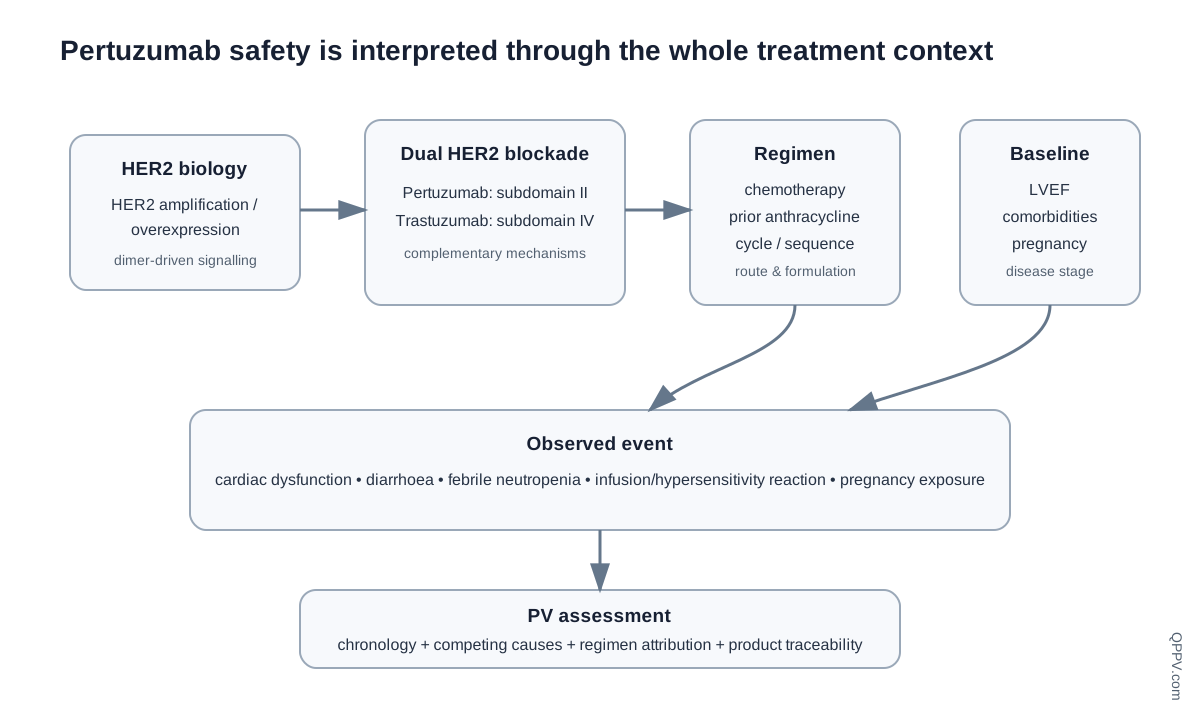
Figure 2. Pertuzumab safety assessment requires the HER2 target mechanism to be connected to the actual regimen, disease stage and patient baseline. The same reported event can have different causal weights depending on these surrounding factors.
Pharmacokinetics and exposure
Pertuzumab displays pharmacokinetic behaviour typical of a therapeutic IgG monoclonal antibody. Distribution is largely within vascular and interstitial spaces rather than across all tissues, and elimination occurs through proteolytic catabolism rather than renal filtration of intact antibody. The terminal elimination half-life is long enough to support dosing at multiweek intervals and means that clinically relevant exposure persists after the final infusion.
This persistence matters for pregnancy counselling, perioperative planning and interpretation of delayed events. A temporal association need not end on the day of the last administration. Conversely, an event occurring months later should not automatically be attributed to residual drug merely because the antibody has a long half-life; biological plausibility, exposure history, competing causes and dechallenge information still require evaluation.
Body size, albumin, disease burden and other covariates can influence monoclonal-antibody pharmacokinetics, but product dosing is determined by the authorised regimen rather than case-by-case pharmacokinetic modelling. For PV, the key exposure variables are dose, loading versus maintenance phase, date and duration of infusion, cycle number, treatment interruptions and the accompanying HER2-directed and cytotoxic medicines.
Safety profile through mechanism and regimen
Left ventricular dysfunction and heart failure
HER2 signalling has physiological roles in cardiomyocyte stress responses. Interference with HER2 therefore creates a mechanistic link between HER2-directed therapy and reduced left ventricular systolic function. Pertuzumab is usually administered with trastuzumab, another HER2-directed antibody with established cardiac risk, and some patients have also received anthracyclines. Cardiac safety is consequently a cumulative treatment-context problem rather than a simple single-drug adverse effect.
A useful cardiac ICSR should seek baseline left ventricular ejection fraction (LVEF), cardiovascular history, hypertension, diabetes, prior or concurrent anthracycline exposure, previous HER2-directed therapy, dates and values of serial LVEF measurements, symptoms of heart failure, cardiac biomarkers or imaging where available, treatment interruption and recovery. A fall in LVEF without symptoms and overt congestive heart failure are related but clinically distinct events and should not be collapsed into one undifferentiated narrative.
Embryo-fetal toxicity
HER2-pathway inhibition during pregnancy can interfere with fetal development. Current prescribing information warns that pertuzumab can cause fetal harm, and animal studies showed oligohydramnios, delayed fetal renal development and embryo-fetal death. Pregnancy status and contraception are therefore central to safe use.
Pregnancy-exposure follow-up should establish timing of each dose relative to conception and gestational age, exposure to trastuzumab and chemotherapy, fetal ultrasound findings, amniotic-fluid status, pregnancy outcome, congenital abnormalities, neonatal renal and pulmonary outcomes and maternal disease course. The exposure should be evaluated as a regimen-level pregnancy event while retaining exact product attribution.
Infusion-related and hypersensitivity reactions
Pertuzumab is administered intravenously and can cause infusion-related reactions and hypersensitivity, including anaphylaxis. The clinically useful distinction is temporal and phenotypic: symptoms beginning during or shortly after infusion may include fever, chills, fatigue, headache, nausea, vomiting, dyspnoea, flushing or hypotension, whereas true hypersensitivity may include urticaria, bronchospasm, angioedema or cardiovascular compromise.
Case follow-up should capture infusion start and stop times, cycle number, premedication, concurrent infusions, symptom onset, vital signs, treatment interruption, supportive therapy, tryptase if measured, recurrence on rechallenge and whether the event was clinically diagnosed as infusion reaction, hypersensitivity or anaphylaxis. Because several medicines may be infused on the same day, sequence of administration is essential for attribution.
Diarrhoea and gastrointestinal toxicity
Diarrhoea is common in pertuzumab-containing regimens and is often most prominent early in treatment. It is clinically important because dehydration, electrolyte disturbance, renal impairment and treatment interruption can follow severe or prolonged episodes. However, attribution must consider chemotherapy, antibiotics, enteric infection, concomitant laxatives and underlying gastrointestinal disease.
A meaningful report should include stool frequency relative to baseline, duration, associated fever or blood, hydration status, microbiological testing if performed, concomitant medicines, hospitalisation, intravenous fluids and dose interruption. Coding a case simply as "diarrhoea" without severity and context loses most of the information needed for aggregate evaluation.
Neutropenia and febrile neutropenia
Neutropenia in pertuzumab regimens is strongly influenced by concomitant cytotoxic chemotherapy. The pharmacovigilance task is not to deny a possible contribution from the overall treatment combination, but to separate the components that can be evaluated: baseline marrow reserve, chemotherapy dose intensity, growth-factor prophylaxis, nadir timing, absolute neutrophil count, fever, cultures, infection source and outcome.
Febrile neutropenia is particularly important because it combines a laboratory abnormality with acute infectious risk. In aggregate review, rates should not be interpreted across indications or regimens without considering the chemotherapy backbone.
Other clinically relevant events
Additional events may include rash, mucosal symptoms, fatigue and other toxicities occurring in combination regimens. The principle remains the same: distinguish known regimen effects from events with unusual phenotype, timing, severity or recurrence that could represent a new or modified signal.
Product identity, formulations and medication-error risk
Biological-product safety requires exact product identification where possible. Pertuzumab may be encountered as an intravenous single-active-substance product or as part of a fixed-dose subcutaneous combination containing pertuzumab and trastuzumab with an absorption-facilitating excipient. These are not interchangeable descriptions of exposure.
A report that records only "pertuzumab" may therefore be insufficient when route, formulation, dosing error, administration-site reaction or device-related issue is involved. Follow-up should seek trade name where appropriate for traceability, active components, route, strength, batch number, device or presentation, and whether the event followed switching between formulations.
Pharmacovigilance case assessment
Pertuzumab case assessment should begin with a treatment map rather than an isolated suspect-product field. At minimum, the reviewer should establish the indication and disease stage, HER2 status where relevant, the complete regimen, sequence and dates of administration, prior HER2-directed therapy, prior anthracycline exposure, relevant comorbidities, and the chronology of the event relative to each medicine.
This is particularly important for dual HER2 blockade because several clinically important adverse events are biologically plausible for more than one component of the regimen. Causality should therefore be expressed with appropriate uncertainty. A report can support a regimen-related effect without proving that pertuzumab was the sole causal agent.
Event-specific follow-up priorities
| Event | High-value follow-up information |
|---|---|
| LVEF decrease / heart failure | Baseline and serial LVEF, symptoms, cardiac history, anthracycline exposure, trastuzumab exposure, biomarkers, cardiac treatment, recovery |
| Pregnancy exposure | Exact dose dates, gestational timing, co-exposures, ultrasound/amniotic fluid, fetal outcome, neonatal renal/pulmonary outcome |
| Infusion reaction / hypersensitivity | Infusion sequence, onset from infusion start, phenotype, vital signs, interruption, treatment, tryptase if available, rechallenge |
| Diarrhoea | Baseline bowel pattern, stool frequency, duration, dehydration, infection testing, chemotherapy, antibiotics, hospitalisation |
| Febrile neutropenia | ANC nadir, fever, cultures, infection source, chemotherapy schedule, G-CSF use, hospital course |
| Lack of efficacy / progression | Disease stage, HER2 test and specimen, prior therapies, adherence to regimen, imaging chronology, treatment interruptions |
| Product-quality complaint | Presentation, route, batch/lot, preparation and administration, storage history, device details where relevant |
The purpose of follow-up is not to collect every possible data element indiscriminately. It is to acquire the variables that discriminate between competing explanations and make the case useful for aggregate evaluation.
Signal detection and aggregate review
Pertuzumab signal detection should stratify rather than pool blindly. Important dimensions include disease stage, chemotherapy backbone, concurrent HER2-directed therapy, route/formulation, age, prior anthracycline exposure and geographic/product presentation. Without such stratification, changes in treatment practice can masquerade as changes in product safety.
Expected risks versus potentially new patterns
Known risks still require surveillance. A known event can become a signal if its frequency, severity, latency, outcome, risk factors or response to risk minimisation changes. Examples include an apparent shift toward later-onset cardiac dysfunction, unexpectedly severe diarrhoea in a new regimen, unusual hypersensitivity after switching formulation, or pregnancy outcomes inconsistent with the established pattern. These would be questions for evaluation, not automatically new causal conclusions.
Attribution in combination therapy
Disproportionality or case counts for pertuzumab can be distorted because pertuzumab, trastuzumab and chemotherapy are co-reported. Aggregate assessment should therefore consider co-reporting structure and regimen exposure. A cluster of neutropenia reports, for example, cannot be interpreted without the chemotherapy backbone. Similarly, cardiac cases should be analysed with prior anthracycline and concurrent HER2 blockade where data permit.
Periodic benefit-risk evaluation
A periodic safety evaluation should connect exposure, indication and regimen to the evolving safety profile. The most useful analysis is not a repetition of label text but an examination of whether new cumulative data alter the established benefit-risk relationship.
For pertuzumab, this includes:
- exposure estimates stratified by relevant indication and presentation where feasible;
- cardiac dysfunction and heart-failure analyses with attention to baseline risk and prior cardiotoxic therapy;
- pregnancy exposures and outcomes;
- infusion/hypersensitivity reactions by route and administration context;
- diarrhoea, neutropenia and febrile neutropenia interpreted in relation to regimen;
- medication errors, formulation confusion and product-quality reports;
- emerging patterns from post-authorisation studies, spontaneous reports, literature and regulatory communications.
Changes in authorised use can alter the safety population. Expansion from metastatic disease into curative-intent early breast cancer, for example, changes expected survival, duration of follow-up and tolerance for persistent toxicity. The same numerical event rate can therefore have a different benefit-risk meaning in different disease settings.
Risk management and operational controls
Risk minimisation for pertuzumab is built primarily around appropriate patient selection, cardiac assessment, pregnancy prevention and counselling, safe infusion practice, recognition and management of hypersensitivity, and management of treatment-emergent toxicities. Exact requirements depend on current regional product information and should not be converted into universal operational rules without checking jurisdiction.
Recommended PV operations include structured follow-up questionnaires for major cardiac events and pregnancy exposure, clear coding guidance for infusion reaction versus anaphylaxis, regimen capture fields, active follow-up of serious diarrhoea and febrile neutropenia, and explicit product/formulation fields for biological traceability.
Potential failure modes
The following are illustrative operational failure modes rather than published inspection findings:
- A cardiac case is coded as "cardiomyopathy" without collecting baseline and follow-up LVEF or prior anthracycline exposure.
- A pregnancy case records only the date of reporting, not the gestational timing of pertuzumab and trastuzumab doses.
- An infusion reaction is attributed to pertuzumab although several infusions were given the same day and their sequence was not collected.
- A febrile-neutropenia cluster is interpreted as a pertuzumab signal without stratifying by chemotherapy regimen.
- A subcutaneous fixed-dose combination is entered as intravenous single-agent pertuzumab, obscuring a route or medication error.
- Biosimilar or combination-product information is collapsed into the active-substance name without retaining the product and batch details needed for traceability.
An experienced reviewer recognises these problems because the missing variables are precisely those needed to distinguish biological plausibility from alternative explanations.
Inspection and governance perspective
An inspector assessing pertuzumab pharmacovigilance would be expected to examine whether the system can reconstruct the real treatment context and demonstrate that important risks are followed consistently. Evidence may include case-processing conventions, product dictionaries, targeted follow-up forms, reconciliation of pregnancy and medical-information cases, signal-assessment records, periodic reports, risk-management outputs and documentation of escalation decisions.
Effectiveness is demonstrated when these elements connect. A procedure that says "collect concomitant therapy" is weak evidence if cases routinely omit trastuzumab or chemotherapy. A signal procedure is incomplete if aggregate analyses cannot stratify by regimen. A biological traceability procedure is ineffective if batch numbers are never requested where they matter.
Practical checklist
For a pertuzumab safety case or aggregate review, confirm:
- the exact pertuzumab-containing product, formulation, route and batch where relevant;
- indication, disease stage and HER2 status where material;
- the complete current regimen and prior HER2-directed treatment;
- prior anthracycline and cardiac history for cardiac events;
- event chronology relative to every administered medicine;
- objective severity data rather than symptom labels alone;
- pregnancy timing and outcome information when applicable;
- infusion sequence for acute reactions;
- chemotherapy context for diarrhoea and cytopenias;
- clinically meaningful dechallenge, rechallenge and recovery information;
- whether the case suggests a known risk, altered pattern, medication error or product-quality issue.
Key Takeaways
Pertuzumab is a humanised IgG1 antibody that binds HER2 subdomain II and interferes with ligand-dependent HER2 heterodimerisation. Its mechanism is complementary to trastuzumab rather than interchangeable with it. The clinical benefit of pertuzumab is generated mainly within dual-HER2 and chemotherapy regimens, so pharmacovigilance must preserve the complete treatment context.
The major safety questions are therefore both molecular and operational: HER2-pathway cardiac effects, embryo-fetal toxicity, infusion and hypersensitivity reactions, gastrointestinal toxicity, chemotherapy-associated neutropenia, and correct formulation/product attribution. High-quality assessment depends on chronology, baseline risk, co-treatment and biological traceability rather than on the suspect-product field alone.
References
- European Medicines Agency. Pertuzumab (Perjeta): EPAR and current product information. Product information updated 28 April 2026. https://www.ema.europa.eu/en/medicines/human/EPAR/perjeta
- U.S. Food and Drug Administration. Pertuzumab prescribing information. Current label, 2026. https://www.accessdata.fda.gov/drugsatfda_docs/label/2026/125409s141lbl.pdf
- Baselga J, Cortés J, Kim SB, et al. Pertuzumab plus trastuzumab plus docetaxel for metastatic breast cancer. N Engl J Med. 2012;366:109-119. doi:10.1056/NEJMoa1113216.
- Swain SM, Baselga J, Kim SB, et al. Pertuzumab, trastuzumab, and docetaxel in HER2-positive metastatic breast cancer. N Engl J Med. 2015;372:724-734. doi:10.1056/NEJMoa1413513.
- von Minckwitz G, Procter M, de Azambuja E, et al. Adjuvant pertuzumab and trastuzumab in early HER2-positive breast cancer. N Engl J Med. 2017;377:122-131. doi:10.1056/NEJMoa1703643.
- Franklin MC, Carey KD, Vajdos FF, et al. Insights into ErbB signaling from the structure of the ErbB2-pertuzumab complex. Cancer Cell. 2004;5:317-328. doi:10.1016/S1535-6108(04)00083-2.
Regulatory Note
Authorised indications, dosing, contraindications, warnings and risk-minimisation instructions vary by jurisdiction and can change after regulatory procedures. This article explains the scientific and pharmacovigilance framework and does not replace current regional product information. Regulatory and label statements were checked against current EMA and FDA sources available in September 2026; operational recommendations in this article are identified as pharmacovigilance practice rather than universal legal requirements.