Pirtobrutinib (Jaypirca): From Non-Covalent BTK Inhibition to Expanded CLL Pharmacovigilance
Pirtobrutinib, marketed as Jaypirca, is a selective, reversible, non-covalent Bruton tyrosine kinase (BTK) inhibitor. It was developed from a pharmacological problem created by the success of earlier covalent BTK inhibitors: prolonged BTK inhibition can produce substantial clinical benefit, but resistance and intolerance can limit treatment, and acquired mutations at the C481 binding site can reduce the effectiveness of covalent inhibitors.
Pirtobrutinib was designed to address that problem by binding BTK without depending on covalent modification of C481. The scientific rationale was therefore inseparable from a pharmacovigilance question: what happens to efficacy and safety when a new BTK inhibitor is introduced specifically into populations already exposed to other BTK inhibitors? The first clinical programmes concentrated on heavily pretreated B-cell malignancies, particularly mantle cell lymphoma (MCL) and chronic lymphocytic leukaemia/small lymphocytic lymphoma (CLL/SLL). Subsequent regulatory expansion has moved pirtobrutinib into earlier treatment settings, where the exposed population and the comparator landscape are materially different.[1–4]
The European Union authorised Jaypirca conditionally in October 2023. Its original European positioning centred on relapsed or refractory MCL after prior BTK-inhibitor treatment, while later regulatory changes expanded use in CLL. The European product remains subject to additional monitoring and conditional-authorisation obligations. In the United States, FDA granted accelerated approval for relapsed or refractory MCL in January 2023, accelerated approval for a heavily pretreated CLL/SLL population in December 2023, traditional approval for previously covalent-BTK-inhibitor-treated CLL/SLL in December 2025, and on 2 October 2026 approved pirtobrutinib for previously untreated CLL/SLL without known 17p deletion.[1–6]
These successive decisions create a useful pharmacovigilance case study. The medicine itself has not changed into a different pharmacological entity, but the clinical meaning of its safety evidence changes as treatment line, prior exposure, disease biology, concomitant medicines and expected duration of treatment change. A safety system that simply aggregates all reports under one product without preserving indication and treatment history can lose that context.
This article follows pirtobrutinib from the rationale for non-covalent BTK inhibition through its discovery and development, the transition from LOXO-305 to Jaypirca, the major MCL and CLL studies, European and U.S. regulatory milestones, and the implications of moving from treatment-resistant disease into previously untreated CLL/SLL.
- Pirtobrutinib (Jaypirca): From Non-Covalent BTK Inhibition to Expanded CLL Pharmacovigilance
- The Therapeutic Problem: BTK Inhibition and Acquired Resistance
- Why Non-Covalent Binding Matters
- Discovery and Development of LOXO-305
- First-in-Human Development
- From a Resistant-Disease Strategy to a Broader Development Programme
- Mantle Cell Lymphoma: The First Regulatory Test
- European Union Conditional Authorisation
- The CLL/SLL Programme
- BRUIN CLL-321: Randomised Evidence After Covalent BTK Inhibitors
- BRUIN CLL-313 and the Move Into Previously Untreated Disease
- The 2026 European Extension
- Safety Profile and Risk Domains
- Pharmacokinetics, Interactions and Practical Case Assessment
- How Indication Expansion Changes the Pharmacovigilance Denominator
- Signal Detection and Benefit-Risk Evaluation
- Post-Authorisation Evidence and Conditional Governance
- Inspection Perspective
- Common Failure Modes
- QPPV Oversight and Governance
- Practical Pharmacovigilance Framework
- Why Pirtobrutinib Is a Useful Pharmacovigilance Case Study
- Key Takeaways
- References
- Regulatory Note
The Therapeutic Problem: BTK Inhibition and Acquired Resistance
BTK is a key component of B-cell receptor signalling. Signalling through the pathway supports the development, activation and survival of normal and malignant B cells, making BTK an established therapeutic target in B-cell malignancies including CLL and MCL.
The first generation of widely used BTK inhibitors established that sustained BTK pathway inhibition could produce clinically meaningful disease control. Ibrutinib, followed by more selective covalent inhibitors such as acalabrutinib and zanubrutinib, binds BTK irreversibly through the cysteine 481 residue. This covalent mechanism produces durable target inhibition, but it also creates a specific evolutionary route to resistance. Substitution at C481 can interfere with covalent binding, allowing BTK signalling to recover despite continued treatment.
The resistance problem is not simply a molecular curiosity. Once a patient has progressed on a covalent BTK inhibitor, the previous treatment history becomes part of the next treatment's biological context. A new agent may need to inhibit a target that has changed under therapeutic pressure. Pirtobrutinib was designed around that requirement rather than being developed as merely another covalent BTK inhibitor.
This distinction also shaped the initial clinical population. Patients who had already received and discontinued covalent BTK inhibitors had an unmet need and provided a direct test of whether non-covalent BTK inhibition could restore meaningful pathway control.
Why Non-Covalent Binding Matters
Pirtobrutinib binds reversibly to BTK at a site that does not require the C481 cysteine for inhibition. Laboratory work showed inhibition of wild-type BTK and C481 mutant forms, including C481S and C481R variants that can compromise covalent inhibition.[7]
The term non-covalent is therefore mechanistically important, but it should not be interpreted as meaning that resistance can never develop. The clinical advantage is that pirtobrutinib does not depend on the same covalent interaction that is disrupted by C481 substitution. Tumours can still evolve alternative resistance mechanisms, including changes affecting BTK itself or signalling pathways downstream of BTK.
This creates an important distinction for pharmacovigilance. A drug developed to overcome one resistance mechanism may generate a different safety and resistance profile over time. The PV system should therefore preserve treatment sequence, prior BTK inhibitor exposure, documented resistance mechanisms where available, and the reason for discontinuation of previous therapy.
Discovery and Development of LOXO-305
Pirtobrutinib was developed by Loxo Oncology under the development code LOXO-305. By 2019, when Eli Lilly announced its acquisition of Loxo Oncology, LOXO-305 was already in phase 1/2 development and was described as a selective non-covalent BTK inhibitor designed to address acquired resistance to available BTK inhibitors.[8]
Lilly completed the acquisition of Loxo Oncology on 15 February 2019. The transaction brought LOXO-305 into Lilly's oncology portfolio and the programme subsequently continued within Loxo Oncology at Lilly.[8,9] Lilly later described LOXO-305 as one of the clinical-development programmes retained within the combined organisation.[9]
The business history matters because it identifies the continuity of the development programme. The scientific rationale originated in Loxo's programme, while later clinical development, regulatory submissions and commercialisation occurred under Lilly. For pharmacovigilance governance, changes in corporate ownership or organisational structure are relevant because safety-system responsibilities, data ownership and interfaces must remain continuous even when development organisations change.
First-in-Human Development
The first-in-human BRUIN study was a phase 1/2 multicentre study in previously treated B-cell malignancies. Pirtobrutinib was evaluated across dose levels from 25 to 300 mg once daily. The recommended phase 2 dose became 200 mg once daily, and no maximum tolerated dose was reached during the initial dose-escalation work.[10]
The early safety profile was compatible with continued development. In the initial publication, fatigue, diarrhoea and contusion were among the most common adverse events, while grade 3 or higher neutropenia was the most common severe adverse event. Importantly, grade 3 atrial fibrillation or flutter was not observed in that initial population, and only a small number of patients discontinued because of treatment-related adverse events.[10]
The early efficacy findings provided the bridge to the resistant-disease strategy. Among efficacy-evaluable CLL/SLL patients previously treated with a covalent BTK inhibitor, the overall response rate was 62%. Responses were observed in patients with prior covalent-BTK-inhibitor resistance and intolerance and in patients with BTK C481 mutations as well as BTK wild-type disease.[10]
These findings were not sufficient on their own to establish the full benefit-risk profile. They were, however, scientifically coherent with the mechanism and supported the progression of pirtobrutinib into disease-specific studies.
From a Resistant-Disease Strategy to a Broader Development Programme
The early programme established pirtobrutinib primarily as a treatment for patients whose options had narrowed after previous BTK inhibitor exposure. The subsequent development strategy tested whether the same reversible mechanism could compete with established treatments in broader populations.
That change matters because a medicine's pharmacovigilance evidence is not static. In a heavily pretreated population, adverse-event rates may be influenced by cumulative prior therapy, advanced disease, organ impairment, infections and reduced physiological reserve. In treatment-naive disease, patients may remain on therapy for longer periods and may experience a different background risk. The denominator therefore changes even when the medicinal product and nominal dose remain the same.
The clinical development programme consequently became a sequence of evidence questions rather than a single approval study: could pirtobrutinib overcome covalent-BTK-inhibitor resistance, could it provide clinically useful control in MCL, could it improve outcomes against standard therapy in previously treated CLL/SLL, and could it become an earlier-line treatment option?
Mantle Cell Lymphoma: The First Regulatory Test
MCL provided the first major regulatory pathway for pirtobrutinib. In the BRUIN study, 120 patients with MCL who had previously received a BTK inhibitor formed the principal efficacy population supporting the U.S. accelerated approval. The population had a median of three prior lines of therapy, and most patients had stopped their previous BTK inhibitor because of refractory or progressive disease.[1]
The overall response rate was 50%, including a 13% complete-response rate, with an estimated median duration of response of 8.3 months.[1] The results demonstrated that reversible BTK inhibition could produce responses in a population for whom a prior BTK inhibitor had already failed or become unsuitable.
FDA granted accelerated approval on 27 January 2023 for adults with relapsed or refractory MCL after at least two lines of systemic therapy, including a BTK inhibitor. The approval was based on response rate, with continued approval contingent on verification and description of clinical benefit in a confirmatory study.[1,5]
The regulatory design is pharmacovigilance-relevant. An accelerated approval does not remove the need for post-authorisation safety surveillance; instead, it creates an additional evidence obligation. The safety system must continue to characterise the medicine while clinical development generates the evidence required to confirm benefit.
European Union Conditional Authorisation
The European regulatory pathway followed a related but distinct model. The CHMP adopted a positive opinion for Jaypirca on 26 April 2023, and the European Commission granted a conditional marketing authorisation valid throughout the EU on 30 October 2023.[2]
The original EU indication covered adults with relapsed or refractory MCL previously treated with a BTK inhibitor. Jaypirca was placed under additional monitoring, and the conditional authorisation reflected an unmet medical need for which earlier availability was considered to outweigh the uncertainty associated with less comprehensive data.[2]
The conditional framework creates a continuing evidence relationship between the marketing authorisation and subsequent data. EMA states that the company must provide further data and that the Agency reviews new information annually. The EU product therefore illustrates a different legal-regulatory mechanism from U.S. accelerated approval, even though both mechanisms can result in authorisation before the complete evidence package that would normally be expected for an unconditional approval.[2]
For pharmacovigilance, this distinction should be preserved. A PV procedure should not describe every expedited pathway as simply "conditional approval". The applicable legal mechanism, outstanding obligations and evidence commitments should be identified by jurisdiction.
The CLL/SLL Programme
CLL/SLL became the central development setting for pirtobrutinib because the biology of BTK dependence and acquired resistance is particularly well characterised in this disease. The initial U.S. CLL/SLL approval, granted on 1 December 2023, covered adults who had received at least two prior lines including a BTK inhibitor and a BCL-2 inhibitor.[3]
The supporting BRUIN population was heavily pretreated. In the FDA review, 108 patients with CLL/SLL had received at least two prior lines including a BTK inhibitor and a BCL-2 inhibitor, with a median of five prior lines; 77% had discontinued their last BTK inhibitor because of refractory or progressive disease.[3]
This was a clinically different population from the one that would later receive pirtobrutinib in first-line treatment. The early CLL indication therefore established a pharmacovigilance baseline dominated by advanced disease and extensive prior treatment.
BRUIN CLL-321: Randomised Evidence After Covalent BTK Inhibitors
The next major evidence step was BRUIN CLL-321, a randomized phase 3 study conducted exclusively in patients with CLL/SLL previously treated with a covalent BTK inhibitor. Pirtobrutinib was compared with investigator's choice of idelalisib plus rituximab or bendamustine plus rituximab.[11]
The trial randomized 238 patients. At the final analysis, pirtobrutinib produced a median progression-free survival of 14.0 months compared with 8.7 months for investigator's choice, corresponding to a hazard ratio of 0.54. Time to next treatment was also longer with pirtobrutinib. Grade 3 or higher treatment-emergent adverse events occurred less frequently with pirtobrutinib than with investigator's choice, and discontinuation because of adverse events was also lower.[11]
FDA granted traditional approval on 3 December 2025 for adults with relapsed or refractory CLL/SLL previously treated with a covalent BTK inhibitor.[4] This was an important change in evidentiary status: the indication moved from an accelerated response-based framework to traditional approval supported by randomized evidence.
For pharmacovigilance, the transition demonstrates why regulatory-status tracking matters. A safety system that continues to describe the indication as an accelerated approval after traditional conversion is not merely using outdated terminology; it can obscure the current regulatory basis for the benefit-risk assessment.
BRUIN CLL-313 and the Move Into Previously Untreated Disease
The 2026 development programme extended pirtobrutinib into treatment-naive CLL/SLL. BRUIN CLL-313 was a randomized, open-label phase 3 study in previously untreated CLL/SLL without known 17p deletion. Patients were randomized 1:1 to pirtobrutinib or bendamustine plus rituximab.[12]
FDA's 2 October 2026 approval was based on 282 patients. With an estimated median PFS follow-up of 28 months, median PFS was not estimable in the pirtobrutinib arm and was 33.5 months with bendamustine plus rituximab. The hazard ratio for progression or death was 0.20, with a P value below 0.0001.[12]
The approved U.S. indication is therefore materially broader than the original resistant-disease indication but remains defined by a biological exclusion: adults with previously untreated CLL/SLL with no known 17p deletion.[12] That boundary matters to PV because it defines the population in which post-authorisation exposure will occur and the clinical comparators against which safety and benefit may be interpreted.
The same development programme included BRUIN CLL-314, comparing pirtobrutinib with ibrutinib in CLL/SLL. EMA's June 2026 CHMP agenda identified both CLL-313 and CLL-314 as the basis for the European extension of indication.[13]
The 2026 European Extension
The EU regulatory picture also changed in 2026. The CHMP adopted a positive opinion on 25 June 2026 for an extension of the Jaypirca indication to include treatment of adult patients with CLL, based on interim results from BRUIN CLL-313 and CLL-314.[13]
The updated European product information now lists Jaypirca as monotherapy for adult patients with CLL, in addition to the existing MCL indication. The medicine remains conditionally authorised and under additional monitoring.[2,14]
This illustrates a key principle in product pharmacovigilance: an indication extension is not simply an administrative addition to the label. It changes who is exposed, why they are exposed, what alternative treatments are available, how long treatment may continue, and which adverse events may become more visible as the denominator expands.
Safety Profile and Risk Domains
The U.S. prescribing information identifies infections, hemorrhage, cytopenias, atrial fibrillation and flutter, second primary malignancies and embryo-fetal toxicity among the important warnings and precautions for pirtobrutinib.[6]
These risks should not be read as a simple list detached from clinical context. BTK inhibition affects pathways involved in immune-cell function and platelet biology, while patients with B-cell malignancies may already have substantial infection risk and hematologic abnormalities. Concomitant antineoplastic and supportive treatments can add further contributors. The PV task is therefore to establish whether an event is consistent with the known product profile, determine its seriousness and clinical outcome, assess competing explanations, and preserve enough treatment chronology for cumulative analysis.
Infections and Cytopenias
Infections and hematologic abnormalities require interpretation against disease stage and previous treatment. A heavily pretreated CLL patient may have immune dysfunction, hypogammaglobulinaemia, prior cytotoxic exposure and recurrent infections before starting pirtobrutinib. A treatment-naive patient may have a different baseline.
This makes exposure-stratified analysis useful. A rise in reports after an indication expansion does not automatically represent an increase in individual risk. It may reflect a larger denominator, different patient characteristics, longer treatment duration or changes in reporting intensity.
For serious infections, high-quality case information should capture the infection type, microbiological findings where available, treatment, hospitalization, outcome, neutropenia or other relevant laboratory findings, concomitant immunosuppressive therapies and the patient's prior treatment history.
Hemorrhage and Cardiac Arrhythmias
Hemorrhage and atrial fibrillation/flutter are particularly relevant when comparing pirtobrutinib with other BTK inhibitors. The clinical significance of a cardiovascular event cannot be assessed adequately without considering baseline cardiovascular disease, concomitant antithrombotic medicines and other risk factors.
The same principle applies to bleeding. A report of hemorrhage should preserve the anatomical site, severity, laboratory findings, antiplatelet or anticoagulant exposure, trauma or procedural context and outcome. A case that records only "bleeding" loses information needed for medical review and signal evaluation.
The fact that pirtobrutinib is non-covalent does not eliminate class-related safety considerations. Mechanism can explain why a product may differ from another BTK inhibitor, but observed clinical evidence must determine whether the difference is real, clinically meaningful and persistent.
Second Primary Malignancies
Second primary malignancies are an important long-latency safety domain. Patients with B-cell malignancies may have substantial background cancer risk and may receive several immunomodulatory or cytotoxic treatments over their disease course.
PV surveillance should therefore distinguish a new primary malignancy from progression, transformation or recurrence. Relevant information includes the site, pathology, timing relative to pirtobrutinib exposure, previous malignancy history, other oncologic therapies and clinical outcome.
Because latency can be long, the absence of a signal early after launch does not establish that the risk cannot emerge later.
Embryo-Fetal Toxicity
Pirtobrutinib can cause fetal harm. This risk creates a specific need for pregnancy-exposure follow-up and outcome information. Pregnancy cases should be managed as high-priority safety information because the clinical interpretation depends on gestational timing, maternal exposure, dose and duration, concomitant medicines and pregnancy outcome.
The PV system should also preserve the relationship between preventive information and exposure. Where risk-minimisation measures or product information require contraception or other precautions, pregnancy cases may provide evidence not only about potential fetal effects but also about whether preventive controls are functioning as intended.
Pharmacokinetics, Interactions and Practical Case Assessment
Pirtobrutinib is administered orally, generally once daily, and dose modification can be required for adverse reactions or organ impairment. The current U.S. prescribing information also contains recommendations concerning drug interactions and dose modification in specific clinical circumstances.[6]
For PV, the practical implication is that medication history must be detailed enough to reconstruct exposure. A case should not record only the nominal pirtobrutinib dose. Relevant information includes start and stop dates, interruptions, dose reductions, renal or hepatic status where clinically relevant, interacting medicines, treatment indication and prior BTK inhibitor history.
This becomes particularly important when assessing events that may be concentration-dependent or influenced by concomitant treatment. The case narrative should distinguish an event occurring during uninterrupted treatment from one occurring after a dose change or treatment interruption.
How Indication Expansion Changes the Pharmacovigilance Denominator
Pirtobrutinib demonstrates why product-level safety surveillance should retain clinical context. Its regulatory history moves through at least four substantially different exposure settings:
| Development setting | Prior treatment context | Regulatory significance | PV implication |
|---|---|---|---|
| Relapsed/refractory MCL | Prior BTK inhibitor, heavily pretreated | U.S. accelerated approval | Advanced disease and prior-treatment confounding |
| Relapsed/refractory CLL/SLL | Prior BTK + BCL-2 inhibitor | Initial U.S. accelerated approval | High prior-treatment burden |
| R/R CLL/SLL after covalent BTKi | Randomized phase 3 evidence | U.S. traditional approval in 2025 | Comparative safety evidence becomes stronger |
| Previously untreated CLL/SLL without known del(17p) | No prior systemic treatment | U.S. approval in 2026; EU CLL extension | Earlier exposure and potentially longer treatment duration |
These populations cannot simply be pooled and assumed to have identical background risk. The same reported adverse event may have different competing causes in each population, while longer exposure in earlier-line treatment can reveal risks that were difficult to observe in heavily pretreated cohorts.
The pharmacovigilance database should therefore retain indication, line of therapy, prior BTK exposure, prior BCL-2 exposure, disease status, relevant biomarkers and treatment duration as analytically useful dimensions.
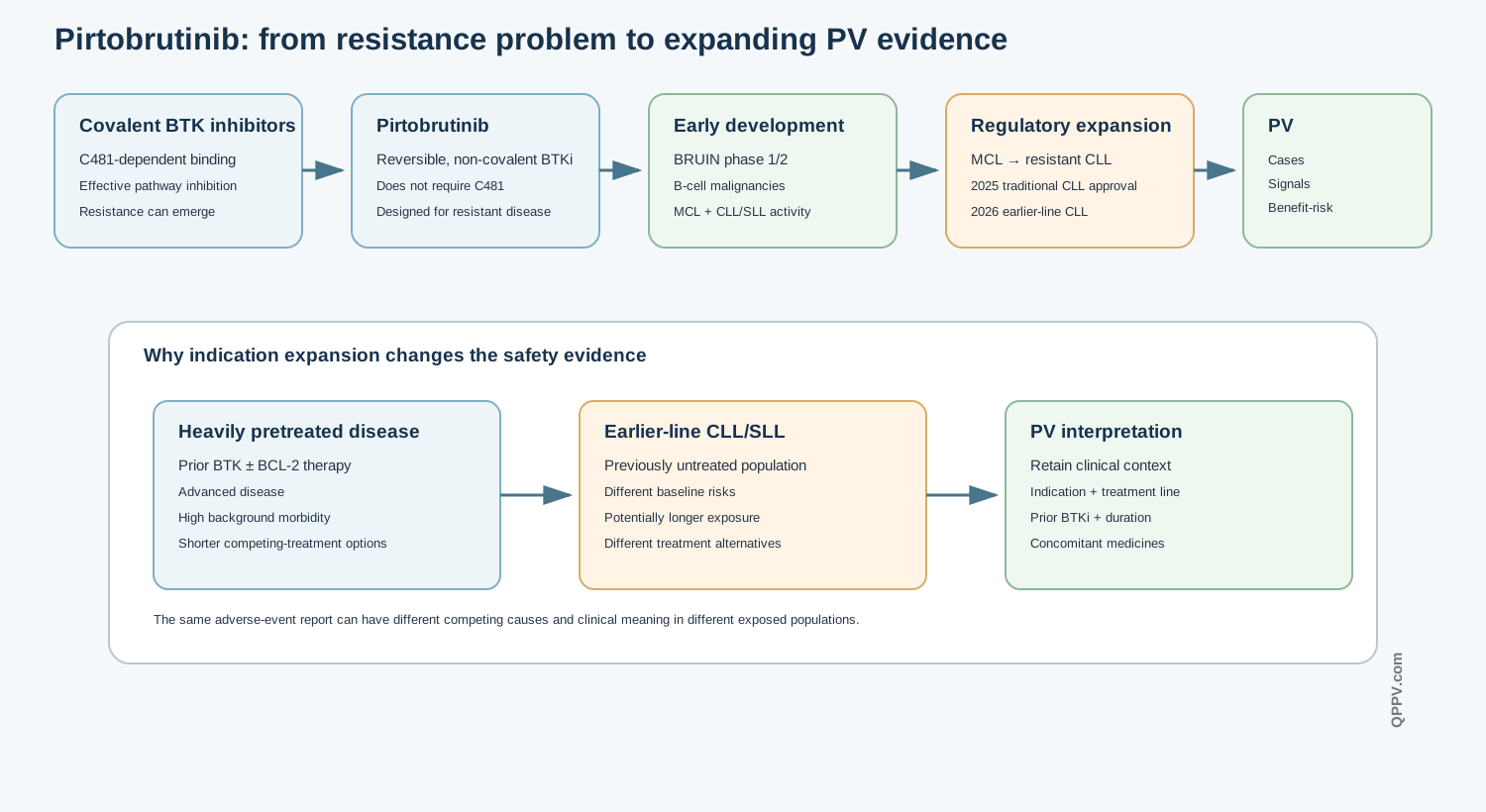
Figure 1. Pirtobrutinib development and pharmacovigilance pathway. The sequence moves from the scientific problem of covalent-BTK-inhibitor resistance through non-covalent BTK inhibition, resistant-disease development, regulatory expansion and the changing post-authorisation safety denominator. The pathway is illustrative rather than a legal representation of any regulatory process.
Signal Detection and Benefit-Risk Evaluation
Signal detection for pirtobrutinib should integrate spontaneous reports with clinical-trial findings, literature, regulatory assessments and other available evidence. Spontaneous-report counts are useful for hypothesis generation but cannot by themselves establish incidence or causality.
The changing indication makes disproportionality and case-series interpretation particularly sensitive to confounding. A signal enriched in heavily pretreated CLL may behave differently when pirtobrutinib becomes a first-line therapy. Conversely, an apparent increase in reports after the 2026 approval may reflect increased exposure rather than increased individual risk.
Subgroup analysis can therefore be valuable where data permit. Useful dimensions include indication, treatment line, prior BTK inhibitor exposure, age, sex, relevant comorbidities, renal function, concomitant antithrombotic therapy, and duration of exposure.
Benefit-risk evaluation should integrate the same context. In a population with few remaining treatment options, a serious but manageable risk may have a different clinical significance from the same risk in a previously untreated population with several alternatives. Regulatory decisions should remain evidence-based rather than relying on the general proposition that a new indication is either safer or riskier.
Post-Authorisation Evidence and Conditional Governance
The European conditional marketing authorisation and additional-monitoring status create an explicit continuing evidence relationship. The EMA product page states that further data are required and that new information is reviewed as it becomes available.[2]
For the pharmacovigilance organisation, this means that post-authorisation commitments should not sit in a separate regulatory tracker disconnected from routine safety governance. Commitments, emerging safety findings, risk-management measures and aggregate reports should be linked through controlled governance.
The U.S. accelerated-approval history similarly demonstrates the need to track the status of confirmatory evidence. Once an indication converts to traditional approval, the regulatory basis changes, but safety surveillance continues. The PV system should therefore track current indication status rather than preserving historical regulatory descriptions indefinitely.
Inspection Perspective
An inspection or audit of pirtobrutinib pharmacovigilance could reasonably test whether the organisation can demonstrate that indication expansion changed its surveillance strategy where appropriate. The following are illustrative questions rather than reported inspection findings.
| Inspection question | Evidence that would support an effective system |
|---|---|
| Can cases be stratified by indication and treatment line? | Structured database fields and validated reporting |
| Is prior BTK exposure captured? | Case source, medical history and treatment chronology |
| Are MCL and CLL safety findings evaluated separately where clinically relevant? | Signal assessments and aggregate analyses |
| Are long-term risks considered as exposure duration increases? | Cumulative analyses and follow-up strategy |
| Are pregnancy cases followed to outcome? | Follow-up records and outcome documentation |
| How are bleeding and arrhythmia cases medically assessed? | Narratives, concomitant medicines and causality review |
| Are regulatory status changes reflected in controlled PV documents? | Current product information, RMP/PSUR governance and change control |
| Are EU additional-monitoring obligations supported? | Reporting processes, signal review and regulatory interfaces |
| How does the QPPV oversee indication expansion? | Governance minutes, metrics, escalation and benefit-risk review |
The strongest evidence is not a procedure stating that these activities occur. It is traceability showing that the system actually captured the relevant information, evaluated it, escalated meaningful findings and changed controls when warranted.
Common Failure Modes
One failure mode is collapsing all pirtobrutinib cases into a single undifferentiated dataset. This can hide important differences between heavily pretreated and treatment-naive populations.
A second is treating non-covalent mechanism as a guarantee of superior safety. The mechanism provides a rationale for certain differences but does not replace clinical evidence.
A third is failing to capture the reason for prior BTK inhibitor discontinuation. Resistance, intolerance and planned treatment changes have different clinical implications and can affect interpretation of subsequent events.
A fourth is confusing increased reporting volume after an indication expansion with increased risk. Exposure, patient mix and reporting behaviour must be considered before drawing a conclusion.
A fifth is allowing historical regulatory language to persist in current procedures. Pirtobrutinib has moved from accelerated approval in some settings to traditional approval in others, while the EU retains conditional authorisation. PV documentation must reflect the current status by jurisdiction and indication.
QPPV Oversight and Governance
The QPPV's role is to ensure that the pharmacovigilance system remains capable of interpreting pirtobrutinib as its use expands. This includes oversight of case quality, indication and treatment-line capture, signal detection, aggregate reporting, regulatory commitments and interfaces with clinical development and regulatory affairs.
Particular attention should be paid to changes in the exposed denominator. An indication extension should trigger an assessment of whether the existing safety specification, monitoring strategy, case follow-up expectations and aggregate analyses remain adequate.
The QPPV should also ensure that the organisation can explain why an apparent safety change is or is not meaningful. That explanation should be supported by exposure information, medical evidence and appropriate comparative or epidemiological context rather than report counts alone.
Practical Pharmacovigilance Framework
For pirtobrutinib, a practical product-level framework can be organised around five linked controls.
First, identify the exposure context. Every medically significant case should, where available, preserve the indication, line of therapy, prior BTK inhibitor exposure, reason for previous BTK discontinuation, relevant concomitant medicines and treatment duration.
Second, assess the event medically. Infection, bleeding, cytopenia, arrhythmia, malignancy and pregnancy exposure require clinical interpretation rather than mechanical coding alone. The case should distinguish the reported event from the medical assessment and document relevant alternative explanations.
Third, connect cases with cumulative evidence. Individual reports should feed signal detection and aggregate evaluation. Clinical-trial findings, literature, regulatory assessments and other relevant evidence should be considered alongside spontaneous reports.
Fourth, track the regulatory context. The U.S. and EU regulatory histories are not identical. Current indications, accelerated or traditional approval status, conditional-authorisation obligations and additional-monitoring requirements should be maintained in controlled sources.
Fifth, reassess the system when the population changes. The 2026 move into previously untreated CLL/SLL is a clear trigger for reviewing whether surveillance assumptions developed in heavily pretreated populations remain appropriate.
This framework is recommended operational practice rather than a statement that each element is independently mandated by a specific law or GVP provision.
Why Pirtobrutinib Is a Useful Pharmacovigilance Case Study
Pirtobrutinib demonstrates a broader principle in drug safety: the product is not the only unit of pharmacovigilance interpretation. The exposed patient population, treatment sequence, disease stage, concomitant therapy and regulatory context influence the meaning of observed safety information.
Its development also illustrates how pharmacology can shape post-authorisation evidence. A reversible BTK inhibitor was conceived to address resistance to covalent inhibition. That scientific rationale determined the first populations studied and the first regulatory questions. As the same molecule moved into earlier-line disease, the safety evidence had to be interpreted against a different clinical background.
The regulatory history adds another layer. U.S. accelerated approvals, a later traditional approval, and EU conditional authorisation are legally and procedurally distinct mechanisms. They all require continuing evidence, but the nature of the obligation differs. A professional PV system therefore needs jurisdiction-specific regulatory traceability rather than a single generic label of "expedited approval."
The central pharmacovigilance lesson is that indication expansion changes the evidence environment. It changes who is exposed, the expected duration of exposure, competing causes of adverse events, the available alternatives and the clinical meaning of benefit and risk.
Key Takeaways
Pirtobrutinib was developed as a selective, reversible, non-covalent BTK inhibitor to address a specific limitation of covalent BTK inhibition: resistance associated with changes at the C481 binding site. Early clinical evidence demonstrated activity in patients previously exposed to covalent BTK inhibitors, supporting development in treatment-resistant B-cell malignancies.[7,10]
The product's first major regulatory milestone was the U.S. accelerated approval for relapsed or refractory MCL in January 2023, followed by conditional EU authorisation in October 2023. CLL/SLL then became the principal expansion setting, first in heavily pretreated disease and later, after randomized evidence, in broader populations.[1–4]
The 2025 U.S. traditional approval for covalent-BTK-inhibitor-pretreated CLL/SLL and the 2026 U.S. approval for previously untreated CLL/SLL illustrate the progressive strengthening and broadening of the evidence base. The 2026 European CLL extension similarly expands the population under ongoing conditional authorisation and additional monitoring.[2,4,12,13]
From a PV perspective, the critical control is context. Indication, treatment line, prior BTK exposure, treatment duration, concomitant medicines and disease characteristics should remain visible in the safety dataset. Without that information, signal detection and benefit-risk assessment can confuse differences in patient populations with differences in product risk.
The QPPV perspective is therefore one of continuity: maintain high-quality individual case information, connect cases to cumulative evidence, track regulatory commitments and changes, and reassess surveillance when the exposed population changes.
References
- U.S. Food and Drug Administration. FDA grants accelerated approval to pirtobrutinib for relapsed or refractory mantle cell lymphoma. 27 January 2023.
- European Medicines Agency. Jaypirca (pirtobrutinib): EPAR, product information and regulatory history. Conditional marketing authorisation 30 October 2023; product information updated 2026.
- U.S. Food and Drug Administration. FDA grants accelerated approval to pirtobrutinib for chronic lymphocytic leukemia and small lymphocytic lymphoma. 1 December 2023.
- U.S. Food and Drug Administration. FDA grants traditional approval to pirtobrutinib for chronic lymphocytic leukemia and small lymphocytic lymphoma. 3 December 2025.
- U.S. Food and Drug Administration. Ongoing Cancer Accelerated Approvals: Jaypirca (pirtobrutinib). Current listing, accessed October 2026.
- U.S. Food and Drug Administration. JAYPIRCA (pirtobrutinib) Prescribing Information. Current U.S. labeling.
- Furman RR, et al. Pirtobrutinib inhibits wild-type and mutant Bruton's tyrosine kinase-mediated signaling in chronic lymphocytic leukemia. Blood Cancer Journal. 2022;12.
- Eli Lilly and Company. Lilly Completes Acquisition of Loxo Oncology. 15 February 2019.
- Eli Lilly and Company. Lilly Announces New Leadership and Strategy in Oncology Research and Development. 5 December 2019.
- Wilson WH, et al. Pirtobrutinib in relapsed or refractory B-cell malignancies (BRUIN): a phase 1/2 study. The Lancet. 2021;397:892–901.
- Sharman JP, et al. Phase III Trial of Pirtobrutinib Versus Idelalisib/Rituximab or Bendamustine/Rituximab in Covalent Bruton Tyrosine Kinase Inhibitor-Pretreated CLL/SLL (BRUIN CLL-321). Journal of Clinical Oncology. 2025;43:2538–2549.
- U.S. Food and Drug Administration. FDA approves pirtobrutinib for previously untreated chronic lymphocytic leukemia or small lymphocytic lymphoma. 2 October 2026.
- European Medicines Agency. Draft CHMP Agenda, June 2026: Jaypirca indication extension based on BRUIN-CLL-313 and BRUIN-CLL-314. 22–25 June 2026.
- European Medicines Agency. Jaypirca product information. Latest authorised information, September 2026.
Regulatory Note
This article is an educational pharmacovigilance reference, not legal advice or a substitute for current legislation, GVP guidance, product information or local regulatory procedures. U.S. and EU regulatory mechanisms, indications and evidence obligations differ and may change over time. Operational decisions should use the current authoritative source applicable to the product, indication and jurisdiction.