13-Valent Pneumococcal Conjugate Vaccine: Immunology, Serotype Coverage and Pharmacovigilance
The 13-valent pneumococcal conjugate vaccine contains capsular polysaccharides from 13 Streptococcus pneumoniae serotypes, each conjugated to the non-toxic diphtheria-derived carrier protein CRM197. The design converts purified bacterial carbohydrates into antigens capable of generating stronger T-cell-dependent responses and immunological memory, particularly in young children.
The pharmacovigilance problem is therefore more specific than 'pneumococcal vaccine safety'. Product valency, serotype, age, dose sequence and previous pneumococcal vaccination all affect interpretation.
- 13-Valent Pneumococcal Conjugate Vaccine: Immunology, Serotype Coverage and Pharmacovigilance
- Pneumococcal Disease and Serotypes
- Classification and Conjugate Design
- Historical and Clinical Context
- Safety and Pharmacovigilance Domains
- Breakthrough Disease and Effectiveness Surveillance
- Medication Errors and Schedule Complexity
- Special Populations
- Practical Pharmacovigilance Implementation
- Potential Failure Modes and Inspection Questions
- Governance
- Key Takeaways
- References
- Regulatory Note
Pneumococcal Disease and Serotypes
Streptococcus pneumoniae is surrounded by a polysaccharide capsule. Differences in capsule structure define serotypes, and antibodies directed against one capsule do not necessarily protect against another. Vaccine valency therefore describes the number of serotypes represented, not the number of doses.
Invasive pneumococcal disease occurs when the organism reaches normally sterile sites such as blood or cerebrospinal fluid. Pneumococcal disease also includes non-invasive syndromes such as pneumonia and otitis media. A post-vaccination infection must therefore be characterised clinically and microbiologically before it can be interpreted as potential vaccine failure.
Classification and Conjugate Design
The vaccine is a multivalent bacterial polysaccharide–protein conjugate vaccine. Each selected capsular polysaccharide is chemically linked to CRM197. The protein carrier allows polysaccharide-specific B cells to recruit T-cell help, promoting class switching, affinity maturation and memory.
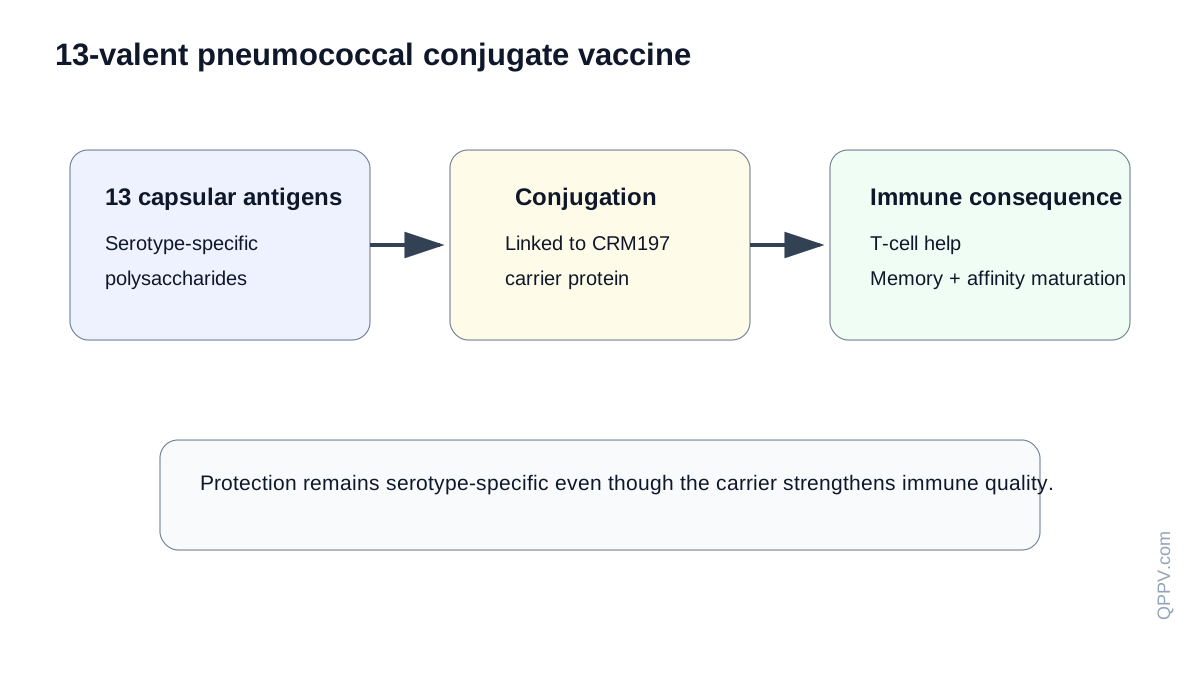
Figure 1. Thirteen serotype-specific capsular polysaccharides are conjugated to CRM197; the carrier protein enables T-cell-dependent immune memory while protection remains serotype-specific.
Historical and Clinical Context
The 13-valent vaccine expanded the serotype coverage of earlier pneumococcal conjugate vaccines and became an important component of paediatric and adult pneumococcal prevention programmes. Higher-valency conjugate vaccines are now available in many jurisdictions, so the 13-valent product often exists within a changing schedule landscape rather than as the only conjugate option.
That transition makes product identification essential. A report saying only 'pneumococcal vaccine' may not establish which serotypes were included or whether the administered sequence followed the applicable age- and risk-based recommendations.
Safety and Pharmacovigilance Domains
Expected reactogenicity
Injection-site pain, erythema and swelling, fever, irritability, fatigue and other short-lived systemic symptoms form part of the expected reactogenicity profile. Case assessment should preserve age, dose number, co-administered vaccines, onset time and clinical severity rather than treating all post-vaccination symptoms as equivalent.
Hypersensitivity and anaphylaxis
Immediate allergic reactions require precise latency, clinical criteria, treatment and outcome. Because the vaccine contains CRM197, history of severe allergic reaction to relevant vaccine components or diphtheria-toxoid-containing products is important according to applicable product information.
Apnoea in premature infants
Very premature infants may require clinical consideration of apnoea risk after vaccination. PV reports should include gestational age, corrected age, respiratory history and monitoring context rather than inferring a general contraindication to vaccination.
Breakthrough Disease and Effectiveness Surveillance
A confirmed pneumococcal infection after vaccination is not interpretable without serotype information. The first question is whether the infecting serotype was represented in the administered vaccine.
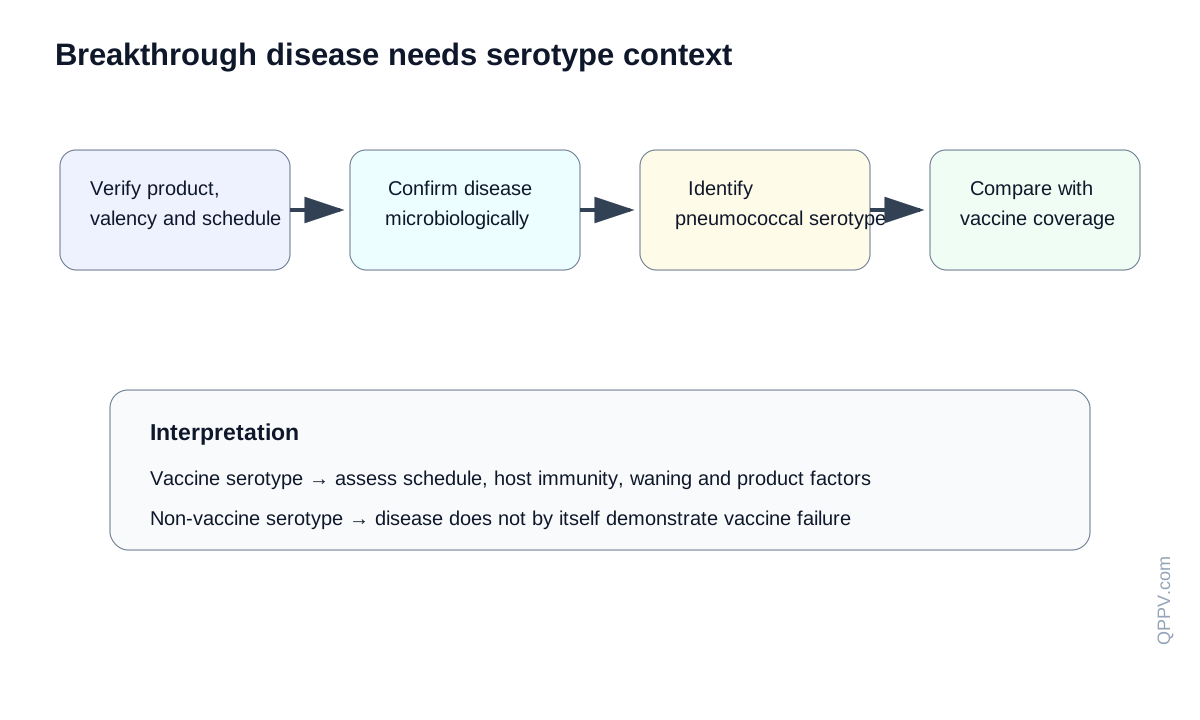
Figure 2. Interpretation of disease after vaccination proceeds from product and schedule verification to microbiological confirmation and serotype comparison with vaccine coverage.
A vaccine-type breakthrough may raise questions about immune response, schedule completion, host immunocompromise, waning protection or unusual epidemiology. A non-vaccine-serotype infection does not demonstrate failure of the vaccine against its intended serotypes.
Medication Errors and Schedule Complexity
Coexistence of 13-valent and higher-valency pneumococcal vaccines creates practical error opportunities. Useful reports identify the exact product, dose, route, age, indication, prior pneumococcal vaccines and intended schedule. Wrong-product or unnecessary-repeat-dose cases should be captured even when no adverse reaction occurs if they meet local reporting requirements or are relevant to safety surveillance.
Special Populations
Immunocompromised patients may have reduced immune responses. This is primarily an effectiveness consideration, although their underlying disease and therapies also complicate adverse-event attribution. In infants and children, multiple vaccines are frequently administered at the same visit, so temporal association alone should not assign causality to one component.
Practical Pharmacovigilance Implementation
For adverse-event cases, useful minimum context includes exact vaccine, lot, dose number, age, route, site, co-administered vaccines, previous pneumococcal vaccines, onset, clinical course and relevant medical history. For suspected breakthrough disease, add microbiological confirmation and serotype whenever available.
Aggregate surveillance should keep reactogenicity and effectiveness questions separate. A rise in fever reports and a rise in vaccine-type invasive pneumococcal disease are different signal problems requiring different denominators, data sources and clinical interpretation.
Potential Failure Modes and Inspection Questions
Illustrative failure modes include collapsing all pneumococcal conjugate products into one exposure category; failing to capture serotype in breakthrough disease; interpreting non-vaccine-serotype infection as failure of vaccine-type immunity; and losing schedule information when patients transition between products of different valency.
An inspector could ask whether vaccine brand/valency and lot are routinely recovered, whether co-administration is captured, how breakthrough infections are linked to microbiology, and how safety data remain interpretable when national immunisation schedules change.
Governance
Vaccine PV interfaces with epidemiology, microbiology, public-health programmes, regulatory affairs and product quality. The safety system must therefore support both individual case assessment and population-level questions about serotype-specific effectiveness.
Key Takeaways
The 13-valent pneumococcal conjugate vaccine uses CRM197 conjugation to convert serotype-specific polysaccharides into stronger T-cell-dependent antigens. Its PV depends on exact product identification because valency determines what the vaccine can reasonably be expected to prevent.
Breakthrough pneumococcal disease is a microbiological question as well as a clinical one. Serotype is central to distinguishing vaccine-type breakthrough from disease caused by a serotype outside vaccine coverage.
References
- U.S. Food and Drug Administration. Prescribing information and regulatory documentation for pneumococcal 13-valent conjugate vaccine (diphtheria CRM197 protein).
- Current official product information for the 13-valent pneumococcal conjugate vaccine, accessed September 2026.
- World Health Organization. Pneumococcal conjugate vaccine position papers and technical guidance.
- European and national immunisation guidance should be consulted for current age- and risk-based schedules where applicable.
Regulatory Note
Pneumococcal vaccination schedules and preferred products change over time and differ by jurisdiction. This article explains product biology and PV interpretation; it does not replace the current national immunisation schedule or locally authorised product information.