Pneumococcal Polysaccharide Conjugate Vaccine (20-Valent): Biology, Serotype Coverage and Pharmacovigilance
The 20-valent pneumococcal conjugate vaccine is designed to protect against disease caused by selected capsular serotypes of Streptococcus pneumoniae. Its architecture combines two biological ideas. First, the bacterial capsule provides serotype-specific polysaccharide antigens. Second, each polysaccharide is chemically linked to a carrier protein, CRM197, converting the immune response from one dominated by carbohydrate recognition into a response that can recruit T-cell help and generate stronger immunological memory.
- Pneumococcal Polysaccharide Conjugate Vaccine (20-Valent): Biology, Serotype Coverage and Pharmacovigilance
- Classification and Molecular Architecture
- Why Conjugation Changes the Immune Response
- Current Regulatory Context
- Safety Profile and Case Interpretation
- Vaccine Failure Is a Serotype Question
- Age, Schedule and Previous Vaccination
- Product and Lot Traceability
- Product-Specific Case Assessment
- Aggregate Surveillance and Effectiveness Interpretation
- Illustrative Failure Modes
- Inspection and Governance Considerations
- Practical Checklist
- Key Takeaways
- References
- Regulatory Note
Classification and Molecular Architecture
The vaccine is a multivalent bacterial conjugate vaccine. It contains purified capsular polysaccharides representing 20 pneumococcal serotypes. These polysaccharides are individually conjugated to CRM197, a non-toxic variant of diphtheria toxin used as a carrier protein, and the final vaccine is adsorbed on aluminium phosphate.
“20-valent” describes antigenic breadth, not complete coverage of all pneumococcal strains. Pneumococcal disease can be caused by serotypes outside the vaccine, and effectiveness can differ among included serotypes and clinical outcomes.
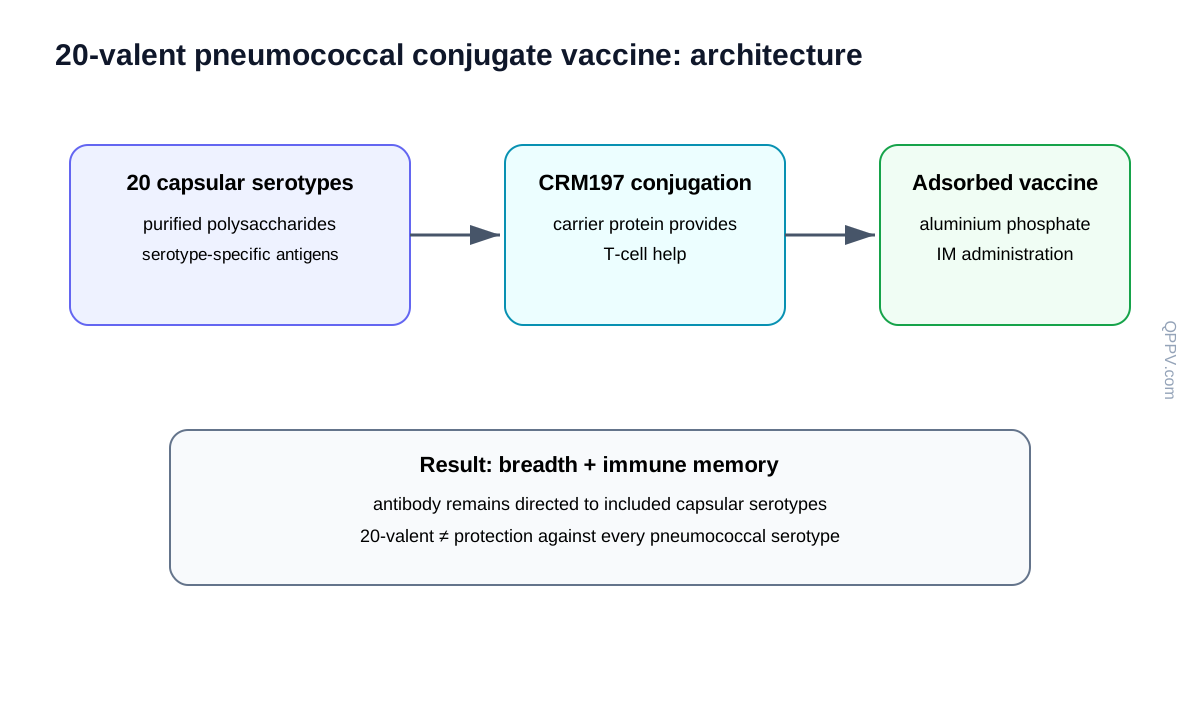
Figure 1. Capsular polysaccharides from 20 pneumococcal serotypes are linked to CRM197, creating serotype-specific antigens with carrier-protein-mediated T-cell help.
Why Conjugation Changes the Immune Response
Unconjugated polysaccharides can activate B cells largely without conventional T-cell help. That response is less effective at producing durable immune memory in young children. Conjugating the polysaccharide to a protein allows polysaccharide-specific B cells to internalise the conjugate, process the carrier protein and present carrier-derived peptides to helper T cells. The resulting T-cell help supports class switching, affinity maturation and memory-B-cell formation.
The carrier protein does not make immunity non-specific. Antibody generated against the capsular polysaccharide remains serotype-directed; CRM197 provides the immunological bridge that improves the quality of that response.
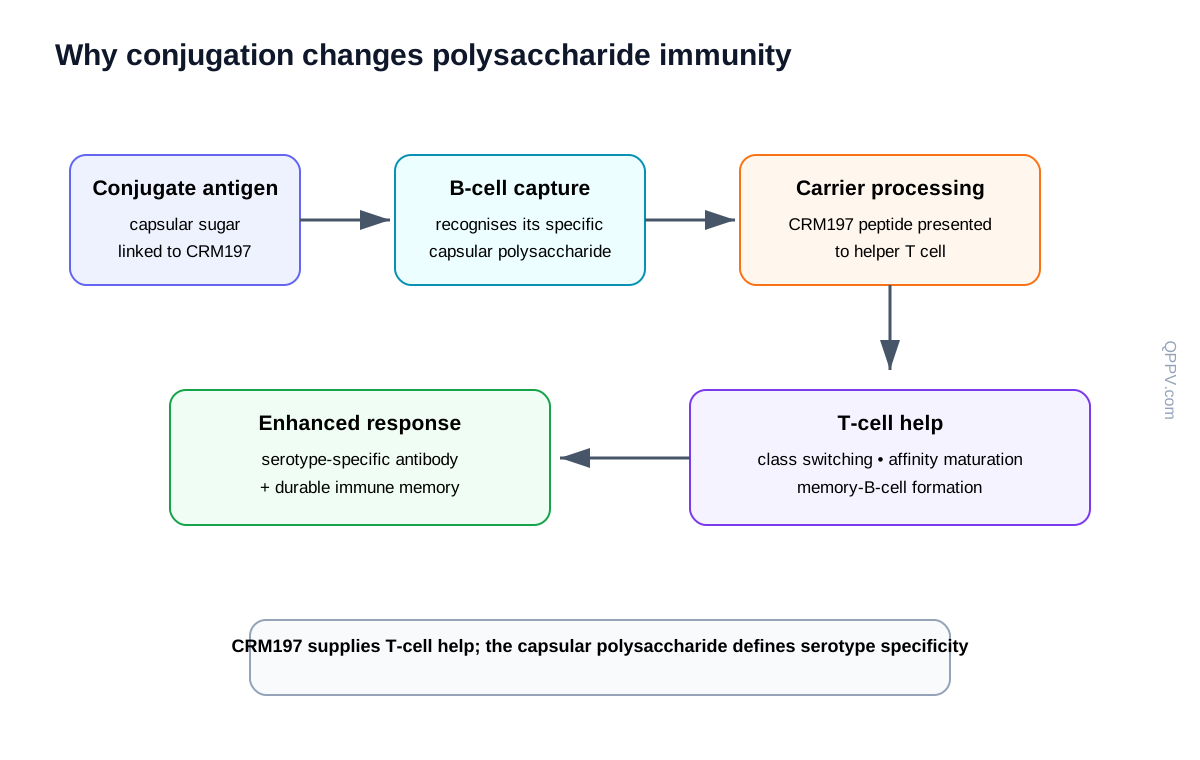
Figure 2. Conjugation allows a polysaccharide-specific B cell to recruit carrier-protein-specific T-cell help, improving antibody quality and immunological memory.
Current Regulatory Context
In the European Union, the current medicine overview states that the 20-valent vaccine is used in adults and children from 6 weeks of age for prevention of invasive pneumococcal disease and pneumonia, and in children from 6 weeks to 17 years for acute otitis media. The number of doses in children depends on age and previous vaccination status; adults generally receive a single dose under the authorised product information and official recommendations.
Current EU product information was last updated on 18 November 2025, and the product remains under additional monitoring. Because immunisation schedules are set within national programmes, the current applicable schedule and prior-vaccine recommendations should be verified rather than inferred from the antigen count alone.
Safety Profile and Case Interpretation
Reactogenicity and fever
Injection-site pain, redness or swelling and systemic symptoms such as fatigue, headache, myalgia, irritability or fever occur in vaccine programmes and should be interpreted in relation to age and co-administered vaccines. In infants and young children, fever assessment should record measured temperature, onset, duration, antipyretic use, seizure occurrence and other vaccines given at the same visit.
Hypersensitivity
Immediate hypersensitivity or anaphylaxis requires precise chronology and objective clinical criteria. Useful follow-up includes previous vaccine or component allergy, onset after injection, respiratory and cardiovascular involvement, treatment, co-administered vaccines and outcome. A local injection-site reaction should not be conflated with systemic allergy.
Syncope and administration-associated events
In adolescents and adults, syncope can occur around vaccination as a procedure-associated response. Falls or injuries are clinically important consequences. Reports should capture timing relative to injection, posture, prodromal symptoms and injury rather than assuming a vaccine-antigen mechanism.
Vaccine Failure Is a Serotype Question
A post-vaccination pneumococcal infection does not by itself demonstrate failure of the vaccine. The organism should be confirmed where possible and the capsular serotype identified. Disease due to a non-vaccine serotype is outside the direct antigenic scope of the vaccine; disease caused by an included serotype requires a different assessment.
For suspected vaccine failure, useful follow-up includes vaccination dates, age at each dose, completion of the age-appropriate schedule, previous pneumococcal vaccines, immune status, anatomical or functional asplenia, underlying disease, microbiological confirmation, serotype, clinical syndrome and outcome.
This is an important example of why “lack of efficacy” coding without biological detail can be misleading. The vaccine is multivalent but not universal.
Age, Schedule and Previous Vaccination
The same 20-antigen formulation is used across age groups, but the immune system and schedule differ. Infants require a priming/booster approach because the objective is to establish durable immunity in an immunologically immature population. Older children and adults may follow different schedules according to age, prior vaccination and official recommendations.
Medication-error assessment should therefore capture chronological age, exact prior pneumococcal vaccine history and the intended schedule. Common operational problems can include an extra dose, missed dose, wrong interval, confusion with another pneumococcal-valency product, administration outside the intended age/schedule, or failure to consider prior vaccination.
Co-administration
Pneumococcal conjugate vaccine may be given with other vaccines according to applicable recommendations. When fever, syncope, allergy or another acute event follows a multi-vaccine visit, all vaccines, injection sites and lots should be recorded. Attribution to one product without preserving co-exposures weakens signal assessment.
Product and Lot Traceability
Vaccines are biological products administered to large populations, often in organised programmes. Exact product and lot therefore matter for detecting clustering, administration errors and potential quality problems. A report of “pneumococcal vaccine” should be followed up to distinguish the 20-valent conjugate vaccine from other conjugate and polysaccharide vaccines.
Product-Specific Case Assessment
| Scenario | High-value follow-up |
|---|---|
| Fever or febrile seizure | Age, temperature, onset, co-vaccines, seizure description, prior history |
| Anaphylaxis | Onset, objective criteria, treatment, previous allergies, co-vaccines |
| Suspected vaccine failure | Dose dates, schedule completion, prior vaccines, immune status, organism and serotype |
| Medication error | Exact product/valency, age, prior vaccination, intended schedule, interval and consequence |
| Lot cluster | Product, lot, vaccination site, date, event phenotype and co-administered products |
For PV, the most important conceptual distinction is between safety surveillance and effectiveness surveillance. Both use post-vaccination data, but they answer different questions and need different denominators and follow-up variables.
Aggregate Surveillance and Effectiveness Interpretation
Aggregate safety review should stratify by age because background rates, co-administered vaccines, reactogenicity and schedules differ substantially between infants, children, adolescents and adults. Analyses of fever or febrile seizure that combine all ages can conceal clinically meaningful patterns.
Effectiveness surveillance requires a different structure. Invasive pneumococcal disease should be examined by serotype when microbiological data permit, vaccination status, time since vaccination and host risk factors. A rise in disease caused by non-vaccine serotypes is epidemiologically important but is not equivalent to failure against an included serotype. This distinction also matters when interpreting serotype replacement at population level.
Illustrative Failure Modes
These are hypothetical operational scenarios rather than reported inspection findings.
- A pneumococcal infection is coded as vaccine failure without obtaining the serotype.
- An infant fever cluster is analysed without accounting for routine co-administered vaccines.
- The safety database records only “pneumococcal vaccine,” losing the valency and lot.
- A schedule error is reviewed without documenting prior pneumococcal vaccination.
- Age groups with different schedules are combined in one medication-error denominator.
- A non-vaccine-serotype infection is interpreted as evidence that the conjugate mechanism failed.
Inspection and Governance Considerations
An inspector could examine whether the PV system preserves product, valency and lot, whether vaccine-failure follow-up actively seeks microbiological serotype data, and whether safety and effectiveness analyses use age-appropriate denominators. Interfaces with medical information, quality, immunisation programmes and epidemiology may be relevant when a signal crosses ordinary ICSR boundaries.
Because the vaccine is used within public-health schedules, recommended operational practice is to record prior pneumococcal vaccination and the schedule being followed. This improves interpretation but does not create a separate statutory reporting requirement.
Practical Checklist
- Identify the exact 20-valent conjugate vaccine and lot.
- Record age, dose number and vaccination date.
- Capture previous pneumococcal vaccines and relevant intervals.
- Record all vaccines co-administered at the visit.
- For fever, obtain measured temperature and clinically significant consequences.
- For hypersensitivity, document objective criteria and treatment.
- For suspected failure, seek organism confirmation and pneumococcal serotype.
- Record immune compromise, asplenia and other host factors relevant to breakthrough disease.
- Separate safety-signal analysis from effectiveness and serotype surveillance.
- Trend medication errors by age, schedule and product identity.
Key Takeaways
The 20-valent pneumococcal conjugate vaccine is a multivalent biological system: 20 capsular-polysaccharide antigens are conjugated to CRM197 so polysaccharide-specific B cells can recruit T-cell help and form higher-quality antibody responses and memory.
Its PV therefore extends beyond ordinary reactogenicity. High-quality surveillance preserves age + schedule + prior pneumococcal vaccination + co-administered vaccines + product/lot, while suspected breakthrough disease additionally requires organism and serotype. Without serotype information, vaccine-failure interpretation is often biologically incomplete.
References
- European Medicines Agency. Prevenar 20 (previously Apexxnar): EPAR and product information. Product information updated 18 November 2025. https://www.ema.europa.eu/en/medicines/human/EPAR/prevenar-20
- European Medicines Agency. Prevenar 20 product information: 20 capsular-polysaccharide CRM197 conjugates, approximately 51 micrograms CRM197 per 0.5 mL dose, adsorbed on aluminium phosphate. https://www.ema.europa.eu/en/documents/product-information/prevenar-20-epar-product-information_en.pdf
- U.S. Food and Drug Administration. PREVNAR 20 — Pneumococcal 20-valent Conjugate Vaccine: current package insert and regulatory information. https://www.fda.gov/vaccines-blood-biologics/vaccines/prevnar-20
Regulatory Note
Pneumococcal immunisation schedules, age groups, previous-vaccine recommendations and public-health programmes differ by jurisdiction and may change. The current local product information and official immunisation recommendations remain controlling. This article distinguishes safety surveillance from vaccine-effectiveness and serotype surveillance; operational follow-up recommendations are not additional legal reporting criteria.