Polatuzumab Vedotin: Classification, History, Mechanism of Action, Safety and Pharmacovigilance
- Polatuzumab Vedotin: Classification, History, Mechanism of Action, Safety and Pharmacovigilance
- Multidimensional classification
- Why CD79b is a useful ADC target
- Development and regulatory evolution
- Safety profile through mechanism and treatment context
- Regimen attribution in DLBCL
- Special situations
- Pharmacovigilance case assessment
- Signal detection and periodic review
- Risk management and operational controls
- Illustrative failure modes
- Inspection and governance perspective
- Key Takeaways
- References
- Regulatory Note
Polatuzumab vedotin is an antibody-drug conjugate directed against CD79b, a component of the B-cell receptor complex expressed on many mature B cells and B-cell malignancies. The antibody provides cellular targeting; the linker connects it to monomethyl auristatin E (MMAE), a potent microtubule inhibitor. After target binding and internalisation, intracellular processing releases cytotoxic payload that disrupts microtubules and can kill the targeted cell.
Its pharmacovigilance profile cannot be understood from the antibody alone. The same treatment may produce peripheral neuropathy through MMAE pharmacology, cytopenias and infection through treatment and marrow effects, infusion reactions through biological administration, and tumour lysis through rapid destruction of susceptible malignant cells. Because polatuzumab vedotin is used in multidrug regimens, attribution must also account for rituximab, chemotherapy, corticosteroids and disease-related immunosuppression.
Multidimensional classification
| Axis | Classification | Why it matters |
|---|---|---|
| Platform | Antibody-drug conjugate | Safety depends on antibody, linker, payload and processing |
| Target | CD79b | Links the ADC to mature B-cell biology and B-cell lymphoma |
| Payload | Monomethyl auristatin E (MMAE) | Microtubule disruption explains neuropathy and cytotoxic effects |
| Linker | Protease-cleavable vedotin linker system | Intracellular processing permits payload release after uptake |
| Therapeutic class | CD79b-directed antineoplastic ADC | Distinct from unconjugated anti-CD20 therapy and other ADCs |
| Treatment architecture | Combination therapy in DLBCL | Regimen attribution is essential for cytopenias, infection and organ toxicity |
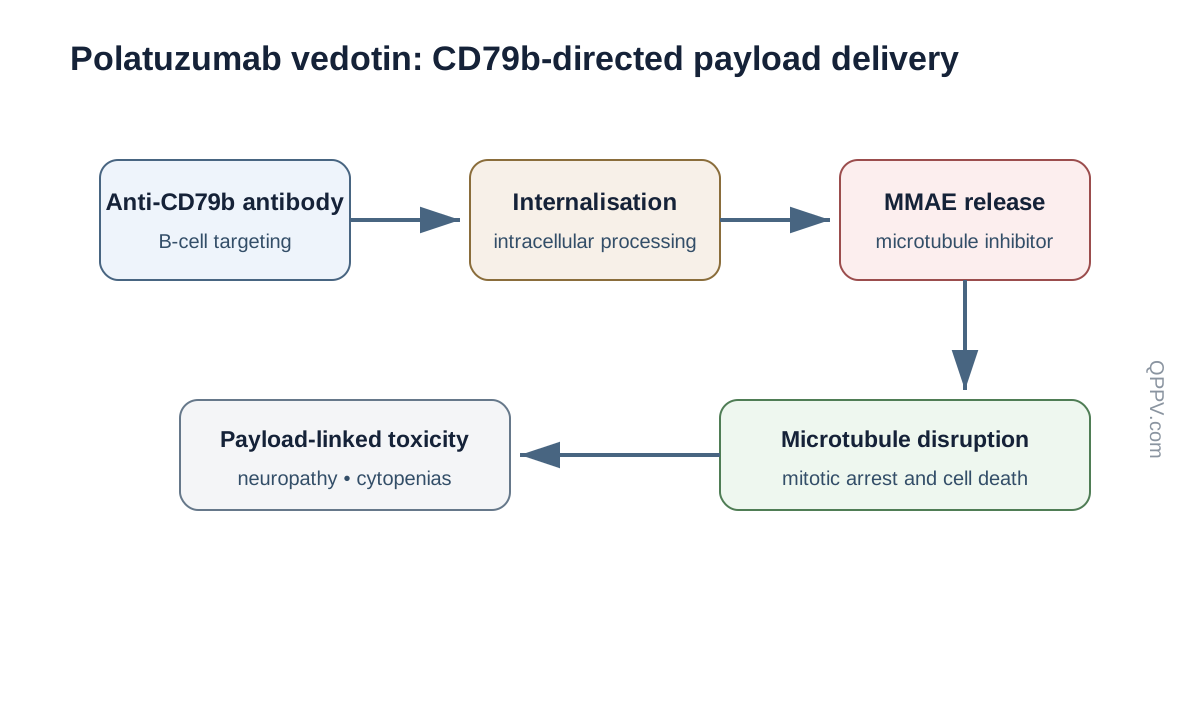
Figure 1. Polatuzumab vedotin uses CD79b recognition to deliver an MMAE microtubule-inhibitory payload to B cells. Targeting, internalisation and payload release are separate mechanistic steps.
Why CD79b is a useful ADC target
CD79b forms part of the signalling apparatus of the B-cell receptor. Its expression on mature B cells and many B-cell lymphomas makes it accessible to antibody binding and suitable for internalisation-based drug delivery. Unlike CD20-directed antibodies whose pharmacology relies heavily on Fc-mediated depletion or complement effects, the principal therapeutic logic here is targeted delivery of a cytotoxic payload.
That difference matters in the comparison with rituximab or obinutuzumab. All can affect B-cell populations, but the mechanism of cell injury is not the same. A neuropathy signal, for example, has little biological relationship to CD20 depletion but is highly compatible with an MMAE-containing ADC.
Development and regulatory evolution
Polatuzumab vedotin was developed for aggressive B-cell lymphoma in which conventional immunochemotherapy does not always produce durable disease control. The first EU authorisation in 2020 addressed relapsed or refractory diffuse large B-cell lymphoma in combination with bendamustine and rituximab for patients not candidates for haematopoietic stem-cell transplantation. The authorised use later expanded to previously untreated DLBCL in combination with rituximab, cyclophosphamide, doxorubicin and prednisone (R-CHP).
This expansion changes the PV population. Relapsed/refractory patients may have greater cumulative marrow injury, immunosuppression and prior neurotoxic exposure, whereas first-line treatment reaches less heavily pretreated patients but adds the ADC to a curative-intent multidrug regimen. Aggregate safety analyses should preserve that distinction.
Safety profile through mechanism and treatment context
Peripheral neuropathy
Peripheral neuropathy is a characteristic MMAE-associated toxicity. Microtubules are essential not only for mitosis but also for axonal transport, so disruption can injure peripheral nerves. Case assessment should document baseline neuropathy, prior vincristine or other neurotoxic treatment, sensory and motor features, functional limitation, onset relative to cumulative exposure, treatment modification and reversibility.
Neuropathy is particularly important in DLBCL because previous and concomitant regimens may already contain neurotoxic agents. A worsening neuropathy case should therefore be assessed longitudinally rather than attributed from onset date alone.
Cytopenias and infection
Neutropenia, thrombocytopenia and anaemia can arise from disease, prior treatment, chemotherapy partners or the ADC itself. Infection risk follows from those haematologic effects as well as lymphoma-associated immune dysfunction, B-cell-directed co-therapy and corticosteroids.
For serious infection, microbiology, site, neutrophil count, immunoglobulin context where relevant, prophylaxis, corticosteroid exposure and timing within the regimen are more informative than a generic term such as “immunosuppression.” Opportunistic infection should trigger review of cumulative treatment rather than a single-agent narrative.
Tumour lysis syndrome
Rapid destruction of a large burden of sensitive lymphoma cells can cause tumour lysis syndrome (TLS), with hyperuricaemia, hyperkalaemia, hyperphosphataemia, hypocalcaemia and acute kidney injury. High tumour burden, renal impairment and treatment sensitivity influence risk. A PV report should preserve pre-treatment disease burden, prophylaxis, laboratory chronology, renal outcome and whether TLS followed the initial exposure or later therapy.
Infusion-related reactions
Acute reactions may include fever, chills, dyspnoea, hypotension, rash or other hypersensitivity-like features. Because other infused biologicals may be administered on the same day, sequence and exact onset from each infusion are essential for attribution.
Progressive multifocal leukoencephalopathy vigilance
Progressive multifocal leukoencephalopathy (PML) is a rare but serious differential diagnosis in immunosuppressed patients with new neurological symptoms. A suspected case requires careful evaluation of MRI findings, cerebrospinal-fluid JC-virus testing, immune status, prior therapies and alternative diagnoses. An initially negative test does not necessarily resolve the question when clinical suspicion remains high.
Hepatic and other organ toxicity
Abnormal liver tests can arise from lymphoma, infection, concomitant therapy or drug toxicity. Assessment should include baseline and serial ALT, AST, alkaline phosphatase and bilirubin, hepatic involvement by lymphoma and co-medications. Payload-containing ADCs should not be treated as pharmacologically inert outside the targeted cell.
Regimen attribution in DLBCL
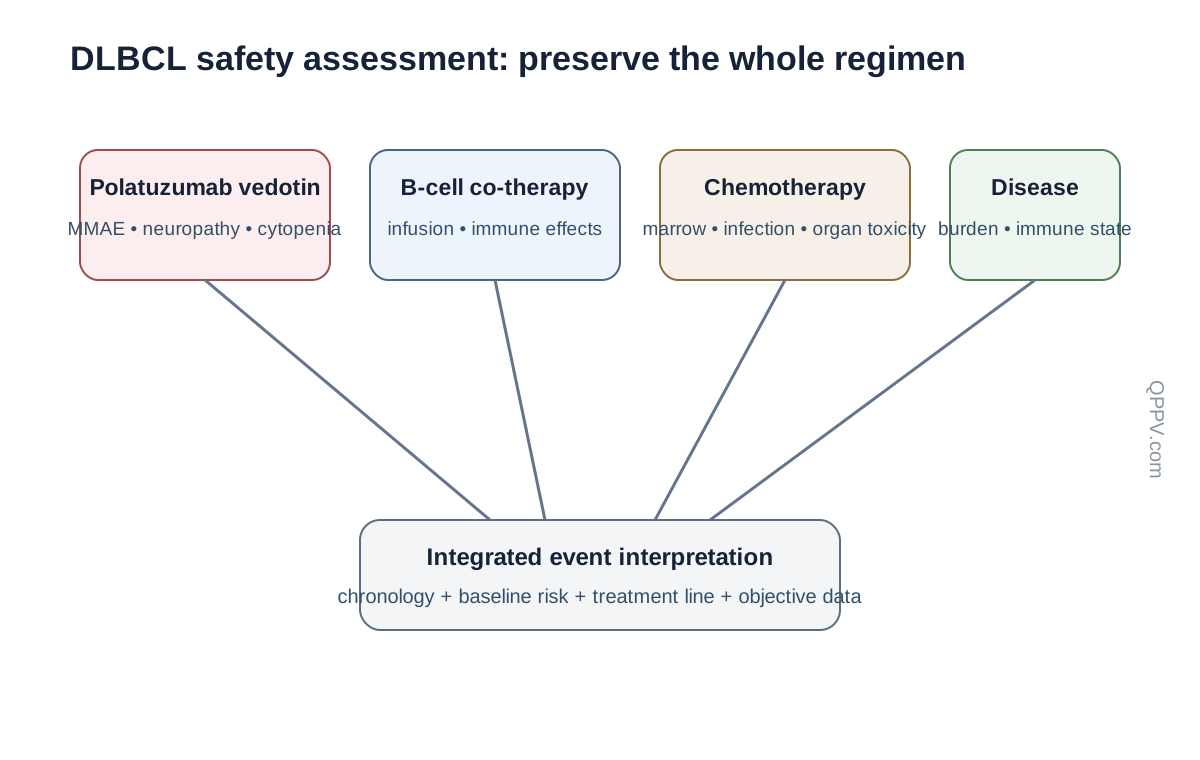
Figure 2. In DLBCL, adverse events may arise from the ADC, rituximab, cytotoxic partners, corticosteroids, disease or prior treatment. PV assessment should preserve the complete regimen and timeline.
The combination context changes causal reasoning. Neutropenia during R-CHP, for example, may reflect cyclophosphamide and doxorubicin as strongly as polatuzumab vedotin. Infusion reactions can arise from more than one infused biological. Infection risk accumulates across the whole regimen. The correct conclusion may therefore be regimen-related without identifying one exclusive causal agent.
Special situations
Pre-existing neuropathy
Patients with pre-existing neuropathy require a baseline neurological picture if later worsening is to be interpreted credibly. “Neuropathy after polatuzumab” is insufficient without knowing the pre-treatment grade and prior exposure to vincristine, taxanes, diabetes or other causes.
Severe infection and delayed recovery
A serious infection occurring after the last ADC dose may still be treatment-related because marrow and immune recovery lag behind plasma exposure. Safety follow-up should therefore extend beyond the immediate dosing interval when the clinical question concerns cumulative immunosuppression.
Product traceability
As a biological ADC, product name and batch information are useful for quality complaints, preparation errors and clusters. The active-substance name should not be truncated to “polatuzumab” in a way that obscures the vedotin payload component.
Pharmacovigilance case assessment
A complete case should reconstruct disease state, prior therapy, current regimen, exact dose dates, baseline marrow and neurological status, infection risk and event chronology.
| Event | High-value follow-up |
|---|---|
| Peripheral neuropathy | Baseline grade, prior neurotoxic therapy, sensory/motor phenotype, functional effect, cumulative exposure, reversibility |
| Neutropenia / infection | ANC trend, cultures, site, hospitalisation, prophylaxis, G-CSF, corticosteroids, concomitant chemotherapy |
| Thrombocytopenia / bleeding | Platelet trend, bleeding phenotype, transfusion, marrow status, anticoagulants |
| TLS | Tumour burden, LDH, renal function, electrolytes, uric acid, prophylaxis, timing from dose |
| Neurologic/PML concern | MRI, CSF JC virus, immune status, prior therapies, alternative diagnosis, neurological evolution |
| Infusion reaction | Which product was infusing, sequence, onset, phenotype, treatment and rechallenge |
| Hepatic injury | Serial liver tests, hepatic lymphoma, infection, co-medications, imaging |
Signal detection and periodic review
Aggregate analyses should stratify by first-line versus relapsed/refractory use, treatment combination, prior neurotoxic exposure and marrow reserve. This is especially important for peripheral neuropathy, neutropenia, severe infection and treatment-related mortality because background risk differs substantially by treatment line.
Known risks remain signal-relevant if their severity, timing, reversibility or risk factors change. A new pattern of late neuropathy or serious infection after treatment completion, for example, can warrant investigation even when the event terms are already established.
Risk management and operational controls
Current product information governs dose modification, laboratory monitoring, infection precautions and treatment management. Recommended PV controls include targeted follow-up for neuropathy, TLS, serious infection, cytopenias and suspected PML; structured capture of treatment line and regimen; and clear medicinal-product dictionaries that preserve the full ADC name.
Illustrative failure modes
The following are hypothetical examples, not published inspection findings:
- A neuropathy signal is evaluated without capturing prior vincristine exposure.
- A febrile-neutropenia case is attributed solely to polatuzumab although chemotherapy timing is absent.
- New cognitive and motor symptoms are coded as disease progression without documenting whether PML was considered.
- A TLS case lacks baseline tumour burden and renal function, making risk-factor assessment impossible.
- A spontaneous report says only “polatuzumab,” and the payload-bearing ADC identity is not resolved.
Inspection and governance perspective
Inspection evidence should demonstrate that the system can connect ADC identity with regimen context and event-specific follow-up. Relevant records may include product dictionaries, targeted questionnaires, coding conventions, signal stratification methods, periodic-report analyses and escalation documentation for suspected PML, TLS or severe infection.
Key Takeaways
Polatuzumab vedotin is a CD79b-directed ADC carrying the microtubule inhibitor MMAE. Its pharmacology combines B-cell targeting with intracellular cytotoxic payload delivery. The most important PV domains include peripheral neuropathy, cytopenias, infection, TLS, infusion reactions, hepatic abnormalities and rare serious neurological events such as PML.
Because it is administered in combination regimens, causality often belongs to the treatment architecture rather than one isolated suspect product. Treatment line, prior neurotoxic exposure, marrow reserve and complete regimen chronology are therefore central to credible assessment.
References
- European Medicines Agency. Polatuzumab vedotin (Polivy): EPAR and current product information. Product information updated 27 May 2026. https://www.ema.europa.eu/en/medicines/human/EPAR/polivy
- Tilly H, Morschhauser F, Sehn LH, et al. Polatuzumab vedotin in previously untreated diffuse large B-cell lymphoma. N Engl J Med. 2022;386:351-363. doi:10.1056/NEJMoa2115304.
- Sehn LH, Herrera AF, Flowers CR, et al. Polatuzumab vedotin in relapsed or refractory diffuse large B-cell lymphoma. J Clin Oncol. 2020;38:155-165. doi:10.1200/JCO.19.00172.
- Dornan D, Bennett F, Chen Y, et al. Therapeutic potential of an anti-CD79b antibody-drug conjugate. Blood. 2009;114:2721-2729. doi:10.1182/blood-2009-02-205500.
Regulatory Note
Authorised combinations, treatment lines, dose-modification rules, warnings and monitoring requirements vary by jurisdiction and may change. Regulatory statements were checked against current EMA information available in September 2026. Operational recommendations are pharmacovigilance practice unless explicitly identified as regulatory requirements.