Pozelimab: Classification, Mechanism and Pharmacovigilance
Pozelimab is a terminal complement inhibitor used for a very rare inherited disease. Its small evidence base and infection precautions are central to understanding both treatment and safety reports.
1. Product identity and clinical context
Pozelimab is the active substance in Veopoz in the United States. The FDA indication is treatment of adults and children aged 1 year and older with CD55-deficient protein-losing enteropathy (PLE), also called CHAPLE disease. The acronym refers to complement hyperactivation, angiopathic thrombosis and protein-losing enteropathy. Disease-causing CD55 deficiency removes an important brake on complement activation; patients can develop intestinal protein loss, low serum albumin, abdominal symptoms, oedema and thrombotic complications.
The FDA approved pozelimab in August 2023 as the first treatment specifically approved for CHAPLE disease. The U.S. regimen begins with an intravenous loading dose and continues with weekly subcutaneous maintenance dosing. This U.S. indication and regimen should not be assumed to apply in jurisdictions without an authorisation or where a different product information is in force.[1,2]
CHAPLE is rare, and the pivotal clinical study enrolled ten patients. That scale affects how precisely benefit, uncommon adverse reactions and long-term outcomes can be estimated. It does not erase the importance of the observed clinical response, but it makes careful follow-up and transparent uncertainty especially important.[3]
2. Classification and mechanism
Pozelimab is a fully human IgG4 monoclonal antibody directed against complement component C5. C5 sits near the end of the complement cascade. When cleaved, it produces C5a, an inflammatory mediator, and C5b, which helps initiate assembly of the membrane attack complex (MAC), a structure that can damage cell membranes.
By binding C5, pozelimab prevents its cleavage and reduces terminal complement activity. In CHAPLE, the intervention is downstream of the deficient CD55 regulatory control. It does not repair the CD55 gene defect; it blocks a downstream effector step while treatment continues.
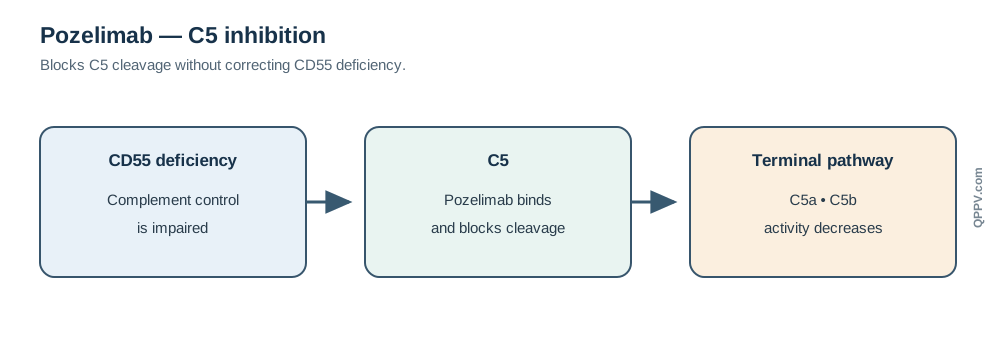
Figure 1. Pozelimab binds C5 and blocks its cleavage into C5a and C5b; this is downstream pathway inhibition, not correction of CD55 deficiency.
3. Clinical evidence and treatment exposure
The pivotal phase 2/3 study was open-label, single-arm and historically controlled. Ten patients received pozelimab; all met the composite primary endpoint at week 24, which required serum-albumin normalisation alongside improvement in active clinical outcomes and no worsening in inactive outcomes. With no concurrent control group and very few participants, this result should be presented as the study’s observed outcome, not as a precise estimate of comparative effect.[3]
The U.S. label describes a 30 mg/kg intravenous loading dose on day 1, followed by 10 mg/kg subcutaneously once weekly from day 8. The label also includes vaccination and prophylaxis instructions. Dose and preparation details are jurisdiction-specific and should be checked against the current product information.[1]
Because treatment suppresses terminal complement activity, interruption or delay may matter clinically. For suspected loss of disease control, capture the last dose, missed or delayed doses, albumin, gastrointestinal symptoms, oedema, thrombotic events, infection and concomitant treatment. A symptom recurrence does not by itself prove pharmacologic failure; the disease, adherence, intercurrent illness and alternative diagnoses need review.
4. Safety and infection prevention
The principal pharmacologic safety concern follows from blocking terminal complement: increased susceptibility to serious infections, particularly meningococcal disease, including infection from strains not covered by available vaccines. The U.S. label directs vaccination against meningococcal serogroups A, C, W and Y and serogroup B before treatment when feasible, and gives additional instructions when urgent therapy cannot wait. Vaccination does not eliminate infection risk.[1]
The label also addresses other bacterial infections, systemic hypersensitivity reactions and immune-complex formation. These are not interchangeable events: record the clinical phenotype, timing, microbiology, laboratory findings and treatment. Fever, abdominal symptoms or general deterioration in a patient with CHAPLE may reflect the underlying illness or infection and require clinical assessment rather than automatic attribution.
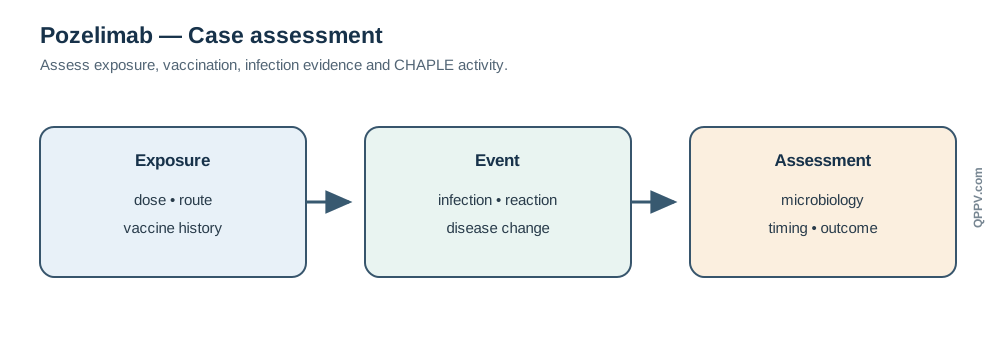
Figure 2. A complement-inhibitor safety review connects dose history and vaccination with infection evidence, disease activity and response.
5. Pharmacovigilance case assessment
For a suspected meningococcal or other serious infection, document onset relative to pozelimab exposure, culture or molecular results, organism and serogroup where known, vaccination dates, antibacterial prophylaxis, treatment and outcome. Record whether complement inhibition was continued or interrupted and the reason. A vaccinated patient may still develop meningococcal disease; the case narrative should not treat vaccination as proof against a biologically plausible risk.
For hypersensitivity, distinguish immediate infusion or injection reactions from delayed symptoms and immune-complex phenomena. Record route, dose, administration rate, objective signs, treatment and whether subsequent dosing occurred. For lack of effect or worsening CHAPLE, capture the clinical measures used, serum albumin, protein loss, gastrointestinal features, oedema, thrombosis and missed doses.
Since the phase 2/3 pivotal study involved ten patients, spontaneous reports and carefully followed real-world cases can add useful information about rare events and longer-term exposure. Individual reports still cannot estimate incidence on their own. Signal evaluation should combine case quality, biological plausibility, exposure denominators where available, clinical-study data and competing explanations.
6. Regulatory context and practical safeguards
Pozelimab’s FDA authorisation is specific to CD55-deficient PLE/CHAPLE in patients aged 1 year and older. Its published U.S. label directs a specific vaccination strategy and warns that serious meningococcal infections can occur despite vaccination. For treatment decisions or safety reporting outside the United States, use the product information and pharmacovigilance requirements of the applicable jurisdiction.[1,2]
Key takeaways
- Pozelimab blocks C5 downstream of CD55 deficiency; it does not correct the inherited defect.
- The pivotal CHAPLE evidence is based on ten patients in a single-arm study.
- Terminal complement inhibition creates a serious infection risk; vaccination reduces but does not remove that risk.
- Interpret each event with dose, vaccine, infection and disease-activity timelines.
References
- U.S. Food and Drug Administration. Veopoz U.S. prescribing information. Current DailyMed label record.
- U.S. Food and Drug Administration. FDA approves first treatment for CD55-deficient protein-losing enteropathy (CHAPLE disease). 18 August 2023.
- Ozen A, et al. Open-label phase 2/3 study of pozelimab in CHAPLE disease. The Lancet Child & Adolescent Health. 2024.
- U.S. Food and Drug Administration. Veopoz Drug Trials Snapshot.
- European Medicines Agency. Good Pharmacovigilance Practices.
Regulatory Note
This article uses the U.S. FDA indication and prescribing information as its product-specific regulatory baseline. It is educational and does not replace current local product information, applicable law or clinical judgement.