Prednisone: Discovery, Development, Safety and Pharmacovigilance
Prednisone is one of the most familiar systemic anti-inflammatory medicines and one of the easiest to underestimate. Its clinical effects can be rapid and dramatic, yet the same glucocorticoid signalling that suppresses damaging inflammation also alters glucose regulation, host defence, bone turnover, mood and the hypothalamic–pituitary–adrenal (HPA) axis. The risks cannot be summarised by a single safe daily dose. They depend on indication, dose, treatment duration, cumulative exposure, concomitant medicines, susceptibility and how treatment is stopped.
This article follows prednisone, the WHO international nonproprietary name (INN), from the corticosteroid discovery era to present formulations and pharmacovigilance. Prednisolone is a different INN: it is the principal active metabolite of prednisone and has its own products and authorisations. Clinical studies of prednisolone can inform glucocorticoid class effects but must not be presented as trials of a prednisone product. Similarly, a 5-mg immediate-release tablet and a 5-mg delayed-release tablet contain the same nominal amount of prednisone but have deliberately different release profiles. [1–4]
- Prednisone: Discovery, Development, Safety and Pharmacovigilance
- Origins: from adrenal hormones to synthetic glucocorticoids
- Pharmacology: what the body does to prednisone
- What constitutes a meaningful benefit–risk assessment?
- Clinical evidence: the indication changes the question
- Regulatory scope and treatment setting
- Safety as a function of exposure and vulnerability
- Product-specific adverse-reaction listedness: US versus Germany
- Practical pharmacovigilance: from exposure to a defensible case assessment
- Signal detection, effectiveness and governance
- Monitoring and prevention in practice
- Key Takeaways
- References
- Regulatory Note
Origins: from adrenal hormones to synthetic glucocorticoids
The modern corticosteroid story began with work on adrenal cortical hormones in the first half of the twentieth century. Edward Kendall and colleagues isolated and characterised adrenal steroid compounds; clinical studies of cortisone and adrenocorticotropic hormone in inflammatory disease then established that hormonal manipulation could substantially change rheumatoid arthritis symptoms. The 1950 Nobel Prize in Physiology or Medicine recognised the foundational adrenal-hormone discoveries, not the later invention of prednisone itself. [1]
Prednisone was developed in the 1950s by Arthur Nobile and colleagues at Schering through modification of the steroid structure. Introducing an additional double bond into the cortisone-derived scaffold increased glucocorticoid anti-inflammatory activity relative to the older parent compound and helped reduce, though not abolish, mineralocorticoid effects. The US delayed-release prednisone label records 1955 as the initial US approval year for prednisone; this is not the approval year of every modern generic or modified-release presentation. [1,3]
This development was an early example of medicinal chemistry improving a naturally occurring hormone's clinical profile while retaining much of its physiological burden. Unlike many recent drugs, prednisone did not enter practice through a single modern phase III programme with one tightly defined indication. Its use expanded across rheumatology, respiratory medicine, transplantation, oncology palliation and other specialties over decades, with much subsequent evidence evaluating how and for how long to use systemic corticosteroids rather than proving the original molecule's first efficacy claim.
Commercial and formulation history
Schering's early programme belongs to the origin story, but subsequent generic manufacturing and distribution cannot be attributed to a single enduring innovator. Prednisone is widely available as immediate-release oral tablets, with products carrying their own marketing authorisations, pack sizes, excipients and labelling. The US Par Health prednisone 5-mg immediate-release tablet, displayed in a DailyMed repackager record, is one concrete example; its current label identifies a June 2026 revision and a September 2026 DailyMed publication. The product must be identified precisely in any listedness comparison rather than treating a generic name as a universal label. [2]
Modified-release development later exploited the circadian pattern of rheumatoid arthritis symptoms. Delayed-release prednisone products release the active ingredient hours after ingestion, aiming to deliver systemic activity during the night when inflammatory signalling can contribute to early-morning stiffness. US Rayos and other US delayed-release prednisone products, and Germany's Lodotra, illustrate this branch of the lifecycle. A formulation's name, authorised indications and administration instructions are jurisdiction-specific; a German Lodotra SmPC is not an EU-wide centrally authorised label. [3,4]
Pharmacology: what the body does to prednisone
Prednisone is largely converted in the liver by 11β-hydroxysteroid dehydrogenase type 1 to prednisolone. Prednisolone binds intracellular glucocorticoid receptors, modifying transcription of inflammatory and metabolic genes. Effects include repression of multiple inflammatory mediators, altered leukocyte trafficking and suppression of immune activation. Some rapid non-genomic actions may also contribute. The medicine therefore does not selectively inhibit a single inflammatory cytokine; it changes multiple pathways in parallel. [2–4]
Conversion matters clinically. Prednisone and prednisolone are often treated as approximately equipotent in standard anti-inflammatory dose-conversion tables, but they are not the same chemical substance. Significant hepatic dysfunction, altered protein binding and interacting drugs can change exposure and response. The German Lodotra information describes extensive first-pass conversion and warns that lower doses may suffice in cirrhosis or hypothyroidism. Dose equivalence is a clinical approximation, not permission to substitute formulations without reviewing their labels. [4]
The plasma elimination half-life is shorter than the biological duration of glucocorticoid effects. Receptor-mediated changes persist after circulating drug concentrations fall. With repeated exposure, exogenous glucocorticoids suppress hypothalamic corticotropin-releasing hormone and pituitary adrenocorticotropic hormone (ACTH), reducing endogenous cortisol production. This negative feedback explains why abruptly stopping prolonged treatment can precipitate adrenal insufficiency even when the original inflammatory disease appears controlled. [5]
Formulation and timing are part of exposure
Immediate-release oral prednisone is typically selected for prompt systemic treatment, with dosing individualised to disease and clinical response. Delayed-release prednisone is not an emergency rescue preparation. The German Lodotra 2026 SmPC describes release approximately 4–6 hours after evening administration and instructs patients to swallow tablets intact with or after food; fasting can reduce bioavailability. The 2024 US Rayos prescribing information similarly requires administration with food and swallowing whole, although its full authorised scope differs from Germany's rheumatoid-arthritis-specific Lodotra indication. [3,4]
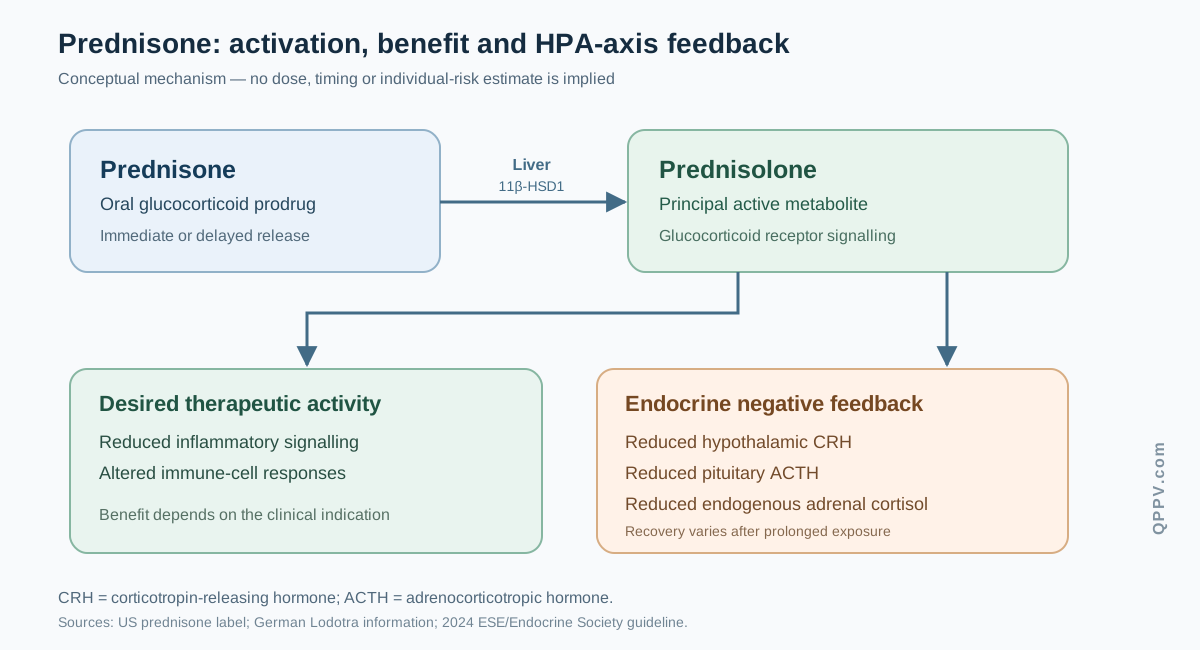
Figure 1. Prednisone is converted to prednisolone, which produces desired anti-inflammatory activity while also suppressing HPA-axis signalling. The diagram is conceptual, not a quantitative pharmacokinetic or dose-response model.
What constitutes a meaningful benefit–risk assessment?
For a short course in an acute exacerbation, the clinical question is whether the improvement justifies a limited period of systemic exposure. For months of maintenance treatment, the question changes: what disease control is achieved that could not be maintained with a safer or more targeted regimen, and how will cumulative harm be prevented or detected? The same milligram dose can have different consequences in a patient with latent infection, diabetes, prior fragility fracture or a history of steroid-associated psychiatric symptoms.
The relevant unit of assessment is therefore the treatment episode and the patient's cumulative corticosteroid history, not merely a prescription line. Pharmacovigilance should capture dose, route, formulation, indication, dates, prior courses, tapering, other glucocorticoids and concomitant immunosuppression. Without those details, an apparently straightforward report of infection, fracture or adrenal crisis may be impossible to interpret.
Clinical evidence: the indication changes the question
Prednisone is used in settings as different as a brief treatment for an acute respiratory exacerbation, control of active rheumatoid arthritis, prevention of transplant rejection and palliation in haematological disease. These settings should not be collapsed into a single efficacy claim. Some uses rely on decades of accumulated clinical experience and disease-specific trials; others have contemporary head-to-head studies examining a shorter course, a modified formulation or a steroid-sparing alternative. [2,3]
Rheumatoid arthritis: a formulation trial is not a class-wide safety trial
The CAPRA programme investigated whether shifting prednisone exposure into the night could improve morning symptoms in rheumatoid arthritis (RA). In CAPRA-1, 288 patients receiving established prednisone therapy were randomised to modified-release prednisone taken in the evening or standard immediate-release prednisone taken in the morning. Over 12 weeks, the prespecified relative reduction in morning-stiffness duration favoured modified release (−22.7% versus −0.4%; reported between-group p=0.045). The difference in absolute minutes did not meet the conventional 0.05 threshold (29.2 minutes; p=0.072). This is a useful example of why endpoint definition matters: the trial supports a relative-stiffness benefit in its studied population, not proof of superiority on every symptom or long-term safety outcome. [6]
CAPRA-2 used a different comparison. In 350 patients with active RA on background disease-modifying antirheumatic drugs (DMARDs), evening modified-release prednisone 5 mg was compared with placebo over 12 weeks. ACR20 responses were reported in 48% versus 29% (p<0.001); ACR50 responses in 22% versus 10%. The trial supports short-term add-on efficacy, but does not establish that prolonged low-dose prednisone is free of infection, bone or metabolic harm. It also does not show that all immediate-release prednisone regimens are inferior to modified release, because its control was placebo rather than active immediate-release prednisone. [7]
A separate, important study, GLORIA, randomised 451 people aged at least 65 years with established RA to prednisolone 5 mg/day or placebo for two years alongside usual care. Disease activity and radiographic progression favoured prednisolone, but the proportion experiencing an adverse event of special interest was 60% versus 49%, with a substantial contribution from infections. The trial is informative for shared glucocorticoid risk assessment; it must be cited explicitly as prednisolone evidence, not mislabelled as a prednisone trial. The two-year follow-up and older population also make it more relevant to cumulative-risk discussion than the 12-week CAPRA studies, without resolving all long-term risks. [8]
| Evidence | Intervention and comparator | Main question | Interpretation limit |
|---|---|---|---|
| CAPRA-1 | Modified-release versus morning immediate-release prednisone | Does release timing change morning stiffness? | Relative endpoint positive; absolute-minute difference not conventionally significant |
| CAPRA-2 | Modified-release prednisone plus DMARD versus placebo plus DMARD | Does a low-dose add-on improve RA activity? | Twelve weeks; no definitive chronic-harm estimate |
| GLORIA | Prednisolone versus placebo, both with usual care | What is the two-year efficacy–harm balance in older RA patients? | Different INN; selected RA population and follow-up |
This comparison also illustrates a business and product-development distinction. A chronotherapeutic formulation can be commercially differentiated through its release technology and dosing schedule without becoming a different INN. Conversely, demonstrating improvement in a symptom endpoint does not make the molecule newly discovered or establish a broad safety advantage.
COPD exacerbations: shorter treatment, less exposure
The REDUCE trial compared prednisone 40 mg daily for five days with the same dose for 14 days in adults presenting with an acute exacerbation of chronic obstructive pulmonary disease (COPD). The randomised, double-blind noninferiority design enrolled 314 participants; the primary analysis found the shorter course noninferior for time to next exacerbation within six months (hazard ratio 0.95; 90% CI 0.70–1.29, within the trial's prespecified margin). Mean cumulative prednisone exposure was approximately 379 mg versus 793 mg in the analysed groups. [9]
The correct conclusion is narrower than “five days is always enough.” REDUCE supports reduced exposure in a population resembling its enrolled COPD exacerbation patients, under the studied management and noninferiority margin. It does not settle treatment of asthma, severe immune disease, transplant rejection or every COPD exacerbation phenotype. Nor did its lack of a statistically detectable difference in certain adverse events prove equivalence of all rare toxicities; the trial was not powered to exclude small differences in infrequent outcomes.
Pulmonary sarcoidosis: a genuine alternative challenges tradition
The PREDMETH trial, published in 2025, compared initial prednisone with methotrexate in 138 previously untreated patients with pulmonary sarcoidosis. It was an open-label noninferiority study with change in percent-predicted forced vital capacity at week 24 as its primary endpoint. Methotrexate met the prespecified noninferiority criterion; the adjusted between-group difference was −1.17 percentage points (95% CI −4.27 to 1.93) against a five-point margin. Adverse-event types differed: weight gain, insomnia and appetite increase were prominent with prednisone, while nausea, fatigue and abnormal liver tests were important with methotrexate. [10]
This is not evidence that methotrexate is universally interchangeable with prednisone in every organ manifestation or urgent presentation of sarcoidosis. It does demonstrate why established first-line status should be revisited when comparative trials and treatment burden change. From a PV perspective, switching to a steroid-sparing drug replaces one risk profile with another; it does not remove the need for safety monitoring.
The negative and missing evidence matters
A trial that shows faster symptom relief may not demonstrate lower mortality, fewer fractures or improved quality of life years later. A noninferiority trial can support an alternative only within its enrolled population, chosen margin and endpoint. A short-term trial cannot reliably quantify late cataracts, osteonecrosis or vertebral fractures. Observational safety signals can be affected by the severity of the underlying disease and other medicines, while randomised trials may be too small or too short for uncommon harms.
A particularly relevant observational study of short oral corticosteroid courses in commercially insured US adults reported increased short-term rates of sepsis, venous thromboembolism and fracture after dispensing. These associations strengthen the case for judicious prescribing but do not establish that every event was caused by prednisone; the analysis included oral corticosteroids as a class, not solely prednisone. The study's incidence-rate ratios are not directly transportable to every age group, indication or health system. [11]
Regulatory scope and treatment setting
The June 2026 US Par Health immediate-release prednisone 5-mg tablet labelling describes a broad range of inflammatory, allergic, endocrine, haematological, respiratory and other conditions. The March 2024 US Rayos delayed-release label also describes broad therapeutic categories but imposes formulation-specific administration instructions. In contrast, the January 2026 German Lodotra SmPC identifies moderate-to-severe active rheumatoid arthritis in adults, particularly with morning joint stiffness, as its indication. These are different products in different jurisdictions, not contradictory statements about one universal authorisation. [2–4]
Where a national label or professional guideline describes glucocorticoid use, it should not be rewritten as a binding EU-wide rule. Decisions about individual indications, dose, taper and prevention of adverse effects must be grounded in the actual product information and applicable disease-specific clinical guidance. Off-label practice, where legally permitted, must be identified as such rather than silently folded into the authorised indication.
Safety as a function of exposure and vulnerability
The pharmacology of prednisone explains much of its safety profile, but it does not predict exactly which patient will experience an adverse reaction. Some effects are dose-related and common, such as hyperglycaemia, appetite increase and sleep disturbance. Others are less frequent but potentially serious, such as severe infection, psychosis, osteonecrosis, gastrointestinal bleeding or adrenal crisis after withdrawal. The clinical importance of each event depends on severity, reversibility, background risk and whether an alternative therapy could achieve the same disease control. [2–5]
Infection and impaired host defence
Systemic glucocorticoids can increase susceptibility to infection, reactivate latent infection, worsen an existing infection and mask fever or inflammatory signs. Prednisone-associated immunosuppression is not confined to a single pathogen: tuberculosis, varicella, fungal and opportunistic infections require attention according to exposure and epidemiological context. The January 2026 German Lodotra information specifically cautions about Strongyloides hyperinfection in patients with suspected or established infection. Infection surveillance should therefore include travel or residence history, concomitant immunosuppressants and the possibility that symptoms were suppressed before diagnosis. [2,4]
The label warning about immunosuppressive-dose corticosteroids and live vaccines should not be converted into a blanket statement that every low-dose user is prohibited from every vaccination. Vaccine type, dose, duration, indication and applicable immunisation guidance matter. The risks of withholding essential anti-inflammatory treatment can also be substantial; the operational objective is individualised prevention and early detection, not indiscriminate avoidance of prednisone.
Metabolic, cardiovascular and psychiatric effects
Hyperglycaemia may appear rapidly, especially in patients with diabetes or limited pancreatic reserve. Weight gain, increased appetite, fluid retention, hypertension and dyslipidaemia become important over longer exposure. Hypokalaemia can be accentuated by potassium-wasting medicines, while anticoagulants and nonsteroidal anti-inflammatory drugs can complicate bleeding risk. A patient who develops a new glucose abnormality during treatment needs assessment of baseline glycaemia, the steroid regimen and the underlying illness, rather than automatic attribution to one cause. [2–4]
Sleep disturbance, agitation, mood changes, depression, mania and psychosis are clinically relevant. Severe psychiatric reactions require prompt assessment, particularly where a temporal relationship with starting or increasing a glucocorticoid is apparent. In a case narrative, distinguish a new syndrome from pre-existing psychiatric disease, delirium related to infection or metabolic disturbance, and withdrawal symptoms. A reaction can be serious even if its label frequency is unknown.
Bone, muscle, eyes and skin
Glucocorticoids reduce bone formation and can increase fracture risk before bone-density loss becomes obvious. Vertebral fractures may occur without a major traumatic event. Other recognised effects include myopathy, osteonecrosis, tendon injury, thin skin, bruising, impaired wound healing, posterior subcapsular cataract, raised intraocular pressure and glaucoma. Both the US immediate-release label and German Lodotra SmPC describe many of these risks. [2,4]
The American College of Rheumatology's 2022 guideline, published in 2023, addresses patients expected to receive glucocorticoids at a prednisone-equivalent dose of at least 2.5 mg/day for more than three months. It recommends early fracture-risk assessment and risk-stratified prevention or treatment. These are professional guideline recommendations, not universal statutory pharmacovigilance reporting rules. The guideline also acknowledges that many prevention trials measure bone mineral density rather than being powered for fracture outcomes. [12]
Adrenal suppression, withdrawal and intercurrent stress
Prolonged systemic treatment can suppress the HPA axis. Symptoms during dose reduction may reflect relapse of the treated disease, glucocorticoid withdrawal syndrome, true adrenal insufficiency, or more than one of these processes. Fatigue and myalgia alone cannot reliably distinguish them. Severe hypotension, vomiting, altered consciousness or collapse after cessation or during acute illness may indicate adrenal crisis and require emergency clinical assessment. [5]
The 2024 European Society of Endocrinology/Endocrine Society guideline identifies systemic exposure lasting approximately three to four weeks or longer and exceeding physiological replacement equivalents (about 4–6 mg prednisone daily) as thresholds at which risk becomes relevant; individual variability remains important. These are risk-screening thresholds, not a declaration that every shorter or lower course is harmless. The guideline recommends tapering strategies guided by duration, dose and clinical condition, with more caution as physiological doses are approached. A fixed universal taper is not supported for every indication. [5]
Product-specific adverse-reaction listedness: US versus Germany
This assessment was performed on 1 November 2026 using two identified prednisone products and their available current public professional information:
- United States: Par Health USA prednisone immediate-release oral tablet 5 mg, DailyMed set ID
290a91e5-22ae-4d62-ab34-39a3117002e2, label revised June 2026, current DailyMed version published 10 September 2026. The assessed sections are Warnings, Precautions and Adverse Reactions. [2] - Germany: Mundipharma Lodotra modified-release prednisone tablets 1, 2 and 5 mg, German national professional information (Fachinformation) January 2026, assessed sections 4.1–4.8. This is a German national product information document, not a centrally authorised EMA SmPC. [4]
Both sources are about prednisone, but they differ in formulation, authorised indication and adverse-reaction presentation. Neither is the label for a prednisolone product. The comparison below distinguishes reactions explicitly in the adverse-reaction section from warnings or clinical observations elsewhere.
| Safety topic | US immediate-release prednisone, adverse reactions / warnings | German Lodotra modified-release, SmPC 4.8 / warnings |
|---|---|---|
| Infection and immune suppression | Infection aggravation or masking and immunosuppression listed; infection precautions in warnings | Increased susceptibility/severity and masking or reactivation listed as common; additional infection precautions in 4.4 |
| HPA suppression / Cushingoid effects | Secondary adrenal or pituitary unresponsiveness and Cushingoid effects listed; withdrawal warning | Adrenal suppression and Cushing syndrome listed as common |
| Hyperglycaemia, appetite, weight | Decreased glucose tolerance, diabetes and appetite/weight changes listed | Reduced glucose tolerance, diabetes, appetite increase and weight gain listed as common |
| Sleep and psychiatric disorders | Insomnia, mood change, depression, mania and psychosis listed | Insomnia common; depression, irritability, euphoria and psychosis rare |
| Osteoporosis, fractures, osteonecrosis | Osteoporosis, pathological or vertebral fractures, and aseptic necrosis listed | Osteoporosis common; osteonecrosis rare; fractures listed with frequency unknown |
| Ocular effects | Cataracts, glaucoma and central serous chorioretinopathy listed | Cataracts and glaucoma common; central serous chorioretinopathy frequency unknown |
| Scleroderma renal crisis | Not identified in the assessed US adverse-reaction section | Explicitly listed with frequency unknown, with additional explanatory text |
| Thromboembolism and vascular effects | Thromboembolism and thrombophlebitis listed | Increased thrombosis risk and hypertension categorised as uncommon |
These are label-specific listedness statements, not a head-to-head estimate of incidence. The US generic label largely enumerates reported corticosteroid reactions without assigning frequency categories, while the German product information uses frequency categories and warns that dose and treatment duration affect severity. A German frequency category must not be copied into the US label or interpreted as the observed rate for every prednisone user. [2,4]
Scleroderma renal crisis deserves special attention: it is expressly present in German Lodotra section 4.8, whereas the assessed US immediate-release adverse-reaction list does not identify it. This does not prove that the event is impossible with the US product, that the event is absent from every other US label, or that it is automatically unexpected in a particular case. The relevant reference safety information, product, jurisdiction and version must be determined before a formal expectedness or listedness decision.
The distinction between a listed adverse reaction, a warning, an observed trial event and a case-level expectedness assessment is essential. Public USPI or SmPC comparison cannot substitute for the company's approved reference safety information or establish causality. When a label contains a reaction only in warnings rather than in its adverse-reaction section, record that placement explicitly rather than treating all label mentions as equivalent.
Pregnancy, lactation and special populations
Animal studies identify potential fetal developmental effects of systemic glucocorticoids, while human pregnancy evidence is confounded by maternal disease and co-treatment. The US generic label uses older pregnancy-category language; the German Lodotra information discusses the uncertainty surrounding human cleft-palate risk and possible neonatal adrenal suppression after substantial exposure. These descriptions should not be flattened into a claim of a quantified, established human malformation risk. Maternal disease control and the exact product information remain central to decision-making. [2,4]
In children, growth velocity and cumulative exposure deserve attention; the German Lodotra indication is for adults and its information does not recommend paediatric use because of insufficient data. In older adults, infection, falls, diabetes, bone fragility and polypharmacy alter the benefit–risk balance. Patients with cirrhosis, thyroid dysfunction or substantial interacting medication may require particular assessment. No single monitoring interval is appropriate for every treatment episode.
Practical pharmacovigilance: from exposure to a defensible case assessment
A useful prednisone safety record begins before the suspected event. For a patient receiving repeated courses, the pharmacovigilance question is not simply whether prednisone was prescribed on the day of the event. The relevant exposure may include an earlier high-dose course, a recent taper, a change from immediate to delayed release, concomitant inhaled or injected corticosteroids, and interacting immunosuppressants. Repeated exposure may be recorded across different prescribers and indications. A cumulative history can materially change interpretation of an infection, fragility fracture or adrenal event.
The minimum useful case narrative
Capture the exact active substance and product, manufacturer when known, immediate- or delayed-release formulation, strength, prescribed and actually taken dose, route, frequency, start/stop dates, missed doses, taper steps and the clinical indication. Record the onset and course of the suspected reaction, objective findings, seriousness, treatment, dechallenge/rechallenge information where naturally available, relevant medical history and alternative causes. For a serious infection, include microbiology, baseline immunosuppression and concurrent biologics or cytotoxic therapy; for a fracture, prior osteoporosis, trauma and other steroid exposure; for adrenal insufficiency, the taper timeline, acute illness and relevant endocrine testing. [2–5]
A suspected adverse drug reaction does not require proof of causality before appropriate reporting. Conversely, temporal association alone does not justify assigning definite causality. The reporter's account should be preserved separately from the assessor's medical interpretation. Use the applicable pharmacovigilance definitions, seriousness criteria and reporting rules for the organisation and jurisdiction; this article does not invent a universal submission deadline or replace the relevant GVP procedures.
Four recurring failure modes
A course that was not really short. A patient receives several nominal five-day courses from different clinicians over a few months. Each prescription looks limited, but the total systemic exposure and indications are fragmented. Medication reconciliation, pharmacy records and a single longitudinal exposure timeline may reveal a different risk picture.
A taper mistaken for recurrence. Fatigue, nausea and dizziness appear during reduction of long-term prednisone. The original disease may be controlled, yet adrenal insufficiency or withdrawal syndrome is possible. Assessment should document vital signs, intercurrent illness, timing, endocrine evaluation where indicated and the clinical rationale for any change; indiscriminately increasing the dose without diagnosis can obscure the problem. [5]
A formulation change treated as a generic substitution. A patient switches from a morning immediate-release tablet to an evening delayed-release tablet and then reports loss of symptom control or a dosing error. Investigate whether the product was taken with food and swallowed intact, whether timing instructions were understood and whether the substitution was authorised. The same nominal milligram strength does not guarantee the same time-of-day concentration profile. [3,4]
An infection with masked signs. A patient on prednisone and another immunosuppressant develops a serious infection after nonspecific symptoms. A low-grade or absent fever should not be used to dismiss infection. Assess concomitant immunosuppression, latent infection risk, delayed recognition, severity and the potential role of the underlying disease. [2,4]
These are illustrative case patterns, not reports of actual patients or regulatory inspection findings.
Signal detection, effectiveness and governance
For signal review, stratify reports by indication, daily and cumulative dose, treatment duration, age, co-medications and formulation when data permit. A disproportionality finding for a common corticosteroid reaction may reflect prescribing patterns, disease severity, stimulated reporting or confounding. Signal validation requires case-level clinical review, biological plausibility, temporality, external epidemiology and comparison with the existing product information. The large exposed population and long marketing history do not remove the possibility of newly recognised risks in a particular subgroup.
Effectiveness of risk minimisation should be evaluated against observable outcomes. For example, a steroid-exposure reconciliation intervention can be assessed by the proportion of high-risk patients with a documented cumulative history; a bone-protection programme by completed risk assessments and appropriate treatment decisions; and adrenal-suppression education by documented counselling and the management of intercurrent illness. These are examples of sensible quality indicators, not legally mandated metrics for every marketing authorisation holder. [5,12]
For multinational safety operations, maintain a product-information matrix that identifies the actual authorisation and label revision in each market. The German Lodotra SmPC cannot be substituted for an Irish or centrally authorised EU label: the Irish HPRA record for Lodotra, for example, lists its national authorisation as withdrawn in March 2016. A withdrawn authorisation is a jurisdictional status, not evidence that the molecule is globally withdrawn or unsafe. [13]
Monitoring and prevention in practice
At initiation or review, clinicians should establish the intended indication, expected treatment duration and a plan to reassess whether systemic glucocorticoid exposure can be reduced. For patients likely to receive longer courses, review blood pressure, weight, glucose status, infection risk, bone health, eye symptoms, mood and interacting drugs according to individual risk. Ask about earlier steroid courses and non-oral exposure. If a clinically important adverse reaction occurs, document the risk–benefit reasoning behind continuation, modification, alternative treatment or discontinuation.
For patients approaching withdrawal after prolonged therapy, an individualised taper and education about possible adrenal insufficiency are particularly important. The 2024 endocrine guideline provides a structured approach to risk and recovery; the 2022 ACR osteoporosis guideline offers risk-stratified bone protection. Neither document replaces a product label or the treating clinician's disease-specific plan. [5,12]
Operational checklist
- Confirm the INN, product, jurisdiction, formulation and label version before interpreting a safety statement.
- Reconstruct actual dose, duration, cumulative exposure, taper and co-medications, not merely the most recent prescription.
- Assess infection, metabolic, psychiatric, skeletal, ocular and adrenal risks in light of the patient's background conditions.
- Distinguish an adverse-reaction listing from a warning, clinical-trial observation, class effect or case-level expectedness decision.
- For serious or unexpected events, preserve objective evidence, alternative explanations, clinical outcome and the exact exposure timeline.
- Follow applicable local reporting, escalation and risk-management procedures; evaluate whether prevention and patient education were effective.
Key Takeaways
Prednisone's value lies in broad and often rapid suppression of inflammation, but its liabilities arise from the same systemic glucocorticoid biology. The original 1950s medicinal-chemistry programme led to decades of generic use; later delayed-release development sought to change when drug activity occurs rather than create a new active substance. CAPRA, REDUCE and PREDMETH answer different questions about formulation, duration and steroid-sparing alternatives, while GLORIA is explicitly prednisolone evidence. [1,6–10]
The safest interpretation of an adverse event is product-specific, time-specific and exposure-aware. In particular, the 2026 US immediate-release prednisone label and January 2026 German Lodotra SmPC share many recognised reactions but differ in indication, frequency presentation and certain explicit listed terms. Clinical judgement, label review, and a defensible longitudinal exposure record are more useful than a single unqualified statement that prednisone is either safe or dangerous. [2,4]
References
- American Chemical Society. Prednisone. Molecule of the Week, 22 June 2009; historical update 4 August 2024. https://www.acs.org/molecule-of-the-week/archive/p/prednisone.html
- US National Library of Medicine, DailyMed. Prednisone 5-mg immediate-release tablets, Par Health USA (set ID 290a91e5-22ae-4d62-ab34-39a3117002e2). Label revised June 2026; DailyMed version published 10 September 2026. Accessed 1 November 2026. https://dailymed.nlm.nih.gov/dailymed/drugInfo.cfm?setid=290a91e5-22ae-4d62-ab34-39a3117002e2
- US Food and Drug Administration. Rayos (prednisone) delayed-release tablets, prescribing information. Revised March 2024; FDA application 202020, supplement 013. Accessed 1 November 2026. https://www.accessdata.fda.gov/drugsatfda_docs/label/2024/202020s013lbl.pdf
- Mundipharma GmbH. Lodotra 1/2/5-mg modified-release prednisone tablets: German Fachinformation. January 2026; sections 4.1–4.8 and 5.2. Accessed 1 November 2026. https://www.fachinfo.de/fi/detail/011708/lodotra-r-1-mg-2-mg-5-mg-tabletten-mit-veraenderter-wirkstofffreisetzung
- Beuschlein F, et al. European Society of Endocrinology and Endocrine Society joint clinical practice guideline: diagnosis and therapy of glucocorticoid-induced adrenal insufficiency. J Clin Endocrinol Metab. 2024;109:1657–1683. https://doi.org/10.1210/clinem/dgae250
- Buttgereit F, et al. Efficacy of modified-release versus standard prednisone to reduce morning stiffness in rheumatoid arthritis (CAPRA-1). Lancet. 2008. PMID: 18207016. https://pubmed.ncbi.nlm.nih.gov/18207016/
- Buttgereit F, et al. Low-dose prednisone chronotherapy for rheumatoid arthritis (CAPRA-2). Ann Rheum Dis. 2013. https://pubmed.ncbi.nlm.nih.gov/22562974/
- Boers M, et al. Low-dose add-on prednisolone in rheumatoid arthritis aged 65+: GLORIA randomised trial. Ann Rheum Dis. 2022. PMID: 35641125. https://pubmed.ncbi.nlm.nih.gov/35641125/
- Leuppi JD, et al. Short-term versus conventional glucocorticoid therapy in COPD exacerbations: REDUCE trial. JAMA. 2013;309:2223–2231. https://pubmed.ncbi.nlm.nih.gov/23695200/
- Wijsenbeek MS, et al. First-line treatment of pulmonary sarcoidosis with prednisone or methotrexate (PREDMETH). N Engl J Med. 2025. https://www.nejm.org/doi/full/10.1056/NEJMoa2501443
- Waljee AK, et al. Short-term use of oral corticosteroids and related harms among US adults. BMJ. 2017;357:j1415. https://www.bmj.com/content/357/bmj.j1415
- Humphrey MB, et al. 2022 American College of Rheumatology guideline for prevention and treatment of glucocorticoid-induced osteoporosis. Arthritis Rheumatol. 2023;75:2088–2102. https://doi.org/10.1002/art.42646
- Health Products Regulatory Authority (Ireland). Lodotra national authorisation record, PA1688/015/001, withdrawn 14 March 2016. Accessed 1 November 2026. https://www.hpra.ie/find-a-medicine/for-human-use/authorised-medicines/details/29137
Regulatory Note
This article distinguishes historical research, individual marketing authorisations, clinical evidence, current public product information and recommended clinical or pharmacovigilance practice. US prescribing information and a German national SmPC are not interchangeable with each other or with an EU-wide authorisation. Public-label listedness is not company-core listedness, case-specific expectedness, proof of causality or an individual reporting determination. Confirm the current locally applicable product information and regulatory requirements before clinical or safety-reporting decisions. Research and label access date: 1 November 2026.