Ramucirumab: Mechanism, Clinical Safety and Pharmacovigilance
Ramucirumab is an intravenous antibody that binds vascular endothelial growth factor receptor 2 (VEGFR2). This receptor contributes to endothelial signalling and the formation of tumour-associated blood vessels. Blocking VEGFR2 can interfere with tumour angiogenesis, while also making vascular, wound-healing and bleeding complications key safety concerns.
The safety assessment must remain anchored to the actual clinical event. Haemorrhage in a patient with gastrointestinal cancer may reflect tumour erosion, portal hypertension, anticoagulation, thrombocytopenia or treatment. A delayed wound complication may involve comorbidity and recent surgery as well as anti-angiogenic therapy. Mechanism helps structure questions; it does not establish individual causality.
Clinical Role and EU Authorisation
Ramucirumab is authorised in the EU for specific advanced cancer settings. These include gastric or gastro-oesophageal junction adenocarcinoma; metastatic colorectal cancer after prior bevacizumab-, oxaliplatin- and fluoropyrimidine-based treatment; selected locally advanced or metastatic non-small-cell lung cancer settings; and hepatocellular carcinoma with alpha-fetoprotein (AFP) at least 400 ng/mL after prior sorafenib.[1,2]
The indication and combination regimen vary. Depending on the cancer setting, ramucirumab may be used alone or with a defined chemotherapy or targeted therapy. Record the tumour type, stage, treatment line, biomarker criteria where relevant, prior systemic therapy and all combination agents. These details inform expected background events and help distinguish ramucirumab-associated concerns from toxicities of the regimen or complications of progressive cancer.
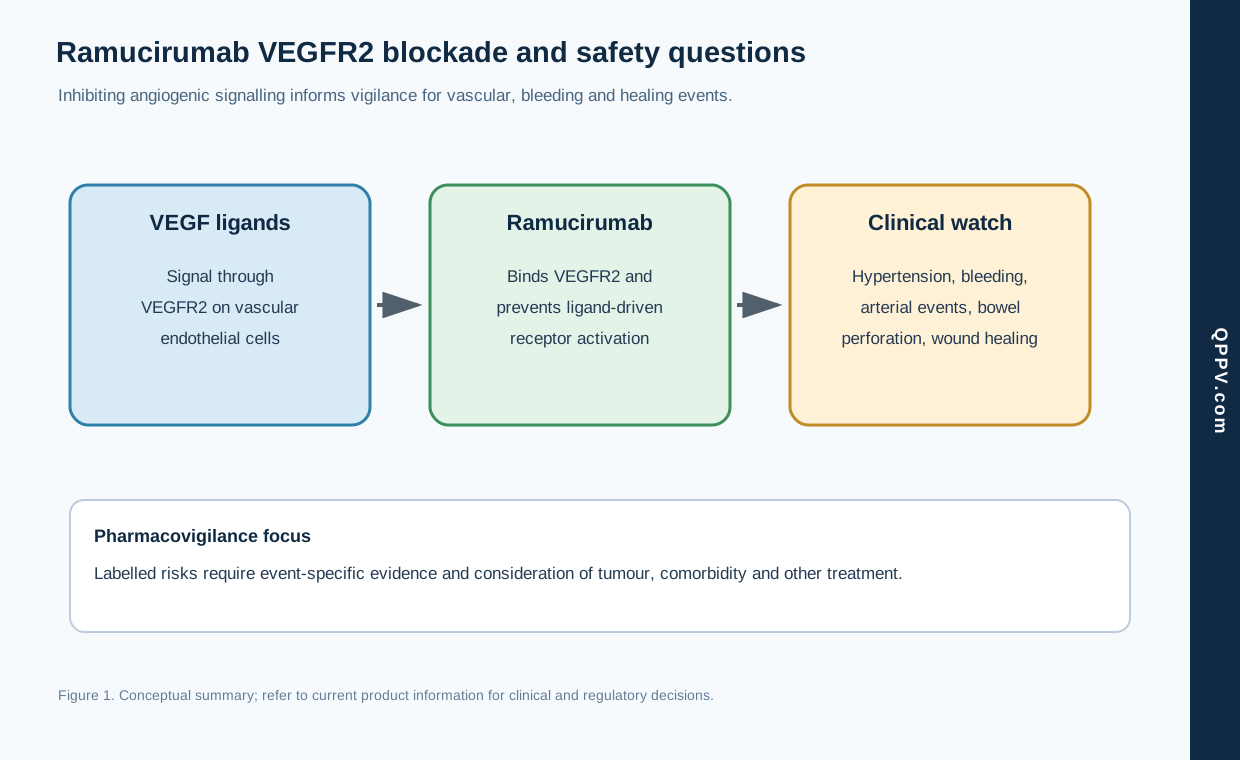
Figure 1. Ramucirumab blocks VEGFR2-mediated signalling involved in angiogenesis. The mechanism supports vigilance for labelled vascular, bleeding, wound-healing and gastrointestinal risks without proving causality in an individual event.
Classification and Molecular Design
Ramucirumab is a recombinant human IgG1 monoclonal antibody that specifically binds VEGFR2, also known as KDR or FLK-1. The receptor is expressed on endothelial cells. Binding prevents activation by vascular endothelial growth factors and inhibits downstream signalling associated with endothelial proliferation, migration and survival.[2]
This is a receptor-blocking antibody rather than a cytotoxic antibody-drug conjugate. Its pharmacologic action is directed at angiogenic signalling. Tumour response and vascular adverse reactions are clinical outcomes that require measurement; they cannot be inferred from receptor occupancy alone.
Anti-angiogenic pharmacology provides a rationale for attention to hypertension, proteinuria, haemorrhage, arterial thromboembolic events, gastrointestinal perforation, fistula formation and wound healing. The product information also describes other clinically significant risks, including infusion-related reactions, reversible posterior leukoencephalopathy syndrome, hyponatraemia and aneurysm or arterial dissection. Each event should be assessed with the current label and clinical evidence rather than a general assumption that every vascular problem is treatment-related.
Risk Pattern and Clinical Context
The product information warns of arterial thromboembolic events, including myocardial infarction, cardiac arrest, cerebrovascular accident and cerebral ischaemia; severe bleeding; gastrointestinal perforation; and impaired wound healing.[2] Their seriousness and urgency mean that a report should include the clinical diagnosis and objective evidence where available: imaging, endoscopy, operative findings, haemoglobin trends, transfusion, intervention and outcome.
For haemorrhage, record the site, onset, severity, source, tumour status, platelet count and coagulation findings, anticoagulants or antiplatelet medicines, and any history relevant to bleeding risk. In hepatocellular carcinoma, note whether portal hypertension or varices were present and what assessment was performed. For gastrointestinal perforation, capture symptoms, imaging or surgical confirmation, affected site, infection, and potential contributions from tumour, bowel disease, prior surgery or other treatment.
Before planned surgery or invasive procedures, wound status and the interval from last administration are clinically relevant. If impaired healing is reported, include the procedure date, wound type, evidence of dehiscence or infection, nutritional and vascular comorbidity, and management. Do not reduce a complex postoperative complication to a single mechanism without supporting evidence.
Hypertension and Proteinuria
Hypertension is an important labelled adverse reaction. Record baseline and serial blood pressure, symptoms, antihypertensive changes, severity, acute complications and whether ramucirumab was delayed or stopped. Severe hypertension can accompany several conditions and medicines, so timing and clinical assessment remain necessary.
Proteinuria should be described with the measurement method, amount, trend, renal function, urinalysis, relevant baseline kidney disease and any associated symptoms. A dipstick result and a quantified urine protein measure are not interchangeable; retain the source units and test date. Distinguish a laboratory finding from nephrotic syndrome or another diagnosed renal event, and document the action taken.
Infusion Reactions and Other Events
An infusion-related reaction can occur with intravenous ramucirumab. For an acute event, record infusion start and stop times, onset, observed symptoms and vital signs, interventions, response and any subsequent re-exposure. Note premedication and the administration sequence for other same-day medicines. A precise narrative supports differentiation among an infusion reaction, hypersensitivity, infection, cardiopulmonary disease and an unrelated acute event.
Other labelled events may include gastrointestinal fistula, reversible posterior leukoencephalopathy syndrome, hyponatraemia and aneurysm or arterial dissection. For a suspected neurologic syndrome, capture blood pressure, neurologic findings, imaging, seizure or visual symptoms, and alternative explanations such as metastasis or metabolic disturbance. For electrolyte disorders, include the measured sodium, trend, symptoms, volume status and concomitant medicines.
Case Evaluation Framework
A product-specific case reconstruction should answer the following:
- Which indication and treatment line applied? Record cancer type, stage, biomarkers and prior treatment relevant to the authorised setting.
- What was the regimen? Identify ramucirumab and every concomitant anticancer agent, with doses, dates, cycle number, treatment sequence and recent changes.
- What was the event? Preserve the reporter’s term and add objective clinical detail: site, grade or severity, tests, intervention, hospitalisation and outcome.
- What risk factors and alternatives were present? Include recent surgery, wounds, tumour invasion, hypertension, vascular disease, bleeding history, portal hypertension or varices where relevant, anticoagulation, antiplatelets, thrombocytopenia, infection and organ function.
- What changed after treatment? Record withholding or discontinuation, clinical course, resolution, sequelae, rechallenge and recurrence.
For a serious event, seek discharge summaries, procedure or imaging reports, relevant laboratory trends, specialist assessments and the reporter’s causality view. Missing information should be named, not silently interpreted as negative.
Seriousness, Expectedness and Attribution
Seriousness is determined by regulatory criteria, including death, life-threatening outcome, hospitalisation or prolongation, persistent or significant disability, congenital anomaly or another medically important condition. The intensity of a bleed, blood pressure elevation or laboratory change does not by itself establish seriousness; the clinical consequence and intervention matter.
Expectedness must be assessed against the applicable current reference safety information for ramucirumab and each suspected combination medicine. A listed risk is not automatically expected in every form or severity. Record the precise reaction and compare it with the relevant wording. For combination cases, do not assume that a known toxicity belongs only to chemotherapy or only to ramucirumab.
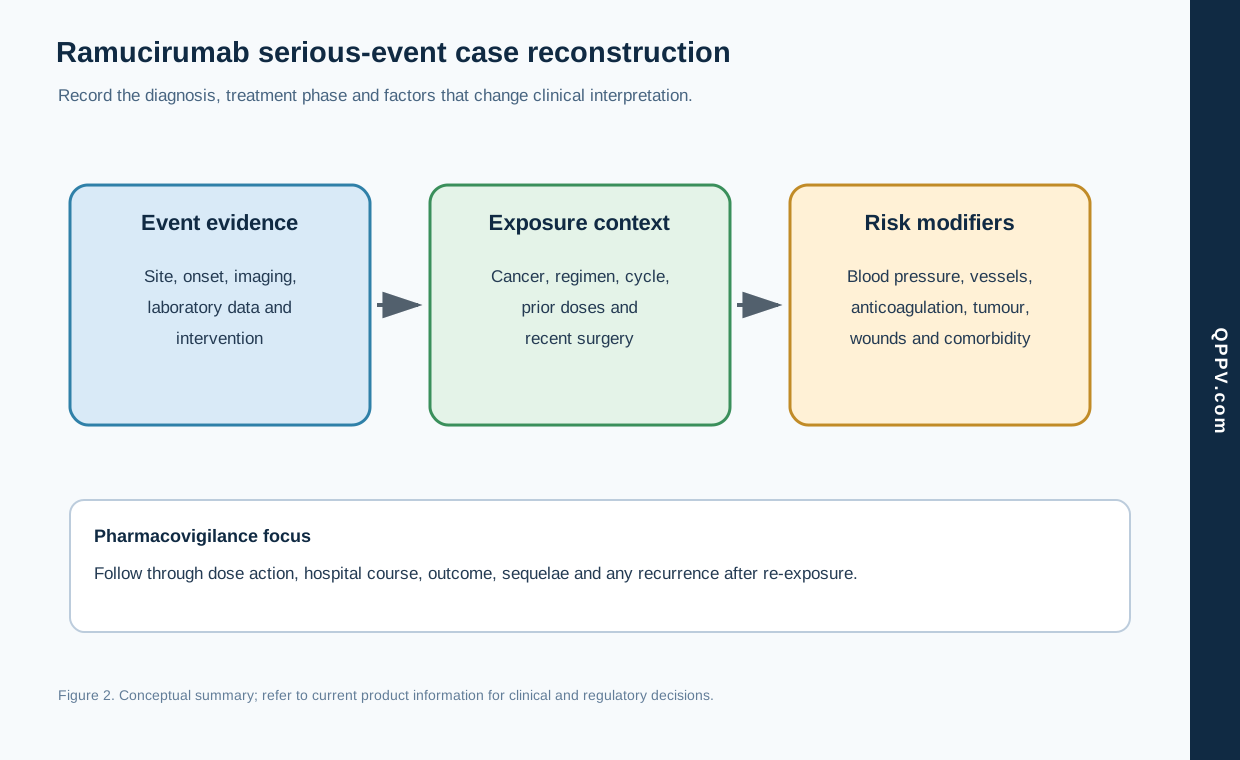
Figure 2. A serious-event assessment connects objective evidence with the regimen, recent surgery and patient-specific vascular or bleeding factors.
Practical Synthesis
Ramucirumab’s anti-VEGFR2 action makes vascular events, serious bleeding, gastrointestinal perforation and wound complications central to safety surveillance. The most informative reports connect a specific diagnosis to treatment timing, indication, regimen, baseline risk, objective findings and clinical outcome. Context is especially important in advanced cancer, where tumour burden, prior therapy, surgery and comorbidity can produce similar events.
Pharmacovigilance should use the mechanism to ask better questions while preserving uncertainty where evidence is incomplete. A clear timeline and well-described competing causes support proportionate assessment of causality, seriousness, expectedness and potential risk-minimisation needs.
References
- European Medicines Agency. Cyramza: European Public Assessment Report. EU overview of authorised cancer settings and public safety information.
- European Medicines Agency. Cyramza: product information. Current Summary of Product Characteristics and package leaflet.
- European Medicines Agency. Good pharmacovigilance practices, including Module VI on collection, management and submission of suspected adverse reaction reports.
- International Council for Harmonisation. E2C(R2): Periodic Benefit-Risk Evaluation Report. Principles for structured benefit-risk evaluation and safety information.
Regulatory Note
This article is an educational pharmacovigilance resource, not a substitute for the current product information, clinical judgement or applicable reporting requirements. Indications, warnings and risk-minimisation measures may change. Consult the current European Medicines Agency product information and relevant national requirements before making a clinical or regulatory decision.