Ravulizumab: Classification, History, Mechanism of Action, Safety and Pharmacovigilance
Ravulizumab is a long-acting monoclonal antibody against complement component C5. Its therapeutic logic is simple at first sight: prevent C5 cleavage and thereby suppress the terminal complement pathway. The clinical consequences, however, depend on why complement is causing disease. In paroxysmal nocturnal haemoglobinuria (PNH), terminal complement destroys vulnerable red cells; in atypical haemolytic uraemic syndrome (aHUS), dysregulated complement contributes to thrombotic microangiopathy; in anti-acetylcholine-receptor-positive generalised myasthenia gravis (gMG), complement damages the neuromuscular junction; and in aquaporin-4-antibody-positive neuromyelitis optica spectrum disorder (NMOSD), complement contributes to inflammatory astrocyte injury.
The molecule is also an instructive example of antibody engineering changing pharmacokinetics without changing the fundamental safety mechanism. Ravulizumab was derived from the C5-blocking antibody eculizumab and engineered so that C5 dissociates more readily from the antibody in the acidic endosome, while the antibody is efficiently recycled through the neonatal Fc receptor (FcRn). The result is a substantially longer serum half-life and longer dosing interval. The susceptibility to invasive meningococcal infection, however, remains a consequence of C5 blockade itself.
- Ravulizumab: Classification, History, Mechanism of Action, Safety and Pharmacovigilance
- Multidimensional classification
- Complement biology
- From eculizumab to a long-acting C5 inhibitor
- Development and regulatory history
- How the same C5 mechanism produces different therapeutic effects
- Safety architecture
- Treatment interruption and loss of complement control
- Switching from eculizumab
- Disease-specific pharmacovigilance evidence
- Special situations
- Pharmacovigilance case assessment
- Signal detection and aggregate review
- Periodic benefit-risk evaluation
- Risk management and operational controls
- Potential failure modes
- Inspection and governance perspective
- Practical checklist
- Key Takeaways
- References
- Regulatory Note
Multidimensional classification
| Classification axis | Ravulizumab classification | Pharmacovigilance significance |
|---|---|---|
| Molecular format | Humanised full-length monoclonal antibody | Systemic biological requiring product and batch traceability |
| Target | Complement protein C5 | Prevents generation of C5a and C5b-9 |
| Functional class | Terminal-complement inhibitor | Benefit and meningococcal susceptibility arise from the same mechanism |
| Engineering principle | pH-dependent C5 release with FcRn-mediated recycling | Extends exposure and dosing interval relative to eculizumab |
| Current EU disease settings | PNH, aHUS, AChR-antibody-positive gMG and AQP4-antibody-positive NMOSD | The same target must be interpreted against four different disease phenotypes |
| Administration | Weight-based systemic treatment | Dose timing and treatment interruption are important case variables |
| Core safety domain | Serious meningococcal and other susceptible infections | Vaccination reduces but does not eliminate risk |
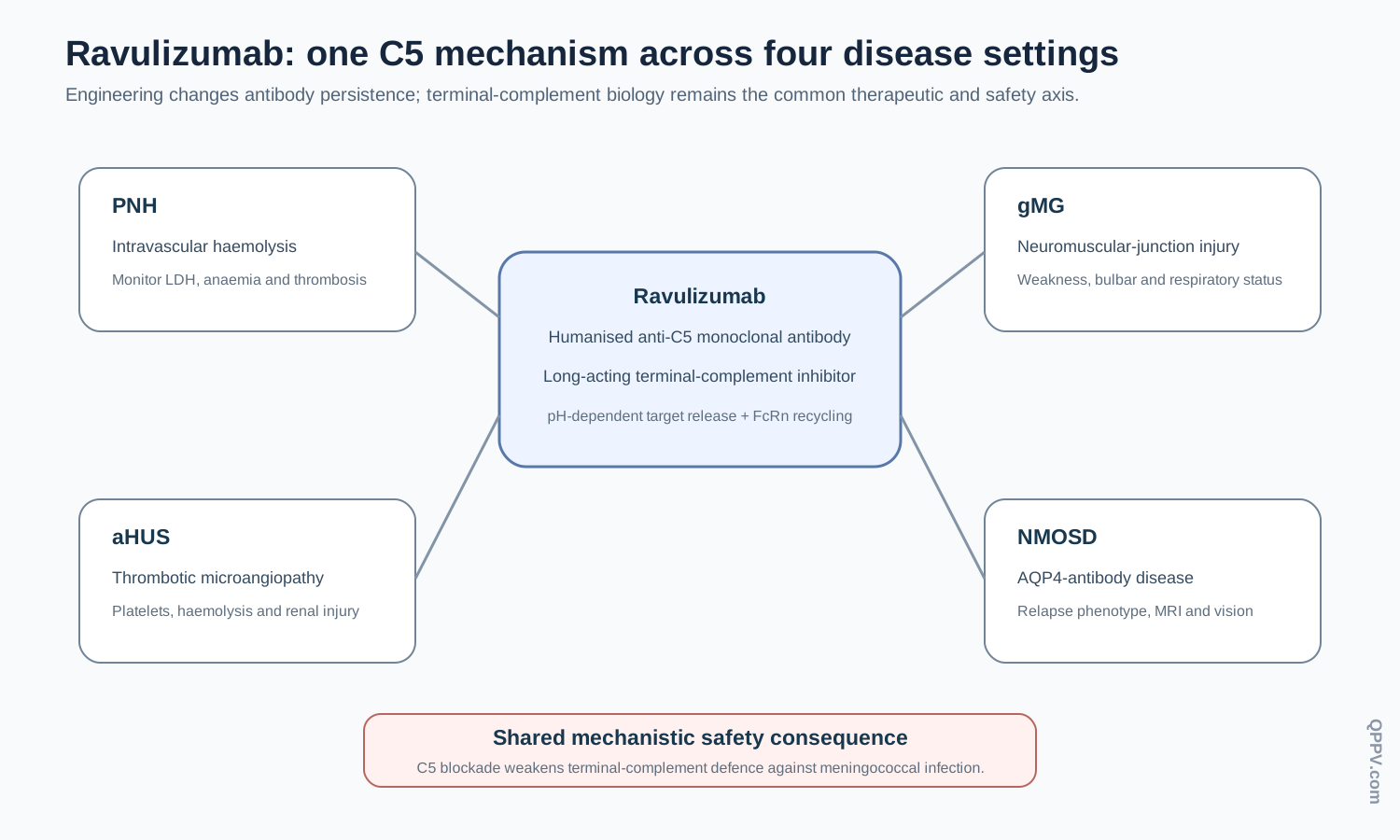
Figure 1. Ravulizumab combines a stable C5 mechanism with engineered prolonged exposure. Its safety interpretation changes with disease context even though terminal-complement blockade is shared.
Complement biology
Complement is a network of circulating and cell-surface proteins that forms part of innate immunity. Classical, lectin and alternative pathways converge on C3 activation and then on cleavage of C5. Cleaved C5 produces two important terminal effectors: C5a, a potent inflammatory mediator, and C5b, which initiates assembly of the membrane-attack complex C5b-9.
This creates a useful conceptual split. Upstream complement helps recognise and opsonise targets, whereas terminal complement contributes both to inflammatory amplification and direct membrane injury. Blocking C5 can therefore protect tissues from pathological terminal-complement activity while simultaneously weakening a host-defence mechanism that is particularly important against Neisseria meningitidis.
From eculizumab to a long-acting C5 inhibitor
Ravulizumab and eculizumab recognise C5 and prevent terminal-complement activation, but ravulizumab was engineered to remain in circulation longer. Amino-acid substitutions alter how the antibody behaves after the antibody-C5 complex is internalised. At the acidic pH of the endosome, ravulizumab releases C5 more efficiently; the antibody can then bind FcRn and return to the circulation rather than being degraded with its target.
The scientific analogy is a reusable carrier rather than a permanently occupied one. The carrier still transports the same type of cargo interaction—in this case C5 binding—but releases the cargo in a cellular compartment that allows the antibody to be recycled. This changes exposure and dosing frequency; it does not create a new complement target.
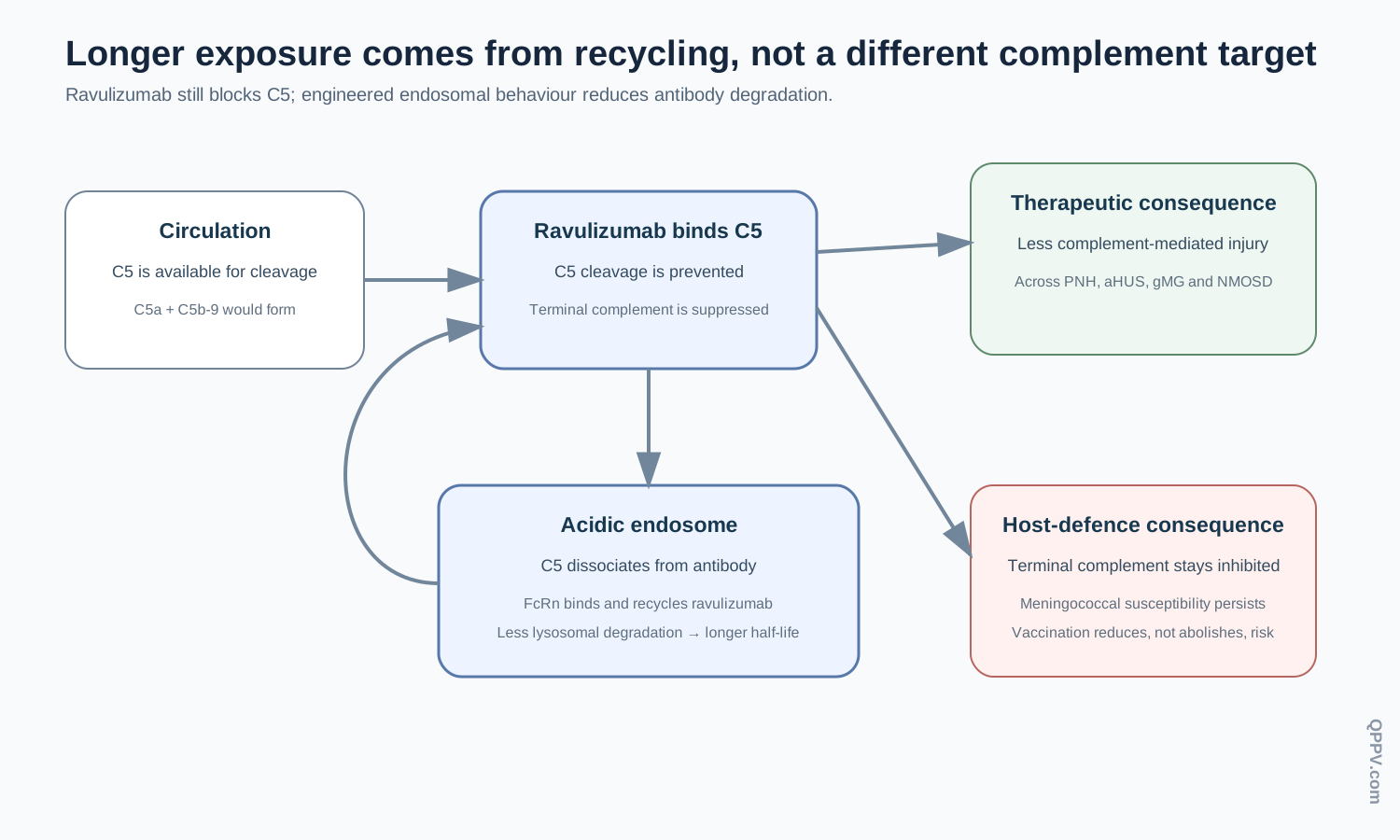
Figure 2. Ravulizumab blocks C5 in the circulation. pH-dependent target release in the endosome permits FcRn-mediated antibody recycling, extending systemic exposure while preserving the same terminal-complement mechanism.
Development and regulatory history
Ravulizumab was developed after clinical experience with eculizumab established C5 as a tractable therapeutic target. The European Union first authorised ravulizumab in July 2019 for PNH. Its authorised use subsequently expanded as terminal-complement involvement was demonstrated in additional diseases.
Current EU product information, updated in July 2026, includes PNH in adults and children weighing at least 10 kg, aHUS in patients weighing at least 10 kg, add-on treatment of anti-AChR-antibody-positive gMG in adults, and treatment of AQP4-antibody-positive NMOSD in adults. The PNH and aHUS labels also accommodate defined transitions from eculizumab in patients with controlled disease.
This expansion illustrates why a target-based medicine should not be treated as having one universal disease model. Complement is the shared effector pathway, but the upstream pathology, markers of loss of control and clinical consequences of interruption differ across PNH, aHUS, gMG and NMOSD.
How the same C5 mechanism produces different therapeutic effects
In PNH, a somatic PIGA mutation in a haematopoietic stem-cell clone impairs synthesis of glycosylphosphatidylinositol anchors. Red cells derived from that clone lack adequate surface complement regulators, particularly CD55 and CD59, and become vulnerable to complement-mediated intravascular haemolysis. C5 blockade reduces terminal-complement injury, but it does not remove the PNH clone or eliminate every cause of anaemia, thrombosis or fatigue.
In aHUS, dysregulation of the alternative complement pathway produces endothelial injury and thrombotic microangiopathy. Ravulizumab suppresses the terminal effector pathway, but a report of anaemia, thrombocytopenia or kidney injury still requires assessment for infection, malignant hypertension, transplant-associated injury, drug-induced thrombotic microangiopathy and other competing causes.
In AChR-antibody-positive gMG, pathogenic autoantibodies activate complement at the postsynaptic membrane. Terminal-complement blockade reduces complement-mediated damage at the neuromuscular junction. Clinical follow-up therefore depends on weakness, bulbar or respiratory involvement and validated disease measures rather than haematological markers used in PNH.
In AQP4-antibody-positive NMOSD, aquaporin-4 antibodies bind astrocytes and can activate complement. Preventing terminal-complement amplification reduces the risk of inflammatory relapses affecting the optic nerve and spinal cord. Here, a new neurological episode requires rapid distinction among true relapse, infection, structural disease and other neurological causes.
Safety architecture
Meningococcal infection is the defining mechanistic risk
Terminal complement is particularly important for defence against Neisseria. Patients receiving C5 inhibitors can develop rapidly progressive and life-threatening meningococcal infection even after vaccination. Current product information therefore requires implementation of the applicable meningococcal vaccination and infection-prevention recommendations, together with patient education about symptoms requiring urgent medical assessment.
Vaccination must not be represented as complete biological protection. The treated patient remains pharmacologically complement-deficient while C5 blockade persists. Pharmacovigilance follow-up for suspected meningococcal infection should therefore capture vaccination dates and vaccine type, prophylactic antibiotics where applicable, organism and serogroup, blood or cerebrospinal-fluid culture/PCR, presentation, antimicrobial treatment, intensive-care requirements, outcome and ravulizumab exposure chronology.
Other infections
The complement mechanism also justifies vigilance for other Neisseria infections and serious infection more generally. Not every infection in a treated patient is caused by ravulizumab; age, immunosuppressive co-therapy, chronic kidney disease, central lines and the underlying autoimmune disease can all modify risk. Aggregate analysis should therefore preserve organism, anatomical site, seriousness and co-treatment rather than collapse all reports into a single infection count.
Infusion and hypersensitivity reactions
As an intravenously administered biological, ravulizumab can be associated with infusion-related reactions and hypersensitivity. A useful case reconstruction includes infusion number, onset relative to the infusion, symptoms, vital signs, interruption or rate change, treatment, resolution and outcome after subsequent exposure. Fever, headache or hypotension occurring during an infusion should not automatically be coded as a generic infusion reaction if infection or disease deterioration is plausible.
Treatment interruption and loss of complement control
The clinical consequences of missing or stopping treatment are disease-specific. In PNH, loss of terminal-complement suppression can permit renewed intravascular haemolysis and increase thrombotic risk. In aHUS, recurrent complement-mediated thrombotic microangiopathy can damage the kidney and other organs. In gMG, worsening weakness can culminate in bulbar or respiratory compromise. In NMOSD, a relapse can produce irreversible visual or neurological disability.
This is why pharmacovigilance should capture both safety events and loss-of-efficacy or disease-recurrence events after interruption. A missed infusion is not merely a medication-error term. It can be the exposure explanation for a clinically serious relapse of the underlying complement-mediated process.
Switching from eculizumab
Ravulizumab was specifically developed to maintain C5 inhibition with less frequent dosing, and current labels include defined switching schedules from eculizumab. Safety interpretation during a transition requires the last eculizumab dose, first ravulizumab dose, body weight, dose administered and evidence of disease control before and after switching.
A post-switch haemolysis or neurological deterioration should not be labelled a molecular failure without checking timing and adequacy of exposure. Conversely, assuming that two C5 inhibitors are operationally interchangeable without respecting their authorised loading and maintenance schedules can create avoidable gaps in complement suppression.
Disease-specific pharmacovigilance evidence
| Disease | High-value markers of disease control | Important competing explanations |
|---|---|---|
| PNH | LDH, haemoglobin, bilirubin, reticulocytes, transfusions, thrombosis, breakthrough haemolysis | Infection, marrow failure, iron deficiency, extravascular haemolysis, missed/delayed treatment |
| aHUS | Platelets, haemoglobin/haemolysis markers, creatinine/eGFR, dialysis, organ injury | Other thrombotic microangiopathies, malignant hypertension, infection, transplant complications |
| gMG | MG-ADL or equivalent clinical measures, bulbar/respiratory status, rescue therapy | Infection, medication effects, inadequate background therapy, non-myasthenic weakness |
| NMOSD | Relapse phenotype, MRI, visual/neurological examination, rescue therapy | Infection, pseudo-relapse, other inflammatory/structural neurological disease |
The table demonstrates the central PV principle for ravulizumab: target pharmacology is shared, but evidence of treatment failure is not.
Special situations
Surgery, severe infection and complement-amplifying conditions
Major physiological stress, severe infection or procedures can complicate assessment of disease control. In PNH, complement-amplifying conditions can coincide with breakthrough haemolysis. In neurological indications, infection can both mimic and precipitate clinical worsening. Follow-up should therefore reconstruct the intercurrent condition rather than treating a temporal association with treatment as sufficient causality evidence.
Pregnancy
Pregnancy can alter the natural history and thrombotic risk of complement-mediated disease. Exposure reports should capture indication, disease activity before conception, dosing through pregnancy, concomitant treatment, maternal complications and fetal/neonatal outcomes. The clinical consequences of withholding a complement inhibitor may be substantial, so pregnancy safety assessment must distinguish medicine exposure risk from the risk of uncontrolled maternal disease.
Pharmacovigilance case assessment
A clinically useful ravulizumab case should be reconstructed around five questions: which complement-mediated disease is being treated, was C5 suppression likely to be continuous, what event phenotype occurred, what competing causes are present, and was infection prevention implemented? These questions are more informative than the adverse-event term alone.
Event-specific follow-up priorities
| Event or issue | High-value follow-up information |
|---|---|
| Suspected meningococcal infection | Vaccination history, prophylaxis where applicable, organism/serogroup, culture or PCR, sepsis/meningitis phenotype, antimicrobial treatment, ICU care, outcome |
| Breakthrough haemolysis | Indication, LDH and haemoglobin trend, reticulocytes/bilirubin, transfusion, thrombosis, infection or surgery, dose timing, body weight |
| Suspected recurrent TMA | Platelets, haemolysis markers, creatinine, blood pressure, organ injury, differential diagnosis, dose chronology |
| gMG deterioration | Bulbar/respiratory symptoms, MG-ADL or equivalent, rescue therapy, infection, background treatment, missed dose |
| NMOSD relapse | Neurological phenotype, MRI, visual findings, AQP4 status, rescue therapy, infection and alternative diagnosis |
| Infusion reaction | Infusion number, latency, signs and vital signs, interruption/rate change, treatment, rechallenge |
| Treatment transition | Last eculizumab dose, ravulizumab loading/maintenance dates, dose, body weight and disease markers around switch |
Signal detection and aggregate review
The infection programme should retain meningococcal disease as a dedicated medically important case series rather than allowing it to disappear inside broad infection groupings. Organism confirmation is valuable but should not be required for clinical review of rapidly treated suspected cases.
Loss-of-efficacy analyses should be stratified by indication. Combining PNH breakthrough haemolysis, aHUS thrombotic microangiopathy, gMG worsening and NMOSD relapse into a single “drug ineffective” analysis would discard the biological evidence needed to interpret each event.
Treatment transitions deserve separate review because dosing errors at the eculizumab-to-ravulizumab interface can mimic pharmacological failure. Body weight is also clinically relevant because dosing is weight-based.
Periodic benefit-risk evaluation
Periodic evaluation should integrate serious meningococcal and other infections, infusion/hypersensitivity events, immunogenicity where relevant, pregnancy outcomes, treatment interruptions, medication errors and disease-specific evidence of loss of efficacy. Exposure should be stratified by indication and age where possible because the treated populations differ substantially.
The benefit-risk model is mechanistically coherent: C5 inhibition prevents pathological terminal-complement activity but weakens an important antibacterial defence pathway. Longer antibody persistence increases convenience and continuity of inhibition, but it also means that the pharmacodynamic effect cannot be rapidly removed after the last dose.
Risk management and operational controls
Current regional product information and applicable risk-minimisation materials govern vaccination, infection education, dosing and management of treatment interruption. Recommended operational practices include verification of vaccination status before treatment, structured urgent follow-up for suspected meningococcal infection, disease-specific lack-of-efficacy forms, transition checks when switching complement inhibitors and exact product/batch traceability.
These are implementation controls. They should not be described as additional legal requirements unless the relevant jurisdiction specifically mandates them.
Potential failure modes
The following are illustrative scenarios, not published inspection findings:
- A vaccinated patient develops meningococcal sepsis and the case is downgraded because vaccination is assumed to exclude drug-related susceptibility.
- A PNH haemolysis case is coded as “drug ineffective” without documenting the delayed infusion or concurrent infection.
- A patient switched from eculizumab deteriorates, but the case does not capture the last and first treatment dates.
- All four indications are pooled in an aggregate lack-of-efficacy analysis without disease-specific endpoints.
- A neurological relapse is attributed to inadequate C5 blockade without excluding infection or an alternative neurological diagnosis.
- The product name is recorded but the biological batch is unavailable despite a serious reaction and accessible source documentation.
Inspection and governance perspective
An inspector could evaluate whether the pharmacovigilance system can identify meningococcal cases rapidly, reconcile them with vaccination/risk-minimisation data, and preserve disease-specific evidence for breakthrough events. For switching programmes, an inspector could ask whether treatment dates and dosing rules are available to demonstrate continuous complement inhibition.
The effectiveness question is not whether the organisation has a meningococcal checklist. It is whether a serious infection, missed dose or disease relapse can be reconstructed from exposure through biological mechanism to clinical outcome, with appropriate escalation and aggregate learning.
Practical checklist
For a ravulizumab case or aggregate analysis, confirm:
- exact indication and baseline disease severity;
- body weight and administered dose;
- loading and maintenance dates;
- prior complement inhibitor and transition dates;
- meningococcal vaccination and prophylaxis information where applicable;
- organism and diagnostic evidence for serious infection;
- disease-specific objective markers of loss of control;
- intercurrent infection, surgery or other complement-amplifying condition;
- concomitant immunosuppression;
- pregnancy status where relevant;
- exact biological product and batch.
Key Takeaways
Ravulizumab is an engineered long-acting C5 inhibitor. Molecular changes improve target release and FcRn recycling, allowing prolonged exposure without changing the fundamental therapeutic target.
The same terminal-complement blockade is useful in PNH, aHUS, AChR-antibody-positive gMG and AQP4-antibody-positive NMOSD, but each disease requires different evidence to recognise breakthrough activity. The defining shared safety consequence is susceptibility to invasive meningococcal disease, which persists despite vaccination.
References
- European Medicines Agency. Ultomiris (ravulizumab): EPAR and current product information. EU marketing authorisation issued 2 July 2019; product information updated 21 July 2026. https://www.ema.europa.eu/en/medicines/human/EPAR/ultomiris
- European Medicines Agency. Ultomiris product information. Current authorised indications include PNH, aHUS, AChR-antibody-positive gMG and AQP4-antibody-positive NMOSD. https://www.ema.europa.eu/en/documents/product-information/ultomiris-epar-product-information_en.pdf
- Sheridan D, Yu Z-X, Zhang Y, et al. Design and preclinical characterization of ALXN1210: a novel anti-C5 antibody with extended duration of action. PLoS One. 2018;13:e0195909. doi:10.1371/journal.pone.0195909.
- Lee JW, Sicre de Fontbrune F, Wong Lee Lee L, et al. Ravulizumab versus eculizumab in adult patients with PNH naïve to complement inhibitors: the 301 study. Blood. 2019;133:530-539. doi:10.1182/blood-2018-09-876136.
- Vu T, Meisel A, Mantegazza R, et al. Terminal complement inhibitor ravulizumab in generalized myasthenia gravis. NEJM Evidence. 2022;1:EVIDoa2100066. doi:10.1056/EVIDoa2100066.
Regulatory Note
Authorised indications, vaccination requirements, dosing schedules and risk-minimisation measures differ by jurisdiction and can change. This article explains the scientific and pharmacovigilance framework and does not replace current regional product information or specialist guidance. Regulatory information was checked against EMA sources current in September 2026.