Recaticimab: Classification, Mechanism, Clinical Evidence and Pharmacovigilance
Recaticimab is a fully human IgG1 monoclonal antibody targeting proprotein convertase subtilisin/kexin type 9 (PCSK9). By binding PCSK9, it reduces PCSK9-mediated degradation of the low-density lipoprotein receptor (LDLR), supporting receptor recycling and increased clearance of circulating LDL cholesterol (LDL-C). It is a lipid-modifying biologic, not a statin, small-molecule inhibitor or gene-silencing therapy.
China’s National Medical Products Administration (NMPA) has authorised recaticimab for injection. The NMPA describes it as a PCSK9-targeting antibody; published first-approval information identifies adult hypercholesterolaemia and mixed dyslipidaemia populations, including use with lipid-lowering therapy and specified monotherapy use. Exact patient eligibility and dosing must be taken from the current Chinese product information. This article does not imply FDA or EU authorisation. [1,2]
Classification and mechanism
PCSK9 binds LDLR and promotes receptor internalisation and lysosomal degradation. Fewer LDL receptors at the hepatocyte surface means reduced removal of LDL particles from plasma. Recaticimab binds circulating PCSK9 and limits its interaction with LDLR; the resulting increase in receptor availability can lower LDL-C. Because this mechanism increases LDL clearance rather than directly inhibiting cholesterol synthesis, clinical use is generally understood in relation to baseline lipid-lowering treatment and the patient’s cardiovascular risk.
The pharmacologic effect is mediated through a validated pathway, but a reduction in a lipid biomarker is not by itself proof of a particular patient-level cardiovascular outcome for every product, population or dosing schedule. Product-specific outcome evidence and authorised claims must be kept distinct from class-level evidence.
Molecular profile and administration
NMPA identifies recaticimab as a fully human IgG1 antibody. Published phase 3 studies evaluated subcutaneous dosing schedules, including every four weeks; other regimens and populations should be interpreted against their specific trial or label. As with other therapeutic proteins, exposure, injection technique, adherence, immunogenicity assessment and cold-chain handling can affect real-world effectiveness and safety reporting.
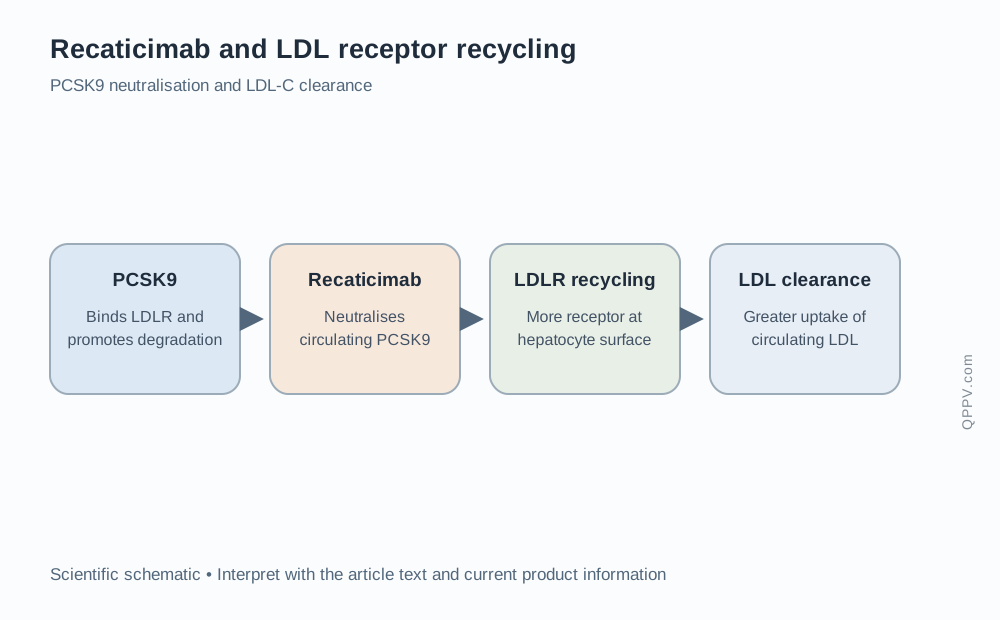
Figure 1. PCSK9 promotes LDLR degradation; recaticimab binds PCSK9, leaving more LDLR available for LDL-C clearance. The diagram describes the molecular pathway, not a clinical outcome claim.
Clinical evidence and authorisation
The NMPA announced marketing approval in China in 2025 and described recaticimab’s target and LDLR mechanism. A first-approval review reports the China indication scope for adult primary hypercholesterolaemia and mixed dyslipidaemia, including add-on and monotherapy contexts. Product information in the relevant jurisdiction remains the controlling source for eligibility, dose, contraindications and warnings. [1,2]
The phase 3 REMAIN programme tested recaticimab in Chinese populations with non-familial dyslipidaemia and heterozygous familial hypercholesterolaemia (HeFH). In REMAIN-3, 143 participants with HeFH receiving stable lipid-lowering therapy were randomised to 150 mg subcutaneously every four weeks or placebo for 12 weeks. At week 12, mean LDL-C change was −54.4% with recaticimab and −4.5% with placebo; the treatment difference was −49.8 percentage points (95% CI −55.8 to −43.9). Treatment-related adverse events were similar overall, with injection-site reactions and increased creatine phosphokinase more frequent in the active group. [3]
These results establish short-term lipid-lowering efficacy in the studied population, not long-term cardiovascular outcome benefit or direct equivalence to other PCSK9 antibodies. Phase 3 studies remain bounded by duration, setting and population. Avoid pooling results across differing backgrounds, endpoints or treatment schedules without a justified comparative design.
Safety and pharmacovigilance profile
Published trial reports support attention to injection-site reactions and laboratory findings such as creatine phosphokinase. The available NMPA public notice is not a substitute for the full local label, and the article does not assign a product-specific warning absent an authoritative product source. Hypersensitivity and immunogenicity should be assessed and reported when clinically suspected, without assuming that a class expectation confirms a recaticimab-specific risk.
For an individual safety case, capture treatment indication, baseline and serial LDL-C, co-administered statin and other lipid therapies, dose dates, injection site, adherence, recent changes in diet or treatment, symptoms, laboratory results and clinical outcome. If an apparent loss of lipid response occurs, assess missed doses, administration or storage problems, assay timing, intercurrent illness and treatment changes before attributing it to neutralising antibodies.
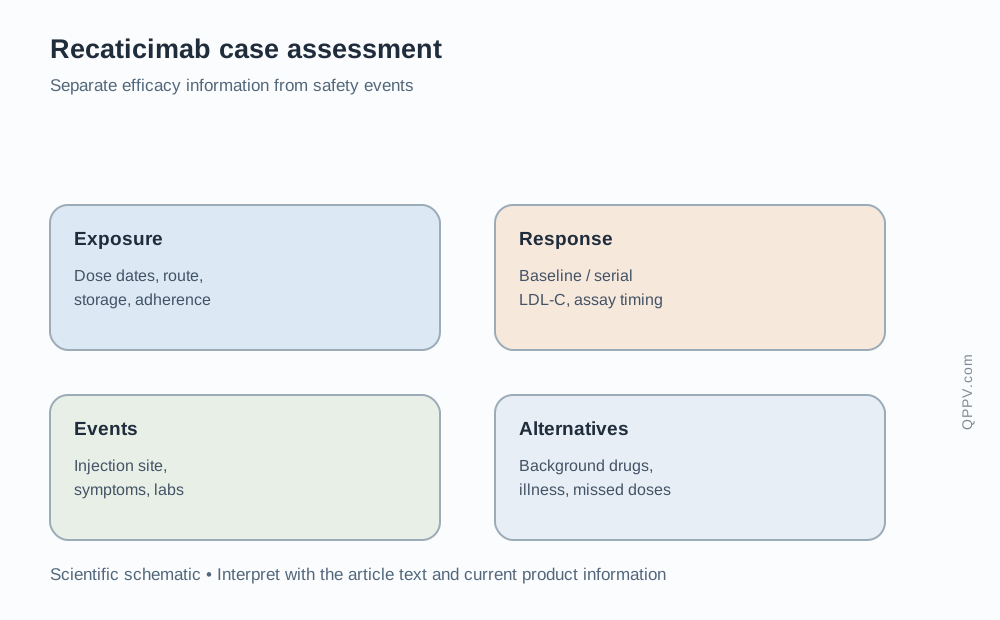
Figure 2. A practical case-review map separating exposure, lipid response, adverse events and alternative explanations. It is an operational framework, not a mandated monitoring schedule.
Pharmacovigilance and evidence governance
Signal review
Aggregate safety review should distinguish spontaneous reports from controlled-trial events and routine laboratory follow-up. Interpret injection-site events by timing, severity, recurrence and intervention. For muscle symptoms or elevated creatine phosphokinase, document the value and reference range, baseline status, exercise, concomitant medicines and clinical assessment. For a hypersensitivity report, capture onset, manifestations, treatment and any subsequent exposure.
Effectiveness information can be safety-relevant when loss of response triggers treatment changes or reveals administration barriers. It should be coded and analysed separately from adverse reactions where systems allow. A report of myocardial infarction or stroke during treatment is important safety information, but temporal coexistence does not establish an adverse drug reaction or demonstrate that lipid lowering failed.
Practical controls
Maintain traceability between product, batch, dose, route and reporter; reconcile clinical studies with post-authorisation reporting; and apply applicable national expedited and periodic reporting requirements. Follow-up requests should be proportionate and should not delay initial reporting where local rules require early submission. Label changes and signal conclusions should be based on accumulated evidence, not isolated case counts.
For studies or safety datasets, document the enrolled phenotype (familial versus non-familial dyslipidaemia), baseline LDL-C, cardiovascular history, background therapy, exposure duration and endpoint definition. This prevents a pooled “PCSK9 antibody” conclusion from obscuring differences among products and study populations.
Key takeaways
- Recaticimab neutralises PCSK9, preserving LDLR availability and increasing LDL-C clearance.
- NMPA marketing authorisation is China-specific; current local product information defines eligible populations and use.
- REMAIN-3 demonstrated short-term LDL-C reduction in HeFH; it does not establish cardiovascular outcome benefit.
- Capture background therapy, adherence, lipid response, injection events and relevant laboratory context.
- Separate product-specific evidence from PCSK9-class assumptions and avoid causal claims from temporal association alone.
References
- National Medical Products Administration of China. Recaticimab for injection approved for marketing. https://english.nmpa.gov.cn/2025-06/11/c_1101534.htm
- Recaticimab: first approval. Drugs. 2025. PMID: 40545518. https://pubmed.ncbi.nlm.nih.gov/40545518/
- Recaticimab in adult heterozygous familial hypercholesterolaemia (REMAIN-3): a phase 3 study. Cardiovasc Res. 2025. PMID: 40911402. https://pubmed.ncbi.nlm.nih.gov/40911402/
- Recaticimab monotherapy for nonfamilial hypercholesterolemia and mixed hyperlipemia: REMAIN-1. J Am Coll Cardiol. 2024. PMID: 39387764. https://pubmed.ncbi.nlm.nih.gov/39387764/
- Recaticimab as add-on therapy to statins: REMAIN-2. PMID: 39505412. https://pubmed.ncbi.nlm.nih.gov/39505412/
Regulatory Note
Regulatory information was checked on 25 September 2026. The article describes China NMPA authorisation and does not imply approval in the United States or European Union. Exact indications, dosing and warnings are jurisdiction- and label-specific; consult current local product information before clinical or regulatory use.