Recombinant Factor VIII: Classification, History, Mechanism of Action, Inhibitors and Pharmacovigilance
- Recombinant Factor VIII: Classification, History, Mechanism of Action, Inhibitors and Pharmacovigilance
- Multidimensional classification
- Historical development
- Molecular biology and physiological comparator
- Manufacturing and comparability
- Mechanism of action: restoring intrinsic tenase
- Clinical-use settings
- Inhibitors: the principal treatment complication
- Hypersensitivity and other adverse reactions
- Special populations and changing treatment context
- Product-specific pharmacovigilance
- Signal detection, governance and inspection perspective
- Practical checklist
- Key takeaways
- References
- Regulatory Note
Recombinant factor VIII (rFVIII) products are replacement therapies for haemophilia A, an inherited bleeding disorder caused by reduced factor VIII activity. They restore a missing cofactor in the intrinsic coagulation pathway. Their purpose is haemostatic: prevention and treatment of bleeding, including perioperative haemostasis in product-specific authorised settings.
“Recombinant factor VIII” is a product family, not a single medicine. It includes proteins with different domain architectures, cell-expression systems, purification histories, excipients, half-life-extension technologies and assay characteristics. The shared International Nonproprietary Name component does not make individual products interchangeable for prescribing, reconstitution, dosing, monitoring or pharmacovigilance.
The central benefit–risk question is also unusual among biological medicines. A neutralising anti-FVIII antibody—an inhibitor—can transform otherwise effective replacement therapy into apparent loss of efficacy and expose the person to uncontrolled bleeding. This is not merely a laboratory abnormality: it changes acute bleed management, surgery, prophylaxis and often long-term treatment strategy.
Multidimensional classification
| Axis | Recombinant FVIII classification | Practical significance |
|---|---|---|
| Disease target | Replacement therapy for congenital FVIII deficiency (haemophilia A) | Does not treat haemophilia B or every acquired cause of low FVIII |
| Biological role | Coagulation cofactor | Supports activated factor IX rather than acting as a protease itself |
| Molecular architecture | Full-length, B-domain-deleted (BDD), single-chain or otherwise engineered FVIII | Architecture affects production, pharmacokinetics and assay performance |
| Production | Recombinant mammalian-cell expression | Avoids use of pooled human plasma as starting material, while biological quality control remains essential |
| Half-life class | Standard half-life or extended half-life | Extended exposure can arise from Fc fusion, albumin fusion, PEGylation or other design approaches |
| Mechanistic class | Replacement protein / procoagulant cofactor | Restores intrinsic-tenase function after activation by thrombin |
| Therapeutic use | On-demand bleeding treatment, routine prophylaxis and perioperative management, product permitting | Regimen, target and monitoring vary by clinical context |
| Immunogenicity class | Exogenous FVIII antigen capable of eliciting inhibitors | Risk is driven by patient, treatment and product factors |
| Regulatory/product status | Multiple individually authorised biological medicines | Brand, batch, potency and product version must be retained |
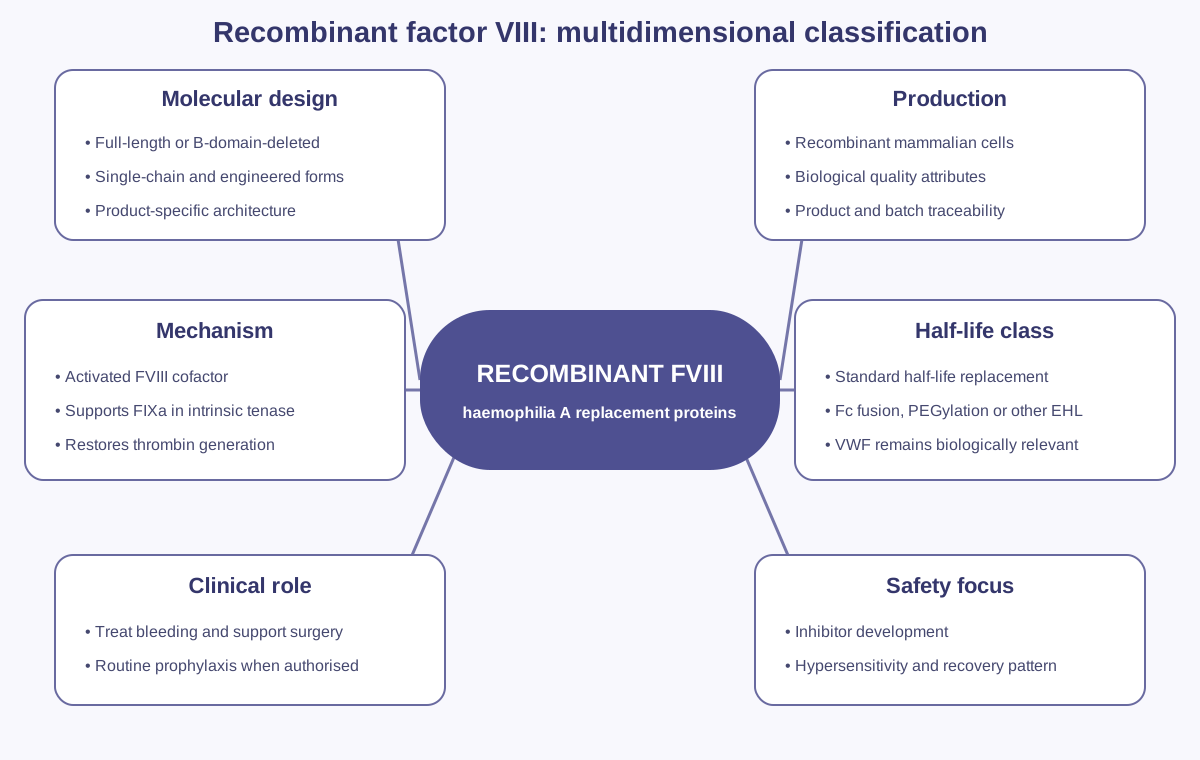
Figure 1. Recombinant FVIII products share replacement of FVIII cofactor activity but differ across molecular design, pharmacokinetics and product characteristics. The figure is a multidimensional map, not a hierarchy of “better” products.
Historical development
For much of the twentieth century, haemophilia A treatment relied on human plasma-derived cryoprecipitate and factor concentrates. These products made home treatment and surgery more feasible but were associated with the devastating historical transmission of blood-borne viruses before donor screening and viral-inactivation advances. That history is relevant to the rationale for recombinant manufacture, but it should not be used to imply that current recombinant products are risk-free or that all plasma-derived products have the same contemporary risk profile.
Molecular cloning of the large F8 gene and expression of biologically active FVIII in mammalian cells made recombinant production possible in the 1980s. Early clinical studies demonstrated haemostatic efficacy of recombinant FVIII. The first recombinant FVIII product received US approval in 1992, opening a sequence of manufacturing and molecular innovations.
Successive products reduced or removed use of human- or animal-derived proteins from cell culture and purification steps, introduced B-domain-deleted designs, and later used half-life-extension technologies. B-domain deletion does not remove the haemostatic function of FVIII: the activated cofactor depends on the A and C domains and associated light and heavy chains. However, individual BDD and engineered products have their own quality attributes, clinical datasets and labelled assay recommendations.
Current European authorisations include standard half-life products such as octocog alfa and extended-half-life products such as efmoroctocog alfa and rurioctocog alfa pegol. Authorisation, age range, prophylaxis interval, surgical use, reconstitution system and monitoring instructions are product-specific and change over time.
Molecular biology and physiological comparator
The F8 gene is located on the X chromosome. In circulating plasma, endogenous FVIII circulates non-covalently bound to von Willebrand factor (VWF), which protects it from premature clearance. Thrombin activates FVIII and releases it from VWF; activated FVIII (FVIIIa) then functions transiently on phospholipid surfaces before it is inactivated.
Full-length FVIII contains domains arranged A1–A2–B–A3–C1–C2. The B domain is dispensable for cofactor activity, which is why BDD products can be active. The C domains participate in membrane and VWF-related interactions, while the A domains are important to the activated cofactor. These structure–function relationships explain why a molecular modification may be clinically useful without making all engineered FVIII products pharmacologically identical.
Manufacturing and comparability
Recombinant FVIII is produced in genetically engineered mammalian cells, then purified and formulated as a biological medicine. Relevant quality attributes include identity, potency, structural integrity, activation state, aggregation, impurities, glycosylation patterns where applicable, and stability through reconstitution and administration. Potency assignment and assay performance are central because the medicine’s clinical effect is measured through functional FVIII activity rather than a simple mass concentration.
Manufacturing changes require regulatory comparability assessment. A change in site, cell bank, purification, formulation or analytical method is not proof of a safety signal, but it may be relevant when evaluating a clustered quality concern or a shift in inhibitor reports. Product-specific traceability is therefore a clinical and pharmacovigilance requirement, not an administrative afterthought.
Mechanism of action: restoring intrinsic tenase
FVIII is a cofactor, not an enzyme. Following vascular injury, activated factor IX (FIXa) and FVIIIa assemble on an activated phospholipid surface in the presence of calcium. This intrinsic tenase complex markedly accelerates conversion of factor X to factor Xa. Factor Xa then contributes to the prothrombinase complex, which generates thrombin; thrombin converts fibrinogen to fibrin and amplifies several upstream coagulation reactions.
In haemophilia A, insufficient functional FVIII limits thrombin generation. The problem is not simply a prolonged laboratory clotting time. Inadequate thrombin burst reduces stable fibrin formation and produces the characteristic bleeding phenotype. Infused rFVIII raises plasma FVIII activity, allowing generation of FVIIIa at the site of haemostatic challenge and restoration of intrinsic-tenase activity for as long as sufficient active protein remains.
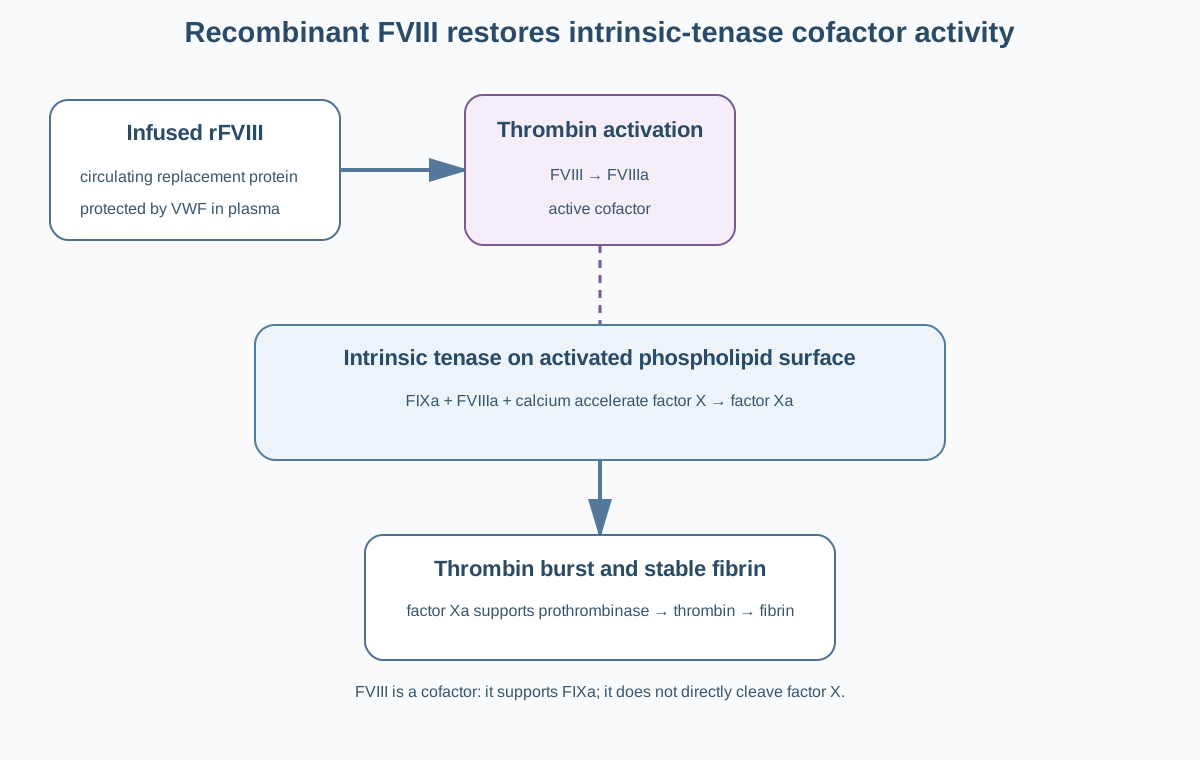
Figure 2. After thrombin activation, infused FVIII becomes FVIIIa and acts with FIXa on a phospholipid surface to accelerate factor X activation. The downstream thrombin burst supports stable fibrin formation. FVIII is a cofactor; it does not directly cleave factor X.
Pharmacokinetics, VWF and half-life extension
Standard half-life FVIII is cleared relatively rapidly, partly through mechanisms influenced by VWF. Endogenous VWF is therefore an important determinant of the terminal half-life of many FVIII products. Increasing FVIII exposure cannot fully escape this physiological constraint: in several extended-half-life products, VWF remains a limiting determinant.
Extended-half-life designs aim to reduce infusion frequency or increase time above a clinically selected activity threshold. Fc fusion can engage neonatal Fc receptor recycling; PEGylation can reduce clearance; and other molecular designs can modify exposure. These are product-specific pharmacokinetic strategies, not evidence that any extended-half-life rFVIII is interchangeable with every other FVIII product.
Laboratory measurement is product-specific
One-stage clotting and chromogenic FVIII assays may give discordant results for certain modified FVIII products. The direction and magnitude of discrepancy depend on the product, assay reagent and laboratory method. Laboratory teams must know the exact concentrate used and use an assay validated or otherwise appropriate for that product. A measured FVIII level without the assay method and product identity may be clinically misleading.
Clinical-use settings
Treatment of bleeding
On-demand treatment aims to achieve haemostasis for a specific bleed. Clinical response, anatomical site, timing, prior joint status and serial factor activity can matter more than a single infusion record. Severe headache, neurological symptoms, neck/throat bleeding, major trauma or suspected compartment syndrome require urgent specialist assessment; factor replacement should not delay emergency evaluation.
Routine prophylaxis
Prophylaxis seeks to prevent bleeding and preserve joint health. It is not defined only by a nominal dose interval. Appropriate planning considers bleeding phenotype, pharmacokinetics, activity pattern, venous access, adherence, target joints, inhibitor status and the individual product’s authorised use. Breakthrough bleeding may signal inadequate exposure, missed dosing, trauma, an inhibitor, altered clearance, an anatomical joint problem or an alternative diagnosis.
Surgery and invasive procedures
Perioperative replacement requires a product-specific plan, coordinated laboratory monitoring and continued assessment of bleeding and thrombosis risk. Preoperative inhibitor status and expected FVIII recovery are important. A factor level is one element of haemostatic assessment, not a substitute for surgical review, imaging or management of a postoperative complication.
Inhibitors: the principal treatment complication
An inhibitor is an alloantibody that neutralises infused FVIII activity. It is usually measured with a Bethesda-based assay and interpreted alongside clinical response, incremental recovery and half-life. A low titre result, a transient result and a clinically consequential high-responding inhibitor are not the same condition. Confirmation and longitudinal characterisation are essential.
Inhibitor development is most common early in exposure among previously untreated people with severe haemophilia A, but it can occur later, particularly after intensive treatment. Patient-related risks include F8 variant type, family history, ethnicity, severity and immune context. Treatment-related variables include age and circumstances of first exposure, intensity of exposure, surgery and inflammatory events. Product-related questions are evaluated in clinical trials, registries and post-authorisation surveillance; they should not be settled from reporting counts alone.
The SIPPET randomised trial reported a higher inhibitor incidence in previously untreated children assigned to recombinant compared with plasma-derived FVIII concentrates containing VWF. Its result informs the historical evidence base, but it does not establish the inhibitor risk of every current recombinant product, every molecular design or every treatment setting. Observational studies are vulnerable to confounding by treatment selection, calendar period, genotype and exposure intensity. Individual product information and contemporary specialist guidance remain the operational reference.
When an inhibitor is suspected, the critical clinical question is not “Did the product fail?” but “What is the recovery and half-life pattern, and is neutralising antibody present?” Management may include repeat testing, bypassing agents, non-factor prophylactic options and immune tolerance induction at a haemophilia treatment centre. These decisions are specialised clinical care.
Hypersensitivity and other adverse reactions
Hypersensitivity reactions, including anaphylaxis, are recognised with FVIII products. A report requires product, batch, device, infusion rate, immediate clinical phenotype, treatment and any re-exposure information. Differentiating a true immediate hypersensitivity reaction from anxiety, vasovagal symptoms, bleeding-related pain or a coincident illness matters for both patient safety and signal assessment.
Thromboembolic events are uncommon in congenital haemophilia A treated appropriately, but thrombotic risk cannot be assumed to be zero. Risk can rise with excessive replacement, surgery, immobilisation, central venous access, older age or additional prothrombotic disease. It also has a different interpretation in acquired FVIII deficiency, where underlying autoimmune disease, malignancy, postpartum status and haemostatic treatment may coexist.
Special populations and changing treatment context
Previously untreated children
Previously untreated patients (PUPs) are a distinct immunogenicity population, not simply smaller adults. Exposure days, genotype, family history, treatment intensity and inhibitor-screening schedule need to be captured prospectively. The European clinical-investigation guideline specifically treats inhibitor development as a major safety outcome and addresses both pre- and post-authorisation evidence.
Non-severe haemophilia A and intensive exposure
People with non-severe haemophilia A may have decades of infrequent treatment before an inhibitor appears. Intensive treatment around surgery or a major bleed can be a relevant exposure context. A new poor response should trigger structured evaluation rather than an automatic switch between products.
Women and girls with haemophilia
Haemophilia A phenotypes occur in females as well as males. Factor level, bleeding phenotype, genotype and reproductive context require individual assessment. The term “carrier” does not establish that a person has normal FVIII activity or no bleeding risk. Product selection and peri-partum haemostatic management are specialist decisions.
Acquired haemophilia A
Acquired haemophilia A is mediated by autoantibodies against endogenous FVIII and is biologically and clinically distinct from congenital haemophilia A. Recombinant porcine FVIII and bypassing agents may be used in specific jurisdictions and situations, but they are not interchangeable with standard recombinant human FVIII replacement. This article concerns recombinant human FVIII products for congenital deficiency unless a product’s authorised information states otherwise.
Product-specific pharmacovigilance
For rFVIII, the core unit of analysis is the product–exposure-day–recovery–bleeding trajectory:
baseline disease and inhibitor status → exact product and batch → dose and exposure days → assay method and FVIII recovery → bleeding outcome → intervention and follow-up
Minimum useful case information includes:
- exact brand, INN, batch, strength, vial or device, route, reconstitution method and infusion dates;
- congenital versus acquired diagnosis, baseline FVIII activity, genotype where known, prior treatment and inhibitor history;
- exposure-day count, intensity of recent treatment and surgery, infection or inflammatory context;
- bleed site, severity, trauma and clinical outcome;
- FVIII assay type, reagent/laboratory context, timing of sample and expected versus observed recovery;
- inhibitor titre, repeat testing, half-life or recovery data, and management;
- concomitant haemostatic agents, including emicizumab or bypassing agents, and relevant assay interference;
- dechallenge, rechallenge, switch, adherence and outcome.
Recording only “factor VIII” is insufficient. It loses molecular design, manufacturer, batch and assay context. Recording only a Bethesda titre is likewise insufficient: titre, clinical response and recovery must be interpreted together.
Apparent lack of efficacy
Possible causes include missed or delayed administration, incorrect reconstitution or dose calculation, inhibitor development, inappropriate assay interpretation, accelerated clearance, an undertreated bleed, a new anatomical source of bleeding or a product-quality problem. Product-quality investigation is appropriate for credible clusters, visible abnormalities, preparation failures or temperature excursions, but isolated breakthrough bleeding does not establish a quality defect.
Traceability, switching and comparability
Switching can be clinically appropriate, but the before-and-after product history must be retained. If an inhibitor, hypersensitivity reaction or unexpected recovery pattern occurs, the relevant question is not simply whether a switch happened; it is whether the event’s timing, exposure history, product-specific assay behaviour, patient risk factors and alternative explanations support a causal hypothesis.
An authorised manufacturing change or product variation is evaluated through regulatory quality and comparability requirements. Pharmacovigilance complements that framework by detecting unexpected clinical patterns. It cannot infer diminished biological comparability merely from a temporal cluster without verified denominator, product and clinical data.
Signal detection, governance and inspection perspective
Aggregate review should stratify PUPs, previously treated patients, non-severe disease, surgery, routine prophylaxis and on-demand use. These groups have radically different inhibitor denominators and exposure patterns. Reporting rates that combine them are not clinically interpretable.
An effective system connects individual case safety reports, inhibitor registries, product-quality complaints, medical information, literature surveillance, laboratory expertise and periodic benefit–risk review. It should be able to reconcile the same event across sources while preserving product and batch traceability.
Common failure modes include:
- treating any breakthrough bleed as an adverse reaction or lack of efficacy without confirming dose, timing and inhibitor status;
- losing the product or batch after a switch;
- comparing FVIII results from different assays without product-specific context;
- coding “inhibitor positive” without titre, repeat test, recovery or clinical consequence;
- generalising findings from PUPs to heavily treated adults;
- attributing thrombotic events to FVIII without considering surgery, central access, age and comorbidity.
Practical checklist
- Confirm diagnosis, baseline FVIII activity, inhibitor history and the exact clinical objective.
- Record the exact rFVIII product and batch at every clinically important exposure.
- Verify dose calculation, reconstitution, infusion and storage against product-specific information.
- Match FVIII monitoring to the product and assay method.
- Investigate suboptimal recovery or recurrent bleeding for inhibitor development and alternative causes.
- Before surgery, document inhibitor status, expected recovery, assay plan and haemostatic follow-up.
- For hypersensitivity, capture immediate phenotype, batch/device and re-exposure outcome.
- Analyse safety separately by PUP/PTP status, treatment intensity and clinical setting.
Key takeaways
Recombinant FVIII products are biological replacement therapies for haemophilia A. FVIIIa acts as the cofactor for FIXa in intrinsic tenase; it accelerates factor X activation and supports the thrombin burst required for stable fibrin formation.
The rFVIII category contains multiple product designs. Full-length, BDD, single-chain and extended-half-life molecules share the therapeutic goal but differ in molecular construction, pharmacokinetics, assay behaviour and product information.
Inhibitor development is the central safety and effectiveness complication. Robust pharmacovigilance preserves product identity, exposure days, assay context, incremental recovery, inhibitor testing, bleeding phenotype and competing clinical explanations.
References
- European Medicines Agency. Guideline on core SmPC for human plasma-derived and recombinant coagulation factor VIII products, Rev. 3. EMA/CHMP/BPWP/1619/1999; effective 1 February 2019.
- European Medicines Agency. Guideline on the clinical investigation of recombinant and human plasma-derived factor VIII products, Rev. 2. EMA/CHMP/BPWP/144533/2009; effective 1 February 2019.
- European Medicines Agency. Elocta: EPAR.
- European Medicines Agency. Kovaltry: EPAR.
- European Medicines Agency. Adynovi: EPAR.
- U.S. Food and Drug Administration. ADVATE prescribing information.
- Vehar GA, Keyt B, Eaton D, et al. Structure of human factor VIII. Nature. 1984;312:337–342.
- Wood WI, Capon DJ, Simonsen CC, et al. Expression of active human factor VIII from recombinant DNA clones. Nature. 1984;312:330–337.
- White GC II, McMillan CW, Kingdon HS, Shoemaker CB. Use of recombinant antihemophilic factor in the treatment of two patients with classic hemophilia. N Engl J Med. 1989;320:166–170.
- Mannucci PM, Tuddenham EGD. The hemophilias—from royal genes to gene therapy. N Engl J Med. 2001;344:1773–1779.
- Pipe SW. The hope and reality of long-acting hemophilia products. Am J Hematol. 2012;87 Suppl 1:S33–S39.
- Peyvandi F, Mannucci PM, Garagiola I, et al. A randomized trial of factor VIII and neutralizing antibodies in hemophilia A. N Engl J Med. 2016;374:2054–2064.
- Srivastava A, Santagostino E, Dougall A, et al. WFH Guidelines for the Management of Hemophilia, 3rd edition. Haemophilia. 2020;26 Suppl 6:1–158.
- European Medicines Agency. Guideline on good pharmacovigilance practices: Product- or Population-Specific Considerations II—Biological medicinal products.
Regulatory Note
This is an educational scientific and pharmacovigilance review, not prescribing advice. Recombinant FVIII products differ in authorised populations, dosing, reconstitution, administration, laboratory-assay recommendations, contraindications and risk-minimisation instructions. Consult current product-specific information and a haemophilia treatment centre for individual clinical decisions. Recombinant human FVIII, plasma-derived FVIII, recombinant porcine FVIII, emicizumab and bypassing agents must not be treated as interchangeable.