Regdanvimab: Classification, Mechanism, EU Authorisation History and Pharmacovigilance
Regdanvimab's former EU use was limited to early COVID-19 treatment in adults at risk of progression; its authorisation has since been withdrawn.
- Regdanvimab: Classification, Mechanism, EU Authorisation History and Pharmacovigilance
1. Regdanvimab as a historical EU-authorised antibody
Regdanvimab is a recombinant human IgG1 monoclonal antibody directed against the receptor-binding domain of the SARS-CoV-2 spike protein.[1,3] The EU authorised it as Regkirona on 12 November 2021 for adults with COVID-19 who did not require supplemental oxygen and were at increased risk of progression to severe disease.[1,2] It was administered by intravenous infusion during the early symptomatic phase under the product information in force at the time.
The European Commission withdrew Regkirona's marketing authorisation on 14 April 2025 at the marketing authorisation holder's request because the holder decided to permanently discontinue marketing for commercial reasons.[1] The public EMA record does not describe this as a safety-based withdrawal. Regdanvimab is not currently authorised in the EU; the past indication should be presented as historical.
This distinction is important in case processing, literature review and aggregate safety work. Historical exposure can remain medically relevant after an authorisation ends. Reports must be interpreted using the label and regulatory context applicable on the exposure date, with the EU lifecycle status recorded accurately.
2. Target binding and susceptibility context
Regdanvimab binds spike and can inhibit interaction with the host-cell receptor for susceptible viral strains. Like other anti-spike antibodies, its effect is not independent of viral sequence. Changes in the target can alter neutralisation; therefore, apparent treatment failure should not automatically be labelled resistance without supporting virological or laboratory evidence.
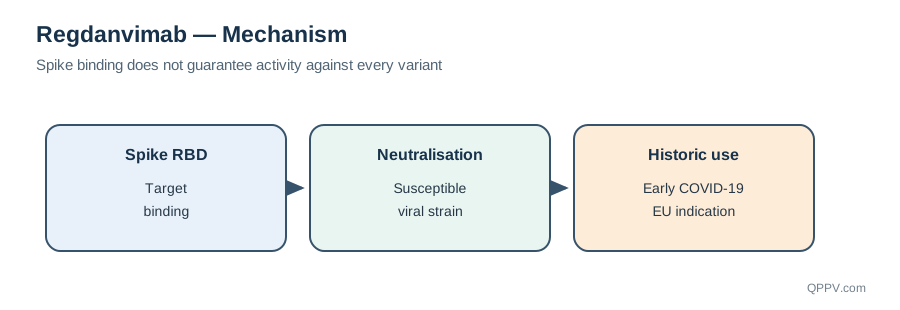
Figure 1. Regdanvimab's historic therapeutic effect depended on spike recognition and susceptibility of the infecting virus; EU authorisation was withdrawn in 2025.
2.1 Historical treatment context
The authorised population consisted of adults with early COVID-19 who had risk factors for progression but did not require supplemental oxygen. For a safety report, symptom-onset date, oxygen requirement, disease severity, infusion date and subsequent clinical course are essential context. The indication should not be expanded to patients already requiring oxygen or to prevention.
3. Safety profile and case-level pharmacovigilance
3.1 Infusion-related and hypersensitivity reactions
The historical EU product information addresses infusion-related reactions and hypersensitivity.[2,3] During or after administration, symptoms may include rash, pruritus, flushing, fever, chills, dizziness, nausea, respiratory symptoms or haemodynamic change. A clinical event can be difficult to distinguish from COVID-19 symptoms, anxiety, co-morbid disease or another medicine's effect.
Follow-up should establish when symptoms began in relation to the infusion, the rate and duration of administration, whether the infusion was interrupted, vital signs, examination findings, treatment, response and outcome. Record the treating professional's diagnosis and preserve uncertainty if the data do not support a more specific term.
3.2 Infection course and clinical alternatives
COVID-19 can worsen after treatment, and progression does not alone establish that regdanvimab lacked activity or caused harm. Relevant information includes baseline disease severity, oxygen status, age and risk factors, test results, hospitalisation, co-treatments and the final outcome. If variant or sequencing data exist, include the source and date; if they do not, do not infer the viral lineage from geography or calendar period.
A suspected lack of effect should be evaluated against timing, disease stage, immune status and viral susceptibility evidence. Clinical non-response, virological persistence and in-vitro resistance are different concepts and should not be used interchangeably.
3.3 Follow-up priorities
For a historical exposure, obtain where feasible:
- Regkirona product identity, batch/lot, dose, route, infusion date/time and country.
- Patient age, COVID-19 onset, test result, severity, risk factors and oxygen status.
- Event chronology, seriousness criteria, investigations, treatment and outcome.
- For infusion or allergic events: vital signs, symptom sequence, management and recovery.
- Concomitant medicines and other COVID-19 treatments with their timing.
- Variant or susceptibility information only where documented and attributable to a reliable source.
EU ICSR validity, submission timelines and follow-up are governed by applicable requirements. Assess seriousness, expectedness and causality separately. A known reaction may still meet seriousness criteria, and a reaction after infusion does not by itself establish causation.
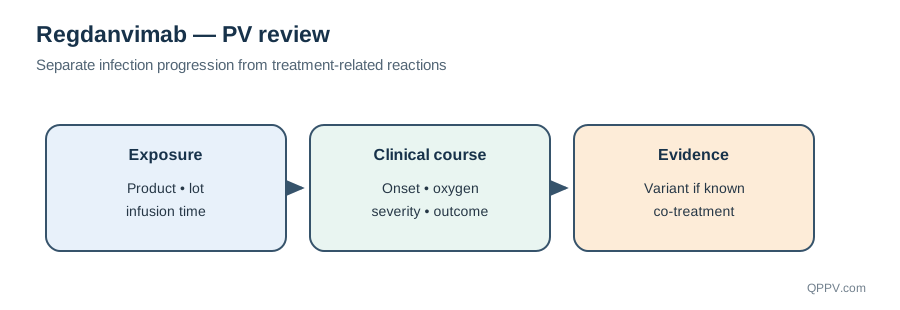
Figure 2. Regdanvimab case review connects the actual infusion to the COVID-19 course, event evidence, viral context and outcome.
4. Aggregate review and inspection perspective
Review safety data with the authorisation period, treatment setting, circulating variants and changes in testing, access and reporting in view. These factors can alter case mix and outcome ascertainment. Spontaneous reports have no reliable denominator and cannot, by themselves, establish incidence, efficacy or a variant-specific risk.
If a potential signal concerns lack of effect or disease progression, review patient-level chronology, eligibility, treatment timing, viral evidence and relevant co-interventions. Avoid counting every post-treatment hospitalisation as product failure. Preserve alternative explanations and uncertainty in the medical assessment and aggregate record.
The pharmacovigilance system should be able to reconstruct product identity, exposure, case validity, follow-up, coding, seriousness, expectedness, causality and submission decisions. Historical product information should remain accessible to reviewers even though the authorisation is no longer valid. Inspection-ready records show how the evidence was evaluated and how conclusions were reached.
Common weaknesses include treating the 2025 commercial withdrawal as a safety finding, omitting oxygen status and symptom onset, making unsupported variant-resistance claims, and confusing progression of COVID-19 with an adverse reaction attributed to treatment.
5. Key takeaways
Regdanvimab was an anti-spike IgG1 antibody authorised in the EU for a defined early-treatment population. The Regkirona authorisation was withdrawn on 14 April 2025 at the holder's request for commercial reasons. It is not currently authorised in the EU.
Historical safety assessment depends on correct exposure dates and product identity, a detailed COVID-19 course, infusion-event chronology, variant evidence where available and careful distinction between clinical progression and treatment-related reactions.
References
- European Medicines Agency. Regkirona: European Public Assessment Report. EU authorisation history and withdrawal on 14 April 2025. Accessed 23 September 2026.
- European Medicines Agency. Regkirona: product information. Historical indication, posology, warnings and adverse reactions. Accessed 23 September 2026.
- European Medicines Agency. Regkirona public assessment report. Scientific assessment, efficacy and safety data. Accessed 23 September 2026.
- European Medicines Agency. EMA issues advice on the use of regdanvimab for treating COVID-19. Historical advice and treatment context.
- European Medicines Agency. ETF warns that monoclonal antibodies may not be effective against emerging strains of SARS-CoV-2. Variant-dependent susceptibility context.
- European Medicines Agency. GVP Module VI: Collection, management and submission of reports of suspected adverse reactions. Current module and addenda.
- European Commission. Commission Implementing Regulation (EU) No 520/2012. EU pharmacovigilance requirements, as amended.
Regulatory Note
This article describes regdanvimab's historical EU-authorised use. The European Commission withdrew the Regkirona marketing authorisation on 14 April 2025 at the holder's request for commercial reasons. Regdanvimab is not currently authorised in the EU. This educational reference does not replace historical product information, current legislation, regulatory guidance or clinical judgement.