Relatlimab: Classification, History, Mechanism of Action, Safety and Pharmacovigilance
- Relatlimab: Classification, History, Mechanism of Action, Safety and Pharmacovigilance
- Multidimensional classification
- Development and regulatory role
- Clinical use and treatment-context map
- Safety profile through mechanism and context
- Pharmacokinetic and pharmacodynamic interpretation
- Pharmacovigilance case assessment
- Signal detection and aggregate review
- Periodic benefit-risk evaluation
- Risk management and operational controls
- Potential failure modes
- Inspection and governance perspective
- Practical checklist
- Key Takeaways
- References
- Regulatory Note
Relatlimab is a human immunoglobulin G4 (IgG4) monoclonal antibody directed against lymphocyte-activation gene 3 (LAG-3). It is authorised as part of a fixed-dose combination with nivolumab, an antibody directed against programmed cell death protein 1 (PD-1). The combination therefore blocks two inhibitory pathways that regulate T-cell activity.
Relatlimab should not be treated as a conventional stand-alone active substance in routine safety analysis. The authorised product delivers relatlimab and nivolumab together, and the clinical evidence, dosing, administration and risk management are built around that exposure. The pharmacovigilance question is consequently whether an event is related to relatlimab, nivolumab, the combined pathway effect, the administration process, another medicine or the underlying melanoma.
Multidimensional classification
| Classification axis | Relatlimab | Pharmacovigilance significance |
|---|---|---|
| Molecular class | Human IgG4 monoclonal antibody | Biological product with product-specific quality and traceability attributes |
| Target | LAG-3 on immune cells, including activated or exhausted T-cell populations | Modifies an inhibitory immune pathway |
| Functional class | Immune-checkpoint inhibitor | Events may reflect immune-mediated tissue injury |
| Product context | Fixed-dose combination with nivolumab | Combination attribution and product coding are essential |
| Therapeutic setting | Advanced melanoma in authorised settings | Tumour burden and prior therapy shape the event differential |
| Primary effect | Increased T-cell activation and antitumour activity | Benefit and toxicity are mediated through immune regulation |
| Product category | Biological medicinal product | Presentation, batch and administration data support investigation |
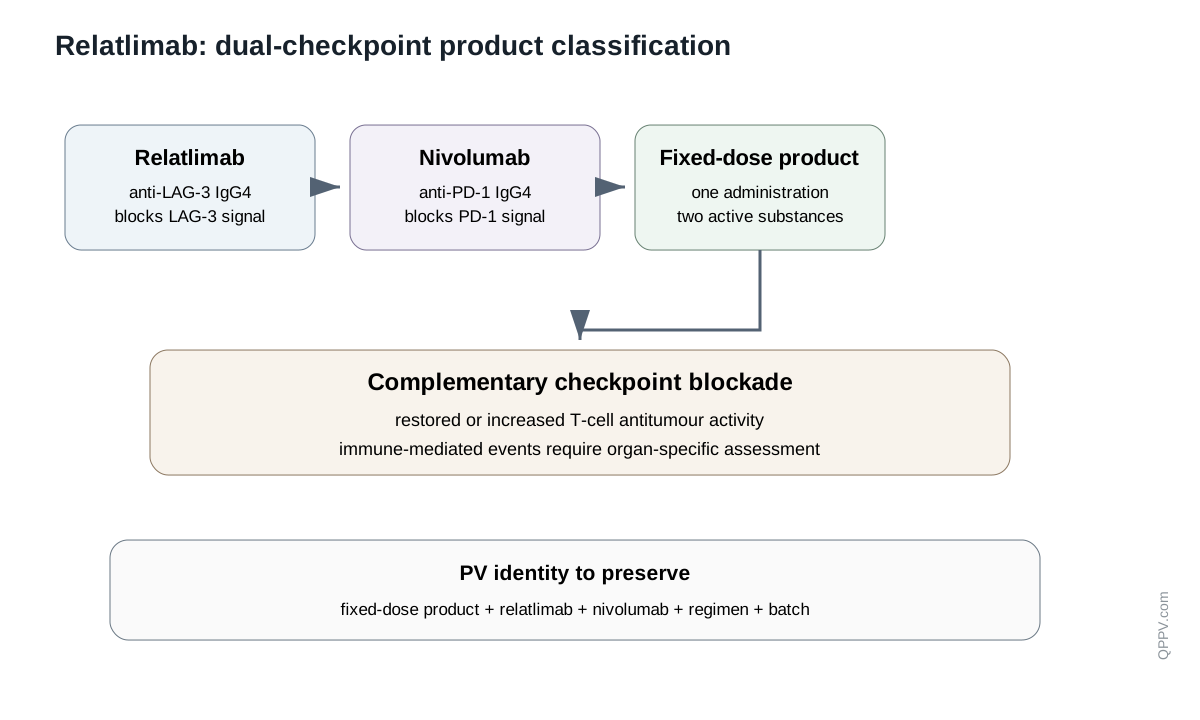
Figure 1. Relatlimab blocks LAG-3 within a fixed-dose product that also blocks PD-1 through nivolumab. The two pathways converge on T-cell activity but are not biologically identical.
LAG-3 as an inhibitory pathway
LAG-3 is an immune-regulatory receptor expressed on several immune-cell populations. Its expression may increase during persistent antigen exposure, including chronic infection and cancer. LAG-3 biology is complex: ligand interactions, cellular distribution and functional consequences depend on the cellular and tissue context.
Relatlimab binding is intended to reduce LAG-3-mediated inhibitory signalling. The practical interpretation is not that every LAG-3-expressing cell is destroyed or that immune activity becomes uniformly amplified. The therapeutic effect depends on the pre-existing immune response, tumour antigen recognition and simultaneous signals from other checkpoints.
Relationship to PD-1 blockade
Nivolumab blocks PD-1, while relatlimab blocks LAG-3. These targets are distinct but can be co-expressed on dysfunctional or exhausted T-cell populations. Dual blockade is intended to restore or increase antitumour T-cell function through complementary regulatory pathways.
This relationship has two consequences for PV. First, the product is a combination exposure even when the administration is recorded as one infusion. Second, a class-level immune-mediated event cannot automatically be assigned to one component. Product-specific information, clinical timing, known pharmacology and the complete regimen should remain visible.
Development and regulatory role
Relatlimab was developed for use with nivolumab in advanced melanoma. The European Union authorised the fixed-dose combination under the name Opdualag, and its product information has subsequently been updated through post-authorisation procedures. Current indications, biomarker conditions, dosing and age restrictions must be taken from the current regional product information.
The fixed-dose design is operationally significant. It simplifies administration but can obscure component-level exposure if the safety database records only a general combination name. Product dictionaries should support the medicinal product and its active substances, while case narratives should identify the actual presentation and dose.
A change in authorised population or biomarker threshold changes the safety denominator. A PV system should therefore preserve the version of product information and indication context used in the assessment, especially when analysing data across several years.
Clinical use and treatment-context map
The authorised relatlimab exposure occurs with nivolumab. This makes the regimen, presentation and administration sequence central to every safety assessment.
Fixed-dose administration
A fixed-dose combination does not mean that the two antibodies have identical pharmacology. It means that the product is manufactured and administered as a defined combination. The case should preserve the product name, active substances, dose, batch or lot, infusion date, infusion duration, premedication, interruption and any administration deviation.
Melanoma and tumour context
Advanced melanoma can produce constitutional symptoms, skin findings, pain, neurological disease and laboratory abnormalities that overlap with adverse-event terms. Prior surgery, radiotherapy, targeted therapy, chemotherapy or checkpoint treatment may alter the baseline risk. The event should be evaluated against disease status and previous treatment, not only against the latest infusion.
Other concomitant medicines
Corticosteroids, antiemetics, analgesics, antibiotics and anticancer medicines may affect symptoms or laboratory results. Immunosuppressive treatment may also modify the presentation and outcome of a suspected immune-mediated event. A complete medication history is therefore required for meaningful causal assessment.
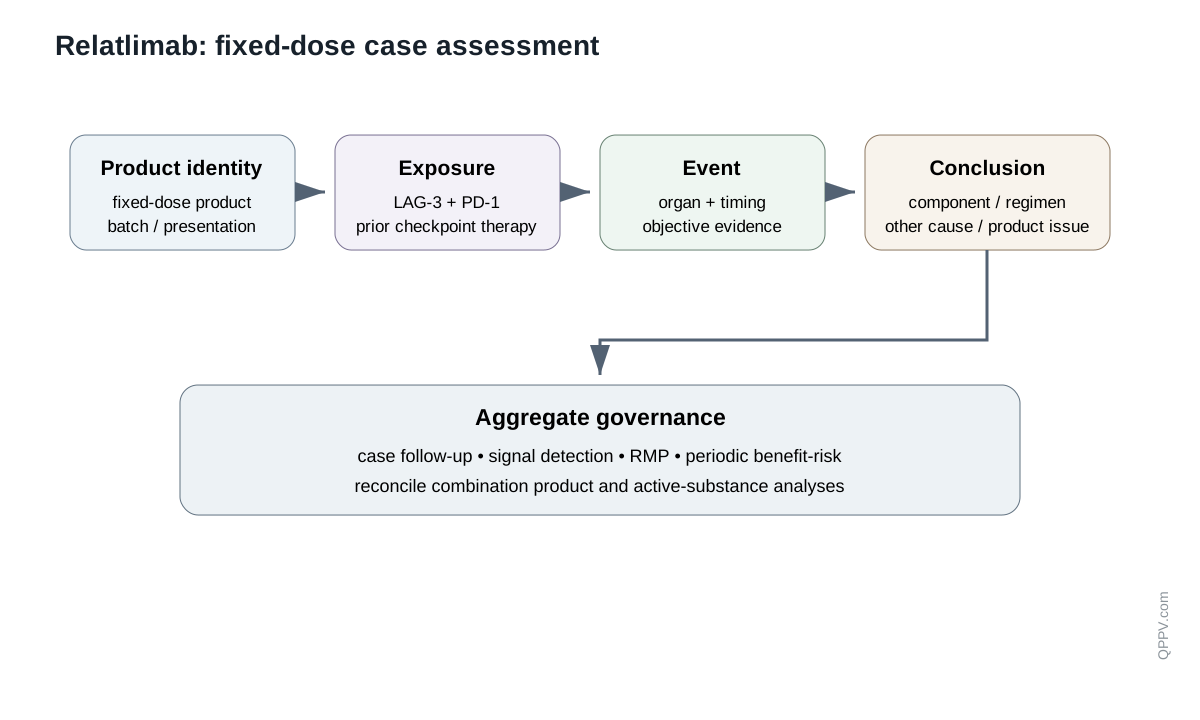
Figure 2. The fixed-dose product creates one administration event but two checkpoint mechanisms. PV assessment must preserve the combined exposure, component biology, tumour context and alternative causes.
Safety profile through mechanism and context
Immune-mediated adverse reactions
Because relatlimab is given with nivolumab, the safety profile must be understood in the context of dual checkpoint blockade. Potential immune-mediated events include pneumonitis, colitis, hepatitis, endocrine disorders, nephritis, skin reactions, myocarditis and neurological syndromes. The preferred term is only the starting point: the clinical phenotype and objective evidence determine the quality of the case.
Gastrointestinal and hepatic events
Diarrhoea may reflect infection, diet, antibiotics, tumour-related disease or immune-mediated colitis. Follow-up should include stool frequency, blood, infection testing, hydration, imaging or endoscopy when performed, treatment and outcome.
Liver-test abnormalities require serial values and assessment of metastases, biliary obstruction, viral infection, alcohol and concomitant medicines. A dual-checkpoint regimen may be suspected, but the causal conclusion should follow the evidence.
Endocrine and other organ events
Thyroid dysfunction, hypophysitis, adrenal insufficiency and diabetes can appear gradually. Baseline status, serial hormones, symptoms and replacement therapy should be documented. Pulmonary, renal, cardiovascular and neurological events require the same organ-specific approach used for other checkpoint therapies.
Infusion-related reactions and hypersensitivity
An acute reaction during or after infusion may include fever, chills, rash, dyspnoea, hypotension or other symptoms. Infusion rate, premedication, timing and treatment are essential. A product complaint or preparation deviation should be considered when several similar reactions occur in temporal or batch association.
Delayed and persistent outcomes
Immune-mediated events may occur after treatment interruption or discontinuation and may require long-term replacement or specialist care. The case should not be considered resolved solely because the acute phase improved. Endocrine replacement, pulmonary impairment, cardiac sequelae or other ongoing effects should be captured.
Pharmacokinetic and pharmacodynamic interpretation
The pharmacodynamic effect of checkpoint blockade may persist beyond measurable administration events. Nivolumab and relatlimab have component-specific disposition and biological activity, but the clinical exposure is the fixed-dose combination. The last dose date, treatment duration and prior checkpoint exposure are therefore necessary for latency analysis.
Tumour response and inflammatory change can complicate radiological interpretation. A report of disease progression should preserve the clinical and imaging assessment rather than automatically treating progression as treatment failure or immune-mediated pseudoprogression.
Pharmacovigilance case assessment
Relatlimab cases should be assessed at three levels: the fixed-dose product, the two active substances and the wider melanoma regimen. This layered approach prevents both loss of component information and unjustified component-level attribution.
Event-specific follow-up priorities
| Event or concern | High-value follow-up information |
|---|---|
| Pneumonitis | Imaging, oxygenation, infection work-up, tumour status, prior radiation and other pneumotoxic medicines |
| Colitis | Stool frequency, blood, infection testing, imaging/endoscopy, hydration and treatment response |
| Hepatitis | Serial liver tests, bilirubin, viral testing, metastases or obstruction and concomitant medicines |
| Endocrine event | Baseline and serial hormones, symptoms, imaging where relevant, replacement and persistence |
| Myocarditis or arrhythmia | Troponin, ECG, cardiac imaging, symptoms, differential diagnosis and outcome |
| Acute infusion reaction | Product, batch, infusion rate, premedication, vital signs, timing, treatment and rechallenge |
| Product-quality concern | Batch, storage, preparation, infusion system and associated cases |
| Apparent lack of efficacy | Indication, biomarker, regimen, adherence to schedule, product traceability and disease assessment |
Signal detection and aggregate review
Signal detection should not use “relatlimab” as a search term without also identifying the fixed-dose product and nivolumab exposure. Analyses should stratify by indication, biomarker-defined population where relevant, treatment line, prior checkpoint therapy and combination context.
A possible signal may concern an immune-mediated event, a particular latency, a new organ pattern, a product-quality cluster, an administration error or a difference between presentations. Disproportionality supports case finding but does not replace clinical review or a defined case series.
Periodic benefit-risk evaluation
The benefit-risk assessment should reflect the authorised melanoma population and the evidence for dual-checkpoint benefit. The risk assessment should include immune-mediated organ injury, infusion reactions, pregnancy exposure, product-quality concerns, medication errors and the consequences of persistent endocrine or organ dysfunction.
A fixed-dose combination also creates a governance question: whether the safety system can reconcile cases coded under the combination product with analyses conducted for each active substance. The answer should be visible in product dictionaries, data standards and periodic-report methodology.
Risk management and operational controls
Current regional product information establishes the regulatory baseline. Recommended controls include:
- coding of the fixed-dose product and both active substances;
- structured capture of nivolumab and relatlimab exposure;
- organ-specific follow-up for immune-mediated events;
- precise infusion and batch traceability;
- treatment-phase and prior-checkpoint fields;
- reconciliation with complaints, medical information and quality systems;
- explicit criteria for assessing lack of efficacy and disease progression;
- documentation of component-level and regimen-level conclusions.
Potential failure modes
The following are illustrative scenarios, not published inspection findings:
- A case is recorded under relatlimab alone even though the patient received a fixed-dose nivolumab combination.
- The database cannot distinguish the fixed-dose product from separate nivolumab exposure.
- An immune-mediated event is assigned to relatlimab without considering dual pathway blockade.
- A cluster of infusion reactions lacks batch, preparation and rate information.
- Signal detection pools first-line melanoma with heavily pretreated populations without stratification.
- Persistent endocrine replacement is not captured in outcome fields.
- Apparent lack of efficacy is assessed without biomarker, schedule or product traceability information.
Inspection and governance perspective
An inspector would examine whether the MAH can demonstrate control over combination-product identity, case attribution and risk evaluation. Evidence may include product dictionaries, case-processing conventions, targeted follow-up, signal reports, periodic reports, quality reconciliation and governance decisions.
A technically complete database is not necessarily effective. If the system stores a combination name but cannot retrieve both active substances, or if it captures an immune-mediated term without organ evidence, the safety system cannot support a reliable benefit-risk conclusion.
Practical checklist
Confirm:
- fixed-dose product name, active substances, dose, presentation and batch;
- administration date, infusion chronology and interruptions;
- melanoma indication, treatment line, biomarker and prior checkpoint exposure;
- all concomitant anticancer and immunosuppressive treatment;
- organ-specific clinical evidence and alternative diagnoses;
- treatment, outcome, persistence and replacement therapy;
- reconciliation with quality complaints and administration errors;
- appropriate product-level and component-level aggregate analyses.
Key Takeaways
Relatlimab is an anti-LAG-3 IgG4 monoclonal antibody administered in a fixed-dose combination with nivolumab. The combination blocks distinct but complementary immune checkpoints.
For pharmacovigilance, the central control is preserving both levels of identity: the actual combination product and its two active substances. Safety assessment should remain organ-specific, regimen-aware and capable of evaluating delayed or persistent immune-mediated outcomes.
References
- European Medicines Agency. Opdualag (nivolumab/relatlimab): EPAR and current product information. https://www.ema.europa.eu/en/medicines/human/EPAR/opdualag
- European Medicines Agency. Opdualag risk-management plan. https://www.ema.europa.eu/en/documents/rmp/opdualag-epar-risk-management-plan_en.pdf
- Tawbi HA, Schadendorf D, Lipson EJ, et al. Relatlimab and nivolumab versus nivolumab in untreated advanced melanoma. N Engl J Med. 2022;386:24–34. doi:10.1056/NEJMoa2109970.
- European Medicines Agency. GVP Module I: Pharmacovigilance systems and their quality systems. https://www.ema.europa.eu/en/human-regulatory-overview/research-development/pharmacovigilance-research-and-development/good-pharmacovigilance-practices
- European Medicines Agency. GVP Module V: Risk management systems. https://www.ema.europa.eu/en/documents/scientific-guideline/guideline-good-pharmacovigilance-practices-module-v-risk-management-systems-rev-2_en.pdf
- European Medicines Agency. GVP Module IX: Signal management. https://www.ema.europa.eu/en/documents/scientific-guideline/guideline-good-pharmacovigilance-practices-gvp-module-ix-signal-management-rev-1_en.pdf
Regulatory Note
Relatlimab is administered within an authorised fixed-dose product with nivolumab. Indications, biomarker conditions, dosing, warnings and post-authorisation information vary by jurisdiction and may change. This article does not replace current product information. Current EMA sources were checked in September 2026.