Retifanlimab: PD-1 Blockade Across Merkel Cell and Anal Canal Carcinomas
Retifanlimab is an immune checkpoint inhibitor with EU-authorised use in two uncommon cancers that differ in disease biology and treatment context. It is given alone for selected Merkel cell carcinoma (MCC) and with carboplatin and paclitaxel for squamous cell carcinoma of the anal canal (SCAC). A product-level pharmacovigilance approach must preserve this distinction because event patterns, background risks and competing causes differ between the settings.
Mechanism and classification
Retifanlimab is a humanised IgG4 monoclonal antibody that binds programmed cell death protein 1 (PD-1) on immune cells. PD-1 engagement by PD-L1 or PD-L2 limits T-cell activation. Some tumours use this pathway to reduce immune recognition. Blocking PD-1 interrupts the inhibitory signal and can restore antitumour immune activity.
This mechanism is related to, but not identical with, PD-L1-directed antibodies. Retifanlimab targets PD-1, whereas avelumab and other agents bind PD-L1. The pharmacological result is checkpoint release, but molecular target and product evidence remain distinct. Safety review should use the retifanlimab label and product-specific data; class experience may guide clinical questions but does not establish product-specific causality.
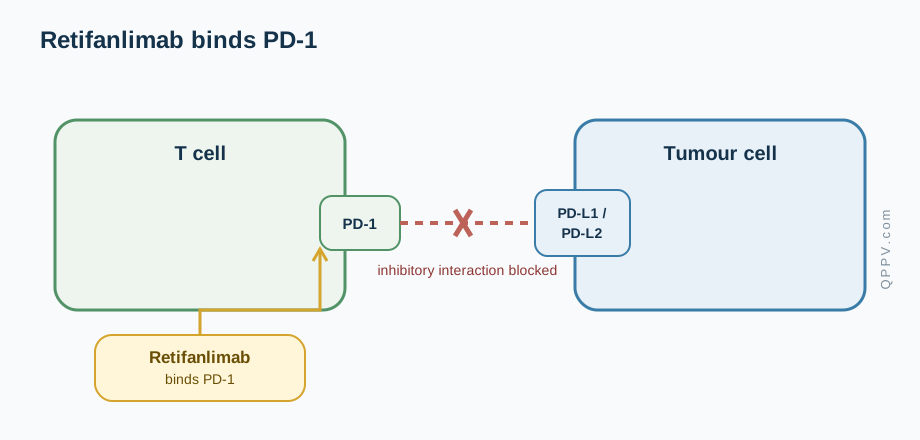
Figure 1. Retifanlimab binds PD-1 on T cells and prevents PD-L1/PD-L2 inhibitory engagement. The diagram shows the principal target interaction; it does not imply that all checkpoint-related events have the same mechanism or presentation.
Indication-specific treatment contexts
The current EU product information covers adults with metastatic or recurrent locally advanced MCC not amenable to curative surgery or radiotherapy, and first-line combination use with carboplatin and paclitaxel for metastatic or inoperable locally recurrent SCAC. The label specifies separate treatment durations and conditions for the two settings. Verify the current SmPC before describing a particular patient’s eligibility or regimen.
In MCC monotherapy, the disease may itself produce skin lesions, constitutional symptoms and systemic complications; previous treatment and immunosuppression may affect interpretation. In SCAC combination therapy, cytopenias, infection, gastrointestinal symptoms, neuropathy and fatigue may arise from chemotherapy, retifanlimab, the cancer or supportive treatment. Attribution should account for the full regimen and distinguish events arising during chemotherapy from those persisting during retifanlimab monotherapy.
Evidence and regulatory context
The MCC evidence included a single-arm study in patients with advanced or recurrent disease; the absence of a comparator contributes to uncertainty when interpreting response outcomes against other treatments. In SCAC, a randomised study compared retifanlimab plus carboplatin/paclitaxel with chemotherapy plus placebo. EMA’s assessment considered the benefits and uncertainties in the context of limited treatment options and the authorised populations.
Retifanlimab received EU marketing authorisation in 2024. The indication was subsequently extended in 2026 to include SCAC. These dates matter for understanding exposure and labelled use in historical reports. Regulatory status at the time of treatment should be recorded where it affects interpretation, and the current product information should be consulted for the exact wording.
Safety profile and clinical interpretation
As with other PD-1 inhibitors, retifanlimab can be associated with immune-mediated inflammation affecting organs such as the lungs, bowel, liver, endocrine glands, kidneys, skin and nervous system. Presentation may be delayed, may occur after treatment stops and can overlap with infection, tumour progression or chemotherapy toxicity. A temporal association warrants assessment but does not prove immune causation.
Infusion reactions and immune-mediated organ toxicity are distinct clinical categories, even when both occur after an infusion. Infusion reactions are linked more closely to administration timing and may include acute symptoms such as fever, chills, flushing, dyspnoea or hypersensitivity features. Immune-mediated events require organ-specific evaluation and may have a later onset or prolonged course.
In the SCAC regimen, chemotherapy creates additional competing explanations. For example, neutropenia may be an expected chemotherapy-associated event, while a new inflammatory syndrome could require assessment for infection, immune toxicity or cancer-related causes. Product attribution must not be forced when evidence supports only regimen-level association. Capture each component, its dose dates, dose modifications and the event’s relationship to each exposure.
Individual case evaluation
A structured case review should establish:
- whether the patient was treated for MCC or SCAC and the disease status at onset;
- retifanlimab exposure dates, cycle number and whether chemotherapy was given concurrently;
- the event phenotype, objective tests, seriousness, treatment and outcome;
- alternative explanations, including infection, tumour progression and other medicines;
- any interruption, withdrawal, immunosuppressive treatment or recurrence after re-exposure.
For suspected immune-mediated events, record the organ involved, diagnostic work-up, severity, corticosteroid or other immunosuppressive treatment and recovery or sequelae. For suspected infusion reactions, document timing from infusion start, signs, treatment, whether the infusion was stopped, and subsequent tolerance. These details support causality assessment and later aggregate review.
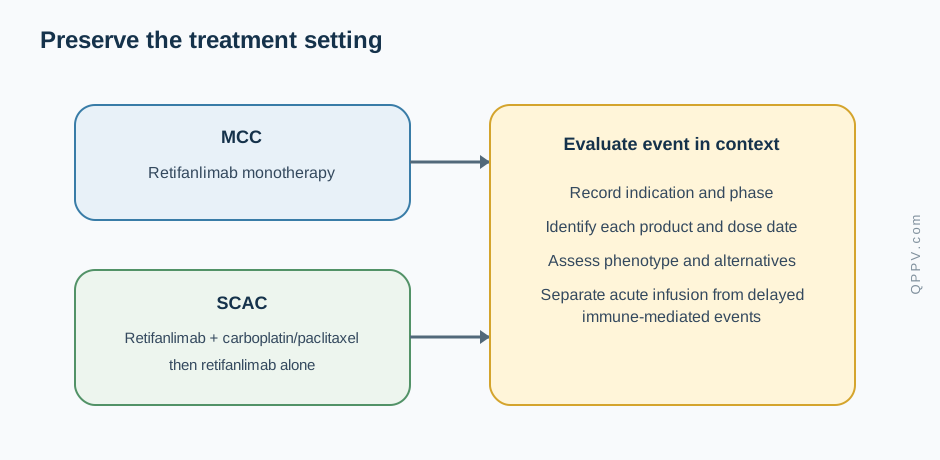
Figure 2. The two labelled settings require different exposure reconstruction: MCC monotherapy versus SCAC chemoimmunotherapy followed by retifanlimab alone. The workflow is an assessment aid, not a prescriptive clinical algorithm.
Signal management and quality controls
Aggregate review should separate MCC from SCAC and monotherapy from combination exposure. Relevant dimensions include age, disease stage, prior therapy, concurrent chemotherapy, cycle number, event latency, treatment duration and relevant comorbidities. Pooling may help detect broad patterns, but clinical interpretation should return to indication-specific cases.
Useful operational controls include product-component identification, regimen-aware case forms, targeted follow-up for suspected immune-mediated syndromes and quality checks on event onset and treatment phase. These practices should be proportionate to the safety question. They are not additional legal requirements unless established by applicable law or regulatory guidance.
Common failure modes include coding all post-infusion inflammation as “immune-related,” assigning chemotherapy-associated cytopenias automatically to retifanlimab, and omitting the indication from case narratives. Each weakens signal interpretation. A sound assessment makes clear what is known, what remains uncertain and what additional evidence could change the conclusion.
Governance and inspection perspective
An inspection may assess whether the PV system distinguishes the two indications and records each component of combination treatment, handles delayed immune-mediated events, and links individual cases with signal and benefit-risk decisions. Evidence may include case-processing instructions, medical-review records, signal evaluations, aggregate reports and documentation of risk-minimisation implementation.
An illustrative review question is whether reports of pneumonitis or colitis were medically evaluated for alternative causes and relevant treatment combinations, rather than classified solely by event term. The goal is effective, traceable evaluation—not manufacturing findings or assuming every event is treatment-related.
Key takeaways
- Retifanlimab blocks PD-1; it should not be conflated with PD-L1-directed products.
- Its EU indications involve MCC monotherapy and SCAC chemoimmunotherapy followed by monotherapy.
- Immune-mediated toxicity may be delayed and should be assessed separately from acute infusion reactions.
- In combination treatment, preserve component-level exposure and competing causes.
- Aggregate review should stratify by indication and regimen before drawing product-level conclusions.
References
- European Medicines Agency. Zynyz: European Public Assessment Report.
- European Medicines Agency. Zynyz: current EU product information.
- European Medicines Agency. Zynyz variation: SCAC indication.
- European Medicines Agency. Good pharmacovigilance practices.
- European Medicines Agency. Zynyz initial and post-authorisation assessment documents, available through the EPAR assessment history.
Regulatory Note
This article reflects EU product information reviewed on 24 September 2026, including the authorised SCAC variation. The current SmPC governs indication, dosing, warnings and monitoring. Operational recommendations are distinguished from legal or regulatory requirements.