Rituximab and Hyaluronidase Subcutaneous Formulation: Safety and Pharmacovigilance
Subcutaneous rituximab with hyaluronidase combines a familiar anti-CD20 antibody with a route-enabling enzyme, but its clinical use is not interchangeable with all intravenous rituximab indications. The product is authorised for selected adult haematological malignancies and is used only after the patient has tolerated at least one full intravenous rituximab dose.
That IV lead-in is central to pharmacovigilance. It means every subcutaneous exposure sits inside a treatment sequence that begins with another presentation of the same active antibody.
- Rituximab and Hyaluronidase Subcutaneous Formulation: Safety and Pharmacovigilance
Product Concept and Scope
The subcutaneous product contains rituximab plus hyaluronidase human. Hyaluronidase enables dispersion of the injection volume; rituximab remains the CD20-directed cytolytic component.
In the United States, approved uses include follicular lymphoma, diffuse large B-cell lymphoma and chronic lymphocytic leukaemia in defined regimens. The presentation is not indicated for non-malignant rituximab uses.
| Feature | PV consequence |
|---|---|
| CD20-directed rituximab | Parent molecule risks remain relevant |
| Hyaluronidase-enabled SC route | Local injection reactions require separate assessment |
| Mandatory prior IV rituximab dose | Exposure sequence must be reconstructable |
| Oncology-only labelled scope | Indication and regimen matter for product-use assessment |
| Different strengths for disease contexts | Wrong strength/product errors are plausible |
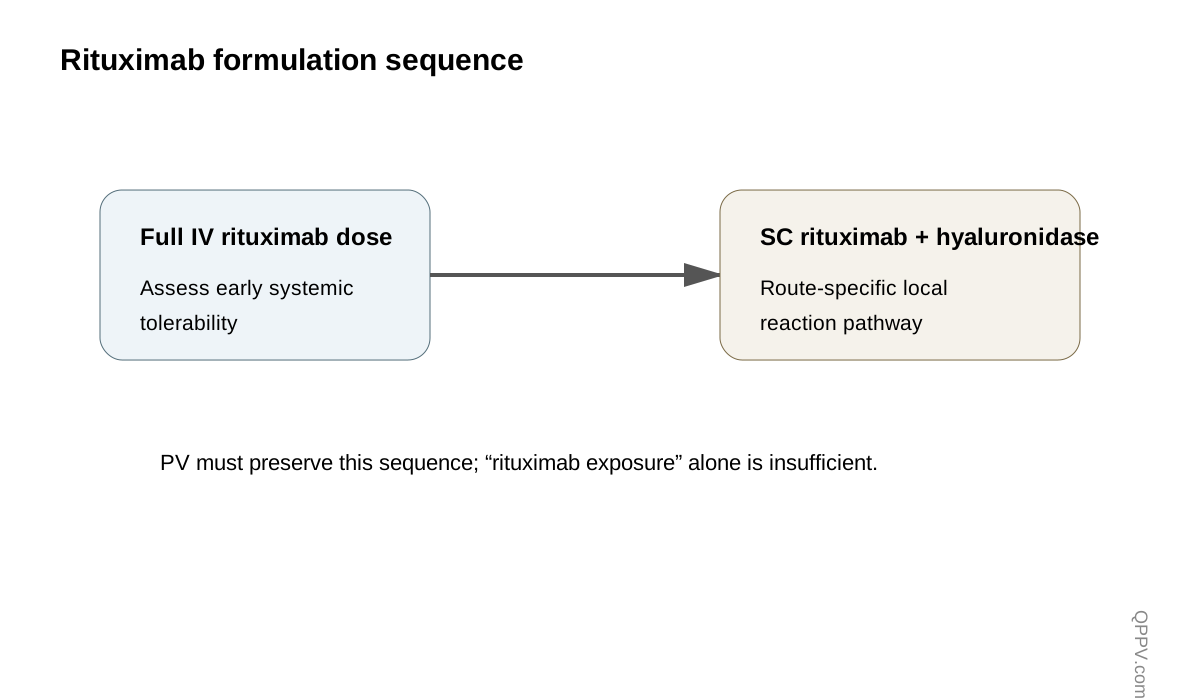
Figure 1. Subcutaneous rituximab-hyaluronidase is used within a sequential pathway that begins with intravenous rituximab.
Why the IV Lead-In Matters
Severe first-dose infusion reactions are a recognised feature of rituximab. Requiring an initial full IV dose before switching to the subcutaneous product creates a deliberate safety sequence: early systemic tolerability is assessed under an infusion setting before later doses are delivered subcutaneously.
For PV, a case involving the subcutaneous product should therefore capture whether the required IV dose occurred, whether it was tolerated, and where in the treatment sequence the event arose.
Safety Profile and Formulation-Specific Assessment
Administration and local reactions
Subcutaneous administration introduces local pain, erythema, swelling and other injection-site reactions. These should be distinguished from systemic hypersensitivity or cytokine-mediated reactions attributable to rituximab itself.
Hepatitis B reactivation, severe mucocutaneous reactions and PML
These remain major rituximab-class risks and are reflected in U.S. boxed warnings for the subcutaneous combination. Their assessment is molecule-level: route should be recorded, but the biological mechanism is related to anti-CD20 B-cell depletion rather than to subcutaneous administration.
Infections and cytopenias
Infections, prolonged cytopenias and immunological effects may reflect rituximab, concomitant chemotherapy, underlying haematological malignancy or their interaction. Aggregate review should therefore preserve regimen context rather than attributing every event to the formulation alone.
Medication and product errors
Because different strengths are used for different disease settings and because the product is subcutaneous-only, product selection and indication are essential case fields. A meaningful report should answer: which strength was used, for which malignancy, after how many prior IV rituximab doses, and was the complete intended dose administered?
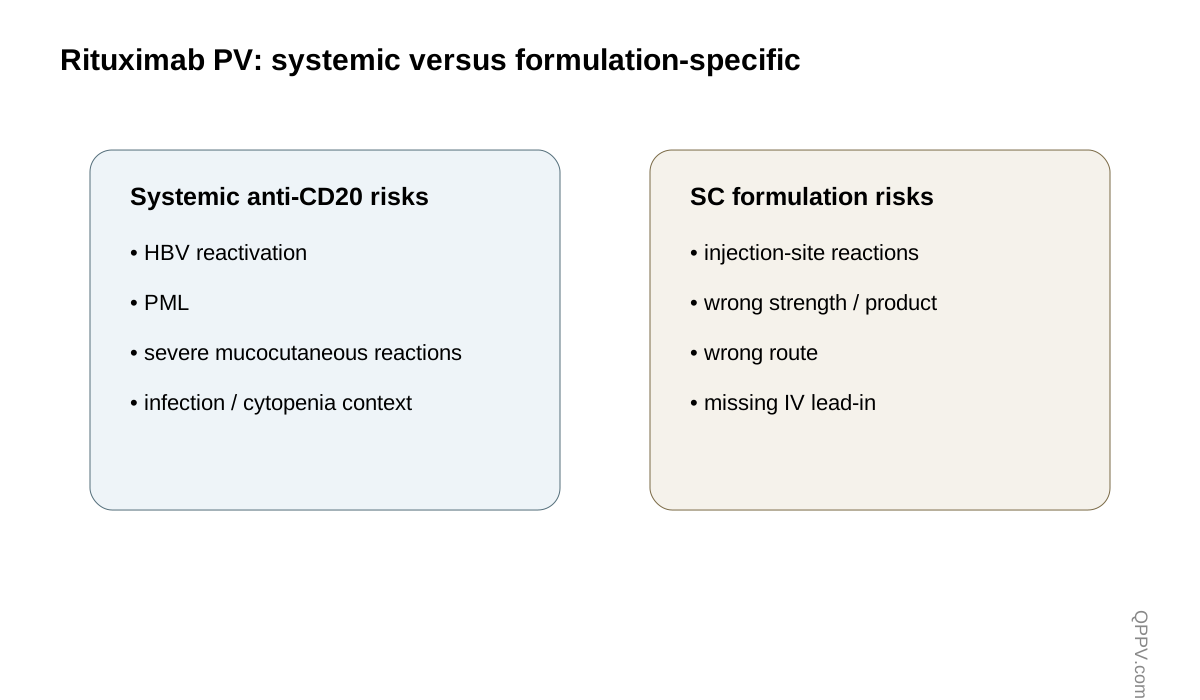
Figure 2. Local and administration risks are formulation-specific, while HBV reactivation, PML and systemic B-cell-depletion risks remain part of the broader rituximab safety framework.
Case Assessment Framework
| Follow-up field | Why it matters |
|---|---|
| Exact subcutaneous product and strength | Detects wrong-presentation errors |
| Indication and regimen | Confirms authorised treatment context |
| Prior full IV rituximab dose | Verifies the required exposure sequence |
| Injection site, timing and local symptoms | Supports route-specific assessment |
| HBV status and monitoring | Supports reactivation assessment |
| Neurological symptoms and diagnostic work-up | Supports PML assessment |
| Concomitant chemotherapy | Critical for cytopenia/infection attribution |
| Batch/lot | Supports biological traceability |
Signal Detection
Injection-site and administration-error signals should be analysed at presentation level. HBV reactivation, PML, severe mucocutaneous reactions and other systemic rituximab risks generally require integrated molecule-level review, with formulation stratification if the data suggest a route-specific difference.
Practical Controls and Failure Modes
The core controls are to preserve formulation identity, confirm the IV lead-in, record disease-specific strength and regimen, and separate local administration events from systemic anti-CD20 risks. A common failure mode would be to record simply “rituximab injection reaction” without documenting whether the exposure was the first IV dose or a later subcutaneous dose; that destroys the safety sequence that makes the product understandable.
Inspection and Governance Considerations
An inspector could assess whether case processing captures the required IV-to-SC sequence, whether wrong-strength and wrong-route errors are coded distinctly, whether the oncology-only scope is preserved in medication-error review, and whether systemic rituximab risks are reviewed across presentations without obscuring formulation-specific signals.
Key Takeaways
Subcutaneous rituximab-hyaluronidase is a distinct medicinal presentation embedded within a broader rituximab treatment sequence. Its most important PV differences are the required IV lead-in, route-specific local reactions, disease-specific strength selection and medication-error controls. Major anti-CD20 risks such as HBV reactivation and PML remain part of the parent rituximab safety framework.
References
- Genentech. Rituxan Hycela (rituximab and hyaluronidase human): Information for Healthcare Providers and Full Prescribing Information. Current online information accessed September 2026.
- U.S. Food and Drug Administration. Rituximab and recombinant human hyaluronidase orphan-drug approval records for follicular lymphoma, DLBCL and CLL.
- QPPV.com. Rituximab: Classification, History, Mechanism of Action, Safety and Pharmacovigilance. Parent molecule reference article.
Regulatory Note
This article is anchored to the U.S. subcutaneous rituximab-hyaluronidase product. Authorised indications and presentations differ by jurisdiction. Local product information should be checked before applying indication, strength or administration details.